• TalkBass has been independent since 1998. Add your voice.
    Create a free account to reply to discussions, view embedded media, and browse with fewer display ads.
    Join freeLog in
    Want zero display ads or expanded classifieds tools? Compare plans.

Year Squier's were crap

  • Like
Reactions: ejaggers
I currently own two MIJ SQ Squier basses, an '83 Precision and an '84 Jazz. I also have a 2017 Affinity P Bass.
The Precision is my #1, it's very much a 70s style Precision and it just owns. The Jazz is a lower spec than the Precision, but still nice, although the neck is Geddy-thin. The Affinity was bought to flip, but stayed because it's surprisingly good.
I also used to own an E series MIJ Squier Strat- still miss it.

Ime, the best Squiers are the JV and SQ models, but bear in mind the MIJ Squiers had different specs and price points, so have different levels of detail and appointments. Personally, while I might advise avoiding most Squiers and almost all Affinity models made between ~1995-2005 as the ones to avoid, I have seen good ones from that era every now and then. Generally though, in that period Squiers were regarded as mostly inferior, and seemed to be made to reinforce that opinion. It's always best to try before you buy.


The bass in the OP is a Squier HM V, the 5 string version of the HM bass.
There were a couple different pickup configurations between the Squier and Fender versions also, and they have different neck radii as well. For what info is available, search for Squier HM or Heartfield HM.

Here's more general Squier/Fender info-

A Brief History of Squier: Origins of Fender MIJ, Budget Superstrats & More

21Frets

Squier-Talk Forum
 
  • Like
Reactions: ejaggers
One of the main things about Leo's designs is that they're "portable" - like an AK47, you can make a Fender bass or guitar design in any country of the world, and so long as you have reasonable manufacturing capabilities (equal to or better than Fender had in the 1950's), the thing will work OK. All the talk about Squiers made here or there as being "crap" is overblown - the manufacturing capabilities that exist nowadays are such that you'e not really gong to end up with "crap" unless the factory really has no clue what it's doing, and Fender simply isn't going to work with anyone that's clueless.

Any given bass, take a look at the neck (not the sticker that says where it was made). If it's a few years old, it's straight, and the truss rod works, you have a bass that you can make work well. All the remaining details are....details that, even if they aren't quite right, can be fixed for a reasonable amount of money and or effort. You can probably find a decent P bass pickup in just about any county on the planet. Same with the other hardware - it's so ubiquitous that it's almost silly at this point.

That particular bass, I'd play the thing, an take note of what the A string does when played on the neck pickup alone. It's probably OK, but some 5 string split pickups have issues (that are obvious when you play through them) that you want to avoid.
 
Late 1990-mid 2000 Affinity series were known for sharp frets and dead spots. Someone actually offered me a 1999 and it was unplayable the truss rod was maxed so I declined the offer. Later tried a 2001 looking for a beater thinking they may have improved, but it wasn't worth the sweat equity needed to get it into a playable state. I have not try one since.
 
  • Like
Reactions: ejaggers
As others have noted, I started playing in the early 2000s when Squier quality was absolute horrible garbage, real bottom of the barrel stuff, and I've admittedly been skeptical of them as instruments ever since. That said, the early MIJ stuff is supposed to be quite good - I have no knowledge of any of the other eras.
 
  • Like
Reactions: MarMar and ejaggers
Fender has made the Squier rep murky over time since the 80's by having them built in many different places and to different 'authentic' levels over the years. They vary from rank beginner to very-close-to-real-Fender quality with no real rhyme or reason.

The only real way is to evaluate the one in front of you by what you're looking at: Better than worse hardware, pickups, the woods involved, finish, etc., and how they sound. The 'generic-ness' of the Fender designs kind of gives you some comparison, and I'd certainly check the truss rod if at all possible (if nothing else, if you can sight it and it's all chewed up, KEEP walking) or for any obvious neck fingerboard issues (the dreaded ski-jump at the last few frets, a way-too-much-relief or conversely a big up-bow in the middle of the fingerboard, chewed-up frets that need a complete fret job, etc.).

Generally, we're talking pretty cheap prices on Squiers and the basic fix-ups (new pots or wiring, new nut, etc.) aren't much money. You just want to be careful you're not buying something where the required fixes could add up to a big percentage of the original buy-in, or even more.
 
I don't think Squiers were ever uniformly crap. There were definitely eras and places of manufacture where a Squier would require some fret work, but that's true of Fenders as well. The early Affinities definitely had crap tuners, tho! I think the early MIJ years and China-era Classic Vibes were probably the most consistent, and the least demanding of mods. Ultimately you take a look and you see what you get. I've owned a ton of Squiers, and they've all been useable.

I've bought three used Squiers sight unseen and they've all been ok. #1 is an Indonesian 2011 Vintage Modified Mustang Bass. The luthier who subsequently set it up says it has a mild twist in the neck. The twist is undetectable to me, and the Mustang sounds great and is a great player. #2 is a La Cabronita Telecaster from the mid teens, which is flawless. #3 is a newer Classic Vibe Jazzmaster. It plays and sounds perfect, but when I took off the neck, there was a crack near the truss rod. I put the neck back on and proceeded to not think about it, figuring I have a Strat neck I could eventually put on it if I needed to. It continues to play well and sound good.

I also have an early MIC Classic Vibe Strat, which has been nothing but perfect since I bought it new, and I've owned an early Affinity P-Bass, which had good bones, but needed new hardware and electronics.

In other words, they've ranged from nearly flawless to useable. The worst was a mod platform, some of had mild irregularities that would be unacceptable on more expensive instruments, but didn't interfere with my enjoyment, and some were nearly flawless, and could easily compete with more expensive instruments. The best was a very early Chinese Classic Vibe Strat, which had spectacular vintage-style pickups, which were made for Fender by Tonemonger.
 
Screenshot 2021-09-28 at 10-56-49 Squier Guitars Serial Number Decoder - GuitarInsite.png
 
I've read on TB somewhere that Squier's were much crappier than today.
What years were that?

This one is from '84-'87, does anyone know about these other than the weird 80s headstock?
View attachment 4419627
View attachment 4419628
057912

Play it.

Does it play like crap? Does it sound like crap?

If you answered no to both questions, the bass is not crap.

Great basses and crap basses can come from any mass produced maker, in any year.
 
  • Like
Reactions: J-Mags
Affinity Squier circa 2000 (give or take a few years), pure crap. When the winter holiday came around and the parents of my prospective bass students started asking about entry level basses, I steered them well clear of those Affinitys and the "Squier Pak."

They only get better from there up, and many Squiers compare favorably with higher price points.

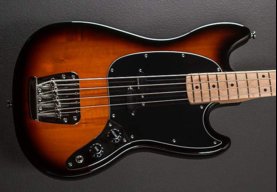
That Squier in the OP pic, me likey. I think it's one of the better ones.
 
Last edited:

Latest posts