No covers for me: I like to have access to the entire string length and tend to do a lot of palm muting at the bridge. I also think they look a bit poser-ish. That's just me though.

Enjoy the benefits of a premium membership!
Upgrade Account
-
TalkBass has been independent since 1998. Add your voice.
Create a free account to reply to discussions, view embedded media, and browse with fewer display ads.
Join free Log in
Want zero display ads or expanded classifieds tools? Compare plans.
You are using an out of date browser. It may not display this or other websites correctly.
You should upgrade or use an alternative browser.
You should upgrade or use an alternative browser.
Yet another P bass thread....this time about covers.
- Thread starter Andy Daventry
- Start date
More options
Who Replied?

I did not know that; I learned something new today. Thank you!The original P bass had a wire from the pickup cover to ground as it came from the factory and on the aluminum pickguard model and the aluminum shield behind the pickguard model the pickup cover was connected to ground via the cover screws if installed properly.
However they still were not a Faraday Cage due to the gaps in coverage.
I always thought the bridge and pickup covers were cosmetic additions to cover up the ugly inner workings, after all remember these were products of the fifties and sixties when Shining Chrome was everywhere! Fender did attach a piece of felt or foam under the bridge covers on some basses that didn't come with adjustable mutes like the early JazzBasses.
I liked the look of the bridge cover so I kept it on my '67. One of the previous owners of the Unknown Blonde had replaced the stock hardware with Schaller tuners and bridge so the bridge cover kept the change under the hood. I am debating now whether to put a bridge cover on my long overdue replacement.
I liked the look of the bridge cover so I kept it on my '67. One of the previous owners of the Unknown Blonde had replaced the stock hardware with Schaller tuners and bridge so the bridge cover kept the change under the hood. I am debating now whether to put a bridge cover on my long overdue replacement.

The Faraday Cage idea is preposterous.
1) it's not completely surrounding the pickup.
2) There's no mesh.
3) There's no continuity between the pickup cover and the ground.
The only "purpose" I can see - other than "looking cool" - is so that if you lay your instrument string side down, the strings don't press against the pole pieces. It provides no shielding.
The original Precision bass and 1968 Telecaster bass pickup covers were indeed grounded to the pickup.

I have a bridge cover on one of my Ps for cosmetic purposes only and bc it doesn't get in my way. The bass came with it.
In general I think pickup covers are annoying as hell.
In general I think pickup covers are annoying as hell.

Gaolee
Official leathers tester and crash dummy
My P is Road Worn. And I am a complete poseur. It didn't come with covers or a tug bar. So I installed both. It is all about the pose. I love 'em!No covers for me: I like to have access to the entire string length and tend to do a lot of palm muting at the bridge. I also think they look a bit poser-ish. That's just me though.

NO! The original purpose of a pickup cover was the same reason we now put copper foil or carbon paint in the pickup cavity: the first attempt at electrostatic shielding, and possibly protecting the yarn-wound pickup of the first single coil P-bass pickups, just like the ashtray on Broadcasters/Telecasters. Remember that the first P-bass single coil pickups had essentially Broadcaster/Telecaster bobbins, just punched for four magnets instead of six. This included not only Broadcasters/Telecasters and first generation P-basses, but later '57-on P-basses (until everyone realized you didn't really need it with the split pickup) and J-basses, where you still needed it because each pickup was single coil, and were used alone as well as blended.Purely cosmetic over the pick up.
Last edited:

Right. I want to know how many people actually use the covers over the pickups and bridge on their P bass. Do you keep them in place, or have you retro-fitted some, and if so, why?
The reason for this post is that I'm thinking of fitting covers so that I can top-mute at the bridge and also to force me to pluck nearer the bridge - my right hand keeps slipping back towards the pickup, and over the pickup is my least favourite sound - I mean, it's a P bass, so all sounds are favourite, of course, but it's OK, it's totally valid for some sounds to be slightly less favourite.
However, as the old Turkish proverb has it, every warrior has his own way of eating yoghourt. So tell me...
Both gone the day it was bought. In order, that bridge cover and that mute lad had to go first, then the pick up cover as I don’t play with a pick song for me, it was useless. just I the way.

I rest my hand on the bridge cover and pluck often...also it protects the bridge screws from ripping up the inside of my gig bag...


I've tried playing with the pickup cover on, that thing is just a nuisance to me, I took it off and threw it in my junk drawer, the bridge cover is cool and is just for dressing up the bass a bit..

When I was watching bands in clubs and pubs I never saw any bassist playing with the covers on. One cover would get in the way when I was changing strings and the other, when I was playing, so the covers came off on the day I got my Precision. They have lived in my sock drawer since 1969.
D
Im thinking more and more about fabricating one to go over the bridge on my modded kit bass.
Low profile aesthetic piece. Maybe something that matches my 67 mopar or something.
Low profile aesthetic piece. Maybe something that matches my 67 mopar or something.

In general, I find they just get in the way. However, I do keep the bridge cover on one bass —my Darkhorse Precision — because that’s how Andy built it, and it just looks right that way...
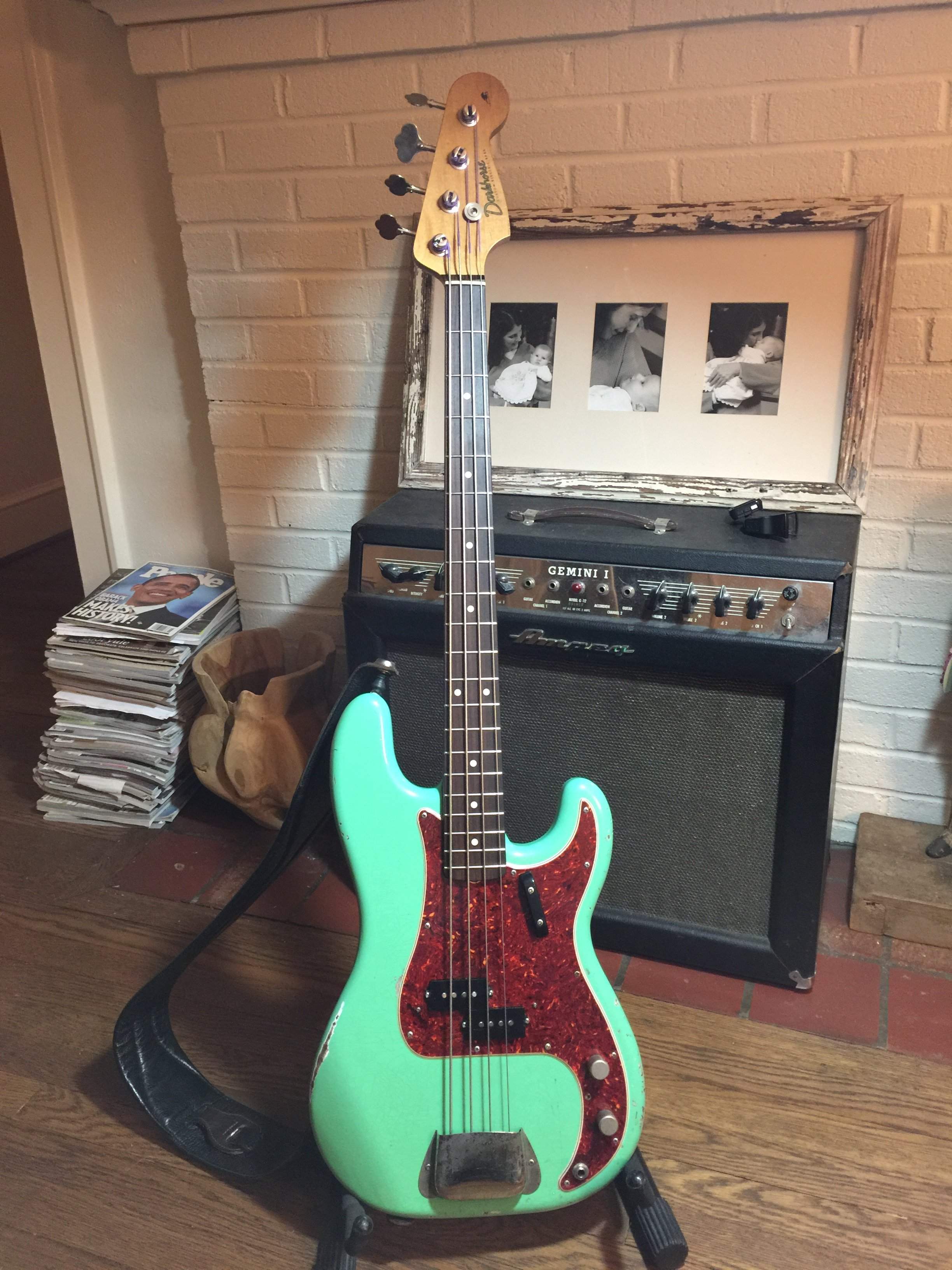
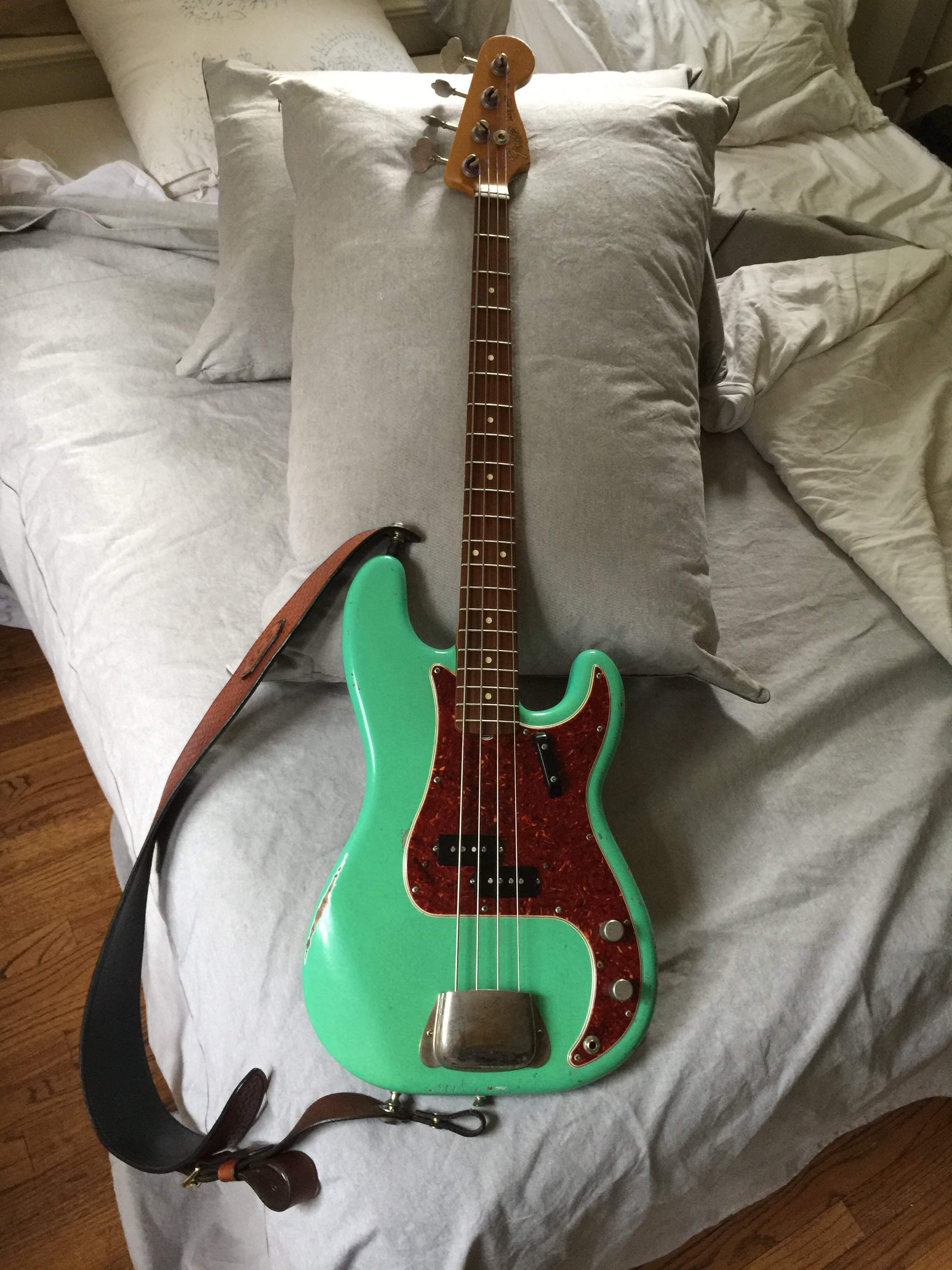
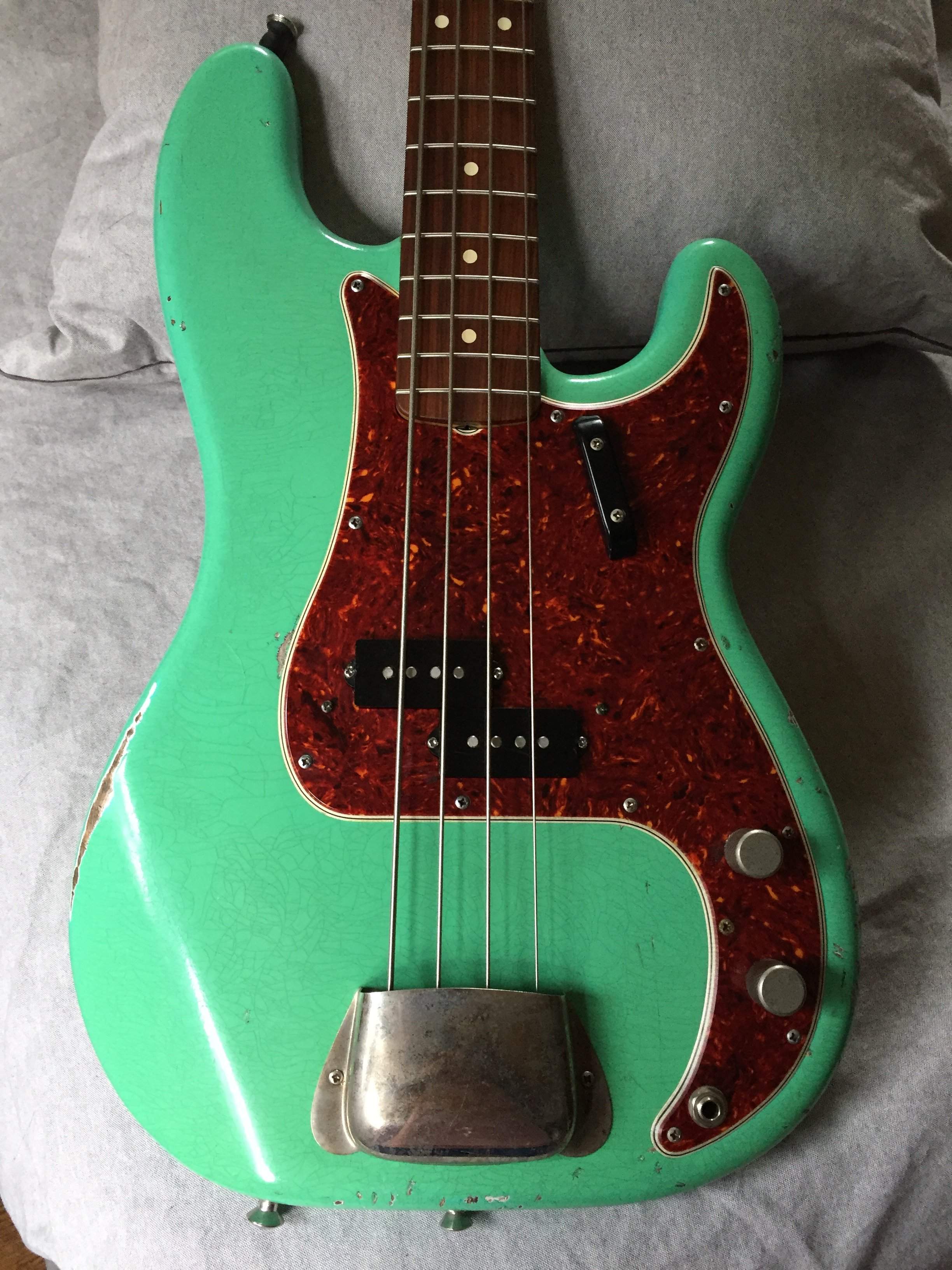

Beautiful bass!In general, I find they just get in the way. However, I do keep the bridge cover on one bass —my Darkhorse Precision — because that’s how Andy built it, and it just looks right that way...
View attachment 4008151 View attachment 4008152 View attachment 4008153


Thanks! Andy builds basses that feel like an old pair of jeans and they look and sound like what I see and hear in my head when I think “P-bass”. My first Darkhorse was also great — and kinda understatedly coolBeautiful bass!


I always install the bell, and skip the ashtray.
I like to anchor on the cover and play just forward of it, in the classic Jamerson zone. And since I like to palm mute, I leave the bridge “free to breathe.” Plus, I don’t like holing the finish if it wasn’t already drilled.
It’s funny, as I’m finding that’s the opposite of what most people do in a single cover install, judging by this thread ...
I like to anchor on the cover and play just forward of it, in the classic Jamerson zone. And since I like to palm mute, I leave the bridge “free to breathe.” Plus, I don’t like holing the finish if it wasn’t already drilled.
It’s funny, as I’m finding that’s the opposite of what most people do in a single cover install, judging by this thread ...
Last edited:
How many different ways do Turkish warriors eat yogurt, anyway?
As many ways as there are Turkish warriors.
I'm adding both covers to see how I like them because I like the look. The bridge cover will house the occasional mute, and I'm going to see how I like anchoring my thumb and/or fingers on the pickup cover. As for the original intent, I'd say, as many people have in this thread, that the covers are purely aesthetic, but many people found uses for them after the fact. Function following form rather than the other way around.
I think I largely agree with you.


