It depends on what one defines "stoner" music as, these days (geez, I sound a bit like Bill Clinton, here).
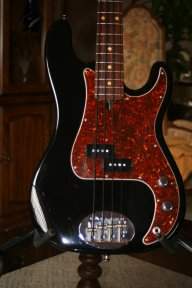
If you are into the original "stoner" music, the psychedelic era, then just about any passive instrument works. P's and J's abounded, as did the Ricks and Gibsons.
If you want to play "stoner" music from the 70's, then you are talking 1st generation metal, and high period prog-rock. A P probably serves the former, whereas a J or Rick is better for the latter.
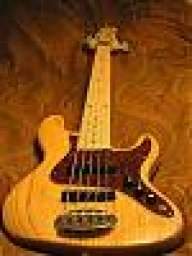
If you want to play a newer form of "stoner" music, like the reggae that exploded into mainstream consciousness, as the 70's wore on, then a P might suffice, but even Flabba Holt used a J.
Jam band music, like the Dead, or Phish? You probably want some tonal flexibility there, so a Rick or J work passively, and just about anything with an active circuit is also in play.
For the current era, "stoner" music implies low & heavy; the trusty P still works there, although drop-tunings and extended-range basses might benefit from active circuitry.
If you are into the original "stoner" music, the psychedelic era, then just about any passive instrument works. P's and J's abounded, as did the Ricks and Gibsons.
If you want to play "stoner" music from the 70's, then you are talking 1st generation metal, and high period prog-rock. A P probably serves the former, whereas a J or Rick is better for the latter.
If you want to play a newer form of "stoner" music, like the reggae that exploded into mainstream consciousness, as the 70's wore on, then a P might suffice, but even Flabba Holt used a J.
Jam band music, like the Dead, or Phish? You probably want some tonal flexibility there, so a Rick or J work passively, and just about anything with an active circuit is also in play.
For the current era, "stoner" music implies low & heavy; the trusty P still works there, although drop-tunings and extended-range basses might benefit from active circuitry.