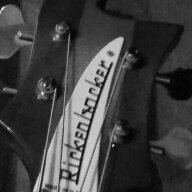
Worst tone I’ve ever heard on a Fodera.All 3 the basses sounded pretty meh tbh.
Edit: Now I know why...fairly sure it's not a real one.
Last edited:

TalkBass has been independent since 1998. Add your voice.
Create a free account to reply to discussions, view embedded media, and browse with fewer display ads.
Join free Log in
Want zero display ads or expanded classifieds tools? Compare plans.
Worst tone I’ve ever heard on a Fodera.All 3 the basses sounded pretty meh tbh.

Yes there is!!...a $21 p bassYes. We should all sell all of our basses immediately and buy $20 P basses. There’s no reason to own anything that costs more. Insert sarcastic face here.


I'm not diggin' what you're throwing down. Why would anyone need to justify the cost of ANYTHING they buy as long as it's legal and does no harm to anyone?Dude can probably play better than most people here, and there are still people trying to justify the $5k price tag. Keep dreaming guys, or at least start practicing. Hanging out on TB ain't gonna get you there.
James Jamerson said "the funk's in the gunk". Still, what did he know?I'm starting to if maybe tone isn't in the BBQ sauce.
In order to syncopate, you must first marinate!

I don't know the answer to that but I do know that anything that comes out of a cat smells worse than an anchovie's butthole!What does cat poo sound like exactly?
My apols - you typed as I thunkedwhat a great player... imagine how much better the $20 bass would sound with new strings.
What is the best BBQ sauce for metal?
BnB
Or a $100,000 bassWhich car they'd rather have, or if a manager could sweep a floor, is irrelevant. The point is that a cared for $700 car is all that's needed to get to work. I'd rather have the $100,000 car too. So I could sell it and buy a car for each person in my family.
After a certain point, feel and comfort come into it over sound. My Stingray is a great feeling and playing bass, as one would expect from a Music Man instrument. My '99 Warwick Thumb is also an excellent instrument, as one would expect from Warwick.
My Marleaux however is another category altogether. I've had 2-3 hour rehearsals every day for the last week, for different projects, and I've been using my Marleaux for all of them. I've noticed no aches or pains at all (apart from a blister on my right ring finger...) In between I had a rehearsal where I used my Thumb bass (different tuning) and man did I feel it at the end... it felt tiring to play compared to the Marleaux. Weight, design, etc.
Sonically, my Marleaux is outstanding of course, but the Stingray and Warwick are also amazing. They have their unique signature sounds. I feel very blessed to have 3 such wonderful, and very different, instruments to work with, any one of which could be someone else's dream bass. The Marleaux however does stand out in terms of feel and ergonomics. No contest. The pricetag is also reflective of this.
Which leads me to the question: what are the expenses associated with building a bass, or for that matter any other solid-body electric stringed instrument?
Well, much like any product, it comes down to the following, among others:
1) R&D - you gotta put time and effort into designing your product. I'm pretty sure guys like Vinnie Fodera, Rob Green, Gerald Marleaux, Roger Sadowsky, Ken Smith, Keith Roscoe, Michael Tobias, Jens Ritter, Sheldon Dingwall, Patrice Vigier, Jerzy Drozd et al put more time and effort into designing and researching every detail of their instruments than the mass SE Asian-based producers of Fender Precision and Jazz copies. They are creating top-end instruments for an extremely discerning clientele - professional players who need something guaranteed to deliver results. Putting all that effort takes time and expertise, then you need to factor in protecting these designs via copyrights/patents etc. Time is money. Plus all the above people are constantly tweaking and updating their products in order to ensure they keep offering something unique and special. The Indonesian factory cranking out Stratocaster copies by the hundred is less concerned with all of that. Their main clientele are younger people who want to start playing an instrument, who by default have less money available.
2) Materials - we can debate until the end of time when it comes to what wood sounds better, but we can all agree that good quality wood and components will make a big difference. I mean high-quality pickups, hardware (bridges, tuners, nut, jacks etc). We've all had basses that have let us down because of a dodgy jack, hissy pots, buzzy electronics, tuners that keep on losing intonation, or pickups which also play the radio. Some have strap buttons that keep coming loose, others have plastic nuts that can snap. I mean, sure, you can go out and get new hardware or pickups, it's fun to do that like I did with my Hamer Slammer P-bass copy (replaced the pickup with the SD Steve Harris signature 1/4pounder) and loads of people enjoy taking instruments apart and upgrading them to create something unique, but if you want something really great out of the box, you'll have to pay for it.
3) Labour - if you take a bunch of young kids looking for their first decent-paying jobs, give them a crash course in how to build one part of one instrument, and put them on a production line with standing orders to do 200 of their part in a day, I can guarantee you that they won't be able to produce quality of the likes that Stuart Spector and his small staff do in their US workshop. I'm talking attention to detail, feel, setup, consistency, aesthetics... everything. This small team can work slowly and methodically and meticulously on one instrument until they are all sure that it is absolutely perfect. Which takes time. All the small details (along with the big ones mentioned above) add up to something that is just... better. That will never happen in a mass-producing Chinese factory that puts volume and numbers above all else. Also, how many times have we all had to deal with bad shielding, less-than-perfect fretwork, somewhat suspect setup, bad soldering/wiring etc. in cheap instruments? That will never happen with one of the above-mentioned custom builders. IF (and that's a big 'if') it ever does, it's a major issue for the builder that they will pretty much all bend over backwards to rectify as soon as possible - often by the owner of the company themselves. When you buy a bass for less than $150, it's pretty much a given that something will be amiss. Maybe not terribly so, but something will be off.
Combine all of these factors, and you'll get an instrument which at the top end will deliver results, night after night, on stage, in the studio and for practice, for years without flinching. My Warwick is 19 years old and I've not had a single part of it fail, even after countless gigs and recording sessions, except for the output jack (Warwick sent me a new one for free when I emailed them about it - I changed it 10 years ago and you could see that the design of the new one was far superior to the old one - see what I said above about constantly updating and upgrading). And of course, plug a cheap bass into a full stage setup, to sit in a busy mix - 9 times out of 10, it will not do the job nearly as good as a more expensive instrument.
I don't think a cheap Chinese-made Washburn bass would be working as well after so long.
I'm not knocking cheap mass-produced instruments by any means. I started off on one, like I'm sure most people here did. Some people still play them even after years of experience. If you're happy with it, why change it? And you can bet anything you want that someone like Bobby Vega or Marcus Miller or Lee Sklar can make an off-the-shelf Squire Affinity P bass sound better than I can make my Marleaux sound. The player is what defines what the bass will sound like, not the other way around.
The pricetag on any given instrument is about way more than just the sound that comes out of the speaker.

A lot more than I ever will.James Jamerson said "the funk's in the gunk". Still, what did he know?

What, that a good bass player can make almost any bass sound good? That’s not surprising.
It also helps that the $20 bass (which isn’t really $20 if you use the new price as was done with the others) is a P. Cheap Ps generally sound better than cheap basses that go for a hi fi sound.
Yeah, cool, but how much did he pay for those fingers?

What's the new price of the Roytek?
Often on videos I find myself feeling that the tone of the basses being demonstrated is very much not the tone I would want from a bass I owned. This video is not as bad as some. I preferred the sound of the Roytek to the other two, which is not to say it is a better bass, just more my tone.