• TalkBass has been independent since 1998. Add your voice.
    Create a free account to reply to discussions, view embedded media, and browse with fewer display ads.
    Join freeLog in
    Want zero display ads or expanded classifieds tools? Compare plans.

History of bass guitar strings?

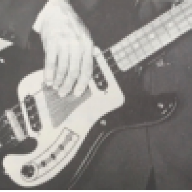
I've been looking that up, but there's not a lot of info out there. Rotosound claims it in 1962. LaBella advertises them now as Vintage 1954, but who knows? In the early '70s my first good bass had LaBella Black Nylon Tapes on it. A Hagstrom like Roger Filiberto's.

Filiberto RH.png
 
Which brings up the question, when were nylon tapewounds invented and by whom?

In the '70s I only ever remember seeing them sold by LaBella, Rotosound, and IIRC the two types of Fender tapewounds?
I've been looking that up, but there's not a lot of info out there. Rotosound claims it in 1962. LaBella advertises them now as Vintage 1954, but who knows? In the early '70s my first good bass had LaBella Black Nylon Tapes on it. A Hagstrom like Roger Filiberto's.
The 1954 are the (former) Jamerson (metal) flats. Actually the Roto website mentions two different dates for their claimed invention, '62 on the product page and '66 in the general timeline. According to user @fjadams the GHS offering was around in the late '60s (I seem to recall 1968 is what he wrote but I'm not sure).
@One Drop: two types? You mean the normal and the "nylon filament" affair, which I've never managed to picture what it was? Had it been around since the '70s?
 
The 1954 are the (former) Jamerson (metal) flats. Actually the Roto website mentions two different dates for their claimed invention, '62 on the product page and '66 in the general timeline. According to user @fjadams the GHS offering was around in the late '60s (I seem to recall 1968 is what he wrote but I'm not sure).
@One Drop: two types? You mean the normal and the "nylon filament" affair, which I've never managed to picture what it was? Had it been around since the '70s?

Yes, I'm pretty sure they were, and they were a lot more common then than now, when people still often wanted to get the sound of an upright on an EB.

I think the nylon filament ones had a black nylon wrap around some kind of a roundwound string, and were huge diameter and very bright.
 
Last edited:
I can add info on both questions from my personal (early) experience. I bought my first roundwound strings in 1966 - Black Diamonds. They were coarse and I thought they sounded awful, and they turned your fingers black, but they were available over the counter at a low price. I also recall using Fender black tape strings on my P-bass probably in '67 or '68. They were "wrapped" with nylon tape, and I found that out when one of them "unwrapped" in one big loose coil that bunched itself up down by the bridge. I don't recall what base they were wrapped around, but I'm thinking it was probably flatwound.
 
  • Like
Reactions: Leo Comerford
This is a very interesting thread, one I am unashamed to necro. :) What were the gauges of the strings which shipped with the Precision and Jazz basses originally? And when did 0.045", 0.065", 0.085", 0.105" become the standard, if it wasn't the standard at the beginning? I used to assume that the 0.045", 0.065", 0.085", 0.105" set was popularised by Entwistle, since he did apparently ask Rotosound to give him a heavier D and G (compared to what, it doesn't say). But according to the Rotosound website Entwistle actually used a I used to assume that the 0.045", 0.065", 0.085", 0.105" set was popularised by Entwistle, which seems to rule out the idea that he was given a 0.045", 0.065", 0.080", 0.100" and had it changed to a 0.045", 0.065", 0.085", 0.105".

 
  • Like
Reactions: trothwell
Just an FYI.
I spoke with a product specialist at Daddario a few months ago.
They have been in business for something like 100 years and are probably the oldest manufacturer of strings.
Not sure when the made the fist electric bass string but they guy was so nice he would certainly answer the question.
 
I spoke with a product specialist at Daddario a few months ago.
They have been in business for something like 100 years and are probably the oldest manufacturer of strings.

Checking websites, while the D'Addario story starts around 1680, the LaBella one states 1640.
 
Round Wound Strings came around 1660 when all we had was Gut strings & they needed a way to make the lowest strings on Bowed stringed instruments that used Gut strings thinner & easier to bow on. In 1874 Hamilton invented Flatwound Strings for Bowed Stringed instruments to replace the Gut Strings because they last many times as long, hold tune better, & the flat surface increases the contact area w/ the bow hairs which in turn increases the response.
 
Round Wound Strings came around 1660 when all we had was Gut strings & they needed a way to make the lowest strings on Bowed stringed instruments that used Gut strings thinner & easier to bow on. In 1874 Hamilton invented Flatwound Strings for Bowed Stringed instruments to replace the Gut Strings because they last many times as long, hold tune better, & the flat surface increases the contact area w/ the bow hairs which in turn increases the response.

An interesting piece of info from a historical perspective, although it has nothing to do with the main point of this thread, "history of bass guitar strings". Bass guitar as in electric bass as we know it. ;)
 
What are people's thoughts on Terry Foster in here? He and a few others have made the claim multiple times that the original strings on Fender basses would have been roundwounds, even back in the early 50s, despite the claim Rotosound makes to "inventing" roundwound strings.

Over on thegearpage there was some speculation that they would've been like Hawaiian lap steel strings—basically groundwounds.
 
What are people's thoughts on Terry Foster in here? He and a few others have made the claim multiple times that the original strings on Fender basses would have been roundwounds, even back in the early 50s, despite the claim Rotosound makes to "inventing" roundwound strings.

Over on thegearpage there was some speculation that they would've been like Hawaiian lap steel strings—basically groundwounds.
Even without Foster's claim, Entwistle's anecdote already shows Rotosound wasn't alone in making roundwounds, with Danelectro basses shipping with Black Diamond made rounds.
Back to Foster,
Flat wound strings and vintage guitars.
I don't do Instagram and can only see the string envelope image, not the comments. Is there a picture of the actual strings linked anywhere there?
 
Even without Foster's claim, Entwistle's anecdote already shows Rotosound wasn't alone in making roundwounds, with Danelectro basses shipping with Black Diamond made rounds.
Back to Foster,
Flat wound strings and vintage guitars.
I don't do Instagram and can only see the string envelope image, not the comments. Is there a picture of the actual strings linked anywhere there?

Yeah, I put the quotes around the word "inventing" because we all should know by now that Rotosound weren't the first making roundwounds for basses regardless or what the originals the instruments shipped with were or weren't.

And no, I haven't found any pictures of the strings—I guess Terry never saw fit to post them.

He did, however, once show packaging of a set that he says is from before Squier took over making strings for Fender (so, before '55), and they are very specifically marked as flatwounds, which would certainly suggest that they weren't just The Standard for everything in the bass world at that time, and that's a few years earlier than those Black Diamonds if I remember right.
 
Last edited:
And no, I haven't found any pictures of the strings—I guess Terry never saw fit to post them.
That's a little odd, and disappointing. Maybe they're so finely ground they appear to be flatty, and he doesn't want to fend off the expected barrage of comments saying they look like true flatwounds to them. Or maybe Terry just enjoys the aura of mysterry.
He did, however, once show packaging of a set that he says is from before Squier took over making strings for Fender (so, before '55), and they are very specifically marked as flatwounds, which would certainly suggest that they weren't just The Standard for everything in the bass world at that time, and that's a few years earlier than those Black Diamonds if I remember right.
For that matter, the strings Paul Tutmarc put on the earliest ever electric bass guitars were roundwound, per those who have hands-on experience on them (including an owner and TB member), and that's over 15 years prior to that.
 
I can add info on both questions from my personal (early) experience. I bought my first roundwound strings in 1966 - Black Diamonds. They were coarse and I thought they sounded awful, and they turned your fingers black, but they were available over the counter at a low price. I also recall using Fender black tape strings on my P-bass probably in '67 or '68. They were "wrapped" with nylon tape, and I found that out when one of them "unwrapped" in one big loose coil that bunched itself up down by the bridge. I don't recall what base they were wrapped around, but I'm thinking it was probably flatwound.

I can echo the late '60's Fender black tapewound experience.

I tried them when they first came out and had the same unpleasant unraveling.

It was 2021 before I tried another set of LaBellas that didn't unreel, but also didn't really yank my chain, either.

Going from flats to rounds a year or two earlier ( Fenders ? ) in the '60's was the Great Unblanketing....