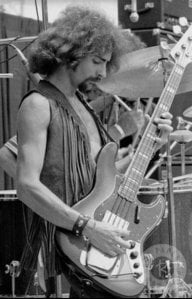
It is never clear to me when this topic comes up whether people are discussing transposing or drop tuning.
Drop tuning is something string players usually do when they either have to cover notes beneath the normal range of the instrument or when something about the setup of the instrument requires the tuning variation. An example of the latter is the traditional Eb tuning favored by the blues guitarists using the ultra heavy strings, and the reason they do it is so they don't snap the neck off their Strat. The bass doesn't typically need this, but if the guitar de-tunes, then the bass of course needs to compensate. With a 4 string bass, you may need to de-tune to retain the voicing of the lines, but the problem is that many of the 4 string basses don't respond really well and get a little flabby around the edges, IME. To Brad's point, this is where the 5 or 6 string instrument allows the bassist to keep the instrument in proper setup and still play along with the guitar. OK, I know Tommy Shannon (and many others) de-tunes and does it very effectively - not saying it can't be done. Its just that the B string will let you compensate.
Transposing is typically done when the original key does not suit the vocalist. In this case, 5 or 6 string instruments accommodate the change without any de-tuning.
So, again, to Brad's point, you really should be able to play in transposed keys on the 5 or 6. But, if you are purposely working with a de-tuned guitar in that Chicago blues format and want to use vintage 4's then de-tuning may make sense.
YMMV.





 How've you been man?