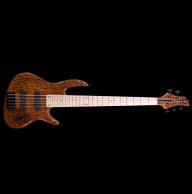
Major point: all xx" scale basses are not alike. I have played 34" basses that were more of a stretch than some 35"ers. More than once.
A major clue can be bridge placement IME.
Exactly! Lot's more going on than just scale length.

TalkBass has been independent since 1998. Add your voice.
Create a free account to reply to discussions, view embedded media, and browse with fewer display ads.
Join free Log in
Want zero display ads or expanded classifieds tools? Compare plans.
Major point: all xx" scale basses are not alike. I have played 34" basses that were more of a stretch than some 35"ers. More than once.
A major clue can be bridge placement IME.

I read somewhere that there was a 34" bass made for him , but this bass ended up being sold in Japan...
Not sure when that was tho.
Let me guess: You didn't read the previous 56 posts, right?
Here is an excerpt from the source I think you are referring to:
"A key for me was an intuition I had while lying in bed in late 1987 about building a Presentation model that would have only the features I wanted on it: A 36"-scale, extra-wide neck at nut and bridge, 28 frets, no electronics, no controls, a chambered body, and a single pickup. One well-placed pickup, I felt, would result in a richer, more complex sound than any two pickups; with two, youve got a lot of audio information obstructed by other audio info thats simply out of phase. Why not choose the best spot to get the most information out of one pickup?
The most striking alteration on your Presentation model was the single cutaway.
Agreed. In early 1989 I had expressed concern about neck instability. A few weeks later Vinnie said he wanted to try a single cutaway with the horn extending much higher up than normal to grab hold of and stiffen the neck. I remember being miffed; its going to look clumsy and be too heavy. He assured me he would carve the back of the cutaway for minimal mass increase. Two weeks later, he came in with a full architectural drawing, and I almost fell to the floor! It was so beautiful and exquisite, I thought, if this works it will be one of the most beautiful guitars ever conceived, an instant classicand I still feel that way.
The first Presentation, No. 7, made with decent but not great materials, worked out very well. We did a lot of work on No. 8, replacing the alder body and maple top with an ash body and various tops; No. 9 was even better. And then we hit the jackpot with No. 10, which I received on Valentines Day, 1996, and still play today. For the record, No. 11 was an attempt to go back to a 34"-scale. It didnt work out and the instrument was sold in Japan."
The source is a Bass Player article:
http://www.bassplayer.com/article/contrabass-conception-anthony/dec-08/90301
Jim
I think 34.5 is for the people who almost want to go the extra step.

Sounds like all the Catholic girls I dated in High School
Hey Kjung, not to get too OT, but how would you say your Alleva's Compare with your Sadowsky? I am totally gassing for an Alleva as I would like a really great passive P bass built from that old-growth wood they talk about. (Also 34 inch scale 5 strings correct) I love my Sadowsky, and am thinking that with my tax return I would order a sadowsky P or PJ. But I was thinking about an Alleva P