
Enjoy the benefits of a premium membership!
Upgrade Account
-
TalkBass has been independent since 1998. Add your voice.
Create a free account to reply to discussions, view embedded media, and browse with fewer display ads.
Join free Log in
Want zero display ads or expanded classifieds tools? Compare plans.
You are using an out of date browser. It may not display this or other websites correctly.
You should upgrade or use an alternative browser.
You should upgrade or use an alternative browser.
4, 5 -Or- 6 String?
- Thread starter IrishRifles
- Start date
More options
Who Replied?
I use a 6 string active with rounds, and a 4 string passive with flats.
Each serves it's duty fair well. Depends on my role in the song and the vibe of the tune.
Each serves it's duty fair well. Depends on my role in the song and the vibe of the tune.

i play 5s most of the time. Not mainly because of the low notes, though it IS nice to be able to pluck that low D or C sometimes - but mostly to have that extra string available without having to move the hand. I also play the low E a lot and prefer to be able to control the note with my left hand.
I always wanted to go towards a six, but never had the spare change to get a good one just for trying out if 6 would suit me. I believe i have little use for the C string and spend lots of time having to play on a wider fretboard. With the low B there's no problem - just ignore it and the bass plays like a 4
I always wanted to go towards a six, but never had the spare change to get a good one just for trying out if 6 would suit me. I believe i have little use for the C string and spend lots of time having to play on a wider fretboard. With the low B there's no problem - just ignore it and the bass plays like a 4


He has a point about the 6,7, and 8 string basses entering the not-quite-a-bass in the traditional sense. The traditional bass guitar was only really meant to replace the standing bass, and even then just for backing up guitar. Even the first 6 string basses were EADGBE.
Things are changing, now with 7 string electric double basses and the like coming out. The bass is making headway towards the damn piano as far as flexibility, and I for one am all for it. That being said, its not like the 4 string is on its way to irrelevancy (except for maybe in the hard rock and metal world, and even that is a huge maybe) and there is an exceptional amount of proof that a 4 string is more than enough for most situations.
I play a 5 because I play a lot of heavier stuff and changing the tuning every song is a bigger hassle than learning the songs transposed on a 5.
Actually the original purpose of the Fender Precision in 1951 wasn't to "Replace" the upright. The purpose was that there were more gigs available for bassists than guitarists since there is usually only one bassist and no more than 2 guitarists in most (Key work here is "Most) groups. This combined with the fact that lets face it bass is not the glamor instrument in the band led Fender to make a 4 stringed bass instrument with frets so guitarists would have something to double on. Hence the name "Precision Bass Guitar".
C/S,
Rev J

Actually the original purpose of the Fender Precision in 1951 wasn't to "Replace" the upright. The purpose was that there were more gigs available for bassists than guitarists since there is usually only one bassist and no more than 2 guitarists in most (Key work here is "Most) groups. This combined with the fact that lets face it bass is not the glamor instrument in the band led Fender to make a 4 stringed bass instrument with frets so guitarists would have something to double on. Hence the name "Precision Bass Guitar".
C/S,
Rev J
Citation needed.

Bryan R. Tyler
TalkBass: Usurping My Practice Time Since 2002
Staff member
Administrator
Gold Supporting Member
Supporting Member
- May 3, 2002
- 28,948
- 20,932
- Disclosures
- Reviewer: Bass Player Magazine
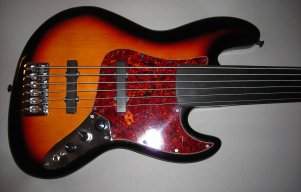
I can't get my hand around a 5 string.
Why would you want to? It ain't a guitar.

Yes it is.
Well... the "proper" name kind of evolved over the years. In the 50's/60's, the term was "Fender bass". Later it was "electric bass" and then more recently "bass guitar" or "electric bass guitar". Anthony Jackson uses the term "contrabass" or "contrabass guitar" to refer to the 6.
But I agree ultimately it's a guitar, but has been called different things down through the years. I got stuck on "electric bass" when I first took it up in the late 70's and can't seem to wean myself off that term for some reason

LS

Bryan R. Tyler
TalkBass: Usurping My Practice Time Since 2002
Staff member
Administrator
Gold Supporting Member
Supporting Member
- May 3, 2002
- 28,948
- 20,932
- Disclosures
- Reviewer: Bass Player Magazine
Yes it is.
I think he means as in wrapping your thumb around the neck to fret certain chords is pretty standard procedure with a standard guitar, but there's very little normal use for it on a bass guitar.
Actually the original purpose of the Fender Precision in 1951 wasn't to "Replace" the upright. The purpose was that there were more gigs available for bassists than guitarists since there is usually only one bassist and no more than 2 guitarists in most (Key work here is "Most) groups. This combined with the fact that lets face it bass is not the glamor instrument in the band led Fender to make a 4 stringed bass instrument with frets so guitarists would have something to double on. Hence the name "Precision Bass Guitar".
C/S,
Rev J
Umm...
 ...there is some truth to this statement, but I'm pretty sure the reason Leo first made the "Fender bass" was to give upright bass players an alternative that was as portable as the electric guitar, and could be amplified like an electric guitar so that it could be heard and played in bands with drums, horns, and electric guitars.
 The reason you give is perhaps the reason why he built it with frets, and that really is the genius of what he created. By adding frets he was able to draw a far larger crowd to the low end than the heavy, clunky, harder to play upright bass could. To say that it wasn't meant to "replace" the upright I don't think is accurate, it certainly was marketed as an alternative for upright players and seeked to solve issues that the upright player had to deal with. And many upright players did pick it up.
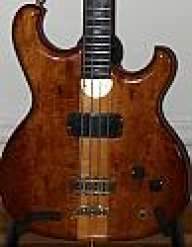
I used to be a four only guy but that is changing as I start to write my own songs. Since I write mostly on the cello, the B string gives me the full range of a cello on my bass.
Bryan R. Tyler
TalkBass: Usurping My Practice Time Since 2002
Staff member
Administrator
Gold Supporting Member
Supporting Member
- May 3, 2002
- 28,948
- 20,932
- Disclosures
- Reviewer: Bass Player Magazine
Actually the reason you give is more likely the reason why Fender made the Fender VI not why Leo made the Fender bass.
That being said it has no relevance to this thread or the question of how many strings should be on a bass.
Did you read the link I posted from Fender's site? Rev J is correct.
Invalid Link Removed
Thank you. I also seem to remember reading this in every article that comes out on an anniversary of the Fender Precision. Plus I think they even tell the story in "The Fender Bass Book.
C/S,
Rev J
Umm...
The reason you give is perhaps the reason why he built it with frets, and that really is the genius of what he created. By adding frets he was able to draw a far larger crowd to the low end than the heavy, clunky, harder to play upright bass could. To say that it wasn't meant to "replace" the upright I don't think is accurate, it certainly was marketed as an alternative for upright players and seeked to solve issues that the upright player had to deal with. And many upright players did pick it up.
You're kind of splitting hairs here. LF's idea was pretty basic - make a bass that's small, electric (and therefore amplifiable), easy for either a guitarist or (acoustic) bassist to pick up and learn and fretted to make it a fixed intonation instrument like the guitar, piano, etc.
That was basically it. Something that's easy to drag to the gig, small, loud and didn't require intonation. That's all and the rest is history.
BTW, that actually makes the fretless electric an innovation on the bass guitar in general. Since it was originally conceived of as a fixed pitch (fretted) instrument, fretless models are actually the derivative type...
Jaco is, of course, credited with popularizing the fretless electric (tho I don't know if he was actually the first to rip the frets off an electric. So its actual inventor may have been earlier, not sure).
So if the pedagogical tradition of the electric bass is poor in general (and it is what with it being only 60 some years old), it's even worse on the fretless (only a few decades old).
Strange but true....
LS


