

Enjoy the benefits of a premium membership!
Upgrade Account
-
TalkBass has been independent since 1998. Add your voice.
Create a free account to reply to discussions, view embedded media, and browse with fewer display ads.
Join free Log in
Want zero display ads or expanded classifieds tools? Compare plans.
You are using an out of date browser. It may not display this or other websites correctly.
You should upgrade or use an alternative browser.
You should upgrade or use an alternative browser.
5 string Ricken-Musicman Bass.
- Thread starter Videojunkie
- Start date
More options
Who Replied?
I only bought the cutter and three bearings for .040, .060, and .120 for two layer Ric checker binding. I didnt even know Amana made binding bits. D'oh! Oh well, its not like I use them every day, they'll last longer than me at my glacial 1 bass/2-4 year output rate. What do use for glue? Ive tried CA, the Stewmac binding glue and acetone, which works on celluloid and most ABS or PVC binding. I like the acetone, it leaves no glue residue, and you can dissolve binding shavings in it to use as filler at miters and such. I weirdly like doing binding. Its a sickness, like all this luthiery bisiness.

I almost bought one of those, but read some not so great reviews, mainly saying the length of the brass bar that rides on the body is too short, so its easy to tip and get uneven depth of cut. There are a few videos on YT with people modding them with longer rods. It looks like it works with a bit of practice and nerves of steel. The gadget I'd really like to have is the sliding vertical armature that's used for binding angled bodies and elbow relief, where a delrin bearing follows the ups and downs. I suppose I could build one, there are some plans online. In all my massive spare time. Right.

I have the StewMac Dremel guide and their bit. It works fairly well. Definitely practice with it. I think the guide it comes with is short so it can be used with carved tops and mandolin type instruments.
On the Amana bit, if you need a different cut depth just go to Motion Industries or Kaaman bearing if there’s one nearby and tell them you need a bearing with the same ID and whatever OD you need for the depth of cut. I’m sure they’re using off the shelf bearings not magic luthier tone bearings. I did that with the guide bearings on my bandsaw. $20.00 for 4 instead of $12-15 each.

- Apr 18, 2008
- 16,011
- 1
- 31,714
- Disclosures
- I'm highly opinionated and extremely self-assured
And 1,000 bonus points are awarded to @Matt Liebenau for “magic luthier tone bearings”.
And 1,000 bonus points are awarded to @Matt Liebenau for “magic luthier tone bearings”.
They have so much mojo you just need to have your bass near them!!!

Have any of you guys used this scale tool? For $13 it seems like a good deal to a guy like me who only makes a few instruments.
Hell. At that price, it's almost disposable.
GEN2 Laser-cut Fret Scale Marking Templates - provide both Chromatic & Diatonic Styles - Pick your Scale!
Hell. At that price, it's almost disposable.
GEN2 Laser-cut Fret Scale Marking Templates - provide both Chromatic & Diatonic Styles - Pick your Scale!

Worth a try for $13.
I'm still using the fretfind2D printout, tape it down and cut on the lines method.
I'm still using the fretfind2D printout, tape it down and cut on the lines method.
When I make my templates for this bass, do you guys use plywood (like 7 layer Baltic Birch, not BC exterior) or MDF, or acrylic?
I made all mine with MDF and lathered the edges with CA.
I used a couple cabinet doors in a pinch when I ran out of MDF. It was dense particle board with a Formica type laminate on the outside. So it held up well for a one time job, but I prefer the MDF.
I used a couple cabinet doors in a pinch when I ran out of MDF. It was dense particle board with a Formica type laminate on the outside. So it held up well for a one time job, but I prefer the MDF.
- Apr 18, 2008
- 16,011
- 1
- 31,714
- Disclosures
- I'm highly opinionated and extremely self-assured
I use whatever I have on hand. Usually some scrap plywood, whatever thickness. Any voids get filled with Bondo, or the whole thing is binned and I start over.
All 3/4 stuff and I had to double stack it for a few things.
1/2" ply will work, as long as it's good stuff and not the cheap sheeting ply with all the knots and gaps. A lot of the birch ply is actually poplar with a thin birch veneer on the outside.
I don't see why it wouldn't work. Maybe CA the edges? I have some 1/2" birch ply but I haven't made any templates with it yet, so I can't say if it's good or bad
1/2" ply will work, as long as it's good stuff and not the cheap sheeting ply with all the knots and gaps. A lot of the birch ply is actually poplar with a thin birch veneer on the outside.
I don't see why it wouldn't work. Maybe CA the edges? I have some 1/2" birch ply but I haven't made any templates with it yet, so I can't say if it's good or bad
Last edited:
Or you could do thatAny voids get filled with Bondo
When I make my templates for this bass, do you guys use plywood (like 7 layer Baltic Birch, not BC exterior) or MDF, or acrylic?
I’ve used all 3 depending on what I have scraps of and what’s within reach. Generally at least 1/2”.
1/2" MDF with CA on the edges. Its a lot easier to sand and tweak than plywood. I get the 2x2 or 2x4 "project panels" at HD, and its relatively cheap. Those templates look fine at a glance. Ive been wussing out and having LMI cnc cut my boards, figuring thats one place i really dont want to eff up. I.see people cut them freehand on YT with just a pencil line, but i dont think my vision is good enough to pull that off anymore.
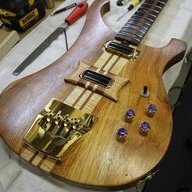
I was looking at these as they are much more in my budget. I was going to get the set with the 4.5mm bearing to match the 3 layer binding plan. Unfortunately, if I decide to do a thinner binding, then I'd have to buy the other set too.
I have the 49346 and used it with a Bosch trim router on an acoustic. It worked well.
So I was looking for some walnut for the neck, and my co-worker mentioned that his FIL had some and he'd grab me a piece.
Some quick work with a plane to find the surface.
Yeah... that'll do nicely.
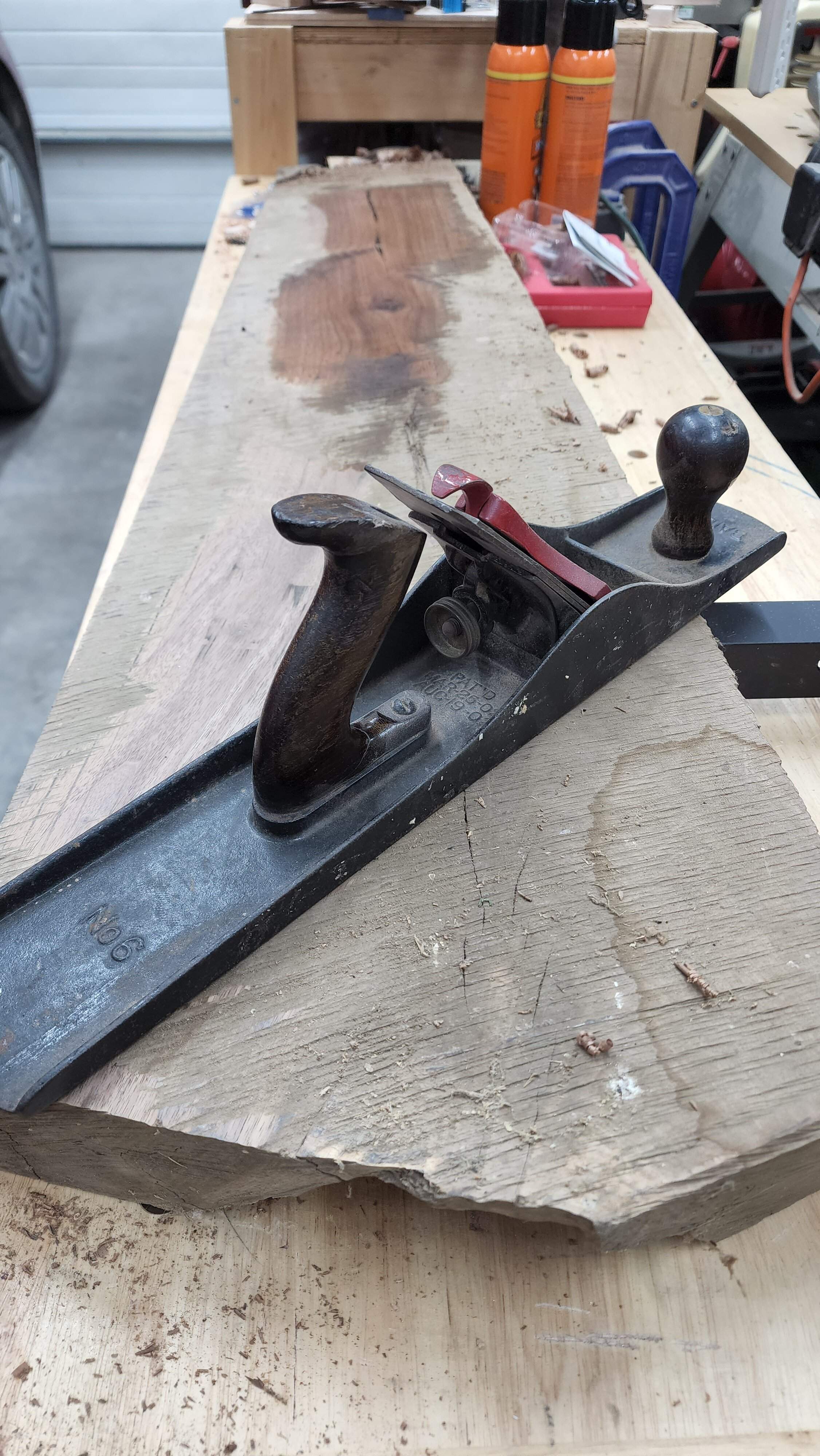
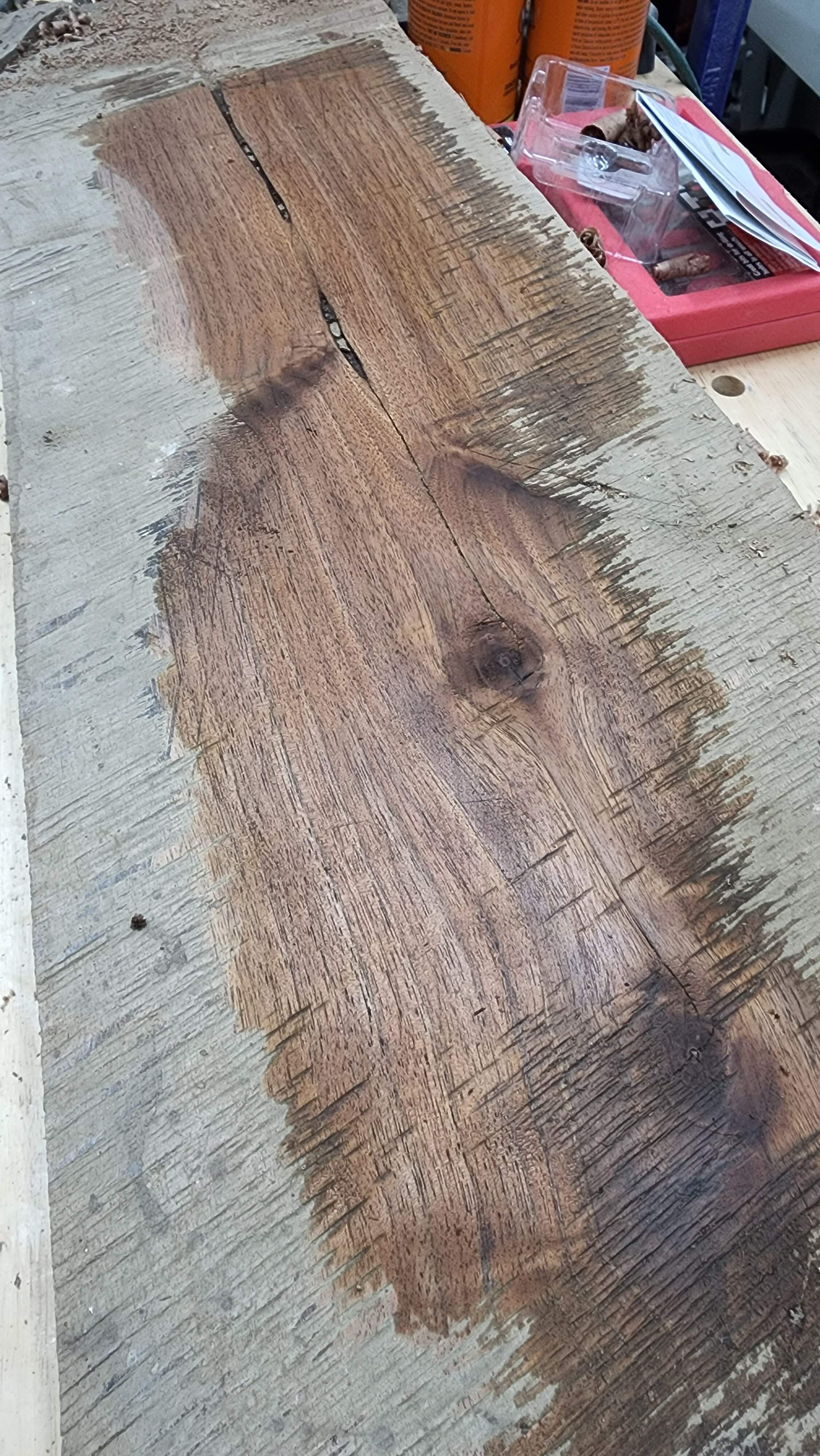
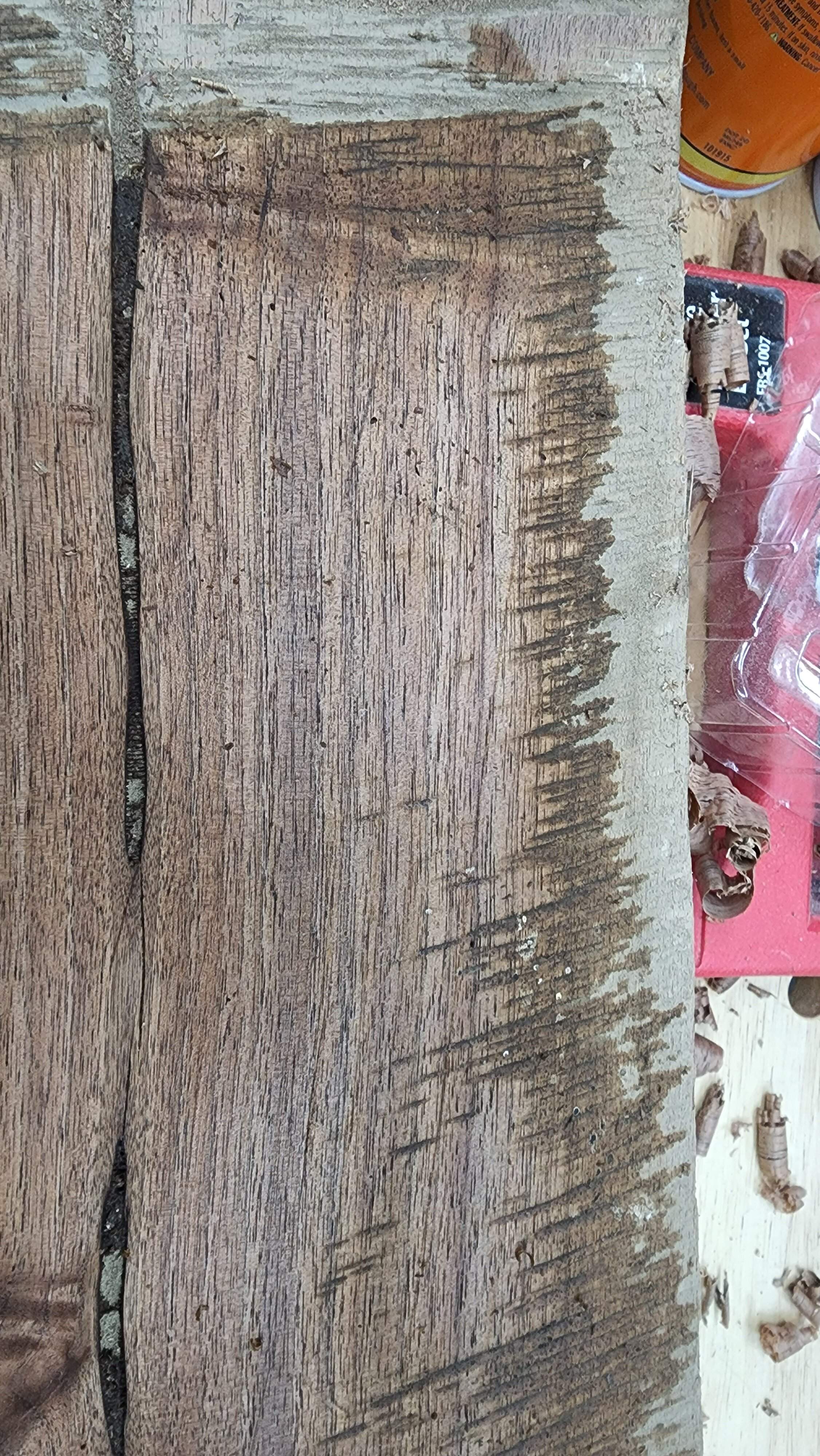
Some quick work with a plane to find the surface.
Yeah... that'll do nicely.
Materials update:
Bridge, nut, binding and truss rod all arrived today.
Carbon fiber rods should arrive next week.
Abalone inlay material sometime in September...
Only thing left is tuners, preamp and pick-ups
I think I have all the lumber too.
I need to think through the order of operations a bit on this build.
My plan is to start with the fretboard:
While the fretboard is square, Mark fret locations and inlay locations.
Route binding channel around inlay locations and install binding.
Radius fingerboard.
Route inlay (using a chisel around the bindings)
Glue inlays in place and finish Radius the fretboard.
Mark and cut fret slots
Once the neck is cut to final dimensions but not carved, attach fretboard, bind, and install frets.
Anything out of order?
Bridge, nut, binding and truss rod all arrived today.
Carbon fiber rods should arrive next week.
Abalone inlay material sometime in September...
Only thing left is tuners, preamp and pick-ups
I think I have all the lumber too.
I need to think through the order of operations a bit on this build.
My plan is to start with the fretboard:
While the fretboard is square, Mark fret locations and inlay locations.
Route binding channel around inlay locations and install binding.
Radius fingerboard.
Route inlay (using a chisel around the bindings)
Glue inlays in place and finish Radius the fretboard.
Mark and cut fret slots
Once the neck is cut to final dimensions but not carved, attach fretboard, bind, and install frets.
Anything out of order?


