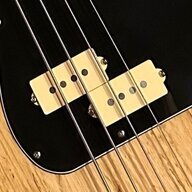
Which one sounds better in a mix? Is the 70s jazz too prominent? Is the 60s too muddy?
Ime the 60s needs some eqing and hard attack to pop through.
Ime the 60s needs some eqing and hard attack to pop through.

TalkBass has been independent since 1998. Add your voice.
Create a free account to reply to discussions, view embedded media, and browse with fewer display ads.
Join free Log in
Want zero display ads or expanded classifieds tools? Compare plans.


 . And now I'm hungry. Which P bass tastes more like a scone?)




All this.The only thing that makes a bass "cut through the mix" is a good arrangement and the mix engineer.
"But the mids cut through the mix!"
No they don't. They only cut through the mix if there's space in the mids. Everyone wants to cut through the mix. If everyone in the band is boosting their mids trying to cut through the mix, nobody will cut through the mix. It'll simultaneously be too loud and nobody will be able to hear anything.
Marcus is incredibly present in his mixes and he's got those mids scooped all the way out. The songs are composed and arranged so all the parts and tones of all the instruments fit together, so that the lows and highs of his bass aren't being stepped on by other instruments in the mix.
Reggae bass is heavy on the low-end. Nobody will tell you that they can't hear the bass in reggae mixes.
I make electronic dance tracks with synth sub bass that's just a sine wave. Sine waves are all fundamental, no harmonics, ergo, no mids. The low bass & subs are the biggest parts of the mix.
A proper arrangement where each instrument is playing in a sonic space, where anything playing in the same register has contrasting timbral qualities, will allow all instruments to be heard in a mix. And at the end of the day, the mix engineer will dictate what "cuts through the mix" because they control the faders. Don't matter how much you boost your mids, the fader on the bass's channel will override that.
Hearing "this bass/piece of gear cuts through the mix" makes me cringe. It's amazing marketing that people eat up. But, it's not true, because every mix is different and needs different things from different instruments. Ain't no such thing as an inherent "cut through the mix" quality.
To emphasize my point: Think of all the songs ever where you can hear the bass well in the mix, and realize how many different basses with different tonal characteristics were used. As a mix engineer i could make either a 60s or 70s Jazz bass cut through or lost in the mix.
$0.02

It all depends. My 70's single coil Jazz with Labella flatwounds sits in a mix as well as any P, with everything dimed--no scoop--the mids are just right. My 60's style with Hum-cancelling pu's...different--does the disappearing act a bit more, especially if I dime the pu's...I don't want to cut through the mix. I want to be in it. So: 60's for me.
No, it doesn't.me the 60s needs some eqing and hard attack to pop through.

Thanks for the enlightening response. I appreciate the perspective change from "cutting thru the mix" to "supporting the overall mix". The shows i play are very low budget, wall of sound guitarist type stuff. It is very hard to hear any definition to be honest, unless it's a high register guitar solo.The only thing that makes a bass "cut through the mix" is a good arrangement and the mix engineer.
"But the mids cut through the mix!"
No they don't. They only cut through the mix if there's space in the mids. Everyone wants to cut through the mix. If everyone in the band is boosting their mids trying to cut through the mix, nobody will cut through the mix. It'll simultaneously be too loud and nobody will be able to hear anything.
Marcus is incredibly present in his mixes and he's got those mids scooped all the way out. The songs are composed and arranged so all the parts and tones of all the instruments fit together, so that the lows and highs of his bass aren't being stepped on by other instruments in the mix.
Reggae bass is heavy on the low-end. Nobody will tell you that they can't hear the bass in reggae mixes.
I make electronic dance tracks with synth sub bass that's just a sine wave. Sine waves are all fundamental, no harmonics, ergo, no mids. The low bass & subs are the biggest parts of the mix.
A proper arrangement where each instrument is playing in a sonic space, where anything playing in the same register has contrasting timbral qualities, will allow all instruments to be heard in a mix. And at the end of the day, the mix engineer will dictate what "cuts through the mix" because they control the faders. Don't matter how much you boost your mids, the fader on the bass's channel will override that.
Hearing "this bass/piece of gear cuts through the mix" makes me cringe. It's amazing marketing that people eat up. But, it's not true, because every mix is different and needs different things from different instruments. Ain't no such thing as an inherent "cut through the mix" quality.
To emphasize my point: Think of all the songs ever where you can hear the bass well in the mix, and realize how many different basses with different tonal characteristics were used. As a mix engineer i could make either a 60s or 70s Jazz bass cut through or lost in the mix.
$0.02
How do you approach using a 60s jazz in a mix? And for what genre?No, it doesn't.
Here you have Marcus Miller and his Seventies Jazz playing with Miles Davis and Darryl Jones and his 1966 Jazz playing with Miles Davis. I should add that Miller’s bass is active and Jones’ bass is passive. How do you all think each bassist sounds in the mix?
Favor the neck pickup to cut through.Thanks for the enlightening response. I appreciate the perspective change from "cutting thru the mix" to "supporting the overall mix". The shows i play are very low budget, wall of sound guitarist type stuff. It is very hard to hear any definition to be honest, unless it's a high register guitar solo.
How do you go about distributing the sonic space to make the mix better overall? Let's say in a grunge setting where there's lots of guitarists with their distortion pedals piercing. How do you go about supporting that mix? Providing solid fundamental? When do you need to cut through the mix as oppossed to supporting?
Best,
Mike