First, low end instruments now are far better than they were when I started playing in the early '70s. The starter stuff then was pretty dismal. Now you can get a pretty well-made 34" scale bass with decent tuning machines and electronics. An instrument that can be set up well and will play in tune without requiring prosthetic devices to fret a string.
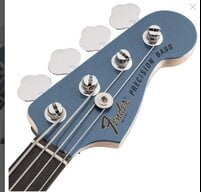
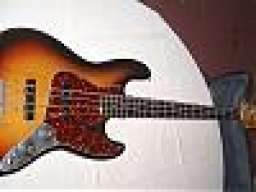
The more mid-range level stuff? A basic MIA Precision (American Standard) is built better with more consistently high quality than just about anything that left Fullerton beteween 1970 and 1982. Much more attention to detail, good fret work, good hardware properly installed, etc. And you have more options. Until the early 80s, Fender offered only two reach choices to make in a Precision. Rosewood or maple, and (if your dealer was knowledgable) a choice of neck width. Color doesn't count as a real choice- it's just cosmetic (and I think rosewood/maple ultimately comes down to cosemetics too, but that's another issue). Now you can get any number of Precisions- different necks, hardware, electronics, even strings.
Other stuff? You now have choices for real basses now too. In the day, you were either a Gibson, Rick, or Fender bassist, or yearning for one of those. Then came Music Man, then Ibanez started builidng their own basses about the time Leo left MM and started G&L, etc.
You also have the opportunity to know a LOT more about instrument construction. So if you're a gear head you can learn whether this bass has a quarter-sawn neck or a flat-sawn one, graphite bars in the neck, etc. And there's a lot of choices in extremely well made basses. Sorta like what would happen if FMIC only made each and every bass exceptionally well. Mike Lull, Roger Sadowsky, and Dan Lakin, Mike Tobias, Mike Pedula (hmmm... what is it with people named "Mike" building basses?) come to mind here.
The curious thing is that while the lower end has become much better, and the high end has become more common, and even the overall mid is better, we still see too many things that are just plain wrong. Fret sprout is inexcusable in an instrument that purports to be well-made. If the wood is aged enough, you shouldn't expect fret sprout in most normal playiing envitronments. Too many companies leave way too much rubbing compound in the control cavaties. People seem to accept poorly cut nuts. I'm enured to seeing nut slots that are too high, but why do we have to put up with things that don't angle away from the fretboard, that don't angle to the tuning machine wraps, and are poorly glued?
And while fret work has gotten way better these days, there's still a lot of file marks on the (increasingly open-grained) fingerboards, and glue spots splash by the frets.
jte