

Enjoy the benefits of a premium membership!
Upgrade Account
-
TalkBass has been independent since 1998. Add your voice.
Create a free account to reply to discussions, view embedded media, and browse with fewer display ads.
Join free Log in
Want zero display ads or expanded classifieds tools? Compare plans.
You are using an out of date browser. It may not display this or other websites correctly.
You should upgrade or use an alternative browser.
You should upgrade or use an alternative browser.
Accessible Jazz vs "Real" Jazz
- Thread starter socialleper
- Start date
More options
Who Replied?

Thank you for being a jazz musician. I mean that from the bottom of my heart.One of my jazz bands played a gig a couple weeks ago. We filled our venue, and on top of our guarantee, made a nice pile of tips. This band plays about 50-50 original jazz compositions, and unique arrangements of contemporary jazz tunes, plus one or two standards. Roughly half of the tunes have bass solos, on both upright and electric bass.
Another of my bands plays complex "concert" big-band arrangements. We consistently fill our venue. There's nothing wrong with specializing in a niche that happens to have a few passionate followers, both in the band and the audience.
Remember that up through the 1950s, jazz filled popular nightclubs and dance floors. The scene was extremely competitive. If your music didn't excite an audience, you got replaced the next night.
I'm both a jazz listener and player. And I like the "weird" jazz. But what I've noticed is that the "weird" kind of jazz gets discussed a lot more than it actually gets played. Especially live.
We can't erase the recorded history, but it seems like most of the "weird" jazz that folks talk about is getting on 40 - 60 years old. And it was controversial even among musicians. It's hard to figure out what "mainstream" jazz even consists of today, because popularity has declined and there are no longer major record labels acting as tastemakers. I think the best way to find out is to attend live performances. You get to hear someone's idea of what they think an audience would like to hear. Most bands are aware that they are competing for their next gig, against mild skepticism about whether or not jazz can attract an audience.
Now there are some things that I've noticed. Some performances are better than others. Not all bands or players are on the same level. From a younger player, the blizzard of notes could be an expression of taste, or a way to cover their nervousness. Both of those things can and will change over time. The best ones are either rehearsed, or with players who can be really tight with one another. One of my bands, a piano trio, plays with no charts, and never rehearses, but we're going on 20 years together. My other two bands rehearse.

Try them both together.My daughter's favorite ice cream flavor is strawberry. Mine is chocolate. I feel no need/desire to "appreciate" strawberry ice cream -- why should I?


LOVE LOVE LOVE this tune & play it somewhat regularly. Love Kenny's playing too.
Accessible?
hadn't heard this before. LOVE Joshua R. yup, very accessible. after all it's basically a BLUES!!! and it's got a killer groove to boot...

Thanks. "There are some who are born with jazz, some who achieve jazz, and some who have jazz thrust upon them." In my case, it was thrust upon me: The middle school band teacher told me that he needed someone to play bass in the middle school jazz band. Otherwise I'd probably still be playing classical music.Thank you for being a jazz musician. I mean that from the bottom of my heart.

Passinwind
I know nothing.
- Dec 3, 2003
- 23,069
- 46,010
- Disclosures
- Designer/Toaster Tech @ Passinwind Electronics
What is your personal experience with surface level, accessible jazz, and deeper "real" jazz?
If are into the harder stuff, can you help me understand how to appreciate these works?
Go see it played live by the people who are considered masters at it. Seeing Sun Ra from eight feet away was nothing like listening to his albums or watching his band on YouTube, IME.
I can't remember the source, but it was probably "Eric in the evening" the longtime jazz DJ on WGBH Boston who taught me Monk was the most recorded American composer. I read so much expository writings on jazz it could have been anyone. So I do not have a foot notable source to site on that, my mind is only half a steel trap.
Some standards were born to swing eh? "It don't mean a thing if it ain't got that swing".
I still greatly prefer Purpose Built Jazz compositions, like the Herbie Hancock album Maiden Voyage. Maybe that will be my shower music today???
As a friend used to say, "I'm skepticable," about Monk being the most recorded, without seeing some sort of evidence. I did a very brief search, didn't come up with much that was definitive - in one entry, Monk's son was loosely referenced as saying that "Round Midnight" is the most recorded song by an American composer, with a couple thousand done ... but the piece went on to say that "Summertime" is said to have been recorded about 30,000 times. Idk about that with any certainty, but Gershwin also had "I Got Rhythm" and a buttload of other hugely popular tunes, so yeah, I'd probably bet on Gershwin. Could be someone else altogether, doesn't really matter, he and Monk were both amazing writers.
Hard bop, and various offshoots, is among my favorite jazz, and favorite music, really. Dexter Gordon I could listen to all day (and have actually done so, on occasion
) - especially, for me, his Steeplechase recordings (though Blue Note is understandably considered definitive for Dex).Here's one, with Barry Harris, no less, on piano. My duo used to play this tune back in the stone age when I was pursuing that. One of my faves to play, and to hear, a classic. Blue Bossa:
This guy does a great job of breaking down Dexter's playing style and approach, looking at some of what makes his music so ... "accessible"
 Just the first couple minutes points to one major factor, then breaks things down on a "cellular" level . Interesting to me, anyway:
I haven't read this entire thread, but has anyone suggested a parallel between "accessible rock" versus "real rock"? or "accessible Classical music" versus "real Classical music"? or "accessible bluegrass" versus "real bluegrass"? etc.
"Accessible" is a tricky word when describing an artform. Accessible to who? Exactly what "access" do those people believe that they have...and how would one prove that? Is the number of people who might claim they "have access" to a particular piece of music in any way indicative of that music's quality, or importance, or value?
I kinda feel the same way about people who say "I get it" or "I don't get it" about a piece of music, or art, or literature: What is this "getting" of which you speak?
Aren't they both (Accessibility" and "get-ability") mostly just ways of indicating that you like it?
======
btw, composer Andrew Rudin once wrote "Great Art, almost by its very nature, is something of an elitist enterprise because it is all but impossible for truly big ideas to be put forward in terms that the least equipped or curious listener will get."
So if "accessibility" is at all related to "popularity" then it's a pretty dubious goal, artistically speaking.
"Accessible" is a tricky word when describing an artform. Accessible to who? Exactly what "access" do those people believe that they have...and how would one prove that? Is the number of people who might claim they "have access" to a particular piece of music in any way indicative of that music's quality, or importance, or value?
I kinda feel the same way about people who say "I get it" or "I don't get it" about a piece of music, or art, or literature: What is this "getting" of which you speak?
Aren't they both (Accessibility" and "get-ability") mostly just ways of indicating that you like it?
======
btw, composer Andrew Rudin once wrote "Great Art, almost by its very nature, is something of an elitist enterprise because it is all but impossible for truly big ideas to be put forward in terms that the least equipped or curious listener will get."
So if "accessibility" is at all related to "popularity" then it's a pretty dubious goal, artistically speaking.
Last edited:
Hard bop, and various offshoots, is among my favorite jazz, and favorite music, really. Dexter Gordon I could listen to all day (and have actually done so, on occasion
Here's one, with Barry Harris, no less, on piano. My duo used to play this tune back in the stone age when I was pursuing that. One of my faves to play, and to hear, a classic. Blue Bossa:
This guy does a great job of breaking down Dexter's playing style and approach, looking at some of what makes his music so ... "accessible"
I'm right with you on Dexter, and that guy did a fabulous job of breaking down his melodic tendencies. I might buy his book. When he plays those cells, i'm like yep, that's Dexter.
But the first thing I notice about Dexter is how much care he applied to every note. H, like most people, repeated phrases and cells, but he played every note with more detail than anyone i know of. Each note is precisely articulated at a precise volume level, either swell or decays, and has a specific end. Who else does that? I think Jaco aspired to that.
I lied about leaving. This is pretty accessible for freeer improv, i think. They play all around the form but repeat enough recognizable elements that it FEELS like a blues. To me anyway.
Monk is my favorite, also love Coltrane, Davis, etc etc etc. i don't think I've ever heard any jazz that I've hated, some I take in measured doses like anything but the longer you listen and the more artists you listen to the more your mind will open. It usually takes something to open your mind, I was a confirmed jazz hater until one of my girlfriends forced me to go see the Count Basie Orchestra, I came out of the club floating on air and just listened to more and more. This made me realize I was a poser, I just liked hating it because I was a rocker. 
Last edited:

buldog5151bass
Kibble, milkbones, and P Basses. And redheads.
More than any other kind of music, jazz has to be experienced live. That's how the interplay of the musicians really has to be experienced.
As a friend used to say, "I'm skepticable," about Monk being the most recorded, without seeing some sort of evidence. I did a very brief search, didn't come up with much that was definitive - in one entry, Monk's son was loosely referenced as saying that "Round Midnight" is the most recorded song by an American composer, with a couple thousand done ... but the piece went on to say that "Summertime" is said to have been recorded about 30,000 times. Idk about that with any certainty, but Gershwin also had "I Got Rhythm" and a buttload of other hugely popular tunes, so yeah, I'd probably bet on Gershwin. Could be someone else altogether, doesn't really matter, he and Monk were both amazing writers.
Hard bop, and various offshoots, is among my favorite jazz, and favorite music, really. Dexter Gordon I could listen to all day (and have actually done so, on occasion
Here's one, with Barry Harris, no less, on piano. My duo used to play this tune back in the stone age when I was pursuing that. One of my faves to play, and to hear, a classic. Blue Bossa:
This guy does a great job of breaking down Dexter's playing style and approach, looking at some of what makes his music so ... "accessible"
From Wikipedia, now of course they both say the second most recorded jazz composer, they don't include American songbook composers
"Monk is the second-most-recorded jazz composer after Duke Ellington.[4] "
4. Giddins, Gary; DeVeaux, Scott (2009). Jazz. New York: W.W. Norton. ISBN 978-0-393-06861-0. = https://www.amazon.com/Jazz-Gary-Giddins/dp/0393068617
Thelonious Monk - Wikipedia
Also from here:
Monk is the second-most-recorded jazz composer after
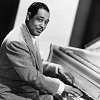
Duke Ellington
piano
1899 - 1974" data-original-title="" title="" >Duke Ellington.
Thelonious Monk: A Thriving Legacy article @ All About Jazz
As an Amazon Associate, TalkBass may receive commissions from qualifying purchases made via links on this site.
I'm right with you on Dexter, and that guy did a fabulous job of breaking down his melodic tendencies. I might buy his book. When he plays those cells, i'm like yep, that's Dexter.
But the first thing I notice about Dexter is how much care he applied to every note. H, like most people, repeated phrases and cells, but he played every note with more detail than anyone i know of. Each note is precisely articulated at a precise volume level, either swell or decays, and has a specific end. Who else does that? I think Jaco aspired to that.
I lied about leaving. This is pretty accessible for freeer improv, i think. They play all around the form but repeat enough recognizable elements that it FEELS like a blues. To me anyway.
Cool piece. I think the fact that the tones themselves are pleasing, and there's a rhythmic pulse maintained, helps to make it accessible. At least for me. Some of the more outside stuff leans toward what my brother used to call "elephant in a tar pit" music.
That was years ago, and I don't really listen to much of that these days ... but it is an apt description for the visceral anguished affect with some of it.Good description of Dexter's note articulation. I think Paul Desmond, a much different player ("the world's slowest alto player", he used to dub himself) is someone who kind of does that, though not at full speed the way Dexter does. They both are very melodic players and improvisers, two of my faves. They ain't just running scales, there's a soulfulness to their playing.
Was this before or after you got married?...I was a confirmed jazz hater until one of my girlfriends forced me to go see the Count Basie Orchestra...
Was Basie still a round at that time?
I saw the CBO, with Basie, in 1982.

Monk is my favorite, also love Coltrane, Davis, etc etc etc. i don't think I've ever heard any jazz that I've hated, some I take in measured doses like anything but the longer you listen and the more artists you listen to the more your mind will open. It usually takes something to open your mind, I was a confirmed jazz hater until one of my girlfriends forced me to go see the Count Basie Orchestra, I came out of the club floating on air and just listened to more and more. This made me realize I was a poser, I just liked hating it because I was a rocker.
Nice!
I heard the Basie Band in a very small club a number of years back. The Count was long gone, but some of the old crew was still hanging in, mixed in with very talented younger players. The bassist had to stand at the side of the stage, as did the BL, and the vocalist. They were packed in tight. OMG, what a sound! The richest, deepest, fullest sound I've ever heard, one of the best concerts I've ever attended for sure. 10/10.


LOVE LOVE LOVE this tune & play it somewhat regularly. Love Kenny's playing too.
It is a wonderful tune. Here, he gets the audience to sing along:

repetition of what? There is a lot to be said for motive development in solos - Creating a phrase, and repeating it with variations, is a very good way to approach soloing. I do it quite a bit - sometimes I will start a solo, then (by luck, usually) play a phrase off the top of my head I like. then re- use it to fit the chord progression. I happen to be huge Clifford Brown fan, and he was a genius at this sort of thing... Even a melody for a song he wrote "Joy Spring" is essentially a motif repeated..
What got me into CB, was patterns
At the end of the day, whatever you do, repetition legitimizes it.
You could play something that is slightly off, but if you do it a few times, people assume an intentionality to it.
Might be apocryphal, but supposedly Jimmy Page once said that if you make a mistake, play it three times and call it a riff.
I think there are only two kinds of people: People who like this Kenny Garrett tune and those who don't.
There's something about it...I think it's the last note of that opening motif where it's out of tune enough to bother me.
Last edited:

a very interesting thread. I do find areas of jazz that are inaccessible to me. But I'm not judgemental about beyond that gray line.
I have two comments.
1. Wm. Blake said (one of the Proverbs of Hell): "The road of excess leads to the palace of wisdom." So I get the Coltrane that I can't bear. Doesn't matter if it made possible the (later) Coltrane that is sublime.
2. Mingus is interestingly right in the middle of this long debate. He was conflicted... had varying opinions on Coleman for example. But ultimately he hit upon one point of discrimination: is is the free jazz piece reproducible? Not rote for rote / note for note, perhaps, but as a composition or performance.
I kind of go with that.
Oh yeah and #3: Some stuff (Pat Metheny comes to mind for one) is strictly for the pleasure of those playing it... if we don't get it, the participants did and they don't care... reminiscent of the after-hours bebop sessions in a way: i.e. like it or don't.
I have two comments.
1. Wm. Blake said (one of the Proverbs of Hell): "The road of excess leads to the palace of wisdom." So I get the Coltrane that I can't bear. Doesn't matter if it made possible the (later) Coltrane that is sublime.
2. Mingus is interestingly right in the middle of this long debate. He was conflicted... had varying opinions on Coleman for example. But ultimately he hit upon one point of discrimination: is is the free jazz piece reproducible? Not rote for rote / note for note, perhaps, but as a composition or performance.
I kind of go with that.
Oh yeah and #3: Some stuff (Pat Metheny comes to mind for one) is strictly for the pleasure of those playing it... if we don't get it, the participants did and they don't care... reminiscent of the after-hours bebop sessions in a way: i.e. like it or don't.
Last edited:


