• TalkBass has been independent since 1998. Add your voice.
    Create a free account to reply to discussions, view embedded media, and browse with fewer display ads.
    Join freeLog in
    Want zero display ads or expanded classifieds tools? Compare plans.

Active or Passive

Active or Passive?

  • Active

    Votes: 74 30.1%
  • Passive

    Votes: 139 56.5%
  • Idk

    Votes: 33 13.4%

  • Total voters
    246
My first real experience with an active bass was in 1990 and i liked it so much i didn’t play much else for the better part of ten years. In 99 i got mangled and took five or six years off playing anywhere but with family. When i reentered The world i decided i needed to retire my number 1 and picked up a Mexi j to mod with a preamp. After another several years trying all manner of preamps and control combinations i settled on a passive jazz with Dimarzio humbuckers and a VVT control layout. I still use the active bass but what i learned in my quest to mod my jazz basses was there are a crapload of frogs in the aftermarket preamp pond, and not one that i tried came close to the richness and versatility of my active bass.
 
I'm intrigued. How'd you do that? A push-pull volume pot that bypasses the preamp?
It was actually a mess. I had to replace the volume pot with a 500k, run the pickup into volume control instead of directly into preamp and then to the switch that bypasses the preamp. You could do it with a push-pull switch, but I already had a series/parallel switch, so I drilled another hole for a mini toggle.
 
  • Like
Reactions: SteveHeissner
You're in Fender country so you should know the majority of answers is going to be either passive P's or J's. Nature of the beast.
Myself, I love a nice active. Has a nice bite and bottom to it.

My newest Ibanez has a passive/active switch and I love both options and use them as the song requires.
 
Last edited:
It’s pretty simple really. Active or Passive! I’m not too sure what I mean, I guess a bass with anything active (Stingray/Subray) or a bass with everything passive (P-bass).

I am aware the Stingray has passive pups but it has active EQ so I’m counting it as active.

(Btw this is my first poll)
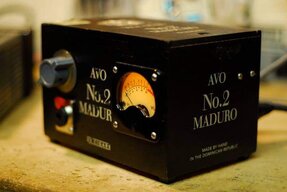
In the studio, when you plug a passive bass into a mic pre, the input impedance of the pre affects how the bass converts into the system and how it sounds somewhat. When you plug an active bass into a mic pre or system its sound it won't be affected much or at all by the mic pre input impedance as the active signal is typically low impedance. When I plug an active bass into a few different pre's to audition them I can't hear as much of a tone difference, all do to the active's low impedance out. With a passive bass I can hear more of the differences of each mic pre.
 
How's this...
-My Spector Forte 5 has passive Aguilar pickups and a bypass for the preamp. Full passive is my favorite tone on this bass.
-My Schecter Stiletto Studio 5 had passive pickups and a cheap stock preamp. I replaced that with active pickups and an Aguilar OBP-3 and it has never sounded better.
 
Four of the six basses I currently own are active/passive. Of the other two, one is passive only and one is active only.

Honestly, whether I want passive or active mode depends on the bass, the electronics, and the sound I'm going for. They all sound good either way but active mode makes you work a bit harder to find a sweet spot. I don't mind that.
 
Here's how I see it: An amp typically has eq knobs. They are inconvenient to adjust playing live. If you are a tone knob twister beyond what a tone knob does on a passive bass (which is simply rolling off the high frequencies or not) and need to do this live, then you should go active. The downside is having to deal with that pesky battery that at anytime could decide to go out, or otherwise fail. Certainly if you go active, I would insist on having a toggle so that you can go passive if you have a battery or preamp failure while playing live. To me you are essentially moving the amp's eq knobs to the guitar. If you are able to preset the amp and make all necessary tone tweaks with the tone knobs and pup switching/blending on the guitar then a passive setup is best. If you are a real tone eq tweaker then going to the amp constantly is not wise - go active.
 
Oh ok. Sounds interesting! :thumbsup:

The luxury of having an active/passive switch included in the controls of a bass with an on-board preamp isn't necessarily to offer more tonal options. Some basses like this sound really good in passive mode, but others might have that switch more as a "just in case" if the battery quits at a gig. The only time I've had a battery poop out on me was a long time ago when I was practicing at home. It sounded super funky for three or four minutes and then crickets :wideyed:

I don't think the risk of a dead battery is anything to worry about as long as you check it and swap it out every here and there.

Is an active bass "better" or does it offer "more" than a passive? I'd say try not to look at it like that. They're different, but they're different even within their own families. Some sound better than others. We had a discussion going here a little while ago and it turned out that several of our pals here who have both a P-style and J-style bass in their own gear lineups have a passive P-bass and an active J-bass, myself included.

My two most recent purchases can switch between active and passive, but I play them in active mode. One has lots of bells and whistles including a pair of JJ humbuckers that can also switch to single coil mode. I like this bass because it gives me three distinct sound that are useful for me, but I'd like it if it only gave me one terrific tone. It's also much lighter than my old boat anchor and that was my top priority when I found it. So there's that.

There's really no wrong answer with either option just as long as it doesn't sound crummy.
 

Latest posts