
Enjoy the benefits of a premium membership!
Upgrade Account
-
TalkBass has been independent since 1998. Add your voice.
Create a free account to reply to discussions, view embedded media, and browse with fewer display ads.
Join free Log in
Want zero display ads or expanded classifieds tools? Compare plans.
You are using an out of date browser. It may not display this or other websites correctly.
You should upgrade or use an alternative browser.
You should upgrade or use an alternative browser.
Alembic Series II
- Thread starter Dr. Cheese
- Start date
More options
Who Replied?
I will just add, having been an alembic series owner in the past, and having currently built my own alembic style state variable filter for my own one-off 6 string bass (from a Combine guitars kit), that there is a relatively easy way to think about it:
the "filter" control title that Alembic uses is a confusing title, but easily explained (imho) with better titles.
These filters are Low Pass filters. Therefore, everything lower than the frequency it's set to is heard normally, and everything above the frequency it's set to is cut off (with a gradual roll-off, for the sake of argument for now).
So if you set the pickup selector switch to, for now, just the neck pickup, and set filter all the way UP (to highest pitch), and for now set the Q control (ContinuouslyVariableQ in case of the series II, three position switch in case of Series I) all the way DOWN (or switch in upmost pointing position if series I), then you will essentially remove the filter's audible effects from the circuit.
Filter frequency all the way UP means all audio is passed, and CVQ control all the way DOWN means it's the most neutral, gradual, transparent filter effect even at that very high frequency it's set to.
Now, if you play a long note and while it's playing you rotate the Filter (frequency) knob down, you are lowering the pitch that the filter cuts off at, so basically turning down the tone control kinda. You are doing something that Fender's passive tone control wished it could do - basically having a Fender tone control that is set with the knob most (but not all) of the way down, and gradually increasing the value of the capacitor on it, to lower the pitch that the tone control starts to take effect. (Electronically that's not what happens, but it has the same effect). So you turn the filter frequency all the way down and you only get the low fundamental of the notes on the bass, put it part way up and you get lower mids too, higher yet and you get most of the sound but not the string noise or sizzle, all the way up and you hear it all.
Now, the CVQ control - it controls the Q at the filter's cutoff frequency.
So, basically, turning the CVQ knob UP will do the following things:
- increase how sharply the treble is cut off above the filter's cutoff frequency (the main filter knob)
- add emphasis (loudness) in a bump right at the filter's cutoff frequency
- in a typical circuit like this (but not on an alembic) it will also increase the overall level of the output (however, Alembic uses a fancy custom workaround for this to compensate for the huge 10-15db boost from turning up the cvq... by lowering gain by similar levels at the same twist of the knob). You can ignore this on a series instrument since they do compensate for it. On my own DIY version, where I don't (yet) have custom dual-gang pots for CVQ, this is an issue I have yet to deal wtih.
The boost when you turn up the CVQ is so apparent than you can use it like so:
- filter knob up pretty high (main filter frequency knob) and cvq up pretty high to emphasize treble while letting the rest of the sound through below it.
- filter knob roughly 25% down, cvq up pretty high, to emphasize presence area while still letting through some treble sound - gives quite a cool sound that I find very useful, almost like a good quality old school fender precision (single pickup), out of an alembic that (without the filter engaged) has a relatively neutral and not-fender-like tone.
- filter knob roughly 50% down isn't so useful imho as it really emphasizes mids to a strange result with cvq turned up, but can sound great with cvq turned down.
- filter knob roughly 75% down to emphasize an older rich thick tone. adjust cvq to taste
- filter knob most or all the way down and cvq turned up a bit to give a huge heavy Reggae sorta sound (just as an example).
Now, what if you want that low depth boost , but still some highs?
set low depth how you want on, for example, neck pickup, and then turn on the bridge pickup too, and set IT'S filter up high and it's cvq up a fair bit and then adjust the filter frequency and pickup output level to add the high tone you want as it's blended with the neck pickup's "woofer" tone.
just some examples there of how you can do whatever you want with a dual filter system like this, but it takes knowledge, experience, time, and experimentation.
the "filter" control title that Alembic uses is a confusing title, but easily explained (imho) with better titles.
These filters are Low Pass filters. Therefore, everything lower than the frequency it's set to is heard normally, and everything above the frequency it's set to is cut off (with a gradual roll-off, for the sake of argument for now).
So if you set the pickup selector switch to, for now, just the neck pickup, and set filter all the way UP (to highest pitch), and for now set the Q control (ContinuouslyVariableQ in case of the series II, three position switch in case of Series I) all the way DOWN (or switch in upmost pointing position if series I), then you will essentially remove the filter's audible effects from the circuit.
Filter frequency all the way UP means all audio is passed, and CVQ control all the way DOWN means it's the most neutral, gradual, transparent filter effect even at that very high frequency it's set to.
Now, if you play a long note and while it's playing you rotate the Filter (frequency) knob down, you are lowering the pitch that the filter cuts off at, so basically turning down the tone control kinda. You are doing something that Fender's passive tone control wished it could do - basically having a Fender tone control that is set with the knob most (but not all) of the way down, and gradually increasing the value of the capacitor on it, to lower the pitch that the tone control starts to take effect. (Electronically that's not what happens, but it has the same effect). So you turn the filter frequency all the way down and you only get the low fundamental of the notes on the bass, put it part way up and you get lower mids too, higher yet and you get most of the sound but not the string noise or sizzle, all the way up and you hear it all.
Now, the CVQ control - it controls the Q at the filter's cutoff frequency.
So, basically, turning the CVQ knob UP will do the following things:
- increase how sharply the treble is cut off above the filter's cutoff frequency (the main filter knob)
- add emphasis (loudness) in a bump right at the filter's cutoff frequency
- in a typical circuit like this (but not on an alembic) it will also increase the overall level of the output (however, Alembic uses a fancy custom workaround for this to compensate for the huge 10-15db boost from turning up the cvq... by lowering gain by similar levels at the same twist of the knob). You can ignore this on a series instrument since they do compensate for it. On my own DIY version, where I don't (yet) have custom dual-gang pots for CVQ, this is an issue I have yet to deal wtih.
The boost when you turn up the CVQ is so apparent than you can use it like so:
- filter knob up pretty high (main filter frequency knob) and cvq up pretty high to emphasize treble while letting the rest of the sound through below it.
- filter knob roughly 25% down, cvq up pretty high, to emphasize presence area while still letting through some treble sound - gives quite a cool sound that I find very useful, almost like a good quality old school fender precision (single pickup), out of an alembic that (without the filter engaged) has a relatively neutral and not-fender-like tone.
- filter knob roughly 50% down isn't so useful imho as it really emphasizes mids to a strange result with cvq turned up, but can sound great with cvq turned down.
- filter knob roughly 75% down to emphasize an older rich thick tone. adjust cvq to taste
- filter knob most or all the way down and cvq turned up a bit to give a huge heavy Reggae sorta sound (just as an example).
Now, what if you want that low depth boost , but still some highs?
set low depth how you want on, for example, neck pickup, and then turn on the bridge pickup too, and set IT'S filter up high and it's cvq up a fair bit and then adjust the filter frequency and pickup output level to add the high tone you want as it's blended with the neck pickup's "woofer" tone.
just some examples there of how you can do whatever you want with a dual filter system like this, but it takes knowledge, experience, time, and experimentation.
This. I don't disagree with you, it would give you one less knob to contend with.
There's likely a reason it is technically more desirable to have separate volumes, but I couldn't say what that is. Maybe something to do with the way blend pots taper? You would get more "resolution" having the entire pot to sweep per pickup.
Generally because adjusting the Q of the pickup (the cvq or swtich if series I) can emphasize the volume of one pickup over the other, and having a level control for each pickup allows you to treat it like a mixer (well, it literally is the same opamp circuit concept as a buffered mixer), so you can have lots of output from one pickup and only add a bit of treble or mids from the other to taste.
One way to simplify the Series electronics, but still get 90% of the benefits, would be to have one filter downstream of the pickup blend, then you only have one "tone + Q" control for the whole bass. I guess Ron assumed that you might want to have separate controls over each pickup to come up with some very specific tones. I can tell you, in the 25 years I've owned my Series I, I've never wanted the filters at different frequencies or Q settings. But I'm sure there is someone out there who does. Lunatics!
Remove the separate volumes, and replace with a blend and you could eliminate 4 controls: the bridge pickup volume, CVQ, filter and the pickup selector. I do like the pickup selector, though, as it acts as a fast mute.
That is exactly what I've done on my own filter circuit I built for my kit bass. I just got it finished yesterday and LITERALLY stuffed into the compartment. It's also how alembic does their offering on their simpler basses that still include a filter - sometimes with only one knob and not even a Q switch or knob, just Q preset pretty high and the knob for filter frequency, or something like that.
So right now I have 2 pickups, passively going into pan pot, then into my various switches (passive HPF and LPF options), and then into my home brew alembic series II style filter (just one channel since, at the moment, that's all I've created), and then out from that into the Mings 3 band preamp/eq, then out of the bass.
I'm going to try it tonight at rehearsal for the first time. I have some level issues to sort out (just need to switch a resistor value when I get time), but it should be interesting and I have a master volume at the end so can compensate for level issues easily.
However, the drawback to a single filter is that you can't emphasize lows and still let highs through (from the other pickup). I used to love this setting on my series I: I'd use lows from neck, with a Q emphasis in the presence area that sounded great, and the bring in the bridge pickup with emphasis up in the higher frequencies (not noise but attack area, kinda), and with only one filter there is no way to do that without just cutting off all the treble (assuming you want to turn the filter pitch to a lower frequency and turn up it's cvq to emphasize that lower frequency, at least).
Last edited:

Thanks for your very interesting and informed posts.I will just add, having been an alembic series owner in the past, and having currently built my own alembic style state variable filter for my own one-off 6 string bass (from a Combine guitars kit), that there is a relatively easy way to think about it:
the "filter" control title that Alembic uses is a confusing title, but easily explained (imho) with better titles.
These filters are Low Pass filters. Therefore, everything lower than the frequency it's set to is heard normally, and everything above the frequency it's set to is cut off (with a gradual roll-off, for the sake of argument for now).
So if you set the pickup selector switch to, for now, just the neck pickup, and set filter all the way UP (to highest pitch), and for now set the Q control (ContinuouslyVariableQ in case of the series II, three position switch in case of Series I) all the way DOWN (or switch in upmost pointing position if series I), then you will essentially remove the filter's audible effects from the circuit.
Filter frequency all the way UP means all audio is passed, and CVQ control all the way DOWN means it's the most neutral, gradual, transparent filter effect even at that very high frequency it's set to.
Now, if you play a long note and while it's playing you rotate the Filter (frequency) knob down, you are lowering the pitch that the filter cuts off at, so basically turning down the tone control kinda. You are doing something that Fender's passive tone control wished it could do - basically having a Fender tone control that is set with the knob most (but not all) of the way down, and gradually increasing the value of the capacitor on it, to lower the pitch that the tone control starts to take effect. (Electronically that's not what happens, but it has the same effect). So you turn the filter frequency all the way down and you only get the low fundamental of the notes on the bass, put it part way up and you get lower mids too, higher yet and you get most of the sound but not the string noise or sizzle, all the way up and you hear it all.
Now, the CVQ control - it controls the Q at the filter's cutoff frequency.
So, basically, turning the CVQ knob UP will do the following things:
- increase how sharply the treble is cut off above the filter's cutoff frequency (the main filter knob)
- add emphasis (loudness) in a bump right at the filter's cutoff frequency
- in a typical circuit like this (but not on an alembic) it will also increase the overall level of the output (however, Alembic uses a fancy custom workaround for this to compensate for the huge 10-15db boost from turning up the cvq... by lowering gain by similar levels at the same twist of the knob). You can ignore this on a series instrument since they do compensate for it. On my own DIY version, where I don't (yet) have custom dual-gang pots for CVQ, this is an issue I have yet to deal wtih.
The boost when you turn up the CVQ is so apparent than you can use it like so:
- filter knob up pretty high (main filter frequency knob) and cvq up pretty high to emphasize treble while letting the rest of the sound through below it.
- filter knob roughly 25% down, cvq up pretty high, to emphasize presence area while still letting through some treble sound - gives quite a cool sound that I find very useful, almost like a good quality old school fender precision (single pickup), out of an alembic that (without the filter engaged) has a relatively neutral and not-fender-like tone.
- filter knob roughly 50% down isn't so useful imho as it really emphasizes mids to a strange result with cvq turned up, but can sound great with cvq turned down.
- filter knob roughly 75% down to emphasize an older rich thick tone. adjust cvq to taste
- filter knob most or all the way down and cvq turned up a bit to give a huge heavy Reggae sorta sound (just as an example).
Now, what if you want that low depth boost , but still some highs?
set low depth how you want on, for example, neck pickup, and then turn on the bridge pickup too, and set IT'S filter up high and it's cvq up a fair bit and then adjust the filter frequency and pickup output level to add the high tone you want as it's blended with the neck pickup's "woofer" tone.
just some examples there of how you can do whatever you want with a dual filter system like this, but it takes knowledge, experience, time, and experimentation.
For live work with my S1’s, I have always preferred running the filters wide open with the Q in the middle position; and then “pan” the volumes as appropriate. In a live mix, I just never heard much benefit to cutting the pickups’ output. But, your description would be a real benefit for how the circuit can be molded in the studio.

I have had the wiring looms from Alembic a few months back now and although the cables were a it of a tight fit. I managed to get it all inside with no shorts or issues. I do need to get a the holes drilled to fit the pickup selector switches on each bass and the mono stereo switch on one of the basses. So at the moment no gigs with split signals yet and I'm not sure how many gigs I will do that will benefit from that split. But at least I have the option. But for now I have a consistent layout for gigging with my signature and series bass.That actually sounds like a very good plan. Keep us posted on how it works out, I might want to follow your lead.
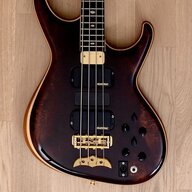
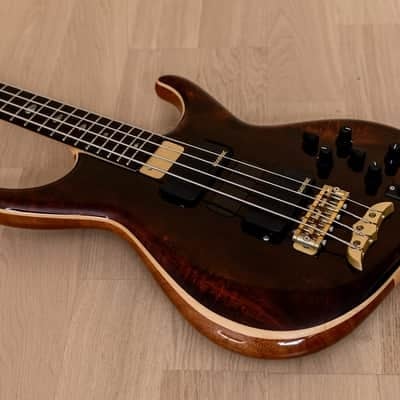
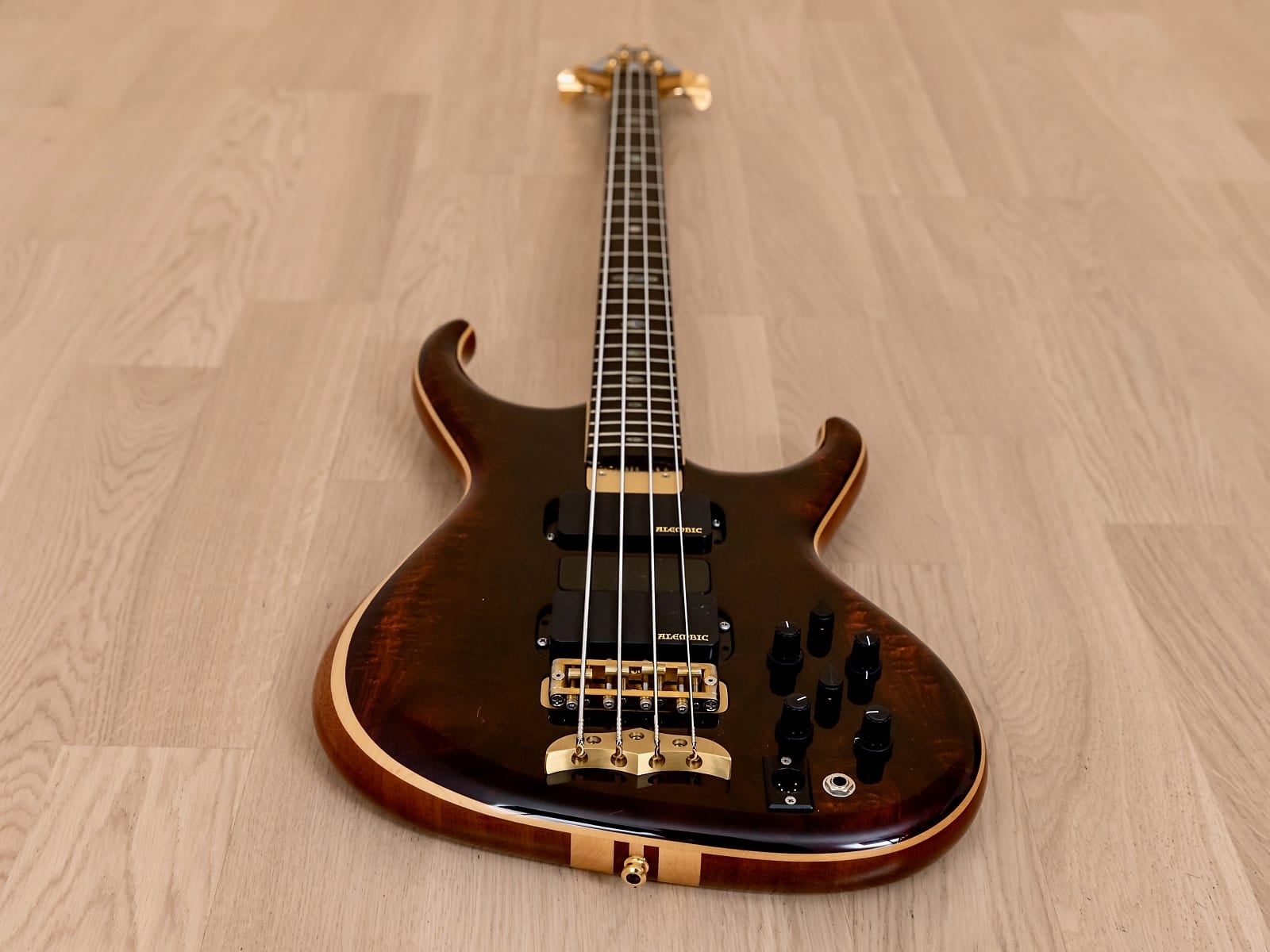
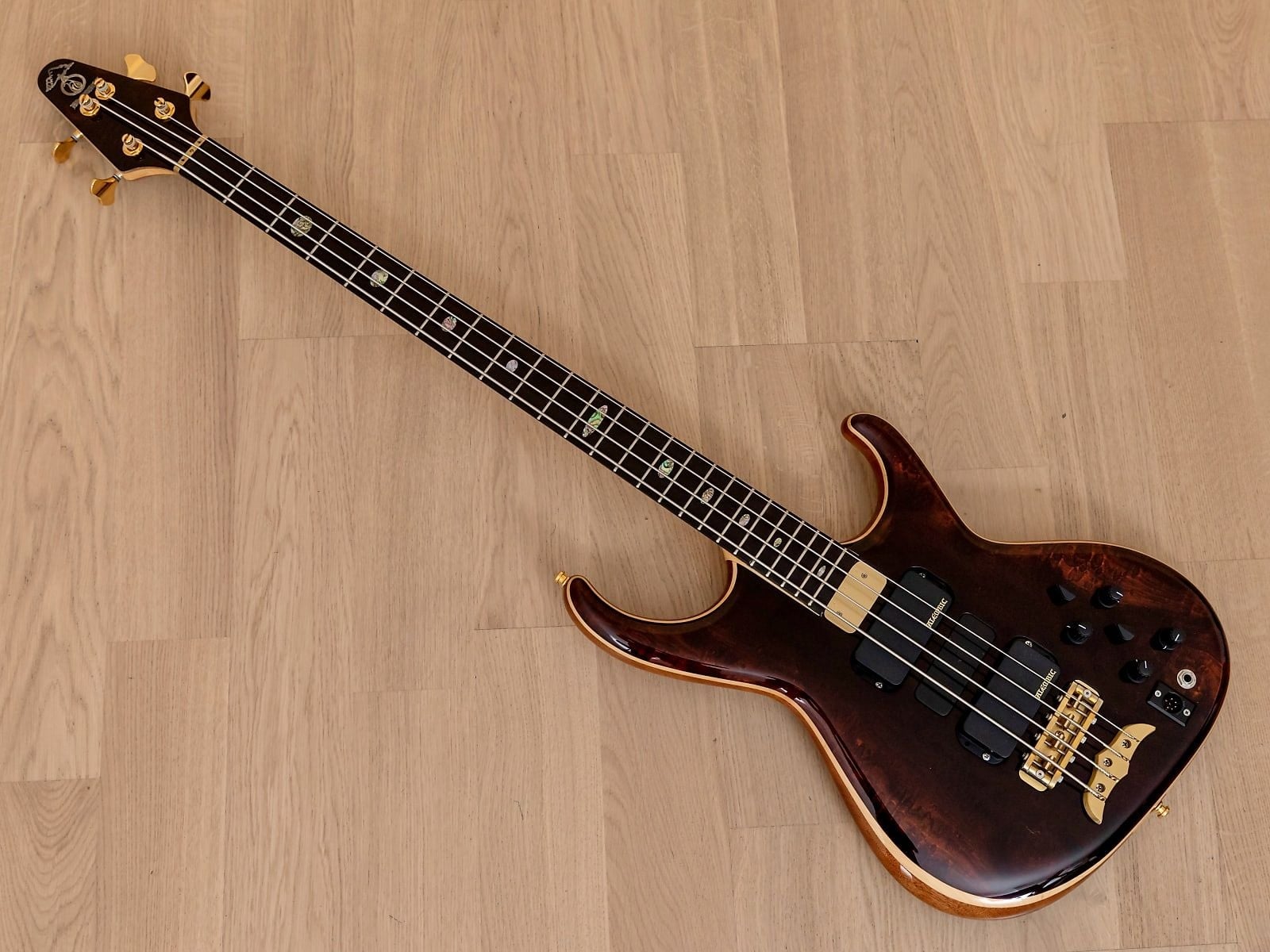
This is a photo of a Series II bass taken from the Alembic Series II product page. It doesn't seem like there are enough control knobs though - how would this one work?
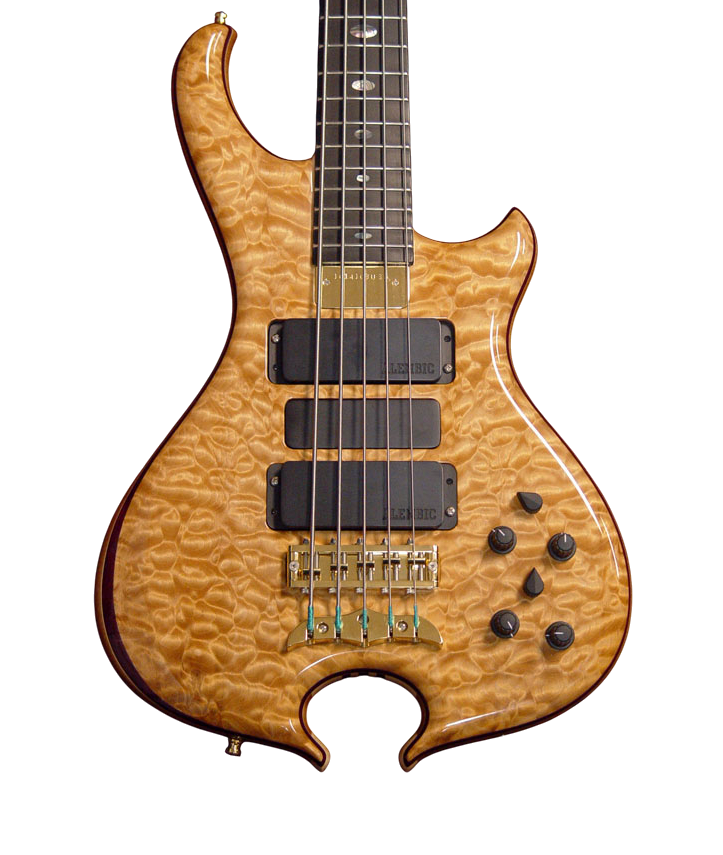

This is a photo of a Series II bass taken from the Alembic Series II product page. It doesn't seem like there are enough control knobs though - how would this one work?
I'm going to guess from the shape of the controls that it's missing the pickup selector switch and master volume control, so its: volume x2, filter x2, continuously variable Q x2
I'm going to guess from the shape of the controls that it's missing the pickup selector switch and master volume control, so its: volume x2, filter x2, continuously variable Q x2
So... would that compromise some of the versatility of having Series 2 electronics? And LED's always on assuming it has them?

It has a pan pot + mastervolume instead of two volumes and mastervolume, the owner (s_wood) has several of those (mostly Europa shaped)This is a photo of a Series II bass taken from the Alembic Series II product page. It doesn't seem like there are enough control knobs though - how would this one work?
It has a pan pot + mastervolume instead of two volumes and mastervolume, the owner (s_wood) has several of those (mostly Europa shaped)
So it has full Series 2 functionality?
It's just a different approach to pickup selection, still has dual Filters with CVQ's. The pan pot is stereo, so also with separate pickup outputs.So it has full Series 2 functionality?
Will Gunn also has his own take on the Series electronics, he has a couple without filters  (explanation in link)
(explanation in link)
That's how I'm doing my next filter build, but with some extra features added into my version of the 'SF2'.Will Gunn also has his own take on the Series electronics, he has a couple without filters
It's not an Alembic build FWIW, just 'inspired by'.

I'm going to guess from the shape of the controls that it's missing the pickup selector switch and master volume control, so its: volume x2, filter x2, continuously variable Q x2
That’s one of my Alembics, and you are correct: in this bass, and in all of my custom builds, I replaced the pickup selector and individual pickup control with a stereo pickup pan control and a master volume. For me, the simplified setup is more user-friendly on a gig because I can change the pickup blend without affecting the volume. Conversely, I can change the volume with just one knob without varying the pickup blend. Here are a few more with that same setup:
All of those basses are Series basses, with the Europa body style… also known as Series Europa basses. As others have noted, it’s the electronics that drive the model name.
I also use an SF-2, and I run mine exactly like JazzyVee runs his:
I use one channel on low pass and the other on band pass so I can ad heft then pick a punch frequency.
My punch frequency is usually around 1.2K, to simulate the snap of a pick.
Whether one uses an SF-2 or the Q filters on a Series bass dialing in one’s tone is quite easy once one gets the hang of how the filters work. Honestly, it’s no more complicated than getting one’s head around a typical active 3 band EQ.
Last edited:

TBH, I asked about Cocoa to learn about her control configuration, but it was her cousin I had my eye on! She’s mine now!

That’s one of my Alembics, and you are correct: in this bass, and in all of my custom builds, I replaced the pickup selector and individual pickup control with a stereo pickup pan control and a master volume. For me, the simplified setup is more user-friendly on a gig because I can change the pickup blend without affecting the volume. Conversely, I can change the volume with just one knob without varying the pickup blend. Here are a few more with that same setup:
View attachment 7501042View attachment 7501047
All of those basses are Series basses, with Europa body… also known as Series Europa basses. As others have noted, it’s the electronics that drive the model name.
I also use an SF-2, and I run mine exactly like JazzyVee runs his:
My punch frequency is usually around 1.2K, to simulate the snap of a pick.
Whether one uses an SF-2 or the Q filters on a Series bass dialing in one’s tone is quite easy once one gets the hang of how the filters work. Honestly, it’s no more complicated than getting one’s head around a typical active 3 band EQ.
Are these all yours?
TBH, I asked about Cocoa to learn about her control configuration, but it was her cousin I had my eye on! She’s mine now!
View attachment 7501060
View attachment 7501058View attachment 7501059
Wow, nice one!
Really like that more simple/less knobs Series 2 configuration.
Reminds me of a my Wal basses. Besides that Wal has pull knobs for variable Q instead of seperate knobs for Q. Only for knobs needed.
Last edited:
That’s one of my Alembics, and you are correct: in this bass, and in all of my custom builds, I replaced the pickup selector and individual pickup control with a stereo pickup pan control and a master volume. For me, the simplified setup is more user-friendly on a gig because I can change the pickup blend without affecting the volume. Conversely, I can change the volume with just one knob without varying the pickup blend. Here are a few more with that same setup:
View attachment 7501042View attachment 7501047
All of those basses are Series basses, with the Europa body style… also known as Series Europa basses. As others have noted, it’s the electronics that drive the model name.
I also use an SF-2, and I run mine exactly like JazzyVee runs his:
My punch frequency is usually around 1.2K, to simulate the snap of a pick.
Whether one uses an SF-2 or the Q filters on a Series bass dialing in one’s tone is quite easy once one gets the hang of how the filters work. Honestly, it’s no more complicated than getting one’s head around a typical active 3 band EQ.
The blue one… short scale? I’d call those three Beldar, Prymatt, and Connie.
Mine are all 34” scale. What shall the name of your new cocobolo Series Europa be?The blue one… short scale? I’d call those three Beldar, Prymatt, and Connie.


