• TalkBass has been independent since 1998. Add your voice.
    Create a free account to reply to discussions, view embedded media, and browse with fewer display ads.
    Join freeLog in
    Want zero display ads or expanded classifieds tools? Compare plans.

Aligning mounting holes?

Please explain how you think transfer punches will work in this instance.?
I'm with the OP in this regard.
The way I've done this before is to put some sharp thin pins in the neck holes then cut them with some side cutters, leaving a small point. Then press the neck into the body. Then drill out the body where the indentation are left.

That’s what transfer punches do.
 
I've done it twice. I taped a piece of heavy paper over the neck heel. Then traced the outline of the heel on the underside. Then I carefully felt around with the point of a dull pencil until I located the predrilled holes. Then punch through. Maybe even draw an arrow pointing toward the body to be safe. Take it off and cut it to size. Lay it in the new pocket and mark the hole locations.

Certainly there are more elegant means, as have already been described. Being a long time member of the "cheap and fast" club, I was perfectly content with my approach.
 
  • Like
Reactions: kirkdickinson
That’s what transfer punches do.

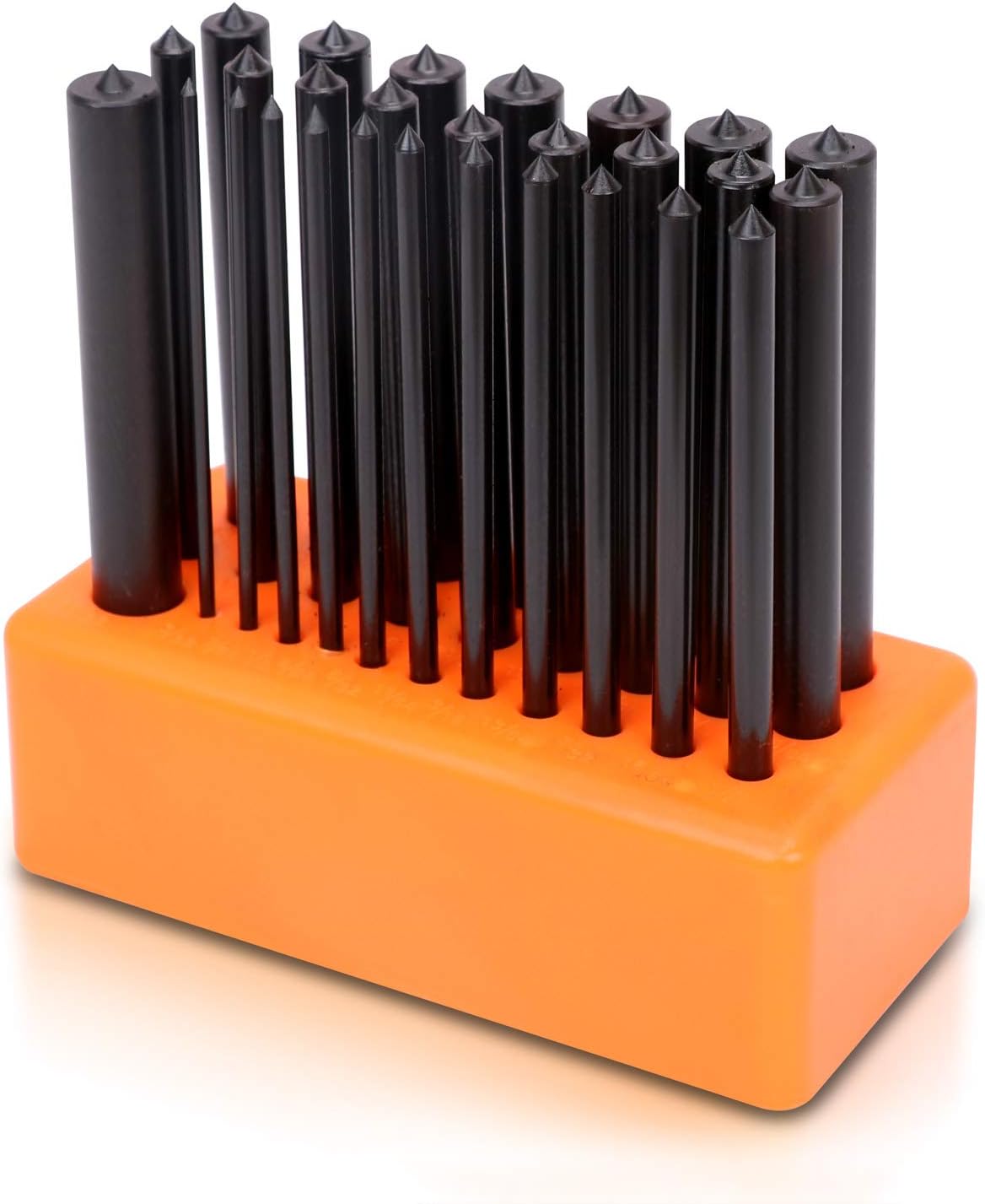
When you say Transfer Punches, most of us are thinking of these:

61lIp31LpeL._AC_SL1500_.jpg


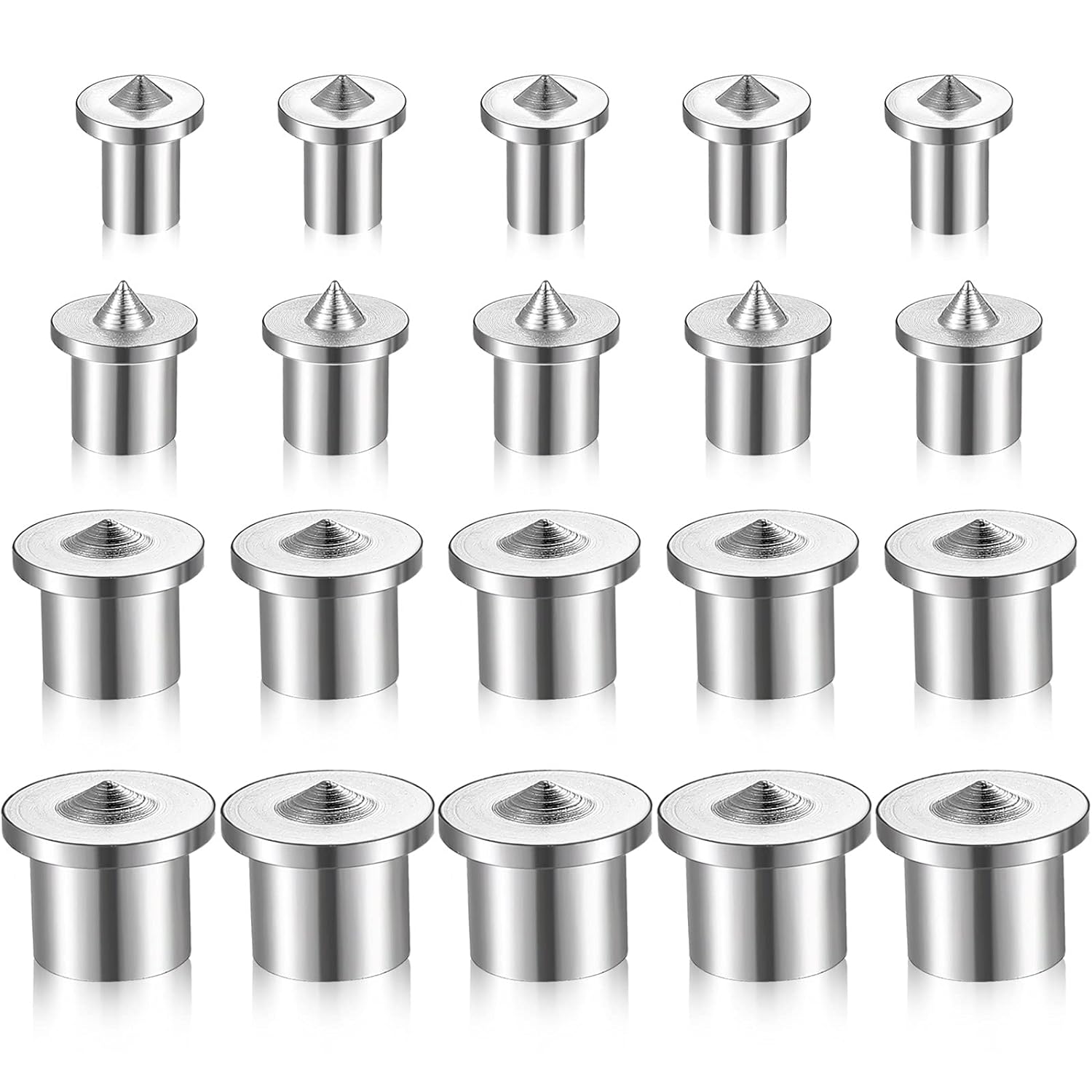
I think you are referring to these, which are for transferring locations of dowel holes. They are calling them Transfer Plugs. Whatever. These are used the same way as the pointed or round head screws.

71RFdy7dkBS._SL1500_.jpg
 
When you say Transfer Punches, most of us are thinking of these:

61lIp31LpeL._AC_SL1500_.jpg


I think you are referring to these, which are for transferring locations of dowel holes. They are calling them Transfer Plugs. Whatever. These are used the same way as the pointed or round head screws.

71RFdy7dkBS._SL1500_.jpg


As a furniture builder, I have sets of both. The bottom items are also called dowel centers, and are usually too big to go in the OP's neck holes.

I'd either use cut off screws, snugly fitted hard music wire or threaded rod, or plug the holes, all previously mentioned... If you use cut screws, brass screws are easiest to cut and file to a point. Chucking them in a drill would be an easy way to cut and file the point.

I don't think I'd have a set of blind punches custom made for a one off job, I'd be more inclined to buy two sets of Harbor Freight punches and cut the two best fitting choices from each set down to length.
 
Hi, kirkdickenson.

Follow Bruce's method of screwing small round head screws into your neck holes to mark locations in the neck pocket.

You can see a variation of that HERE (step / photo #71). My application was a bit different than yours, but I used the "faux neck heel" created in the photo essay to guide the drill to create neck pocket holes later in step / photo #80 in the photo essay.

The method I detail assures that the neck screw locations fit the drilled holes and the drilled body holes will line up with the neck screw locations. I prefer doing it that way because it's easy to misalign your holes if your drill point wanders even a small amount.
 
  • Like
Reactions: kirkdickinson
I like to clamp the neck into the pocket and use a transfer punch that’s the same size as the holes in the body which should be 3/16” give or take.

If you don’t have transfer punches clamp the neck in the body, find a drill bit that fits the body screw holes snugly without removing material, turn the bit a couple of times by hand or run it backwards with a drill and you should have divots where the screws go.

Another thing to check is to make sure the neck screws you want to use slip easily through the body holes without having to be threaded through. If they don’t slip easily through then drill the holes out to the right size.

That’s the way to do it.
The clearance through the body is important good carpentry practice and will allow a bit of wiggle to get good alignment
 
I don't think I'd have a set of blind punches custom made for a one off job...
If the correct size is unavailable off the shelf, why not?
Since the bulk of expense is in the initial setup and tooling costs, why not have an hours worth made after the initial example is accepted when all you are paying for is time and stock, then see if there is any interest in them on a larger scale. Maybe also offer them threaded to screw into necks that are already mounted. Given the neck is usually the critical component in a stringed instrument and requires specialized tooling fixtures and extensive joinery skills to successfully produce but can make even a stack of glued plywood panels into a functioning instrument, wouldn’t an easy way to mate the two be useful? Given your basic electric guitar/bass body does not require much more than decent carpentry and single plane layout skills, an easy way to attach an existing neck to a scratch built body would be a way to drive increased DIY participation in home instrument construction. You would need to be able to get pocket depths right, but decent carpentry skills usually include knowledge of router template and depth stop usage.
if you find there is not enough interest to justify production, give the test samples to pros who might find them useful.
 
Last edited:

Latest posts