• TalkBass has been independent since 1998. Add your voice.
    Create a free account to reply to discussions, view embedded media, and browse with fewer display ads.
    Join freeLog in
    Want zero display ads or expanded classifieds tools? Compare plans.

All lows?

Jun 13, 2013
1,393
2,120
California
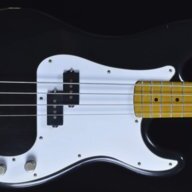
Played a gig with a new group this weekend. Plugged in the P Bass, compressor set to very minimal settings and flat on my GK Legacy 800. Was told I had way too much highs, "the bad kind" by the sound engineer. I took out all the high mids gradually until they were gone, still complained. I took all the highs out, still complained. Got my Jazz bass (mid scoop, essentially no high mids to begin with in comparison to the P) and still complained. Rolled the tone off, then it was too muddy. Put the tone back on full and he said, "it's workable"

I am not the most experienced out there but I've played hundreds of gigs and I've worked with at least 50 different engineers both live and in the studio and this is the first time I've had to dial out that much high end.

I felt like I was playing a synth or MIDI bass. It was essentially all 80-200hz and everything else was sucked out.

Is this normal? I went along with it, but the mix was so muddy. I could only hear bass and some vocals. And kick drum as I was standing right next to it. My wife mentioned the mix from the seats was also very muddy.

Honestly it made playing super boring. There's so much more to bass than just that frequency range.

 
''Hey man, come listen to us up here please''. ''Please mix us to sound like this in the room''.

Will do in a few weeks when I work with him again.

Is it standard to cut all the high mids and highs out? Have I been living under a rock for the past 20 years?

Live recordings of other bands I've played in, the upper mids help give some growl and a lot of the high end gets somewhat lost in the mix, but adds some "depth" behind the keys and guitars and it can be heard when the bass isn't there. I don't care about much over 2k to be honest but the 400-1k range adds so much complexity and richness to the midrange.
 
No, if you leave those mids in you might be able to distinguish the bass from the kick drum. Can't have that.;)

I know, right?? I thought they were supposed to compliment one another by being in similar, but different, frequency ranges. Keyword being different!

No.

But, then again, I've had sound guys who put bass and kick ONLY to the subs!

- John

Oh, well I guess at least that didn't happen! Or I guess maybe it did, depending on where the crossover is.
 
I've never heard a sound person say things like that, and I often play with reggae bands where the bass is expected to be super dubby.

Sounds to me like you got a weirdo... You should definitely ask him about his choices - politely. And let him know that playing like that last time sucked some of the joy out. I'm certain there's a compromise in there somewhere. Good luck!
 
Did you go out front and listen? Also, maybe his P.A. is far from flat. Fire up some recorded music and find out if his P.A. is all highs. If I'm working with an artist who is not agreeing I invite him to the board for a listen, or to soundcheck from back at the board. If you are not wireless, ask him to hit record for 20 seconds or so and listen to that.
 
  • Like
Reactions: Nashrakh and 707GK
It almost sounds to me like your pre/post button (if there is one) was set to pre for the line out. In other words, it was bypassing the preamp of your rig. There's no way you turned the highs on your rig basically off and there was still too much in the way of highs. If that's not it, the guy could just be a deaf idiot.
 
...you've got a doofus sound engineer... you're the bass player in the band... not beholding to him/her... make your sound what you want, and let the chips fall where they may... I'm guessing he isn't Daniel Lanois... the sound guy isn't there to dictate anything... it's your a** on the line for your bass sound... no audience member goes home and says... "Oh, that sound engineer really sucked..."
 
Last edited:
It was post EQ, he was happy when I dialed out literally all the treble and high mids (anything above about 500hz) on my rig. I even used my compressor's "treble" knob and dialed that all the way back. I also had to turn on the amps distortion circuit and use the tone knob on that to dial even more out of it. I basically had all my treble knobs counterclockwise as far as they could go.

My wife was in the audience and is a vocalist, she has a pretty good ear. She said it was muddy and the guitar was overpowering everything to compensate, in order to be heard. She was not a fan of the mix.
 
I used to work sound with a guy who had a tin ear. He had the best gear in town, so he always got the call, but bands were generally thrilled to see somebody else twisting the nobs.

One night on show we couldn't get signal from the opening act's bass. My man was like "it's okay, just crank up the kick drum to compensate."

Suffice it to say there are a lot of people (sound techs included) for whom "bass" is an audio frequency to be felt, not a musical part to be heard, a part defining harmonic structure and playing counterpoint to melody.
 
It was post EQ, he was happy when I dialed out literally all the treble and high mids (anything above about 500hz) on my rig. I even used my compressor's "treble" knob and dialed that all the way back. I also had to turn on the amps distortion circuit and use the tone knob on that to dial even more out of it. I basically had all my treble knobs counterclockwise as far as they could go.

My wife was in the audience and is a vocalist, she has a pretty good ear. She said it was muddy and the guitar was overpowering everything to compensate, in order to be heard. She was not a fan of the mix.

Set you DI to Pre. This will send a flat signal to FOH. At that point it's up to the audio tech to dial in your FOH sound.

It really does sound like the audio tech was clueless.