• TalkBass has been independent since 1998. Add your voice.
    Create a free account to reply to discussions, view embedded media, and browse with fewer display ads.
    Join freeLog in
    Want zero display ads or expanded classifieds tools? Compare plans.

All maple basses.

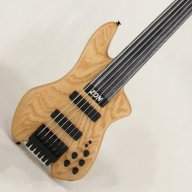
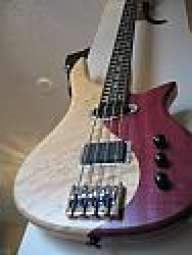
If you had a bass made completely out of maple (body, top, neck, board, ect..) what type of tonal charictoristics would it bring? Does anyone have a bass such as this? I am thinking that a maple body would be close to walnut because it is pretty hard. But, that is not at all an educated opinion.
 
Spector Euro neck-thru models had all maple bodies up until the introduction of the LX-version a year or 2 back. I'm not sure if they still offer the all maple body.

Even with the small size, it's pretty heavy. Tonally, it has the expected brightness, although it is definitely not tinny. To my ears, it has a massive low end and a nice low-mid growl to go with that bite. :)
 
The Squier 70's Vintage Modified Jazz is maple / maple. Pretty bright punch sound out of my practice amp at least.

It wants more sunlight, but my oak / oak bass just ignores it.

Nice usage of "The Trees" by RUSH!:D

+1 on the heavy and bright description!
 
My Pedulla was all maple with an ebony fingerboard. It was one the worst sounding basses I've ever owned. It was very bright, weighed a ton, and the low B was terrible. It was an awesome built bass and I don't know if the tone was horrible because of the choice of woods or the preamp needing to be changed. I do know, however, the B had no pop or depth and the weight! WOW!
 
Would a decent preamp and pickups be able to overcome the brightness of the wood and add more flexability? I had an idea for a Benavente bass and they offer flamed maple as a body wood. They have 2 differnet pickups wide and slim. I would probably go with the wide and thier 3 band preamp.
 
As for the other question, maple and walnut do not have the same tonal properties. Walnut has more warmth. As far as the hardness goes hard maple and soft maple is much harder than walnut. Walnut is closer in harness to honduras mahogany and harder than poplar.
 
Good pick-ups and pre-amp would overcome that problem, but with an all maple bass you have an instrument that is very heavy. I had a friend that had an all maple Vigier bass. He thought it was the best bass on the planet but was always complaining about all the bass amps not being "warm enough". I would recommend finding something all maple and try it out, it may fit your style, just not mine.
 
There's already been a thread similar to this recently.

Maple is clear across the spectrum. I love maple basses. My favourite basses, apart from Alembic and some Seis, are maple. Rickenbacker and Pedulla. Maple isn't necessarily heavy, particularly if it's flame/quilt. The average Ric (all maple apart from the fingerboard and with masses of chrome on them) is probably lighter than the average Fender. My Pedulla MVP weighed about 8 lbs. My Sei 4 is a maple and purpleheart through neck with maple board, alder body with maple facings and that weighs no more than 8 lbs. I tend to find people either like maple basses or they don't; Mr Majestic's comment is a case in point as I loved my MVP and wish I hadn't got rid of it. If I could've changed anything it would've been to add a maple board as I prefer them. I love the clarity; I'm not after huge bottom or massive low mids, although it can do those too at a push.
 
Good pick-ups and pre-amp would overcome that problem, but with an all maple bass you have an instrument that is very heavy. I had a friend that had an all maple Vigier bass. He thought it was the best bass on the planet but was always complaining about all the bass amps not being "warm enough". I would recommend finding something all maple and try it out, it may fit your style, just not mine.

Weight can be solved by ingenious body design and some inventive routing, i think. The hollow body might also warm out the tone some.

Regarding the sound, yes, of course pickups and preamps can overcome brightness. Just check out the carbon-fiber crowd. Zon, for example, uses a lot of bartolini, which are traditionally very warm pickups. I use dual-coil barts, which are 2x warm. And they make my Zon, which should sould even BRIGHTER than a maple/maple/maple bass, have quite a respectable low end (though i can eq it in a way such that the high end will slap you in the face)

IMHO, its easier to EQ frequencies OUT than to EQ them IN. Bright basses rule, you just need a good EQ.
 
  • Like
Reactions: shirky
Weight can be solved by ingenious body design and some inventive routing, i think. The hollow body might also warm out the tone some.

Regarding the sound, yes, of course pickups and preamps can overcome brightness. Just check out the carbon-fiber crowd. Zon, for example, uses a lot of bartolini, which are traditionally very warm pickups. I use dual-coil barts, which are 2x warm. And they make my Zon, which should sould even BRIGHTER than a maple/maple/maple bass, have quite a respectable low end (though i can eq it in a way such that the high end will slap you in the face)

IMHO, its easier to EQ frequencies OUT than to EQ them IN. Bright basses rule, you just need a good EQ.

Well said. All the basses I've had that I didn't like were the ones where I had to eq in the brightness. Also, I've only ever had one maple bass that caused me problems weight-wise, and that's because I'd just started with a lumbar disc problem. It's all the other basses I've had problems with (please step forward Alembic, Wal, Fender, ESP, Jaydee, Warwick etc etc...)
 
Tone and beauty are all relative. There are many factors that go into designing "YOUR" tone. Not all of which comes from the bass itself. Your hands, your amp, your setting...ect. Find something that fits you, then drive it like you stole it.
 

Latest posts