
Enjoy the benefits of a premium membership!
Upgrade Account
-
TalkBass has been independent since 1998. Add your voice.
Create a free account to reply to discussions, view embedded media, and browse with fewer display ads.
Join free Log in
Want zero display ads or expanded classifieds tools? Compare plans.
You are using an out of date browser. It may not display this or other websites correctly.
You should upgrade or use an alternative browser.
You should upgrade or use an alternative browser.
Amp Guts Photos - Official Thread - Lets see those pics
- Thread starter svtb15
- Start date
More options
Who Replied?

I might have posted this before, can't recall. Traynor YVM-1 PA amp. This was it as it arrived, so far all I've done is a recap and some cleanup work. Four channels utilizing half a 12AX7 each for gain, into a bax EQ, PI, dual 6CA7 output stage (Invalid Link Removed). The pre gain stages are super clean, the cathodes are all grounded. My current plan is to build a clean, dirty, dirtier set of channels but things got a bit sidetracks and I haven't been back to this.
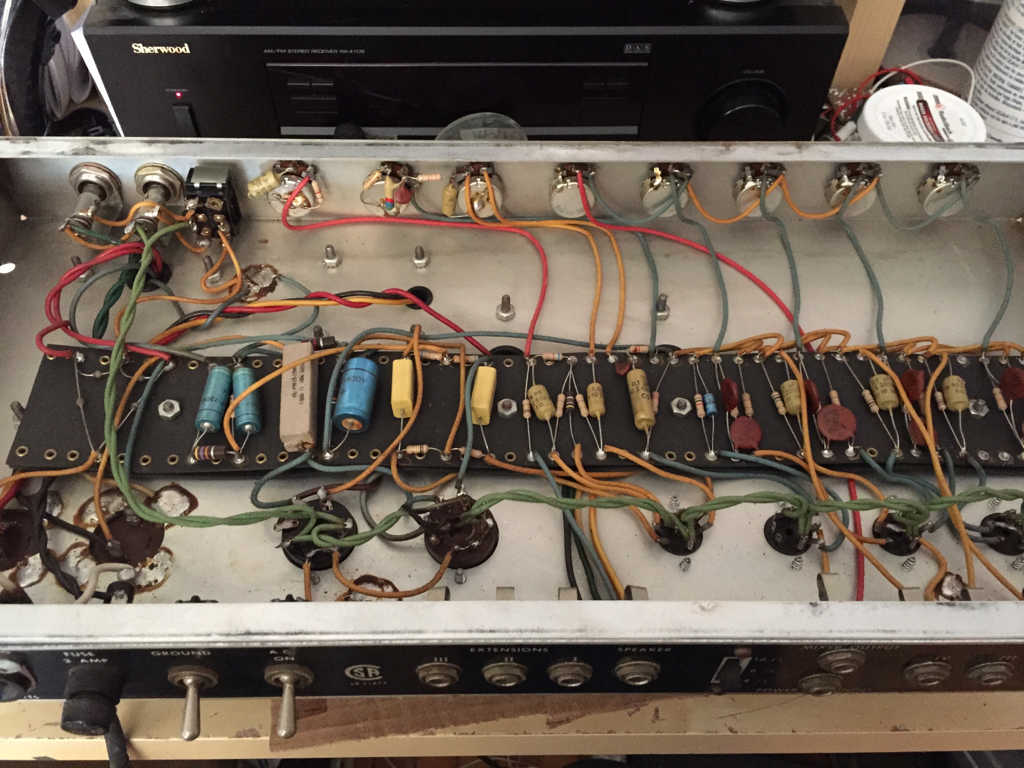
Anywho, also picked up this guy recently. Sound City 50 plus. Bought it cheap figuring it would need some work and/or make a good platform for another hiwatt clone. Got a bit more than I bargained for, but another project for another day. It runs okay for now and has nice partridge transformers so there's that. It's definitely had some work done, just have to go about figuring out what exactly was done and in some cases why. Came with a nice selection of amperex and mullard 12AX7s at least.
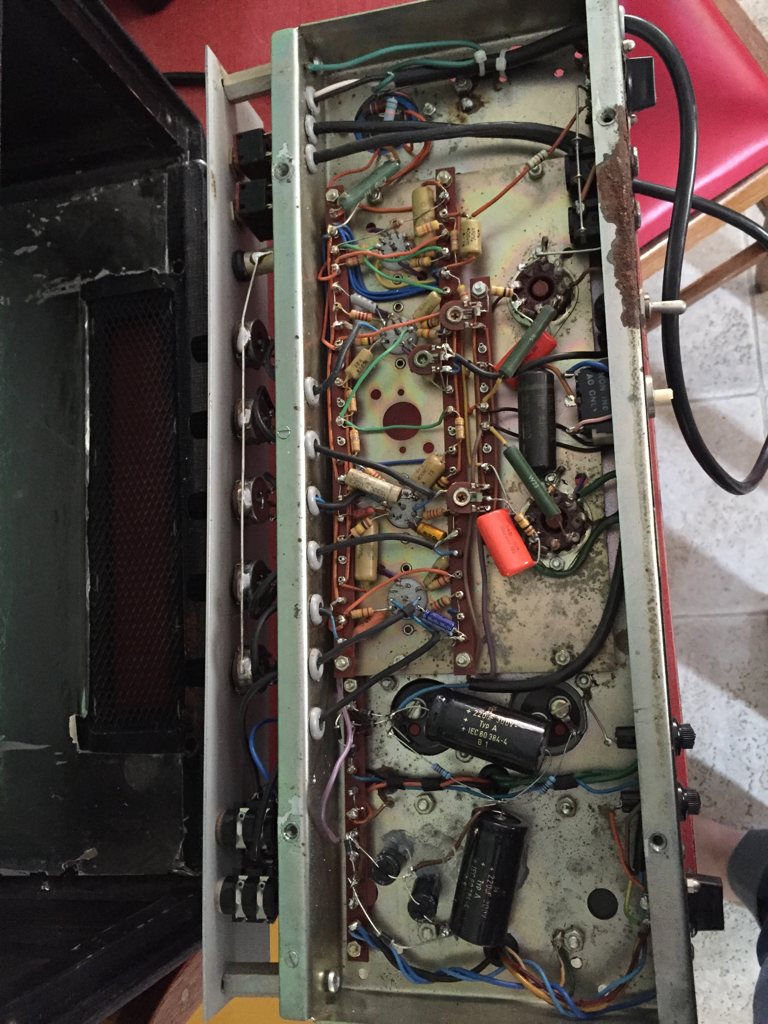
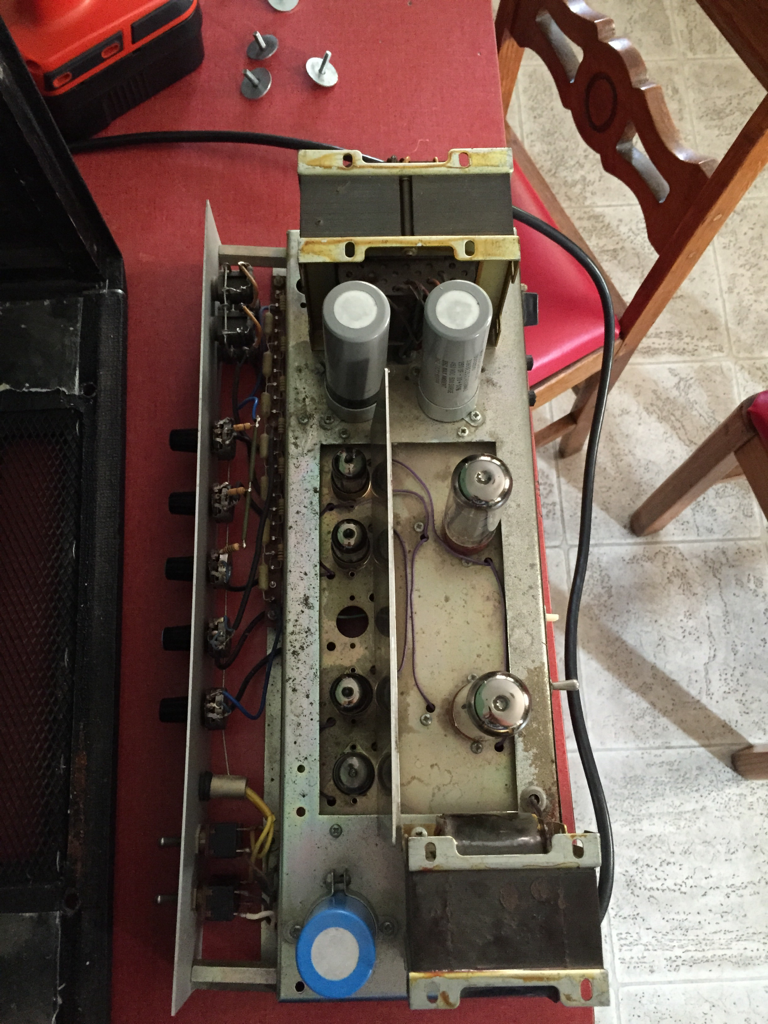
Anywho, also picked up this guy recently. Sound City 50 plus. Bought it cheap figuring it would need some work and/or make a good platform for another hiwatt clone. Got a bit more than I bargained for, but another project for another day. It runs okay for now and has nice partridge transformers so there's that. It's definitely had some work done, just have to go about figuring out what exactly was done and in some cases why. Came with a nice selection of amperex and mullard 12AX7s at least.

Mr. Foxen
Commercial User
High res guts of a fairly unmolested one might help ya:
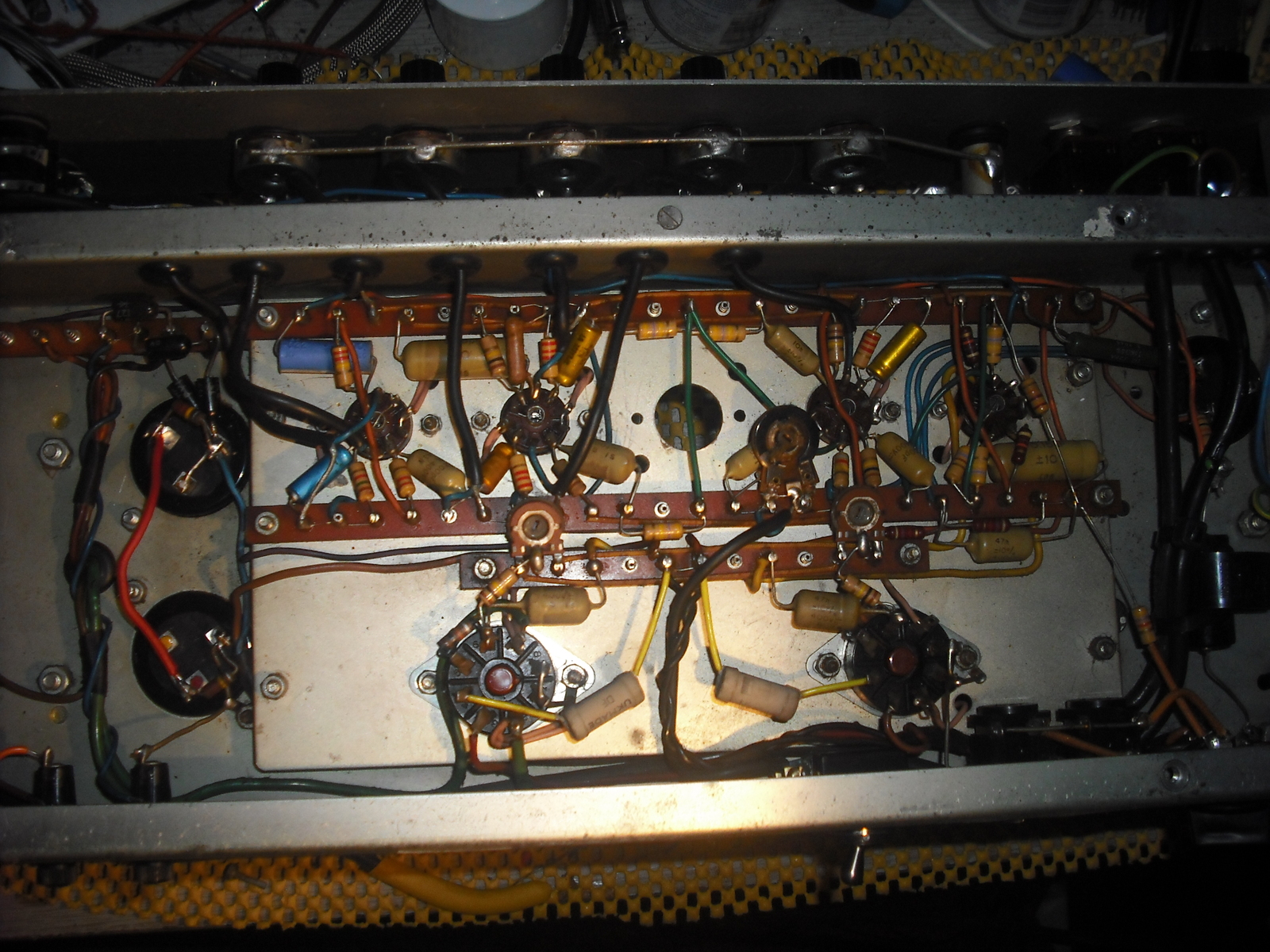
How's this for a weird chassis style:
Link Removed
How's this for a weird chassis style:
Link Removed

Fender Bassman 100T
[Invalid or Expired Link Removed]
[Invalid or Expired Link Removed]
[Invalid or Expired Link Removed]
[Invalid or Expired Link Removed]
Mr. Foxen
Commercial User

Mr. Foxen
Commercial User
I took the photo for making fun of the wiring jobs in classic American amps. It went along with this shot a dude sent me of inside a Hovercraft amp:
Link Removed
Link Removed
I can live with the Ramen, and I recall having been screwed, too! 
How well does Ramen noodles go with bangers?
How well does Ramen noodles go with bangers?

Ampeg B25B:
[Invalid or Expired Link Removed]
[Invalid or Expired Link Removed]
[Invalid or Expired Link Removed]
[Invalid or Expired Link Removed]

The Peavey Basic 112 is very basic - but a good little combo amp for practice. Unfortunately, this specimen had an intermittent in the input jack, so here are the guts:
![ATTACH]](/proxy.php?image=http%3A%2F%2F%5BATTACH%3Dfull%5D2426656%5B%2FATTACH%5D&hash=6850d065ff245598e1e7ee7b12e0615f)

And here is the culprit - two cracked solder joints (centre and centre top):

This is more-or-less inevitable with the jack mounted directly on the circuit board. I just re-soldered the contacts and all is well - 'till next time.
And here is the culprit - two cracked solder joints (centre and centre top):
This is more-or-less inevitable with the jack mounted directly on the circuit board. I just re-soldered the contacts and all is well - 'till next time.
Attachments


- Feb 12, 2006
- 61,056
- 5
- 221,034
- Disclosures
- Development Engineer-Mesa Boogie, Development Engineer-Genzler (pedals), Product Support-Genz Benz
The Peavey Basic 112 is very basic - but a good little combo amp for practice. Unfortunately, this specimen had an intermittent in the input jack, so here are the guts:

And here is the culprit - two cracked solder joints (centre and centre top):
This is more-or-less inevitable with the jack mounted directly on the circuit board. I just re-soldered the contacts and all is well - 'till next time.
Not at all inevitable with PCB mount jacks when using double sided PCBs and plated through holes. Otherwise, every single pro mixing console out on tour would be suffering from this, which they just don't. Even well designed single sided PCBs with proper pads and annular rings and attention to detail.

I don't remember ever seeing this without it being connected to the jack's nut being loose.
Not at all inevitable with PCB mount jacks when using double sided PCBs and plated through holes. Otherwise, every single pro mixing console out on tour would be suffering from this, which they just don't. Even well designed single sided PCBs with proper pads and annular rings and attention to detail.
I don't remember ever seeing this without it being connected to the jack's nut being loose.
Okay, okay - I stand corrected; not inevitable. I'll keep an eye on the input jack nut to make sure it's tight.

Often I/O components are on smaller boards that are connected to the main board with cables. The smaller boards help with strain relief on the solder joints but despite that, problems can occur.
Often I/O components are on smaller boards that are connected to the main board with cables. The smaller boards help with strain relief on the solder joints but despite that, problems can occur.
In fairness, the amp is 15 years old and was gigged some; this is the only thing that's ever gone wrong with it. B-string makes a good point about the input jack nut.
Last edited:
In fairness, the amp is 15 years old and was gigged some; this is the only thing that's ever gone wrong with it. B-string makes a good point about the input jack nut.
I wasn't critizing the design, just saying that there are sometimes better ways to do things. Of couse that makes the product cost more so there are always tradeoffs.
Loose nuts can lead to issues as was said, both broken solder joints and in some cases hum due to a bad ground connection. It is worth checking the amp's nuts from time to time. You don't need a wrench, just your fingers.


