
Quadzilla
Supporting Member

TalkBass has been independent since 1998. Add your voice.
Create a free account to reply to discussions, view embedded media, and browse with fewer display ads.
Join free Log in
Want zero display ads or expanded classifieds tools? Compare plans.


Demeter HBP1-800D to be specific
Demeter HBP1-800D to be specific
Demeter HBP1J-800D to be more specific (the "J" denotes the Jensen transformer DI option)... ;-)
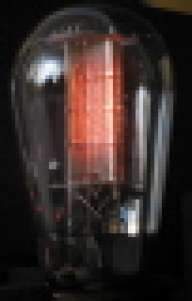
was doing some tube rolling in my Demeter VTBP-M-800DJ and decided I might as well post some gut shots of it while I was at it.
FWIW, I ended up replacing the stock V1 EH 12AX7 with a Sovtek 12AX7LPS, and the stock V2 JJ EC81/12AT7 with a NOS Jan Phillips 12AT7WC.
The Sovtek in V1 did not do a great deal to the over all tone, other than having much less hiss than the EH 12AX7.
The Jan Phillips in V2 did something very nice to my ears. Hard to put it words, but it would seem to have made an already impressively responsive amp even more so .. more responsive to the touch on each string. IDK, my ears are not great anymore, but I did hear something change for the better - and it was already pretty great to begin with
New tubes - top view.
View attachment 982494
Real gut shot
View attachment 982495
enjoy!
Guess the amp?View attachment 2839566

Is it just me or is the workmanship of the Demeter stuff, uh, not great for high dollar gear? Both of these look prototype-ish to me with parts and jumpers barnacled onto the PCBs. Definitely not at the same level as say the Darkglass or Arkham pieces posted in this thread.
While I agree that the board layout is a bit unusual I also like the fact that the components are spread out from each other which may in itself, may provide some level of isolation from electronic noise from one part to another.Is it just me or is the workmanship of the Demeter stuff, uh, not great for high dollar gear? Both of these look prototype-ish to me with parts and jumpers barnacled onto the PCBs. Definitely not at the same level as say the Darkglass or Arkham pieces posted in this thread.
Is it just me or is the workmanship of the Demeter stuff, uh, not great for high dollar gear? Both of these look prototype-ish to me with parts and jumpers barnacled onto the PCBs. Definitely not at the same level as say the Darkglass or Arkham pieces posted in this thread.
I’ve always thought that. The boards and packaging are not up to the professional standards that you see today in comparatively priced products.
Bass Player Magazine doesn’t seem to think so:
“CALIFORNIA AMP AND STUDIO GEAR GURU JAMES Demeter has been a major force in the biz for over 35 years, with many of his designs achieving industry-standard status in studios across the world.”
“The Demeter Minnie head is exceptionally well built and handsome, with a refreshingly no-nonsense front-panel that’s as grokable as they come. The box is covered in vinyl and blessed with a durable top-mounted handle and sizable rubber feet. It’s not as portable as some Class D amps, but its small footprint and low weight still make it a cinch to schlep. Removing the amp from its box revealed a interestingly anachronistic internal design, with the old-school PCB of the preamp standing in stark visual contrast to the thoroughly contemporary surface-mounted board of the Class D/SMPS amp module. The two dual triodes are well protected when in the box, but I’m not a big fan of the blue LEDs that illuminate them from below when the amp is powered up. Seems a little cheesy, although this subjective opinion is certainly not shared by many high-end amp audiophile amp designers. The preamp features good components, like metal-film resistors and Wima capacitors. Tube nuts will approve.”
Quotes from Bass Player Magazine’s review of the Demeter VTBP-M-800D head linked below.
Besides, no other amp sounds like a Demeter, especially in a mix!
Invalid Link Removed
I’ve always thought that. The boards and packaging are not up to the professional standards that you see today in comparatively priced products.
While I agree that the board layout is a bit unusual I also like the fact that the components are spread out from each other which may in itself, may provide some level of isolation from electronic noise from one part to another.
Bass Player Magazine doesn’t seem to think so:
“CALIFORNIA AMP AND STUDIO GEAR GURU JAMES Demeter has been a major force in the biz for over 35 years, with many of his designs achieving industry-standard status in studios across the world.”
“The Demeter Minnie head is exceptionally well built and handsome, with a refreshingly no-nonsense front-panel that’s as grokable as they come. The box is covered in vinyl and blessed with a durable top-mounted handle and sizable rubber feet. It’s not as portable as some Class D amps, but its small footprint and low weight still make it a cinch to schlep. Removing the amp from its box revealed a interestingly anachronistic internal design, with the old-school PCB of the preamp standing in stark visual contrast to the thoroughly contemporary surface-mounted board of the Class D/SMPS amp module. The two dual triodes are well protected when in the box, but I’m not a big fan of the blue LEDs that illuminate them from below when the amp is powered up. Seems a little cheesy, although this subjective opinion is certainly not shared by many high-end amp audiophile amp designers. The preamp features good components, like metal-film resistors and Wima capacitors. Tube nuts will approve.”
Quotes from Bass Player Magazine’s review of the Demeter VTBP-M-800D head linked below.
Besides, no other amp sounds like a Demeter, especially in a mix!
Invalid Link Removed
And there you have it..... It's not cramped, with components practically stacked on-top of each other like many newer designs. It's just more old-school, which works for me...


For contrast, this is an old school design and it is beautifully built:View attachment 2841173





In series with the speaker? Not sure I understand. Why would you want a huge capacitance in series with the load? How would that help performance?The mod you can see is to the power supply, where the original 5,000 uF filter caps in each of + and - rails were increased to 220,000 uF each rail. This set of caps is in series with the speaker so directly affects the sound.