• TalkBass has been independent since 1998. Add your voice.
    Create a free account to reply to discussions, view embedded media, and browse with fewer display ads.
    Join freeLog in
    Want zero display ads or expanded classifieds tools? Compare plans.

Amp models: bass by bass case?

Nov 23, 2015
828
2,434
41
I've been experimenting with building amp models in the HX Stomp and I'm enjoying the process quite a bit. Lots of parameters to adjust and I get a feel for amps that I'll never get to play in physical form. However, every time I build an amp model I like for one bass, it sounds awful on the others. Not meh, but awful. Is this normal?

I'm working with the following: P with rounds, P with flats, J with EMG X pickups

My physical amps never have this issue. I add a touch of bass boost to the J but that's all the tweaking I do between instruments. I'm wondering if I'm missing something while building my amp models because it doesn't seem right. For example, my B-15 model sounds great on the P with flats, but terrible with the round P. The inverse applies with the SVT model I built. Any feedback is appreciated : )
 
  • Like
Reactions: gtirard and GTHintz
I get this a bit, once I've spent time really dialing in the sound for my short scale P with flats my long scale jazz sounds a bit off, so I usually just make another duplicate patch with the setting adjusted for the other bass. It helps that I only have 2 I ever play live so it doesn't take much time to get each right.

I've found if I download a NAM or something and throw it in a basic patch I get something that sounds pretty good for everything, but once I start dialing it in for "perfection" for one bass it always slowly goes out for the other. Just how things are I think.
 
I've been experimenting with building amp models in the HX Stomp and I'm enjoying the process quite a bit. Lots of parameters to adjust and I get a feel for amps that I'll never get to play in physical form. However, every time I build an amp model I like for one bass, it sounds awful on the others. Not meh, but awful. Is this normal?

I'm working with the following: P with rounds, P with flats, J with EMG X pickups

My physical amps never have this issue. I add a touch of bass boost to the J but that's all the tweaking I do between instruments. I'm wondering if I'm missing something while building my amp models because it doesn't seem right. For example, my B-15 model sounds great on the P with flats, but terrible with the round P. The inverse applies with the SVT model I built. Any feedback is appreciated : )
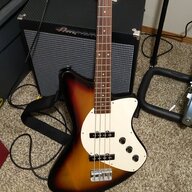
The thing with these amp modellers is that it’s basically a bunch of hi lo pass filters and compression and attenuation that is preset to mimic the sonic effects of the bass rigs that they tested at the time of development of the ir patches. They aren’t exactly real amps so it’s still going to be less organic than the real amps. I think that’s the real problem. If you can find some settings that are more in the middle and supplement it with say eq or another preamp pedal it might balance out. I have several preamp pedals for the exact reason that it’s hard to get perfection from all the basses I have. I found that the best for me is to find a more neutral tone and use my on board pres to fine shape the tone.
 
Are you listening through headphones or into a pair of powered mixing monitors?
I have headphones but I also have a powered monitor I run it through. I can get a good sound out of each bass, but I have to build new patches for each.
I would start by checking the impedance settings on the input block for the respective patch(es) you're using. They can load load your pickups differently depending on the pickups. It's always the first thing I check when things don't sound quite right.
This is actually a good point I forgot to consider. Not really used to active pickups I bet that's a big factor. I'll troubleshoot that tonight thank you.
 
However, every time I build an amp model I like for one bass, it sounds awful on the others. Not meh, but awful. Is this normal?


I haven't and don't plan to go down this rabbit hole, but your experience sounds entirely normal.

IMHO you have to consider the bass, amp, and speaker all parts of a composite instrument. Change out one of the components and usually it will be necessary to make adjustments...even in the virtual word.

It's just like the real world: Let's say I am playing guitar and I adjust some effects to sound good through a Marshall...and then plug into a different amp, such as a Fender. I will have to tweak everything for optimal results.

Dial in you signal path to sound good on stage. Now send this signal through an amp's post EQ DI to front of house. Chances are it will sound awful unless you have an audio tech who can work some serious mojo.
 
I think @GTHintz and @Wasnex pretty much hit the nail on the head, I was going to say something to that effect for both.

The coloration speakers/cabs do to our tone is known, but sometimes we don't fully factor in how much they influence the end product. My reason for asking if headphones or monitors were used is both are designed to remove a lot of variables, in that issues like projection, room acoustics, and beaming are mitigated when using them. I don't know if I'd call it "more accurate" on all fronts, I'd just say they're designed to eliminate some of the variables a speaker cabinet introduces by nature. That's not always a positive thing in all applications, IME.

Full disclosure, I LOVE my Zoom B3n, its headphone out got me through a lot when I had to be silent in my last apartment. Now that I'm in a house, my Ashdown 1x10 combo is my go-to 95% of the time for practice. I can run it dry, with a compressor, or even put the B3n in front, and the Ashdown sounds good flat or with slight EQ tweaking on multiple basses. That's been the case on multiple amps/combos I've owned in the past.

I had/have the same experience as you OP, hence my response lol. The modeling stuff will get you there, just with some extra tweaking. My music gear laziness has started to take over (home maintenance is draining!), so the turnkey attribute has skyrocketed in value to me lol.

Also, those EMG JX pickups are pretty rad...got them in my 5'er and in the bridge on another Ibby. Very beefy and articulate :bassist:
 
Appreciate the insight everyone. I took the Stomp out with my Sire P5R a couple weeks ago and it sounded great so it's not the end of the world to have bass specific patches.
You’ll have to probably have specific patches fine tuned for each bass. It’s about the same as how it is with an old school amp and a few basses to plug in. I wouldn’t expect every bass to be dialed in exactly. Now what I said about finding a more neutral eq on the pedal and doing the rest on the bass stands especially if you had to do it on stage. It took a lot of experimenting to find a preamp that would sound good for all my basses but thankfully I did. Now if I want to play with a certain preamp and bass I can plug it in but I have a core sound I like and I can always go back to. I hope you find a good system for you.
 
  • Like
Reactions: Wasnex
That can happen with real amps. Perhaps the effect is more exaggerated since in a sense you amplifying something that was amplified already when the model was created. Now that I think about it, I see the same sort of thing where my volume difference with different basses I have with my Tonex.
 
I've been experimenting with building amp models in the HX Stomp and I'm enjoying the process quite a bit. Lots of parameters to adjust and I get a feel for amps that I'll never get to play in physical form. However, every time I build an amp model I like for one bass, it sounds awful on the others. Not meh, but awful. Is this normal?

I'm working with the following: P with rounds, P with flats, J with EMG X pickups

My physical amps never have this issue. I add a touch of bass boost to the J but that's all the tweaking I do between instruments. I'm wondering if I'm missing something while building my amp models because it doesn't seem right. For example, my B-15 model sounds great on the P with flats, but terrible with the round P. The inverse applies with the SVT model I built. Any feedback is appreciated : )
I've had the same problem with the HX Stomp when I had it, plus the fact that changing presets using different amp models during a gig made a sudden change of presence in the mix.

So I made all my HXS preset for my main bass, and kept the same amp model in all presets, only changing the effects. And since I was mostly using OD for some songs and Chorus for others, I ended up using only one preset during a whole gig, using OD and chorus in stomp mode.

My final and last move was to give the HXS to my daughter, and by Jad Freer Capo for 2 dirt levels and a bass chorus.
 
  • Like
Reactions: ItsmeSantiago
To me, these things are pointless, either live or into any sort of recording mix, I never heard them do anything I couldn't do with a good bass and amp or preamp and my hands.

It's silly to think a digital emulation through a FRFR style cabinet is going to sound anything like standing in front of the genuine Ampeg, Acoustic, or any other wildly imperfect bass amps and cabinets from back in the day.

YOUR results probably differ. But then, I'm old enough to have played all of them in their day.
 
My additional suggestion is to audition your patches with a loud backing truck of drums and a chordal instrument (guitar or loud keys). Do not just rely on listening to it alone. Usually if it sounds good alone it will be lost or sound bad with other instruments. I use my PA and crank it loud just like in a gig. What I have noticed that on their own specially at practice levels my patches may not sound so great or just okay

I am assuming you will be gigging with your HX stomp patches.....

Not sure what the Hx inputs are . Do they take Hi-Z or are they properly loading your pickups. I use a Source Audio ZIO which has a hi-Z and alsoa line out and that really helps my modeler to react properly as well. It is not an HxStomp. I find it better to just have this device in Line and Just making sure everything it at unity or use the ZIOs level control to gain match.
 
I have always liked experimenting with different amp and speaker combinations, some work better with some basses in some contexts and occasionally there are some horible results, but even those can be an ungly beauty to behold. One of the advantages of digital amp modelling is haveing the opportunity to try out those combinations and even experience rare amps you might never actually encounter IRL. With those tools i can recreate some of my past "greatest hits" and lost combinations like the Bassman through a Cerwin Vega 18" I used in the C&W Dance band for a while, great big booty to the classic 2x15 with a Mesa 400.
 
I set my GT1000- everything runs through the same amp modeler, the same virtual EQ, then, I just assign the knobs with on-the-fly EQ depending on the bass.

No issues- the main thing to look out for is guitar OUTPUT, I set the output signal based on my least hot bass- say my Passive Reverend, so at max volume, output is ideal, for my hotter actives, I just roll the volume down.

Some multi-effects like my Boss are output sensitive, if you aren't careful, you'll clip the output so everything is really harsh especially when it's emulating a tube amp- or the inverse, it'll sound weak and boring.

Think of it as gain.