I play in a motown/wedding band with a Jazz and a 6 string. Will this be a good combo for that tone? How is the tweeter and tone of it? Loudness?

Enjoy the benefits of a premium membership!
Upgrade Account
-
TalkBass has been independent since 1998. Add your voice.
Create a free account to reply to discussions, view embedded media, and browse with fewer display ads.
Join free Log in
Want zero display ads or expanded classifieds tools? Compare plans.
You are using an out of date browser. It may not display this or other websites correctly.
You should upgrade or use an alternative browser.
You should upgrade or use an alternative browser.
Ampeg B15R flip top?
- Thread starter Flat Bass
- Start date
More options
Who Replied?Just so you know, it has almost nothing in common with the "sound" of the original B15N. The B15R is not bad, but IMO, the s/s B100 is a much better amp for your situation if you want a motown tone and costs about a quarter of the B15R's price.

They're selling a 60's Ampeg B-15 at my local GC. I bet THAT sounds fantastic for motown.
Get an extension cab for it though.
Get an extension cab for it though.

The B-15R is basically the current V4B reissue head built up in a Portaflex format. The preamp of both amps is the same as the current SVT Classic. So while it looks like an old B-15 it sounds different. That may be good or bad for your application.
The tweeter can be turned off.
The amp is really heavy, too.
You can buy real vintage B15s for much less (Ampeg is the only company who has sold reissues for more than the originals go for) of course they aren't as loud.
The tweeter can be turned off.
The amp is really heavy, too.
You can buy real vintage B15s for much less (Ampeg is the only company who has sold reissues for more than the originals go for) of course they aren't as loud.


Psycho Bass Guy said:Just so you know, it has almost nothing in common with the "sound" of the original B15N. The B15R is not bad, but IMO, the s/s B100 is a much better amp for your situation if you want a motown tone and costs about a quarter of the B15R's price.
this is a really interesting point. i have tried several times the b100r but i have never had the chance to play thru a b15r. since i loved the tone of the ss b100r i was thinking that a b15r could be a match made in heaven.
the b100r is a tone machine.
the b15r seems to be the same amp as the V4b-h.
- Aug 24, 2006
- 19
- 3
- Disclosures
- Co-Author of "Ampeg: The Story behind the Sound"
You should check out the B15R with your own fingers/bass/ears. I've had one for a few years and love it. I play a '62 reissue P-bass with Tomastik flats. I leave the tweeter off. I think it definately has an "old Ampeg" sound. Maybe not exactly like an old B15 but big and warm and round with a little growl when you dig in. Even at the rated 100 watts, it is not real loud, but loud enough for most of my gigs. I also have the (discontinued) ext. cabinet for it which helps it move a lot more air for some occasions. The built-in balanced out sounds great in the FOH system or into a recording setup. I've used it on two CD projects.
Weighs a ton and is easily overpowered by a banjo and a tambourine. Add in an aggressive bongo player and you might as well forget it. It might work alright in a three piece jazz combo if you play all ballads and the drummer is on Quaaludes. Suitable for backing up some folk singers if you cut the lows and crank the volume all the way up. I bought one new to try it out as a home practice rig. Paid $1495. It looked really cool sitting there in my living room. And the blue tolex matched up nicely with my vintage Gemini I and II guitar amps. Then my guitar player came over to work out some tunes. His little Pignose amp running on batteries drowned out the B15R. The next day I put it on consignment at a popular music store that sells a lot of Ampeg gear. It took a YEAR to unload it and I ended up getting $600. 

try the b200r too. ampeg just released it. i own one. it's got 220 watts, preamp is tube, tweeter (can be turned off), 4 casters (cause its 68 lbs.), Balanced DI Out (in case you need to go into the board), and it got those sexy portaflex looks.
it's the b100r's big brother.
it's the b100r's big brother.

Jazzdogg
Less barking, more wagging!
Flat Bass said:I play in a motown/wedding band with a Jazz and a 6 string. Will this be a good combo for that tone? How is the tweeter and tone of it? Loudness?
One of my rigs is a 1965, all-tube, Ampeg flip-tip. I love the tone, but it can't be pushed terribly loud without distortion.
Guitartist friends are always trying to buy my '65 Ampeg and my '64 Fender Bassman, but I still love the tone they produce for quiet gigs and upright.

Check out the EA amps and Whizzy cab. The Whizzy is a modern cab with sound of the 60's fliptop thumper. They make a cab version and combo version.
I've followed the B15 original vs. B15R debate for a while. And thanks to all that have put their ideas on the table. Time for my 2 cents. I know, opinions are like $#&%*!@^; everyone has one!
I've owned 7 original B15's since 1978 and a B18x head with later (Ampeg-Magnavox) Altec 421A based B15 cabinet which was the best combo of them all. I sold all off I had 6 years ago. Just bought a B15R. I tested it for an hour playing alone. Sounded wonderful and got plenty loud. I took it on a gig with a loud blues trio. Guitarist has a Fender Deluxe Reverb '65 reissue which he runs at full tilt. We run a medium sized PA. It took all night till I found the right settings. But at the end it could just about cut it for stage volume on the loud tunes and on the low to moderate volume tunes, it ran fine, even without a direct out to the PA. I didn't compare the new B15 to the old ones.
Old vs New. I've read the posts about the 'R' being kind of a dog. I spoke to Jess Oliver, the designer of both the original B15 and a key consultant on this reissue. He feels that the new amp does a lot more than the old amp and is improved in many ways, most noticeably in power and the ability to deliver the low 'B' string. However, he said that this extra bass changes the sound so many think the new amp is different and to some, not as good. But, you have the ability on the 'R' to dial in the old amp sound by switching to the 60 watt setting, turning off the tweeter and reducing the bass control. This is not to say the new amp is the same as the old - it's been updated in an honest attempt to make an improved version that includes the original sound in its new format. I believe this fully. This is not just an ill-conceived reissue as it seems to be portrayed from time to time.
Knob settings. This is not an intuitive design to me. The tube bias and impedance selector switches are goofy and the manual doesn't explain what setting is where. I definately had them in the wrong position and the amp sounded inconsistent. The input volume needs to be run up from half to full. The output volume (master) can't exceed half. This is very different than the original which had a single volume control. I wonder if some of the owners of the 'R' never found the right settings which led to their dissatisfaction.
Improvements. I had the 'R' and an original side by side (but I didn't compare sound - sorry!). The new amp seems better built. The logo is metal (not sure if the original was, but this one seems heavier), the corners are screwed in instead of nailed on, the cabinet plywood is that nice 11 ply stuff as opposed to the standard lumber yard construction grade on the original, they went to a single channed head with lots of tone adjustments, the power and speaker cords detach, the transformers are much bigger, you can choose between 2 or 4 output tubes, and on and on...and it sounds real nice too.
Weight. The new amp is somewhere between a B18 and a B15 in size and heavier than the B18 in weight. But the weight is offset by the fact that I always carry the head and cabinet separately. So in this regard, each are about 50lbs and very manageable. The 'R' did not fit in my car trunk though (not a big trunk) as the original would have.
Old amp condition. This is a real wild card. The problem is that the original amps are now 40+ years old. Not being an engineer, I really don't know what I'm buying when I get an original. I was told the electrolytic caps would be leaking oil in an amp of that age and if changed to a different cap, would alter the sound. And that's just the caps. The age can affect a lot of the parts and thus the performance. Sure, if you find a 'closet classic' or can rebuild one to original spec, go for it. But be prepared for the cost and the fact it is a rebuild.
Flexibility. The 'R' has lots of options the original didn't allowing for the use of 5 string basses (according to Jess) and many more tone choices.
Ampeg goes overseas. With the company shifting most or eventually all production to Vietnam, will the US made 'R' become a classic in its own right?
Final thoughts. The 'R' is a beautiful, updated tribute product that does more than the original. I love the sound and it has Jess Oliver's seal of approval. Does the sound match an original if you dial it in carefully? I didn't do the demo. But how valid would the demo actually be? Here's why. My favorite B15 back in the 70's when these amps were only 15 years old was a B18/B15 Magnavox-Altec. And that was picked after extensive sound testing with 5 other B15's in the same room. So even back then, I didn't pick an 'original' as my chosen amp. Now, with the originals being 40+ years old, I don't know what I'd be testing against.
The short of it is the original B15 is the low-volume tone standard for electric bass. I wish I had stashed a few away in a closet. Since I didn't, I'm glad the 'R' is there. And even if I had a mint original, I might still own an 'R' (and maybe a real original B18 too!) YMMV.
I've owned 7 original B15's since 1978 and a B18x head with later (Ampeg-Magnavox) Altec 421A based B15 cabinet which was the best combo of them all. I sold all off I had 6 years ago. Just bought a B15R. I tested it for an hour playing alone. Sounded wonderful and got plenty loud. I took it on a gig with a loud blues trio. Guitarist has a Fender Deluxe Reverb '65 reissue which he runs at full tilt. We run a medium sized PA. It took all night till I found the right settings. But at the end it could just about cut it for stage volume on the loud tunes and on the low to moderate volume tunes, it ran fine, even without a direct out to the PA. I didn't compare the new B15 to the old ones.
Old vs New. I've read the posts about the 'R' being kind of a dog. I spoke to Jess Oliver, the designer of both the original B15 and a key consultant on this reissue. He feels that the new amp does a lot more than the old amp and is improved in many ways, most noticeably in power and the ability to deliver the low 'B' string. However, he said that this extra bass changes the sound so many think the new amp is different and to some, not as good. But, you have the ability on the 'R' to dial in the old amp sound by switching to the 60 watt setting, turning off the tweeter and reducing the bass control. This is not to say the new amp is the same as the old - it's been updated in an honest attempt to make an improved version that includes the original sound in its new format. I believe this fully. This is not just an ill-conceived reissue as it seems to be portrayed from time to time.
Knob settings. This is not an intuitive design to me. The tube bias and impedance selector switches are goofy and the manual doesn't explain what setting is where. I definately had them in the wrong position and the amp sounded inconsistent. The input volume needs to be run up from half to full. The output volume (master) can't exceed half. This is very different than the original which had a single volume control. I wonder if some of the owners of the 'R' never found the right settings which led to their dissatisfaction.
Improvements. I had the 'R' and an original side by side (but I didn't compare sound - sorry!). The new amp seems better built. The logo is metal (not sure if the original was, but this one seems heavier), the corners are screwed in instead of nailed on, the cabinet plywood is that nice 11 ply stuff as opposed to the standard lumber yard construction grade on the original, they went to a single channed head with lots of tone adjustments, the power and speaker cords detach, the transformers are much bigger, you can choose between 2 or 4 output tubes, and on and on...and it sounds real nice too.
Weight. The new amp is somewhere between a B18 and a B15 in size and heavier than the B18 in weight. But the weight is offset by the fact that I always carry the head and cabinet separately. So in this regard, each are about 50lbs and very manageable. The 'R' did not fit in my car trunk though (not a big trunk) as the original would have.
Old amp condition. This is a real wild card. The problem is that the original amps are now 40+ years old. Not being an engineer, I really don't know what I'm buying when I get an original. I was told the electrolytic caps would be leaking oil in an amp of that age and if changed to a different cap, would alter the sound. And that's just the caps. The age can affect a lot of the parts and thus the performance. Sure, if you find a 'closet classic' or can rebuild one to original spec, go for it. But be prepared for the cost and the fact it is a rebuild.
Flexibility. The 'R' has lots of options the original didn't allowing for the use of 5 string basses (according to Jess) and many more tone choices.
Ampeg goes overseas. With the company shifting most or eventually all production to Vietnam, will the US made 'R' become a classic in its own right?
Final thoughts. The 'R' is a beautiful, updated tribute product that does more than the original. I love the sound and it has Jess Oliver's seal of approval. Does the sound match an original if you dial it in carefully? I didn't do the demo. But how valid would the demo actually be? Here's why. My favorite B15 back in the 70's when these amps were only 15 years old was a B18/B15 Magnavox-Altec. And that was picked after extensive sound testing with 5 other B15's in the same room. So even back then, I didn't pick an 'original' as my chosen amp. Now, with the originals being 40+ years old, I don't know what I'd be testing against.
The short of it is the original B15 is the low-volume tone standard for electric bass. I wish I had stashed a few away in a closet. Since I didn't, I'm glad the 'R' is there. And even if I had a mint original, I might still own an 'R' (and maybe a real original B18 too!) YMMV.
- Aug 24, 2006
- 19
- 3
- Disclosures
- Co-Author of "Ampeg: The Story behind the Sound"
Wow, what a great post by MacMrkt.
I've gotta get out to see Joe's Banjo, Tamborine, and bass band; sounds like they could be the next big thng with the kids these days.
I play in a three piece "roots rock" band ( http://TheMelroys.com ) with a hard hitting drummer and guitar player who plays aggressively but balances with the rest of us. My B15R has only had trouble keeping up on gigs in bigger venues (300-2000), but the balanced out into the FOH and monitors takes care of that. Oh, and a couple of times when a guitar player friend who plays too damned loud for the room/band sat it with us, the amp ran out of gas. Yes, it is heavy, but, at 50 years old I can still lift it in and out of the car. To go up more than a flight of stairs, I take the head out and make two trips. I switch off between the P-bass and a 60s Ampeg Baby Bass (with Azola mods) which also sounds great with the B15R.
It wasn't right for Joe, but might be for you, Barraso, try it and see.
To be honest, I also use an Ampeg PortaBass 800 with a 2-10 PortaBass cabinet. Which one I take depends on the venue and how much I have to haul in my car.
I've gotta get out to see Joe's Banjo, Tamborine, and bass band; sounds like they could be the next big thng with the kids these days.
I play in a three piece "roots rock" band ( http://TheMelroys.com ) with a hard hitting drummer and guitar player who plays aggressively but balances with the rest of us. My B15R has only had trouble keeping up on gigs in bigger venues (300-2000), but the balanced out into the FOH and monitors takes care of that. Oh, and a couple of times when a guitar player friend who plays too damned loud for the room/band sat it with us, the amp ran out of gas. Yes, it is heavy, but, at 50 years old I can still lift it in and out of the car. To go up more than a flight of stairs, I take the head out and make two trips. I switch off between the P-bass and a 60s Ampeg Baby Bass (with Azola mods) which also sounds great with the B15R.
It wasn't right for Joe, but might be for you, Barraso, try it and see.
To be honest, I also use an Ampeg PortaBass 800 with a 2-10 PortaBass cabinet. Which one I take depends on the venue and how much I have to haul in my car.

markjazzbassist said:try the b200r too. ampeg just released it. i own one. it's got 220 watts, preamp is tube, tweeter (can be turned off), 4 casters (cause its 68 lbs.), Balanced DI Out (in case you need to go into the board), and it got those sexy portaflex looks.
it's the b100r's big brother.

I just played one.
Great amp.
More power, head room, tone than BR100.
I love to hear one with a 15" extention speaker.
- Aug 24, 2006
- 19
- 3
- Disclosures
- Co-Author of "Ampeg: The Story behind the Sound"
Wow, what a great post by MacMrkt.
I've gotta get out to see Joe's Banjo, Tamborine, and bass band; sounds like they could be the next big thng with the kids these days.
I play in a three piece "roots rock" band ( http://TheMelroys.com ) with a hard hitting drummer and guitar player who plays aggressively but balances with the rest of us. My B15R has only had trouble keeping up on gigs in bigger venues (300-2000), but the balanced out into the FOH and monitors takes care of that. Oh, and a couple of times when a guitar player friend who plays too damned loud for the room/band sat it with us, the amp ran out of gas. Yes, it is heavy, but, at 50 years old I can still lift it in and out of the car. To go up more than a flight of stairs, I take the head out and make two trips. I switch off between the P-bass and a 60s Ampeg Baby Bass (with Azola mods) which also sounds great with the B15R.
It wasn't right for Joe, but might be for you, Barraso, try it and see.
To be honest, I also use an Ampeg PortaBass 800 with a 2-10 PortaBass cabinet. Which one I take depends on the venue and how much I have to haul in my car.
I've gotta get out to see Joe's Banjo, Tamborine, and bass band; sounds like they could be the next big thng with the kids these days.
I play in a three piece "roots rock" band ( http://TheMelroys.com ) with a hard hitting drummer and guitar player who plays aggressively but balances with the rest of us. My B15R has only had trouble keeping up on gigs in bigger venues (300-2000), but the balanced out into the FOH and monitors takes care of that. Oh, and a couple of times when a guitar player friend who plays too damned loud for the room/band sat it with us, the amp ran out of gas. Yes, it is heavy, but, at 50 years old I can still lift it in and out of the car. To go up more than a flight of stairs, I take the head out and make two trips. I switch off between the P-bass and a 60s Ampeg Baby Bass (with Azola mods) which also sounds great with the B15R.
It wasn't right for Joe, but might be for you, Barraso, try it and see.
To be honest, I also use an Ampeg PortaBass 800 with a 2-10 PortaBass cabinet. Which one I take depends on the venue and how much I have to haul in my car.
- Aug 24, 2006
- 19
- 3
- Disclosures
- Co-Author of "Ampeg: The Story behind the Sound"
Please excuse the double post. My browser hung on "posting quick reply please wait" for 15 minutes then said I was not logged in so I posted again.
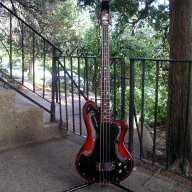
Hello everyone I Hector and I am a long time fan of Ampeg products, I have a 1970 Dan Armstrong Bass, An Scroll neck AEB in mint condition which I play on all of my LatinSalsa Gigs, an Ampeg AMB1 Purple Quilt Bass, an AMG1 Guitar which is awsome, An Ampeg B-1RE bass amp and finally I got directly from Jess Oliver a B-15R ampeg Portaflex Amp. In brand new condition.

Back in 2001, I had a chance to try out the B15R at the GC in Arlington Hts, IL. At that time, I had never played through a vintage Portaflex so I didn't know what to expect other than what I had read. I played through every Ampeg head and cab they in the store, and the B15R was by far... my favorite of them all. I turned the tweeter off because I was going for a very warm and thumpin '60's tone and I got it. back then, I couldnt afford the $1799 they were asking, so I got a 3-Pro.
Fast forward to now. I currently own both a B-100R and a '63 B15N portaflex which I am in the process of restoring the cab. All three amps are from the same bloodline so to speak - and you couldn't go wrong with any of them. The biggest difference between them that affects the sound in my opinion is not so much the amp heads themselves, but rather the fact that the '63 and the B-100 are both single 15's in a comparitively small ported cab. The B15R cabinet is not ported, and requires a little extra EQ tweaking to get some of that air moving like you get from the other two amps.
If I had the cash to jump on a B15R - I would in a heartbeat. However, I would personally order up a couple of port flanges and cardboard tubes from Ampeg, and I would port the back of the cab just like the B-100. That might not be the brightest idea since B15R's are becoming hard to find and that mod wouldnt be considered "original" - but - it would suit my gigging needs. If cost is a driving factor, check out a B100R. You can usually score one very reasonably, and even though its solid state, it's the closest thing out there to an original B15 today.
Fast forward to now. I currently own both a B-100R and a '63 B15N portaflex which I am in the process of restoring the cab. All three amps are from the same bloodline so to speak - and you couldn't go wrong with any of them. The biggest difference between them that affects the sound in my opinion is not so much the amp heads themselves, but rather the fact that the '63 and the B-100 are both single 15's in a comparitively small ported cab. The B15R cabinet is not ported, and requires a little extra EQ tweaking to get some of that air moving like you get from the other two amps.
If I had the cash to jump on a B15R - I would in a heartbeat. However, I would personally order up a couple of port flanges and cardboard tubes from Ampeg, and I would port the back of the cab just like the B-100. That might not be the brightest idea since B15R's are becoming hard to find and that mod wouldnt be considered "original" - but - it would suit my gigging needs. If cost is a driving factor, check out a B100R. You can usually score one very reasonably, and even though its solid state, it's the closest thing out there to an original B15 today.


