• TalkBass has been independent since 1998. Add your voice.
    Create a free account to reply to discussions, view embedded media, and browse with fewer display ads.
    Join freeLog in
    Want zero display ads or expanded classifieds tools? Compare plans.

Ampeg Isovent - Jack Plate Circuit Board.

Status
Not open for further replies.

Nicholas Orick

Inactive
Feb 21, 2016
332
128
63
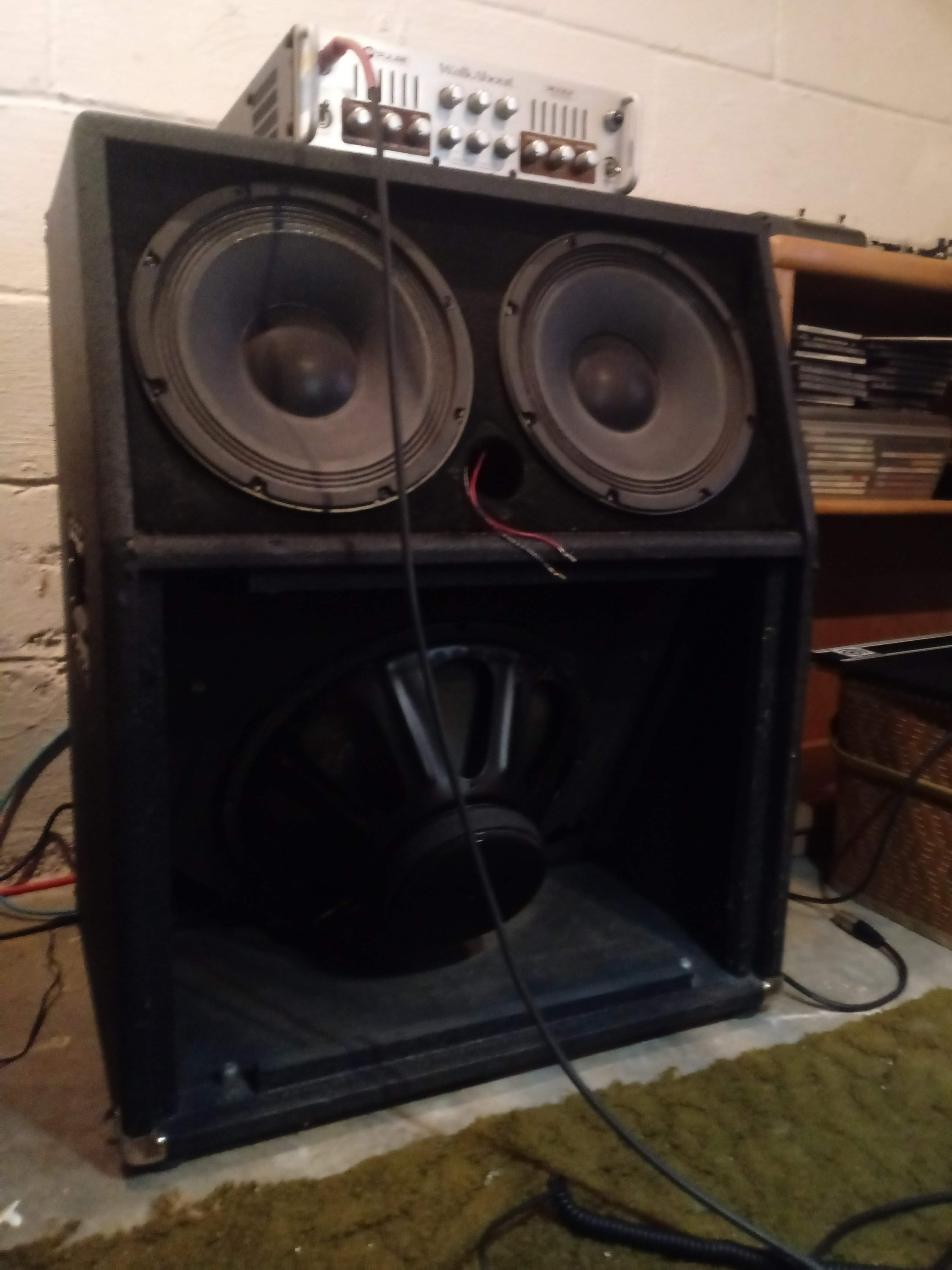
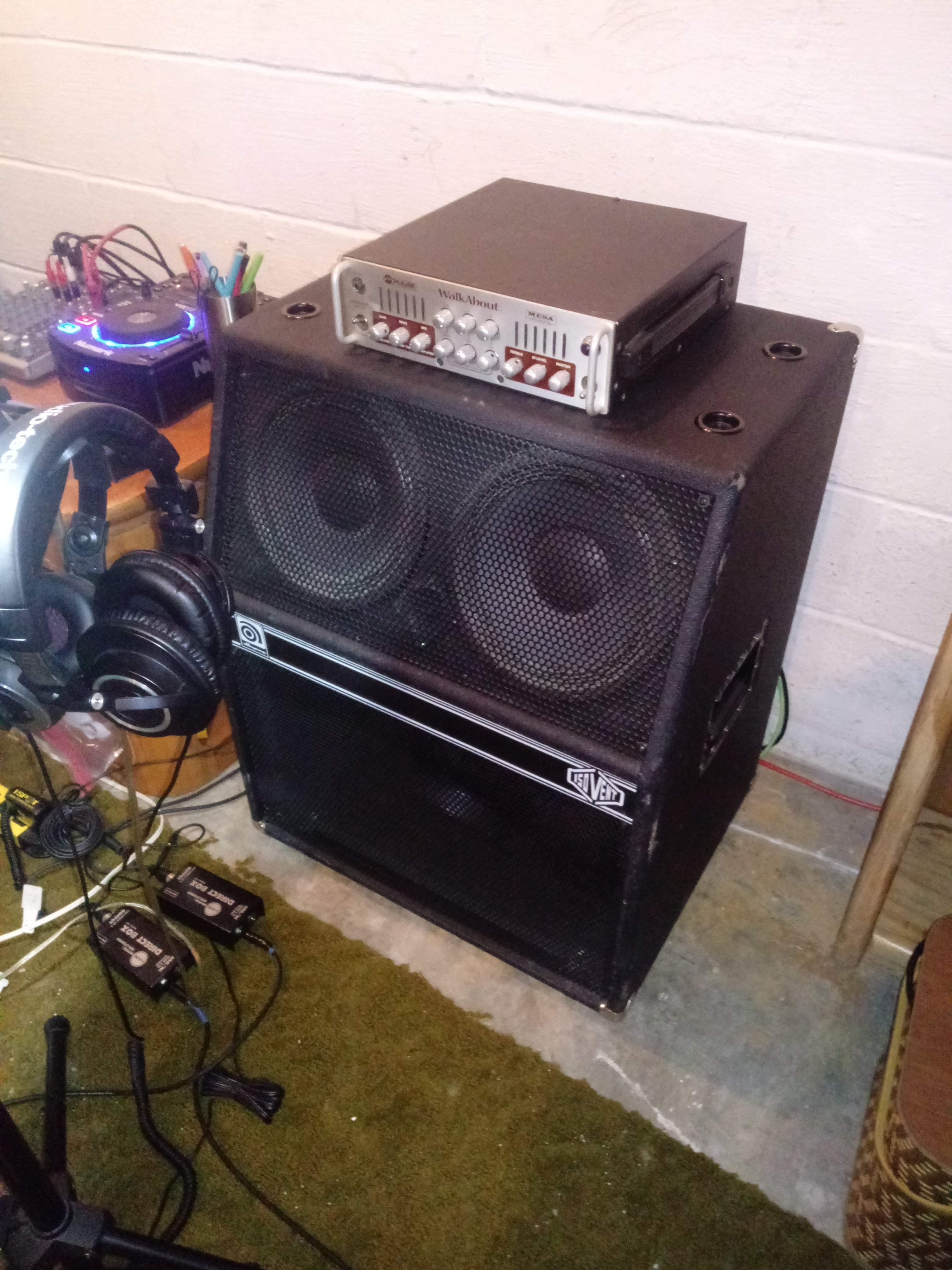
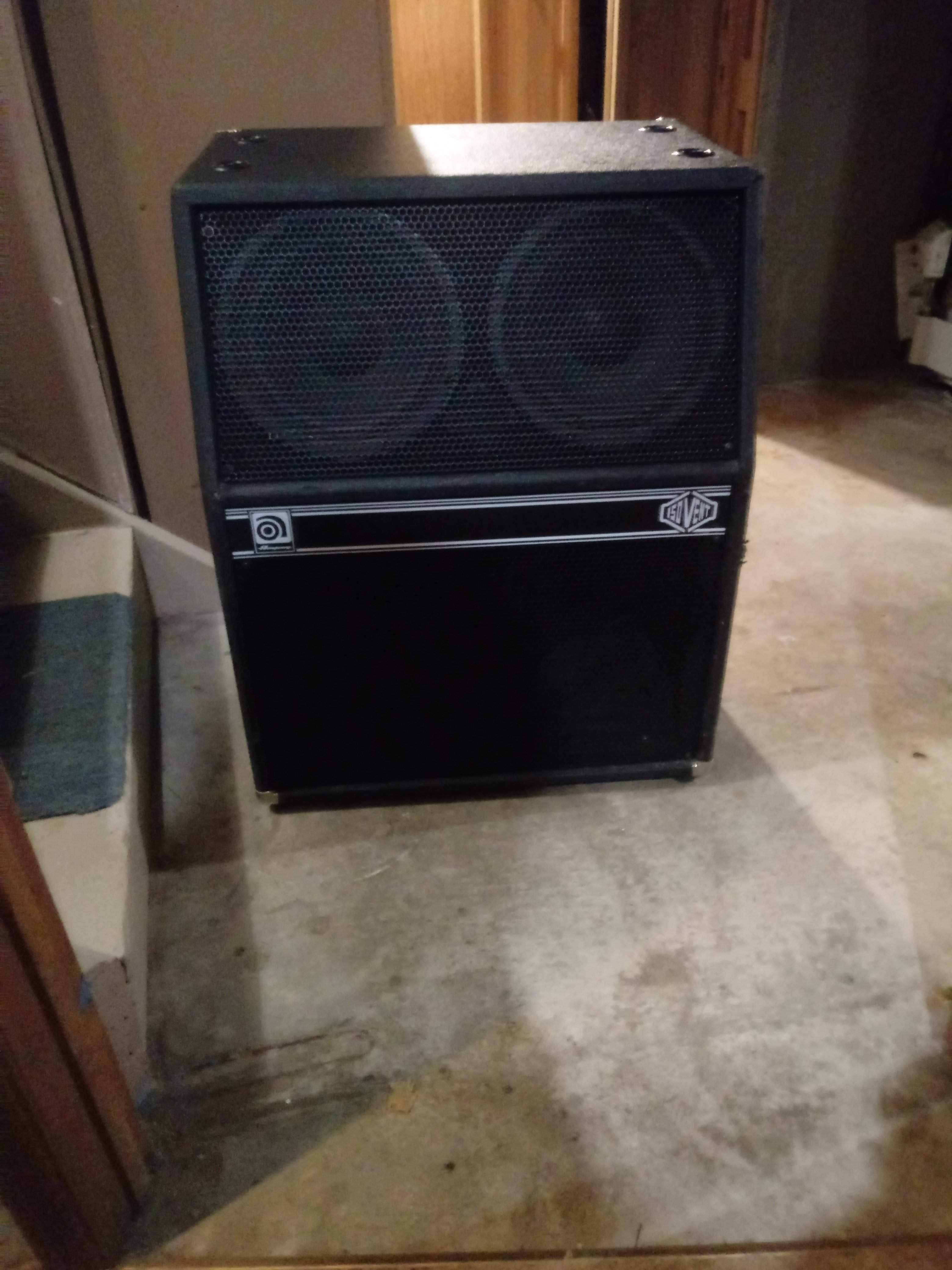
I have an Ampeg Isovent speaker cab. For some unknown reason when I play F, most particularly F2, the F is very intense.

I call this the F Bomb.

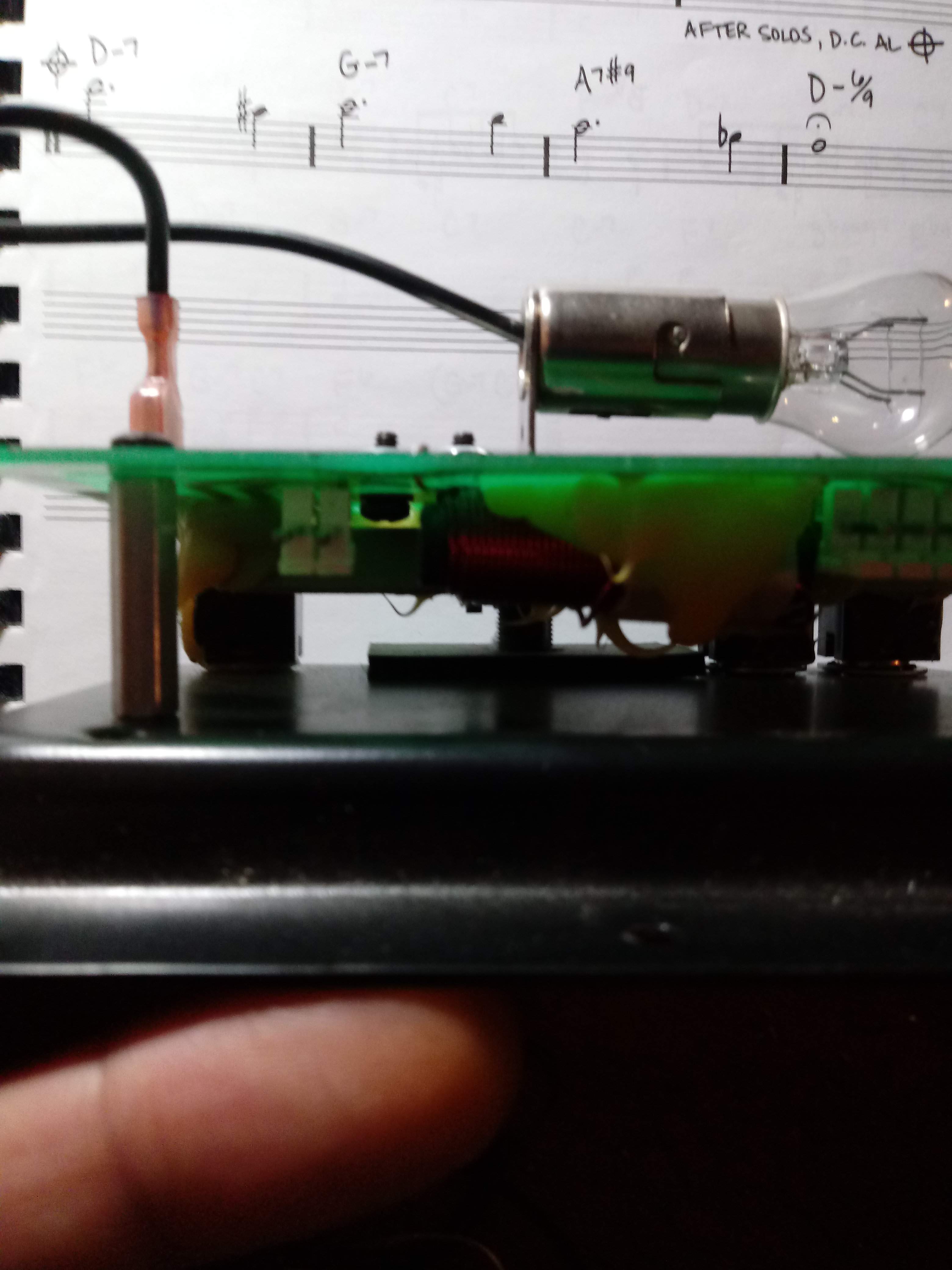
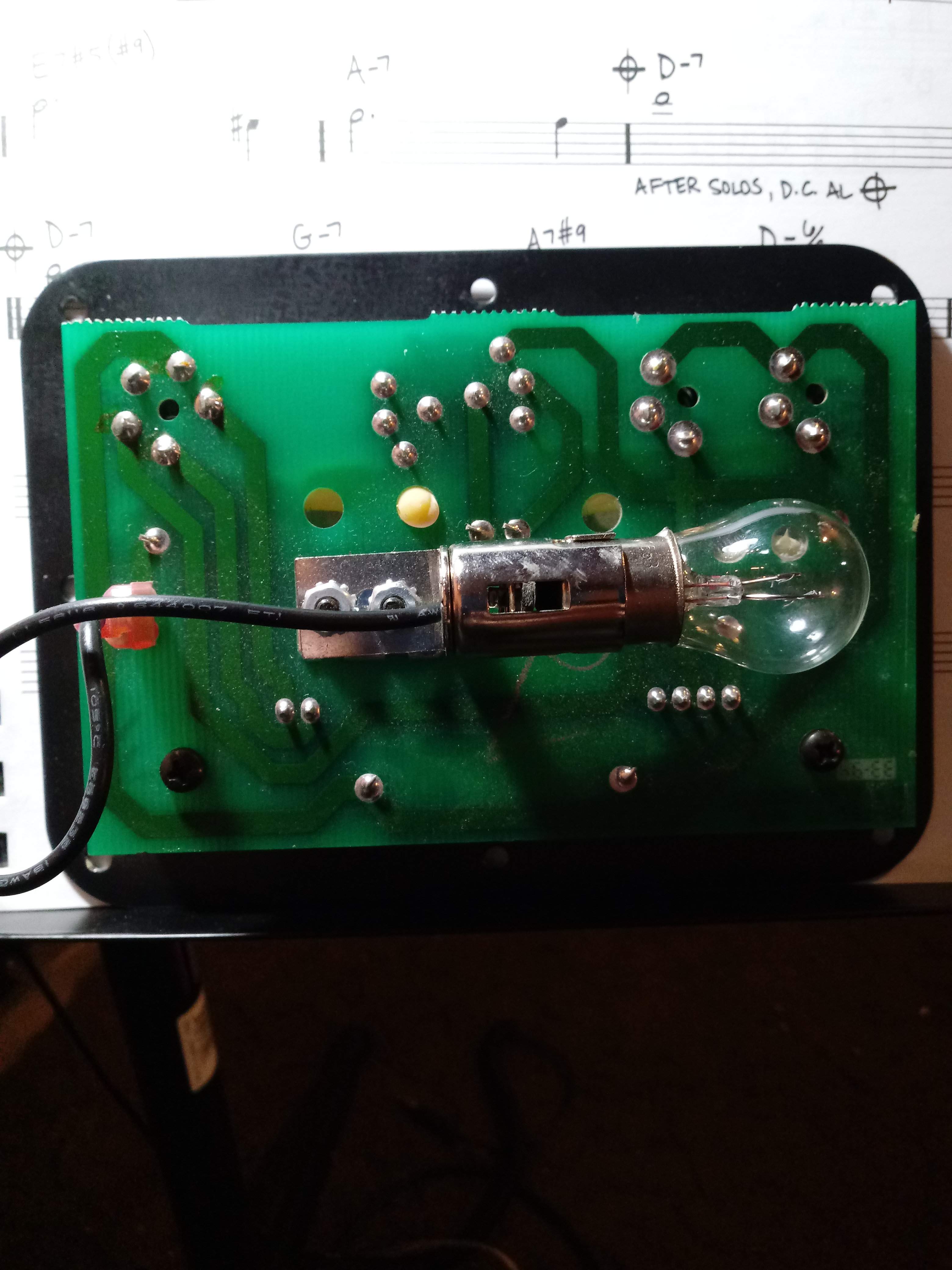
After isolating the problem when testing the Two 10s and the Two 15s separately, it is clear to me the problem is emminating from the place where the speakers cones conjoin, and this juncture is at the Jack Plate Circuit Board. As it turns out, the Jack Plate Circuit Board is some sort of Cross Over board, and after asking some friends to look at it, they seemed stumped by the problem, and refuse to go further with it.

Have any of you experienced this problem when playing through the Ampeg Isovent speaker cab?

My hunch is, the Isovent was originally designed to bring out the four string bass beginning with the Open E, but I usually play five and six string basses with the Open Low B, and the Cross Over Circuit was designed with the four string Open E basses in mind. As a result there is something Ampeg probably did with the design of their Cross Over circuit towards bringing out the Fs of the four string basses.

Understand I do NOT get the F Bomb phenomenon when playing through any other of my bass cabinets. Only the Isovent.

Note: I don't use the small Tweeter, I have shut the Tweeter OFF at the Jack Plate, disconnected the Tweeter, and taped off the leads. However the Tweeter had No Effect on the Intense F Bomb phenomenon.

What do any of you know about this?
20200118_211059.jpg
20200118_211114.jpg
20191218_123411.jpg
20191217_141538.jpg
20191217_141507.jpg
20191217_140933.jpg


.
 
The crossover operates octaves higher than where you are describing.

One of the "features" of that "technology" is higher sensitivity over a narrow bandwidth which can send as you describe. Especially outside of the design's original intent.
 
  • Like
Reactions: Nicholas Orick
The crossover operates octaves higher than where you are describing.

One of the "features" of that "technology" is higher sensitivity over a narrow bandwidth which can send as you describe. Especially outside of the design's original intent.
What would you recommend?

I am trying to get rid of the Intense F Bomb and even out the balance in frequency response output.
 
What would you recommend?
A good parametric EQ would probably help. Also, I'll preemptively join the Greek chorus ready to chime in to say that a LPF would also make a positive contribution.

I didn't know anything about this box, so I looked it up on the Ampeg site... that's a pretty unusual enclosure all the way around. I suspect @agedhorse is right that it's just a problem resonance with the enclosure. It certainly isn't a problem with the crossover, although I was amused that you imagine that the design of a passive crossover in a MI product could express that level of refinement. In fact, Ampeg makes some marketing claims about the box being designed specifically to reproduce a low B, which they branded 'the unheard string'. :D

Just for my own edification, when you use the cab, you DO have the horn (tweeter) in place but disconnected, rather than absent as was shown in that one photo, right? It's absence would have a substantial effect on the performance of the 210 portion of the system.
 
20200118_211104.jpg
20191221_155347.jpg
20191218_122256.jpg
20191218_122304.jpg
A good parametric EQ would probably help. Also, I'll preemptively join the Greek chorus ready to chime in to say that a LPF would also make a positive contribution.

I didn't know anything about this box, so I looked it up on the Ampeg site... that's a pretty unusual enclosure all the way around. I suspect @agedhorse is right that it's just a problem resonance with the enclosure. It certainly isn't a problem with the crossover, although I was amused that you imagine that the design of a passive crossover in a MI product could express that level of refinement. In fact, Ampeg makes some marketing claims about the box being designed specifically to reproduce a low B, which they branded 'the unheard string'. :D

Just for my own edification, when you use the cab, you DO have the horn (tweeter) in place but disconnected, rather than absent as was shown in that one photo, right? It's absence would have a substantial effect on the performance of the 210 portion of the system.

The Tweete is physically socketed in the hole to enclose the 210 compartment.

With the subs free standing the F Bomb is there, and when using just the 210s the F Bomb is there, and either way, independent of each other, the F Bomb is there, and this means the Source of the F Bomb Emminates at the Crossover, which is the point where the two sets of speakers conjoin.

I tried placing more space between the subs, and the F Bomb was still present, and no matter what I did the F Bomb persists.

It can't be the enclosure because Free Standing the speakers also produced the F Bomb.

I can EQ the Hell out of it, but I shouldn't have to Remove what isn't wanted. I should only have to EQ In what is wanted.

Plus the Flat Blemish of the F Bomb continues when EQing.

It has to be the Cross Over.
 
Last edited:
As per my earlier post: this is a weirdly interesting speaker system. The over-all concept is one that should find real favor on this forum: a smallish 2-way, 210 box on top of a small, efficient sub system, in a single compact enclosure. And the 210 part of the box is angled upward toward the player; what an idea! :D The weirdness (for me) comes in with the concept of running two 15" drivers in tandem (front-to-front, clamshell-fashion) as a single driver with a greatly-reduced compliance. Although I very much doubt that's a completely new idea, it's a new concept to me. The sales lit and owner's manual are pretty uninformative, but it appears to me that it's a sorta conventional 2-way system consisting of a 210 box with a conventional passive crossover/HF driver combo (with incandescent lamp limiter, as evidenced in the pix) supplemented by a somewhat unconventional sub arrangement, which I gather is just running in parallel with the 210s. The HF driver is passively crossed over at 5KHz; the 'bi-amp' feature seems to allow the user to separate the 10s from the 'sub' and the HF driver is still passively crossed over from there. It's kind of hard to tell that for sure...the lit tells you how to hook up the bi-amp function, but offers no clue as to what a crossover frequency is likely to be. Seriously...there is no clue as to what crossover frequency to use. The only reference to crossover frequency was a nebulous spec of "Crossover Point: 5 KHz, Crossover Slope: 12dB/octave", which clearly is referring to the passive crossover for the HF unit. But the two "Bi-amp" inputs are each rated at 300 watts/8 ohms and the total cab rating is 600 watts/4 ohms, so it seems fairly clear that the bi-amping function is between the 15s and the 10s. This is a great idea in concept, but it would be helpful if the manufacturer actually informed you of that, and perhaps provided a recommended possible frequency range for the active crossover. I think many end-users, relatively uninformed about bi-amping, would employ a crossover frequency that would be much too high for the how this cab should be used. The GK bi-amp system employed in the RB series, for instance, would be useless hooked up to this box.

In passive mode, with the 210s and that weird clamshell sub running in parallel, the performance is likely to be a bit peculiar, IMO, but running it bi-amped might yield some real advantages. Employing a crossover point in the usual sort of 'sub' range, 80-120 Hz, would relegate the lowest octave or so to that weird dual-15 sub, which likely has pretty uneven performance above that anyway, while freeing the 10s of the burden of carrying that part of the spectrum, which should allow them to really soar. Seems like a pretty good idea to me.
Just for my own edification, when you use the cab, you DO have the horn (tweeter) in place but disconnected, rather than absent as was shown in that one photo, right? It's absence would have a substantial effect on the performance of the 210 portion of the system.
OP: I'm still wondering about the answer to this question.
 
  • Like
Reactions: thetragichero
Again, and this justifies repeating, the crossover can't possibly have ANYTHING to do with what you are experiencing because it operates octaves away from where the problem exists.

The crossover has NOTHING to do with where the two low frequency sections combine, they affect the tweeter response only.

The ONLY thing that's common to the problem is the low frequency drivers AND THE CABINET.

This is a known challenge with this type of cabinet design, which is why it's rarely used.

(Is this a clear enough explanation?)
 
As per my earlier post: this is a weirdly interesting speaker system. The over-all concept is one that should find real favor on this forum: a smallish 2-way, 210 box on top of a small, efficient sub system, in a single compact enclosure. And the 210 part of the box is angled upward toward the player; what an idea! :D The weirdness (for me) comes in with the concept of running two 15" drivers in tandem (front-to-front, clamshell-fashion) as a single driver with a greatly-reduced compliance. Although I very much doubt that's a completely new idea, it's a new concept to me. The sales lit and owner's manual are pretty uninformative, but it appears to me that it's a sorta conventional 2-way system consisting of a 210 box with a conventional passive crossover/HF driver combo (with incandescent lamp limiter, as evidenced in the pix) supplemented by a somewhat unconventional sub arrangement, which I gather is just running in parallel with the 210s. The HF driver is passively crossed over at 5KHz; the 'bi-amp' feature seems to allow the user to separate the 10s from the 'sub' and the HF driver is still passively crossed over from there. It's kind of hard to tell that for sure...the lit tells you how to hook up the bi-amp function, but offers no clue as to what a crossover frequency is likely to be. Seriously...there is no clue as to what crossover frequency to use. The only reference to crossover frequency was a nebulous spec of "Crossover Point: 5 KHz, Crossover Slope: 12dB/octave", which clearly is referring to the passive crossover for the HF unit. But the two "Bi-amp" inputs are each rated at 300 watts/8 ohms and the total cab rating is 600 watts/4 ohms, so it seems fairly clear that the bi-amping function is between the 15s and the 10s. This is a great idea in concept, but it would be helpful if the manufacturer actually informed you of that, and perhaps provided a recommended possible frequency range for the active crossover. I think many end-users, relatively uninformed about bi-amping, would employ a crossover frequency that would be much too high for the how this cab should be used. The GK bi-amp system employed in the RB series, for instance, would be useless hooked up to this box.

In passive mode, with the 210s and that weird clamshell sub running in parallel, the performance is likely to be a bit peculiar, IMO, but running it bi-amped might yield some real advantages. Employing a crossover point in the usual sort of 'sub' range, 80-120 Hz, would relegate the lowest octave or so to that weird dual-15 sub, which likely has pretty uneven performance above that anyway, while freeing the 10s of the burden of carrying that part of the spectrum, which should allow them to really soar. Seems like a pretty good idea to me.
OP: I'm still wondering about the answer to this question.

I very much enjoyed reading your response, and you are right on point, with the one exception being, the subs don't kick in Low, and top out at say 120 Hz, but instead act more continually as a Full Range speaket sub.

NOT only does the Isobraic Clamshell loading of the 215s develop more Power, but also More Speed, since the Pull on one coincides with the Push on the other, which would cause a reduction of air pressure between the two subs, which increases Accelleration. Pushing builds pressure Accelleration while Pulling reduces pressure, and the two work hand in hand compelling a more Powerful Rapid Acceleration. When competing with the inherent speed of the smaller 210s, the Clamshelling solves the difficult problem of more Rapidly Accelerating the larges Subs.

And as you say, the literature is sparse with only a little bit devoted to the stupid tweeter than I Don't use. I capped off the tweeter leads because I am NOT a Tweeter Guy.

The Tweeter is still physically in the cab to keep the air suspension of the 210 compartment but beyond that it serves No Purpose. I could put a quark plug in there instead.

Anyway I am fairly certain the F Bomb comes from the Cross Over circuit board since independently the F Bomb exists in the 210s and the 215s separately.

I am wondering about after market Cross Over boards towards replacing this one.

.
 
I like this Isovent.

I think I am going to fix it up to do what I want it to do.
So if I'm reading you correctly, you like this box, your problem with it is just how it sounds. :)

If your problem really is just with the so-called F-bomb, get a good parametric EQ and dial in a deep cut at 44 Hz, the frequency of F1. Use the highest possible 'Q', which is to say, the narrowest, steepest notch. This should tame your F...even the F2 problem, which is likely to be a harmonic manifestation of the actual response aberration. If it doesn't, try doing the same thing, centered on the actual F2 freq, 87 Hz. Or, since a good parametric is likely to have more than one filter, go after each frequency with a different EQ section. Vary the amount of cut to see if it's effecting the problem note.

And, as mentioned previously...it really would be worth experimenting with a HPF...if fact, I'd try that before using a parametric, but using a parametric EQ would address the problem directly if a HPF is a 'not my thing' for you. The phenomenon you've described sounds like a peculiar box resonance problem to me.

Edit: Edited to correct my brain fritz about HIGH pass filters. Doh.
 
Last edited:
Again, and this justifies repeating, the crossover can't possibly have ANYTHING to do with what you are experiencing because it operates octaves away from where the problem exists.

The crossover has NOTHING to do with where the two low frequency sections combine, they affect the tweeter response only.

The ONLY thing that's common to the problem is the low frequency drivers AND THE CABINET.

This is a known challenge with this type of cabinet design, which is why it's rarely used.

(Is this a clear enough explanation?)

Okay if it is NOT the problem then what is it?

It can't be the enclosure because the problem exists when I test the speaker cones in a Free Standing state separately and apart form the cabinet.

The F Intensity F Bomb exists in both the 210s and the 215s.

Again there must be a common sourse where the problem is crated prior to reaching the speaker cones.

I figure at the Jack Plate Circuit Board, but now you say NOT, and If NOT, then Where From?

It is beginning to sound to me like I can just bipass the Circuit Board, in fact Remove It altogether, and ReWire the cabinet Direct to the Input Receptacles.

Or is it - Input Jacks on the Jack Plate?

Would this be a fair assumption?

I mean this would be a whole lot simpler, because all I would have to do is Remove Something, instead of having to Go Get Something, and this of course would save me time, money, and effort.

What do you say?

.
 
Last edited:
I very much enjoyed reading your response, and you are right on point, with the one exception being, the subs don't kick in Low, and top out at say 120 Hz, but instead act more continually as a Full Range speaket sub.

NOT only does the Isobraic Clamshell loading of the 215s develop more Power, but also More Speed, since the Pull on one coincides with the Push on the other, which would cause a reduction of air pressure between the two subs, which increases Accelleration. Pushing builds pressure Accelleration while Pulling reduces pressure, and the two work hand in hand compelling a more Powerful Rapid Acceleration. When competing with the inherent speed of the smaller 210s, the Clamshelling solves the difficult problem of more Rapidly Accelerating the larges Subs.

And as you say, the literature is sparse with only a little bit devoted to the stupid tweeter than I Don't use. I capped off the tweeter leads because I am NOT a Tweeter Guy.

The Tweeter is still physically in the cab to keep the air suspension of the 210 compartment but beyond that it serves No Purpose. I could put a quark plug in there instead.

Anyway I am fairly certain the F Bomb comes from the Cross Over circuit board since independently the F Bomb exists in the 210s and the 215s separately.

I am wondering about after market Cross Over boards towards replacing this one.

.

Since your understanding of the theory is incorrect, your conclusion is equally incorrect. You could REMOVE the freekin' crossover board and the problem would still remain. In fact, you have essentially done exactly this by disconnecting the tweeter.

May I respectfully suggest that you are creating wild hypothesis without understanding the theory behind what you are saying. By chance did you read this on some website?

This is an unfortunate byproduct of this type of design, which has some benefits also has some rather crippling faults as well. It was a good idea in theory but didn't translate well to good results in practice. It was also quite heavy.

I did investigate a variety of approaches like this many years ago, I ended up with a blended manifold design that was a hybrid, and even that required a waveguide and phase coherency adjuncts to work well. It was a pro audio product that worked pretty well but even so couldn't overcome the drawbacks of linearity, cost and weight. It did improve sensitivity, and it sold ok, but it wasn't good enough to survive the competitive nature of the industry.
 
Okay if it is NOT the problem then what is it?

It can't be the enclosure because the problem exists when I test the speaker cones in a Free Standing state separately and apart form the cabinet.

The F Intensity F Bomb exists in both the 210s and the 215s.

Again there must be a common sourse where the problem is crated prior to reaching the speaker cones.

I figure at the Jack Plate Circuit Board, but now you say NOT, and If NOT, then Where From?

.

The drivers themselves have resonance in free air (Fs) and if the Q of the resonance is high enough, the sensitivity peak at resonance can be objectionable.

I suspect based on what I recall about this approach, is that the combination of Fs and the resonance of the enclosure result in higher sensitivity at the system resonance (which is the product of combining Fs with enclosure) and in fact there may be 2 or more resonance peaks given that there are more than 2 resonance modes in that approach.

Since the crossover has NOTHING to do with the drivers (in fact I believe it's nothing more than a straight wire between the input jacks and the LF drivers), it doesn't even come into play.

What you find objectionable is the resonance of the system which also includes the resonance of the drivers. It's not really fixable unfortunately as it's inherent in the whole approach. It's also why this type of design was not popular and eventually faded away.
 
...the subs don't kick in Low, and top out at say 120 Hz, but instead act more continually as a Full Range speaket sub.
So, the 15s and 10 are actually just connected together, all four drivers running full range, with no crossover between them?
NOT only does the Isobraic Clamshell loading of the 215s develop more Power, but also More Speed, since the Pull on one coincides with the Push on the other, which would cause a reduction of air pressure between the two subs, which increases Accelleration. Pushing builds pressure Accelleration while Pulling reduces pressure, and the two work hand in hand compelling a more Powerful Rapid Acceleration. When competing with the inherent speed of the smaller 210s, the Clamshelling solves the difficult problem of more Rapidly Accelerating the larges Subs.
Come, again? :eek:
 
It can't be the enclosure because the problem exists when I test the speaker cones in a Free Standing state separately and apart form the cabinet.

That's interesting
So you pull the speakers out, set them on the floor, and you still have the F...Bomb?

Well now, speakers outside the cab - ah never-mind

You check other things in the room for sympathetic vibrations? Try another room?
 
The Tweeter is still physically in the cab to keep the air suspension of the 210 compartment but beyond that it serves No Purpose. I could put a quark plug in there instead.

Anyway I am fairly certain the F Bomb comes from the Cross Over circuit board since independently the F Bomb exists in the 210s and the 215s separately.
If you aren't using the tweeter you can remove the crossover board completely. As long as you get the impedance right to load your amp those woofers will be fine connected directly. This will tell you once and for all if the crossover is the problem. It almost certainly isn't though.
The Isobaric loudspeaker - Wikipedia loading of the lower woofers also isn't unheard of, and orange produce bass cabs with the same principles, although they hide it inside the cabinet,
OBC212 Isobaric 2×12″ Bass Speaker Cabinet – Orange Amps
 
If you aren't using the tweeter you can remove the crossover board completely. As long as you get the impedance right to load your amp those woofers will be fine connected directly. This will tell you once and for all if the crossover is the problem. It almost certainly isn't though.
The Isobaric loudspeaker - Wikipedia loading of the lower woofers also isn't unheard of, and orange produce bass cabs with the same principles, although they hide it inside the cabinet,
OBC212 Isobaric 2×12″ Bass Speaker Cabinet – Orange Amps

The Orange Cabinet looks great. However I think it is discontinued.

Do you think the F Bomb - F Intensity - is do to a building of the Distortion talked about in the Wikipedia Report?
 
  • Like
Reactions: DJ Bebop
Status
Not open for further replies.