• TalkBass has been independent since 1998. Add your voice.
    Create a free account to reply to discussions, view embedded media, and browse with fewer display ads.
    Join freeLog in
    Want zero display ads or expanded classifieds tools? Compare plans.

Anchored vs Floating right hand

I can't really recall my arm ever getting tired. I do let my forearm "touch" the body but it still moves back and forth with very minimal pressure. On My Ric it would hurt too much to put pressure on the sharp edge of the binding. I really play the same way I did 37 years ago at age 12. I definitely have some bend in my wrist but I have never experienced pain. Now holding the steering wheel of a Freightliner is a different story. Lately my shoulders start to hurt after about 10 hours of driving. That doesn't affect my bass. Here's a video of my technique. I am sure it will be deemed improper by the Pro's. And yes I admit I am a hack.
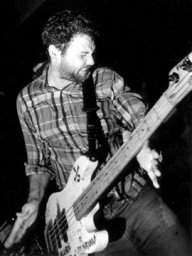

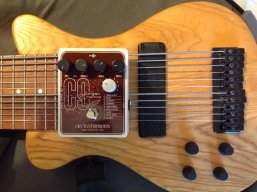
please never call yourself a hack again, it makes the real hacks look really bad. I WISH I could play that stuff.
 
  • Like
Reactions: FunkHead
In my opinion there is no one "right" way to do anything with regards to an instrument. Sometimes I anchor exclusively, but more often than not I find my thumb on the pickup for passages on the E and A strings, and my thumb resting on the A for D and G. I use three fingers for plucking for most things, but again, depends on the song. For something slower with fat quarter notes and double stops, I often stay on the pickup and combine my middle and ring fingers for accents. My left hand is no different - I let it do what it needs to do. It's often on the back on the neck, but if thumb over feels right or is need for a chord, I have no problems doing it. No hard and fast rules for technique as far as I'm concerned. Do what's comfortable.
 
@ "TitaniumRx," :

Regarding your shoulder problem. In the video I linked earlier, Todd Johnson acknowledges that with the FT, the shoulder muscles could feel a little sore... for a couple of days, but that is what they are designed for. When I was trying to master the FT I did indeed experience this kind of shoulder ache. This is because you are now using muscles that you dont normally use. However, just as Todd predicted, the pain went in a few days. That was fourteen years ago and I have not experienced any pain.

From what you say, your shoulder problem is on going. This, and the fact that you can not say for sure that your bass playing is the cause of the problem, leads me to think that something else like perhaps posture or such like, could possibly be the culprit.

Again, this is just my opinion.
 
  • Like
Reactions: TitaniumRx
I am guessing everyone who says there is no right or wrong way hasn't been playing 30 to 40 years.
Use your shoulder muscle to move your hand up and down, and you will still be playing when they drop you into the grave. Continually move your wrist and you are likely to end up like John Wetton did; barely able to hold a pick and playing thru exruciating pain. session players figured this out years ago from watching older comrades have to drop out of the game. The wrist does not handle repetitive movement or constant stress well;it wears out. The shoulder wears out too, but the small effort it needs to perform in order to reposition your hand is repeatable for well past your entire lifetime.
 
  • Like
Reactions: fearceol
A HACK????? Hello!!! You are playing your ass off to Rush songs ... not the easiest material to cover. I loved both of the videos brother. Geddy Lee would be impressed just like me. You rock! Thanks for demonstrating your technique. Awesome!!!!!
Thanks very much for the compliment. I have to honestly say though that People should get a good instructor. I feel like could have been somebody with the right teacher. But I chose to self-teach. I honestly sold myself short. Bottom line regarding the OP is if it hurts then stop and find a better technique. Bass playing is such a joyous thing and I would hate for anyone to have to stop due to injury. Oh and Geddy Lee will always be my favorite bass player with a few close seconds.:)
 
From what I have found (and plain old logic) if you're just subconsciously playing with no thought to hand position, you'll naturally avoid something that will hurt or put strain on your hand that could damage tendons. Therefore, playing with your thumb anchored or not, if you're subconsciously playing, shouldn't be a problem.
 
I am guessing everyone who says there is no right or wrong way hasn't been playing 30 to 40 years.

Most perhaps, but not all. I have been playing since about 1980, and I use all kinds of techniques. That includes an anchored thumb, floating, playing with my thumb, and using a pick. I find that when I play the P-Bass, I nearly always anchor my thumb. Playing the Ric, Playing the 'Bird could go either way, depending. When I play more countrified I-V type bass lines, I usually just pluck with my thumb to avoid getting too bored. Octave runs go with thumb and index finger usually. Obviously, if you are using your thumb to make a noise, you aren't anchoring it, but I will go back and forth from an anchored thumb to using my thumb to anchored to floating. It probably looks a little strange, but it works for me. And, I'm not dead yet, contrary to the reports. Plus, my hands work just fine. I'm not saying this is ideal, since I have never had an instructor to correct my bad habits. I'm just saying it hasn't been fatal for me.
 
It all depends on how many hours a day you play. Weekend warriors have no worries.

+1.

People seem to be constantly saying that they have being playing with a bent wrist for "X" years with no problems. This is probably the case, but the point they are missing is that no one can give an exact time frame as to when they might encounter injury problems.

We all know what RSI stands for. The "R" (repetitive) is the key word here. There are many things that govern when and if we will encounter injury problems. As quoted above, hours a day spent playing/how many days a week/the techniques used and how often a bent wrist technique is used, etc. As I mentioned in an earlier post, when using a bent wrist, it is the repetitive rubbing/friction of the tendons off of the narrowed carpel tunnel (narrowed because of the bent wrist) causes the tendons to kind of fray. How long this takes to happen is comparable to the "how long is a piece of string" concept. All we can say for sure is that the longer you play with a bent wrist the stronger the chances are that you will encounter injury problems.....at some stage. Other things non bass related come into play (excuse the pun !!;)) also, like the kind of work you do and the general wear and tear that your hands encounter every day.

It all boils down to whether you are prepared (assuming you are aware of the danger) to take a gamble that you will be injury free, or do something to reduce the odds.
 
That's a general statement which perhaps just applies to you. Here is Todd (from the previous clip) in full flight. I dont see any problem with accuracy here.....do you...????

Todd's accuracy is great, but I wouldn't say his technique is very good example of the type of playing I described as benefitting from anchoring. In fact what he is doing inherently requires a floating technique because he is plucking with his thumb and fingers to bring out different chord tones.

The place where I tend to gain accuracy is when jumping across strings in fast technical patterns. The anchor increases the accuracy (for me) because it provides a fixed reference point and stabilizes the hand. When floating I actually have more facility on certain types of patterns, but have a tendency to get lost in the strings a bit when I need to play fast, wide internals that involve multiple string crossings. I am not saying you can't develop the same or even more accuracy with the float for playing these types of patterns, but I am no longer a pro player and I don't tend to spend hours working on technique....so it hasn't happened for me.

Bottom line. My goal is to play more float to avoid carpal tunnel syndrome, gain more tonal variations and control, and achieve technical advantages with patterns this technique excels at, but sometimes the musical passage requires a different technique. Pick, thumb, finger style, pull offs, float, anchor....I pretty much change my technique based upon what the music calls for.

 
Sounds like that I do something similar .... I took a look at what I'm actually doing re. controlling the open strings and found that my right hand mutes the B, E an A strings with a thumb or finger on each string, and the left hand mutes the D and G strings by laying fingers across them when necessary. I wasn't even aware of this, it must be something the body and mind have developed on their own by trial and error.
 
If you're a professional or a teacher or anyone who makes a living playing bass don't bother reading this because it won't make a lot of sense to you. This is for the casual player who is learning and playing and loving the experience of playing the bass ... and possibly looking for opinions and answers.

I do not read music but 50 years of playing has given me enough education to where I can comfortably play with most people by playing by ear. Recently a new bass student who'd had a few lessons told me I am playing wrong and I should rest my thumb on the strings instead of the pickups. (A few days later at his funeral I told his widow that he should have kept his opinions to himself.)

Oh boy, I am not gonna be too popular here after reading about the floating thumb technique. With respect to those who use this method I say more power to you. Whatever works for you is the "right" way to play. After hearing so many espouse that the floating method is the "correct" way I want to vomit.

In fact... I think I WILL vomit right now .... BLEECCHHHH!!!!!!! Ah that's better!

I use the pickup(s) to anchor my thumb and it works perfectly for me and I will wager that there are others who also use this method. For me it's a matter of control and feel. As much as I have tried the floating thumb method I always gravitate back to the anchor. I use the alternating index and middle finger plucking and rest stop technique and anchoring my thumb feels solid and stationary like it's supporting my plucking hand.

It just feels right to me and in my experience if it feels and sounds right ... it IS right!

Now, as to muting; Between the rest stops and my left hand lightly resting on the fretboard I have no problems with other strings ringing. But I want to take it one step beyond this and apply it to a band situation. I understand the importance of muting unwanted strings and when I am playing bass in a quiet room with no accompaniment it helps to fine tune the muting technique. BUT..... fast forward to a band situation when all these other instruments and filling the room with their sounds. Even if I am not perfectly muting among the notes I am playing who's going to hear it? It's academic in my opinion.

Come on, you're playing 1/4 notes, 1/8 notes, 1/2 notes .. whatever and you are using rest stops. What's the big deal with muting with that "floating hand"? I say you're not gonna hear anything but the notes you play especially if there's a bunch of other instruments filling up the frequencies. I'm not lessening the importance of muting but sometimes perceived imperfections are what makes the music interesting. Sometimes the phrase, "Close enough for rock n roll" makes good sense.

OK, I have opened a can of worms here and I expect a lot of negative comments from the floating hand technique users. That's fine with me. I'm not trying to win a popularity contest here. I am just expressing an opinion based upon what seems to be working just fine for me and others I have seen who also anchor their thumb on the pickup.

I could not play the way I do using the floating method and I play very well or at least good enough to have other players tell me that I am a solid bass player. I consider my left hand as the mechanism that forms the "words" and my right as the mouth that speaks the words and gives them meaning. It's like my rhythm machine and I need that anchor for my thumb so that I can make the plucked notes generate rhythm and make it interesting.

Whatever works for you IS the right way. I am not going to argue with those who float..hey live and let live. But if someone sees me play and tells me my right hand is incorrect .... they're stupid!

I'd like to hear from others who also use the anchor method and get your take on it. I am open to learning just like anyone else but there is no right or wrong way to play. If it sounds good it is good!

PS: I was just kidding about the funeral stuff above .... I didn't really kill him ... I just kicked him in the nuts!


A big thank you to everyone who replied to my post. I was expecting to get flamed but instead I got some great feedback and information. I came into this thread thinking I was right and now I am somewhat humbled by all the great players here who helped to change my opinion. I guess you CAN teach an old dog new tricks.

I think the best advice was to not think about it and just let my hands do the work, as well as some of the videos that showed the floating hand technique. After all these years of anchoring to the bass and playing only like that I began to employ some of what I'd seen and read. I thought it would take me a long time to change my ways but after only a couple hours of purposely avoiding anchoring on the pickup I found that my speed, accuracy and overall feel of the bass was very similar to the way it was previously.

I can now see how anchoring and floating both have their place and knowing that my hands are less stressed by floating and the angle of bend in my wrist has decreased dramatically I am sure that the benefits of avoiding carpal tunnel are apparent.

I think that the most important thing I learned was that it's never too late to learn something new.

Thank you all very much. I got so much more from this thread than I thought possible.
 
It all depends on how many hours a day you play. Weekend warriors have no worries.

I am indeed a weekend warrior who only plays for an hour or so most days, and only about three hours straight ever. People who make a living playing probably play as much in a day as I play in a week or more.


I'm actually more concerned about what happens to my left hand, and that's why I like having the neck in as vertical an orientation as possible. A vertical neck means neither wrist is bent much, at least for me. It means anchoring doesn't result in much wrist bend. Having the bass slung low bends the left wrist a lot while allowing the right wrist to be straigher. High is the reverse. Vertical allows both to relax. I suppose you could use a slap technique with the bass like that, but I sure can't. The rare times I slap require the neck to come down for a while. Then it goes right back up.
 
Last edited:
  • Like
Reactions: warrplayer