
Checkout the winter build off basses, there is one that’s getting moveable pickups for “sound experiments”.Would be interesting to build a bass that has pickups that can be rotated, from reverse angle, to straight, to forward slant ... so one could experiment to seek real and audible difference. Maybe I am just captivated by the Roscoe LG in general

Enjoy the benefits of a premium membership!
Upgrade Account
-
TalkBass has been independent since 1998. Add your voice.
Create a free account to reply to discussions, view embedded media, and browse with fewer display ads.
Join free Log in
Want zero display ads or expanded classifieds tools? Compare plans.
You are using an out of date browser. It may not display this or other websites correctly.
You should upgrade or use an alternative browser.
You should upgrade or use an alternative browser.
Angled pickups: why?
- Thread starter mambo4
- Start date
More options
Who Replied?

Slanting the pickups DOES change the tone of your instrument. Since tone is a subjective topic, the obvious thing to do is to try the instrument before guessing.
From the engineering stanp point: Strings vibrate when plucked and the vibration amplitude depends in several factors (gage, construction, strenght of pluck, etc.). A perpendicular pickup coil captures that amplitude and coverts it into an electric signal. An angled pickup coil captures a longer portion of the amplitude due to geometry and sends a different electric signal. I suppose this is more evident on a bass B string than a guitar D sring for example, due to the vibration amplitude.
From the engineering stanp point: Strings vibrate when plucked and the vibration amplitude depends in several factors (gage, construction, strenght of pluck, etc.). A perpendicular pickup coil captures that amplitude and coverts it into an electric signal. An angled pickup coil captures a longer portion of the amplitude due to geometry and sends a different electric signal. I suppose this is more evident on a bass B string than a guitar D sring for example, due to the vibration amplitude.
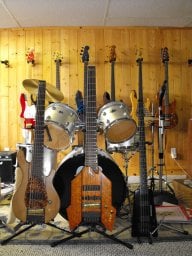
Pickup placement is a huge factor on the tone of the bass. Try a Grabber-style bass with the single sliding pickup moving only a few inches and it's amazing how much the tone changes.
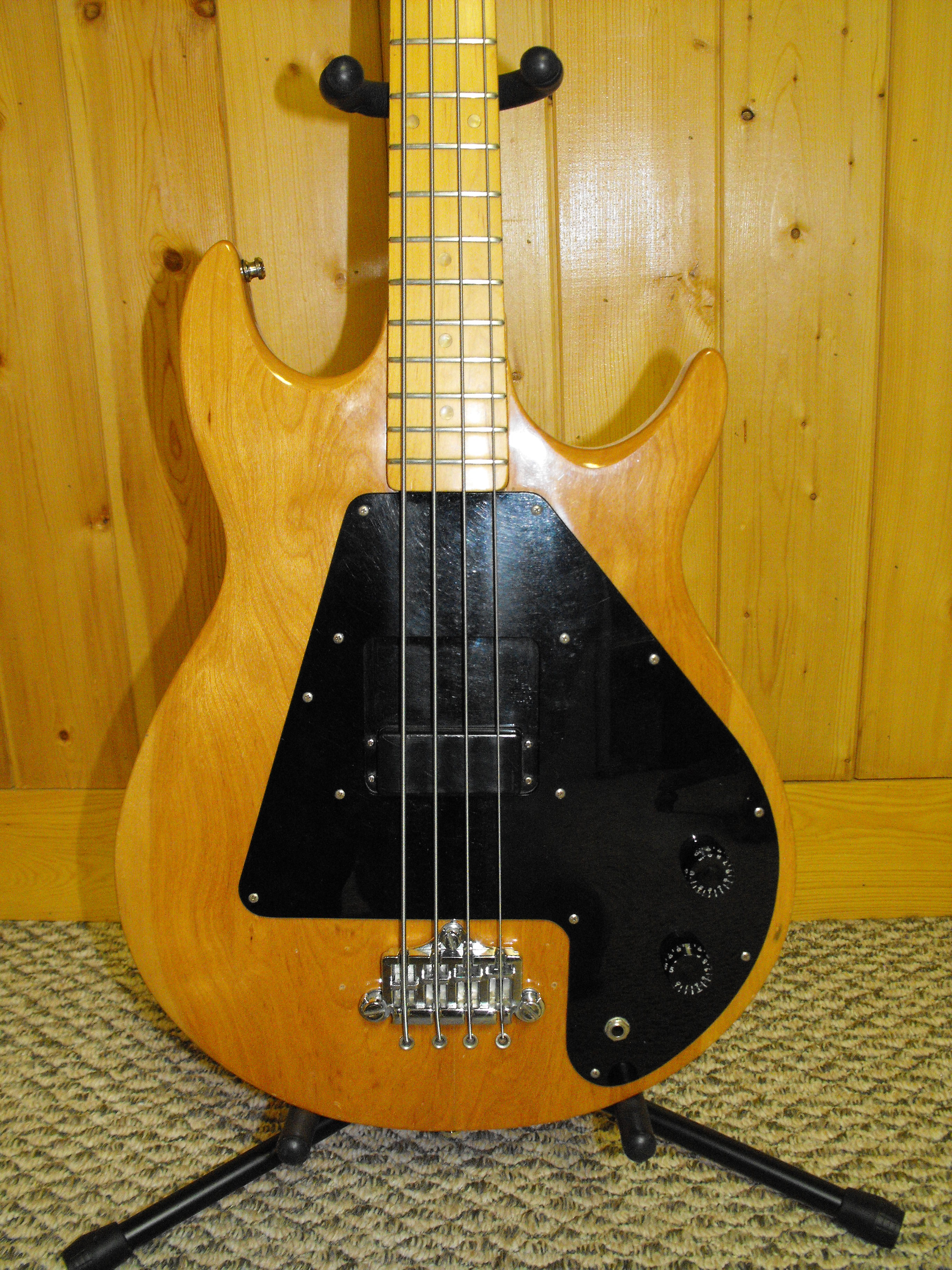
Slanting the pickup also makes a big difference, especially in the bridge position, and when combining 2 pickups. Some companies worked this out long ago. First time I saw it was on the Tune basses, like my old 8 string.

A P-bass with the offset split coils kind of has the same effect as a slanted pickup, and it makes a big difference whether it's standard-P or reverse-P. I'm often guilty of overkill, and this bass has switching to flip the middle and neck D-G coils in relation to the E-A coils, which makes a huge difference in the tone. The double reverse-P combo is extra sweet to my ears.

Slanting the pickup also makes a big difference, especially in the bridge position, and when combining 2 pickups. Some companies worked this out long ago. First time I saw it was on the Tune basses, like my old 8 string.
A P-bass with the offset split coils kind of has the same effect as a slanted pickup, and it makes a big difference whether it's standard-P or reverse-P. I'm often guilty of overkill, and this bass has switching to flip the middle and neck D-G coils in relation to the E-A coils, which makes a huge difference in the tone. The double reverse-P combo is extra sweet to my ears.

No debate there. Of course the pickups have to be slanted...cool...now to fanned frets

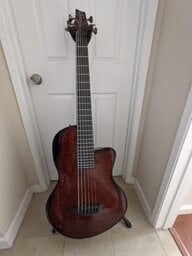
The Rick Turner Model 1 bass has that feature. I don't know exactly how much rotation you get, though.Would be interesting to build a bass that has pickups that can be rotated, from reverse angle, to straight, to forward slant ... so one could experiment to seek real and audible difference. Maybe I am just captivated by the Roscoe LG in general
Basses – Rick Turner Guitars

Slanting the pickups DOES change the tone of your instrument. Since tone is a subjective topic, the obvious thing to do is to try the instrument before guessing.
From the engineering stanp point: Strings vibrate when plucked and the vibration amplitude depends in several factors (gage, construction, strenght of pluck, etc.). A perpendicular pickup coil captures that amplitude and coverts it into an electric signal. An angled pickup coil captures a longer portion of the amplitude due to geometry and sends a different electric signal. I suppose this is more evident on a bass B string than a guitar D sring for example, due to the vibration amplitude.
While there’s probably something to this, I wonder if the slight difference in aperture is even perceptible? I’d think the difference in position would likely have a more marked impact on the sound…
I suppose the best test would be on a 5 string where the pickup would be rotated around its center right under the A string, but the relative position of the pickup (along the scale) would not change on that string.
While there’s probably something to this, I wonder if the slight difference in aperture is even perceptible? I’d think the difference in position would likely have a more marked impact on the sound…
The difference is noticeable, here is a comparison done on a guitar.
The difference is noticeable, here is a comparison done on a guitar.
Yeah, noticable, but kinda what you'd expect - sounds fatter on the low strings with the angle pickup, because the pickup is more towards the neck. The treble strings sound more similar. Thus I'd say most of the difference in sound is due to pickup placement, not angle (aperture).
I'd say most of the difference in sound is due to pickup placement, not angle (aperture)
If we can agree the tone change is due to the difference in set up, the string vibration amplitude from point 1 to point 2 (distance A) it is unnoticeable when compared to the difference of aperture the pickup coil captures (Red and Green arrows).
If we can agree the tone change is due to the difference in set up, the string vibration amplitude from point 1 to point 2 (distance A) it is unnoticeable when compared to the difference of aperture the pickup coil captures (Red and Green arrows).
View attachment 5357926
that has not been my experience. But I could be wrong… How would you demonstrate that?
How would you demonstrate that?
I don't have a stroboscope with camera to measure string amplitude with high precision, but I know the difference in string deflection between Point 1 and 2 is in the order of 0.1 mm or so for that distance. This is way less than the difference of how much the pickup coil captures between the straight and angled positions. From this, I conclude the difference in tone is due to the biggest of the differences in set up.

I don't have a stroboscope with camera to measure string amplitude with high precision, but I know the difference in string deflection between Point 1 and 2 is in the order of 0.1 mm or so for that distance. This is way less than the difference of how much the pickup coil captures between the straight and angled positions. From this, I conclude the difference in tone is due to the biggest of the differences in set up.
sorry, I meant how would we tell what effect we hear, not how to see it.
But I realize we may be talking about different things. You seem to be talking about string travel/amplitude (~volume). I’m talking about relative position of the pickup on the string - where the pickup picks up the string vibration (~tone). As you move the pickup towards the neck the sound gets louder (volume) and bassier (tone). The two may be related, but I hear them as two different things.
The third thing that changes slightly with angling the pickup is the aperture of the pickup - that is, its sensing width, where the pickup samples more of the string along the string length (not perpendicular to it). This is also implied in your picture and the green line, but I see it as the distance from the tip of the green arrows to the solid vertical blue line. It’s a small distance and probably does not have a major impact on tone when angling the pickup. I thought that’s what you were talking about, but it sounds like you focus on the difference in amplitude?
I thought that’s what you were talking about
That is a correct statement. Since the distance between points 1 and 2 is small, the differente in amplitude is negligible compared to the pickup aperture difference. Therefore, I conclude the difference in tone is due to the angle pickup more than to the proximity to the fingerboard.
I think Fender got it right. Regarding the P, if I'm anchored on it, I want my fingers over the other half. Regarding the J, it's just not comfortable to anchor on a reversed J. Angled pickups are fine with me if the high side is angled towards the bridge. Picks up harmonics you might otherwise miss.I'm a Fender fan, but I think Warwick got it right, much like a reversed P, I'd rather get more "body" out the D & G strings. They certainly don't need any extra "plink" to the tone.
I float, it makes moving around the strings much easier to achieve different tones and muting is simple as well.I think Fender got it right. Regarding the P, if I'm anchored on it, I want my fingers over the other half. Regarding the J, it's just not comfortable to anchor on a reversed J. Angled pickups are fine with me if the high side is angled towards the bridge. Picks up harmonics you might otherwise miss.
No anchor required, and no “plink” desired .


