• TalkBass has been independent since 1998. Add your voice.
    Create a free account to reply to discussions, view embedded media, and browse with fewer display ads.
    Join freeLog in
    Want zero display ads or expanded classifieds tools? Compare plans.

Double Bass another broken neck!

Aug 1, 2005
3,546
1,421
Cologne, Germany
www.basscapos.com
Disclosures
Private Inventor - Bass Capos
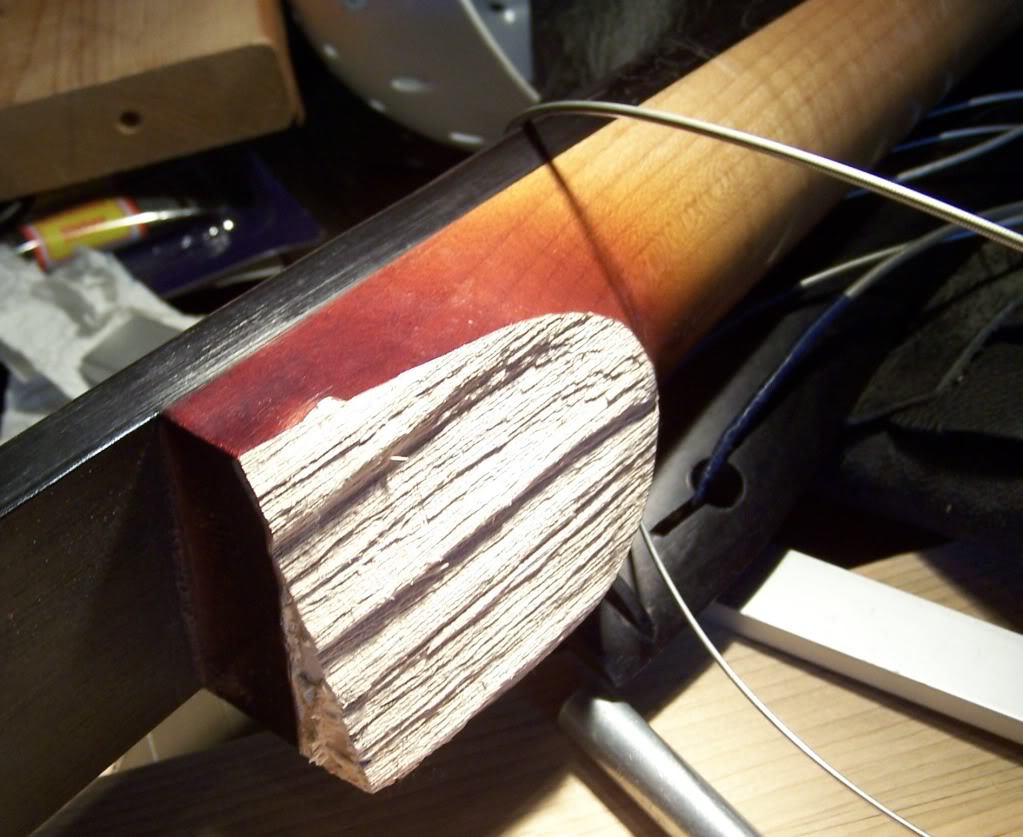
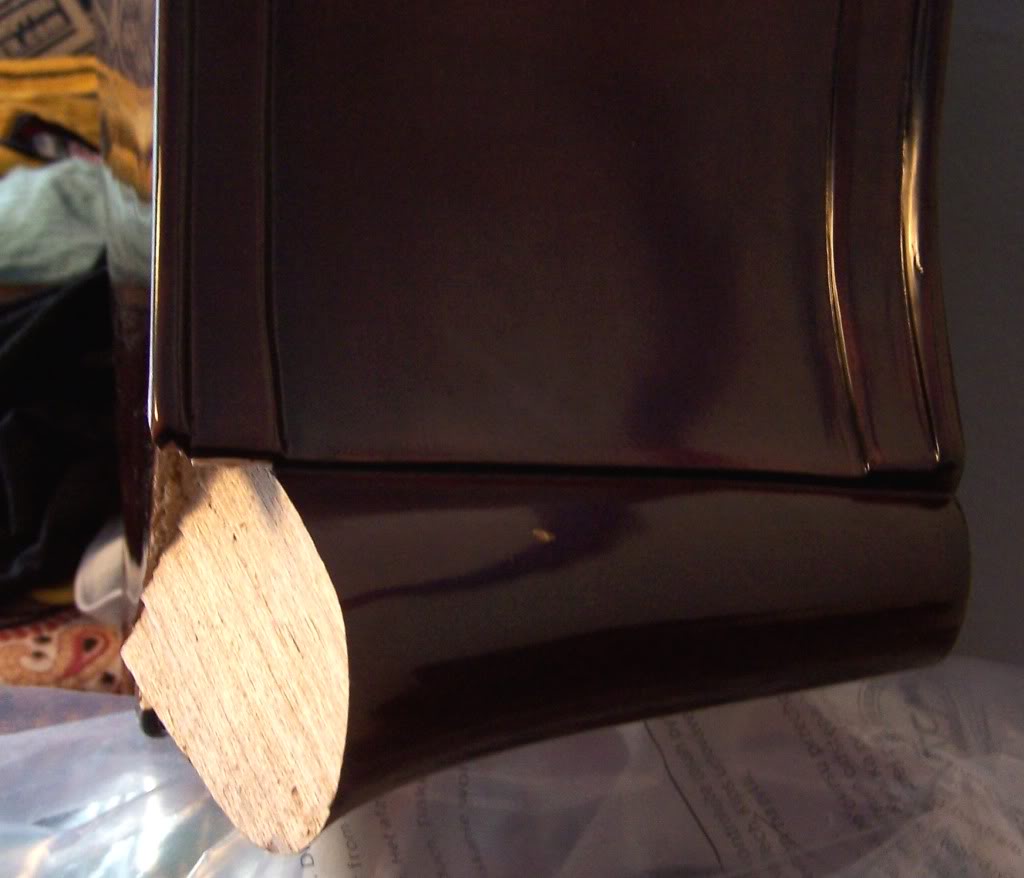
I was just given a 1/4 size Gewa? solid top which the local shop wouldn't touch. I'm thinking of removing the heel from the neckblock and making the repair with hide glue assisted by two long screws from coming from the button end. They will be completely hidden of course, and this will also allow me to reset the neck with more overstand. These instruments, imo, always have too short bridges. Anyway, I know some will call me a cave man, but any details I might consider before I get started?
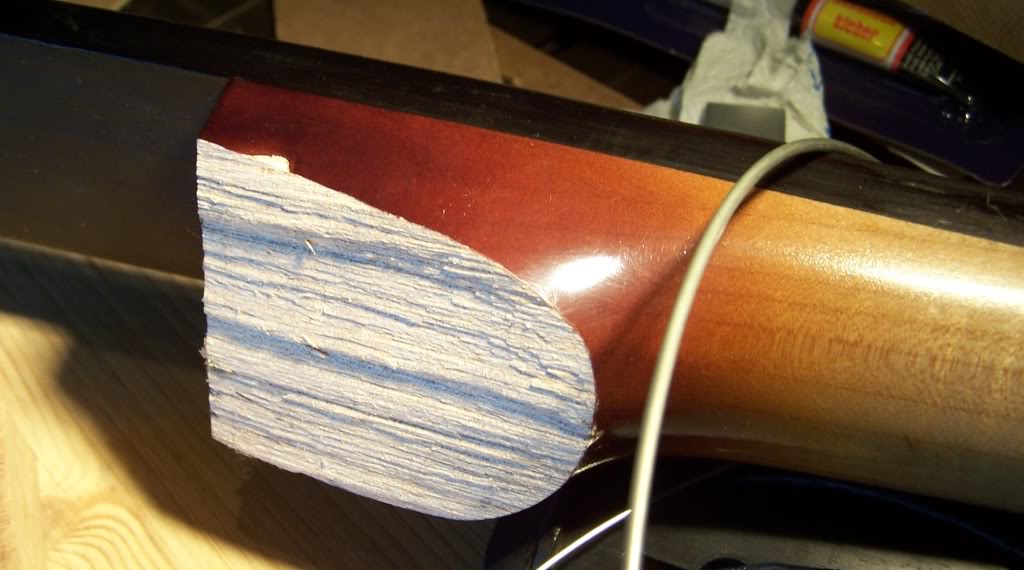
nk1.jpg

nk2.jpg

nk3.jpg
 
That would be a good thing to remove the heal portion from the mortise...
This is the only time we use Epoxy to put the two parts of the neck back together, if the break is clean and you get a good fit then you don't need the screws....
Then take the time to re-set the neck w. the proper angle and make sure you do the chalk fit, etc. Good luck....
 
I have to agree and disagree with Mark.

Epoxy is a must here, I've tried hide glue on my workhorse rentals and they end up back in my shop with the same issue. I use T88 epoxy. It's gap-filling and some great strong stuff. The best part is that it cleans up with vinegar and water.

Though I don't think removing the neck from the mortise is really necessary here if the neck angle was ok to begin with. That's a lot of unnecessary work for that level of instrument.

I would, however, recommend that you remove the fingerboard and the machines/strings for this repair. Removing the board might be a bit tricky as you might encounter splitting in the ebony or the neck or both. I'd wrap it in a heat blanket for a few hours and warm it up real good before removing. If you want to be really fancy, you can refer to this thread.

Line the neck up where it was and epoxy the neck joint together. The rough grain rips in the wood should help you line it up exactly where it was. Let it dry for 24-48 hours then reinforce the heel behind where the fingerboard goes by first drilling some holes carefully at a downward angle. Glue in some hardwood dowels or thick bamboo chopstick pieces (8-10mm minimum). I prefer the bamboo because it's super strong lengthwise but also flexible along the length for weather/humidity concerns. They also have less tendancy to be brittle and snap. Square the ends of the dowels flush to the neck and glue the board back on. If you do this right, you should barely be able to see the crack.

Do not use screws!
Wood expands and contracts, metal doesn't. I don't care how much glue you use to reinforce them, they will work themselves loose in a couple years and you'll really have a difficult repair on your hands. Extracting screws is not a job for the feint of heart. I've had to do it kicking and screaming many times..

Here's my disclaimer to keep me from spontaneous combustion: I would not recommend or perform this repair on an instrument that comes with a significantly higher price tag!

Good luck!
 
epoxy
you have enough wood to butt it up on one side, center the FB, clamp, watch the squirm.

chances are it will be broken again,only lower next time and dowels or screws won't prevent it.

you are planning beaucoup work for a 1/4 ;)

That's a job for 24 hour epoxy - I like to put some dowels in there too, to ward off the next break...

Yeah, it's a lot of work, but it is a solid top bass.

Squirm: That's what I'm afraid of, and why I don't really want to use epoxy. If I use screws I can make sure the joint really mates well, and they would give enough clamping pressure to made a hide glue bond plenty strong. I agree that there's a high risk of the neck breaking again close to the existing break. What if I use screws to do the repair, then remove them and insert two thick dowels afterwards? I sort of want to remove the heal from the block anyway. I haven't done this before so I want to learn, and I find that these student basses always benefit from a higher bridge. I didn't hear the bass before it was broken, but the overstand seems low.
Thanks everyone for the advice!
 
Yeah, it's a lot of work, but it is a solid top bass.

Squirm: That's what I'm afraid of, and why I don't really want to use epoxy. If I use screws I can make sure the joint really mates well, and they would give enough clamping pressure to made a hide glue bond plenty strong. I agree that there's a high risk of the neck breaking again close to the existing break. What if I use screws to do the repair, then remove them and insert two thick dowels afterwards? I sort of want to remove the heal from the block anyway. I haven't done this before so I want to learn, and I find that these student basses always benefit from a higher bridge. I didn't hear the bass before it was broken, but the overstand seems low.
Thanks everyone for the advice!

I'd be inclined to use the screws as a 'clamp' (coat them with wax or some kind of release agent), then take them out when the epoxy has cured, drill the holes out for dowels, et viola...er, bass.
 
Getting the rest of the neck heel out of the bass is the key here. With that you've got more options. Then if you can get the fingerboard off you can use a hidden spline or a big oak/hickory dowel.

The 24 hour cure epoxy gives you a lot of time before it sets up. Plenty of time to readjust your clamp setup and clean up the glue as the parts 'squirm' around.

I wouldn't use epoxy if you're going to leave the remainder of the neck heel in the mortise. What would you do, just dab on a minimum to glue the neck parts together, then struggle to get enough hide glue into the neck joint after the epoxy cures? Maybe, but it would be a mess.
 
I don't have a problem with the parts squirming if everything is clamped right. After removing the fingerboard, I'll clamp to the neck directly and use a wedge on the back button to parallel the clamping surfaces so that there isn't any travel. If you combine this with a temporary screw, you can't lose..
 
Thanks everyone for the recent suggestions.
Update:
I've been working on the neck mortise today. Even though the label says "Gewa Mittenwald '95", it's surely a Chinese bass. The neck was glued in with something which is light brown and opaque. It looks like one of those construction adhesives which come in a caulking gun tube. Alcohol and water do nothing. Lots of heat and some lighter fluid seem to soften it a bit, but I've still got a long journey ahead. Any other solvents I should try?

The best part is the soundpost. I'll let the photos speak for themselves.
post1.jpg

post2.jpg
 
I finally got the heel out. I think the glue used was a two part polyurethane, which expands during cure in the presence of moisture. Nice. Lot's of concentrated vinegar helped, but big hammers and specially crafted chisels did the bulk of the work. My triceps are actually sore. As rough as it looks, I didn't damage the back or button at all. The laminates in the ribs separated at the ends, but they can be glued. I'm happy with the result, considering the obstacle the glue presented.
blk1.jpg

blk3.jpg

blk4.jpg

I sure wish I had left the heel alone and taken the FB off first and done the repair from that end. But on the other hand, the heel portion is as light as balsa wood. Should I invest any time at all in repair, or just get a new neck?
So I guess the lesson here is beware of low end Chinese basses.
 

Latest posts