
I have a rigid metal wire tailgut on my upright, and have been board and antsy to tinker. What impact will braided nylon (similar to that sold on Gollihur) have on my sound. Does anyone have any experience or advice on this?

TalkBass has been independent since 1998. Add your voice.
Create a free account to reply to discussions, view embedded media, and browse with fewer display ads.
Join free Log in
Want zero display ads or expanded classifieds tools? Compare plans.


Thanks for the reply. How noticable would it be after a change of tailgut? You say the monifilament can stiffen up the bass a bit, but a change prob won't make it a wide open bass, right?IME the steel monofilament costs you pizz volume, can make the bass feel stiff and mutes the high end frequencies.
A Kevlar tailgut will allow the tailpiece vibrate freely and should loosen up the feel, but some feel they mute the highs.
I haven't gone crazy experimenting, but a braided steel tailgut is far and away my favorite.
Thanks. My bass has a mono tailgut and I realize an ebonized tailpiece. I have a solid ebony one, but I figure I'll change one at a time to see what's changing.Having anything but monofilament on there SHOULD open up the sound. It might take a while to settle in.
Is there a reason then that most players argue FOR a real ebony tailpiece? Furthermore, why wouldnt people go for carbon fiber, plastic, or even that all wire tailpiece? Thoughts?Less mass to fight.
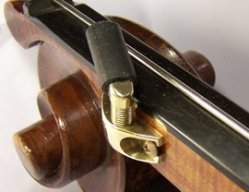

I used a braided steel tailgut, then nylon, adjustable steel, and now have a braided nylon (?) tailgut that was crafted by Jed Kriegel.
My bass was also set up by Jed and he uses a material called vectran. I looks similar to braided nylon or kevlar but from my research, and Jed's explanation it seems that vectran has almost no stretch when tension is applied, or after tension has been applied for a period of time. I can't really speak to the difference in sound compared to steel or anything because I only had my bass for a few months before Jed did a complete set up of my bass. It seems anything is better than rigid metal though.


