here is a picture of a test plate run out of junk wood. from here it becomes very important for the ribs and form to be precise.
Looks like slab-cut pine, with plenty of knots. Looks great, I'll take it!


TalkBass has been independent since 1998. Add your voice.
Create a free account to reply to discussions, view embedded media, and browse with fewer display ads.
Join free Log in
Want zero display ads or expanded classifieds tools? Compare plans.
here is a picture of a test plate run out of junk wood. from here it becomes very important for the ribs and form to be precise.

Laarman plane...ooh...nice...me likey...me wantee...yum...

... all the work I have done in this area is from scratch. ...
to start you make a measured drawing, or take measurements from an instrument enter your points, connect the dots and make certain your critical dimensions are accurate. the nice thing about cad is that from the beginning your work is not in vain ... unless you don't have auto save on, you can keep refining it until it is right.
you start in 2d get your outline and sections all in in 2d then rotate in the various curves and turn them into position to generate your 3D surface. how this is done is dependent on how your software works. I use Mastercam.
once you have generated the geometry of your part, you generate tool paths from that to cut the part you created in cyberspace on a machine. ...
it all sounds pretty simple, until you try and do it. ...
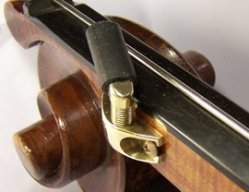
...
Can I presume that the CAD part of the process is at this time prohibitive in respect to using a tracing of a customer's top and modifying your base top design to produce a new solid replacement top for the customer? I guess the question is how would the expense of modifying design and routing compare with labor of carving. Any idea yet?

assuming the wood is dry, all the way through, and is not reaction wood, I have never had a great deal of deflection in a part I was cutting. even if the part remains un-graduated for a while it has never been a problem. seasonal movement, can be an issue, but in general they don't move that much. at least not spruce and maple. I did have an American sycamore back which totally changed shape, but it sat around for a very long time before it was used.
in the not too distant future I plan to get some new digital photo measuring software, if it is as accurate as the marketing indicates, It may significantly reduce the development time for new models.
the hardest thing I had to learn was the subtleties of getting the curves and surfaces correct. though the arch of a bass should look elegantly smooth and has very specific areas of re-curve etc. controlling those surfaces in the computer is not always easy. since every point is relative to the others around it a change in one place always creates a change somewhere else.

RC:
Thanks for generating this thread. I support your work completely and will be excited when you open this up to other builders as a subcontractor service.
j.
I can't take credit for this thread, only an attempted hijacking, but the sub contractor service is where I am looking to see if there is much interest in parts. we are in progress on our web page kcncproduction.com, and it will show a little of my history and work, along with our capabilities.
If the work is there, and it doesn't price things out of sight, it is the kind of thing that can save some repetitive stress injuries and help makers be more productive. Ultimately all I can do is use the computer to take out the trash, the maker still has to know his stuff, or he/she just ends up with a better looking pos., and even that is subject to interpretation.
gbaker,
. . .
just for the heck of it, if you want to of course, take a digital photo of your bass and put a sheet of copy paper on top of the bass . make it as square to the bass as possible do the same from the side. I will then see if I can use the measuring software to put together a drawing of your bass that is accurate enough to satisfy you. the target needs to be at the same plane as the part to be measured , and the lens needs to be as long as possible to avoid distortion of the shapes, zoom in to the max and then back up so the whole top is in the picture, I will , as time allows develop the drawings and measurements. we'll see how good they are.
. . .


