bassstringsonline.com will take care of 90% of SS string problems.

TalkBass has been independent since 1998. Add your voice.
Create a free account to reply to discussions, view embedded media, and browse with fewer display ads.
Join free Log in
Want zero display ads or expanded classifieds tools? Compare plans.

Echoing many comments, do what makes you able to express yourself without pain. It may be a shorter scale, a shorter bass, technique refinement, chiropractic, exercise, diet, or whatever, but pain shouldn't be there while playing.
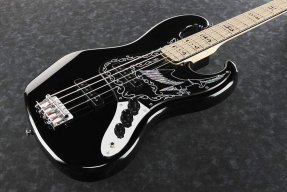
I got a birdsong about a year and a half ago, after playing a short scale p bass copy for a little while that was not heavy, helping my arthritis. The birdsong is the clearest sounding bass I've ever owned, with plenty of harmonic complexity, and very low action with very tight feeling strings (long scale chromes).
But, it's not SHORT, it's short scale. After about 8 months of gigging on it, I began having pain in my neck and shoulders again, as well as hands. Yes, I have arthritis and need exercise and better diet. But I also started to realize that the reach of my left arm was causing me issues. I love the birdsong, amazing sound, construction, and feel, and it's a work of art.
Enter my experiments with uke basses- the hadean one was cool, and I gigged on it exclusively for 5 months, replacing electronics to the nice lr baggs. Then I got my kala 5 string, with 23" scale length. Now I've found my home. I now have kala's round wounds on it, which feel great but are still rounds, I want flats for it. But, it feels great and at less than 5 pounds with very comfortable reach, my bass isn't adding to my pain anymore. And it's FUN. I'm playing weddings, bar gigs, etc and it's been great for them, even when I was using the rubber strings. I changed the bridge to a fender style bridge, so now it intonates accurately as well and I can use it in any setting.
I've learned to play lighter, that's also helped, and try to remember to stay hydrated.
My point? There's no one solution for everyone, do what works. A well made bass will sound great, a poorly made bass will not, regardless of scale. Price isn't always an indicator, but sometimes it is.
In the end a bass is a tool that helps you express what's inside. If it doesn't let you do it, then it's not a tool. And, a great tool needs a great user of the tool to make good work.
Oh, as a last note, when I had the esp Ltd b5 jr (a 28.5" scale 5 string), I cut down long scale flats and never had an issue with them breaking or sounding fine. When I got short scale flats it felt and sounded the same. Others experience may vary, but it can work fine.
Good luck with your playing no matter what bass you play!
Do you have any pictures of the bridge you put on it and what kind? I'd be interested in it and how you attached it.
The difference is irrelevant. If it is a little more sensitive than so be it. I have 34's, 32's, a 30 and a 28. They all get tuned the same way and I never noticed any difference before. If it is a problem then why are guitars so short?Actually there is a difference due to the lower string tension. When a low E is flat by 5cents on a shorty there is much less movement required to bring the string up to tune than on a full scale. With machine heads of the same tuning ratio a 1/4 turn on the shorty will bring the pitch up a lot more than a 1/4 turn on the full scale. It's simple physics as the increase in tension made by a certain amount of turn on the tuning peg results in a higher percentage of total tension of the string than on a longer scale string of the same gauge. Good strings with good machine heads and accurate tuning should ensure that there is little difference to the stability of tuning once at pitch but a shorty is still more sensitive to tuning movements than on a long scale.
The difference is irrelevant. If it is a little more sensitive than so be it. I have 34's, 32's, a 30 and a 28. They all get tuned the same way and I never noticed any difference before. If it is a problem then why are guitars so short?
This is a site to discuss Bass issues not to insult people. I don't doubt you believe what you are saying is rellevant. In the real world any difference that you perceive is easily overcome. Bottom line there are no dissadvantages to short scale basses unless it doesn't fit you or you are looking for a very minor difference in string tension that is nominal at the best.Not sure if you've noticed before but guitars are tuned up to a much higher pitch than bass (one octave on the low 4 strings and well over one octave on the high B and E). Because of this they have a higher tension (relative to the gauge) than bass strings even though they are shorter. I have long and short scale basses as well as long and short scale guitars. Just like with the basses, the short scale guitars are more sensitive to tuning peg adjustments than the full scale guitars. As I mentioned before, it is simple physics.
It may be irrelevant to you, or you may be too ham fisted to notice it, however there is a difference and I, and others (as noted by previous posters), can notice it. Just because you notice no difference doesn't mean it's "Bull Crap". Some people at gigs don't notice that my "guitar" only has 4 strings and is a lot bigger than other guitars.... that doesn't mean it is a guitar just because they think it is.
Curious. Could that mean the frets are set incorrectly or do you notice this on all short scales?I have small hands as well and making the switch to short scale made a world of difference in my playing. The only downside I have noticed is the intonation above the 12th fret is off slightly.
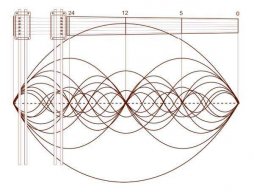
Short scales are more sensitive to intonation issues; you can prove this to yourself with a little geometry. It's only possible to get optimal intonation (not perfect) for a single bridge height on any bass, regardless of scale. Shorter distance from fret 12 to the bridge will slightly exaggerate the problem. Since the frets are closer together on a shortie, that also adds a mechanical accuracy issue which will, again, never be perfect. And of course due to lower average tension, the touch required to get the note perfect is a bit more demanding up top on a short scale.
All true enough. The question is, will this add up to something significant? In my experience, no, it won't. It will generally be lost in the noise of manufacturing error, setup error, imperfect neck curvature, and gorilla hand technique. But that is a random sample, and a taking a look at how a small section of any random series can work out easily convinces me that two people honestly evaluating what they have seen can lead to wildly different opinions -- both valid for the dataset they've experienced.
There's probably a reason science avoids anecdotal evidence.
This is a site to discuss Bass issues not to insult people. I don't doubt you believe what you are saying is rellevant. In the real world any difference that you perceive is easily overcome. Bottom line there are no dissadvantages to short scale basses unless it doesn't fit you or you are looking for a very minor difference in string tension that is nominal at the best.
Thank you. Well explained.I think this is right on the money. Another way to look at it: intonation is sensitive to action height - the higher the action (beyond the 12th fret) the greater the discrepancy in intonation when you fret a note. Upright players are very aware of this issue when playing in thumb position because high action is typical on the upright. This problem is present with any scale length, and as noted above, is more exaggerated with a short scale length and/or with high action. And how important is this phenomenon? It depends on the application. On a sparse ballad in a quiet studio setting you might notice it playing high on the neck. I've never used a short scale bass for that kind of work, myself, so I can't comment from experience.
I think this is right on the money. Another way to look at it: intonation is sensitive to action height - the higher the action (beyond the 12th fret) the greater the discrepancy in intonation when you fret a note. Upright players are very aware of this issue when playing in thumb position because high action is typical on the upright. This problem is present with any scale length, and as noted above, is more exaggerated with a short scale length and/or with high action. And how important is this phenomenon? It depends on the application. On a sparse ballad in a quiet studio setting you might notice it playing high on the neck. I've never used a short scale bass for that kind of work, myself, so I can't comment from experience.

Unless you find yourself constantly playing in the high register...no. Most short scale basses have a pretty good mid-range growl to them. It sounds like you play a lot of songs in the basement end of the instrument. What bass are you playing on now, and if you go to a short scale, can you find one that sounds similar? Some times the 34 can get to me when I play "Geek Stink Breath".
...I forgot to mention. Have you tried alternate tuning? Drop D tuning may help.