
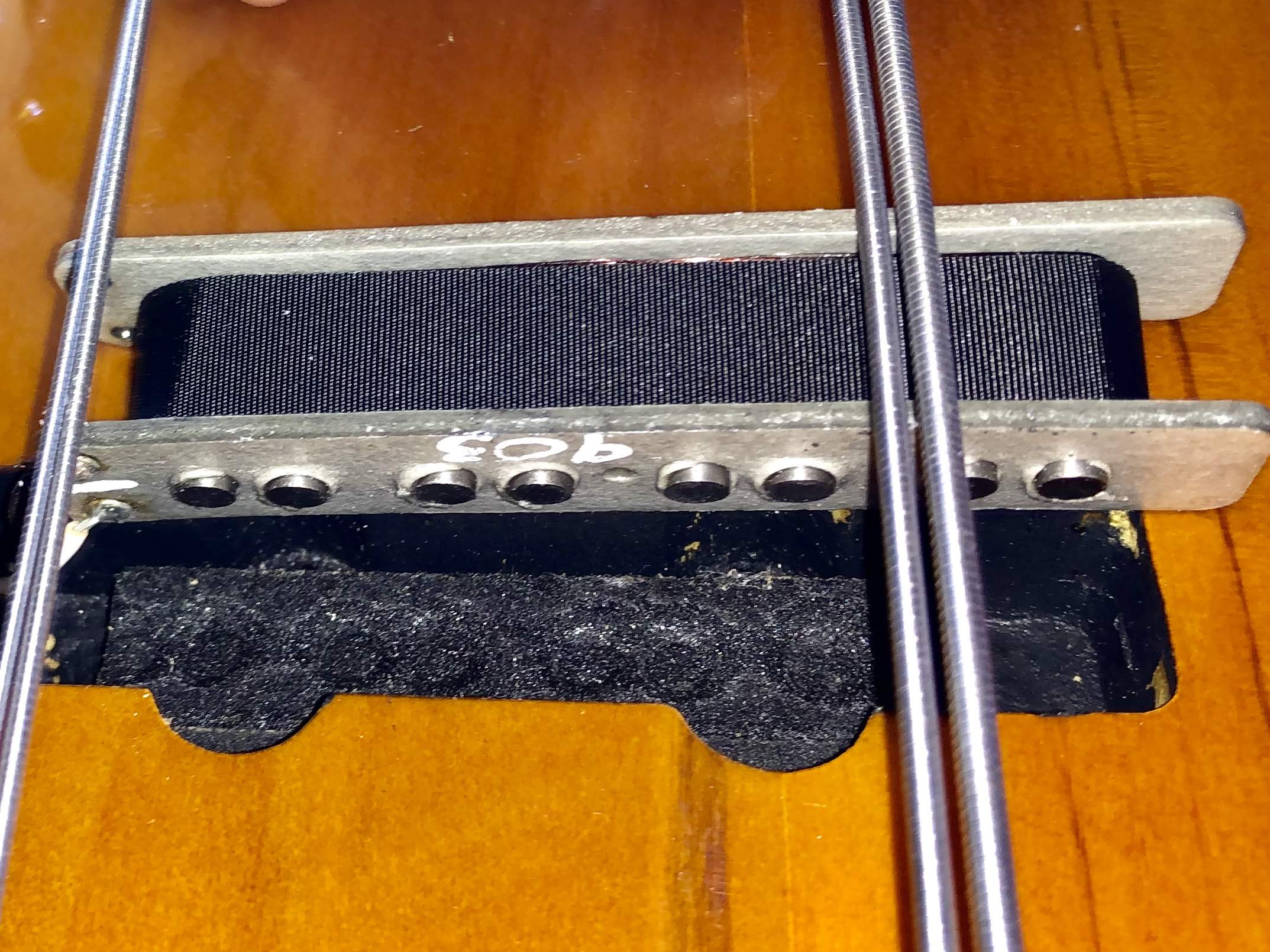
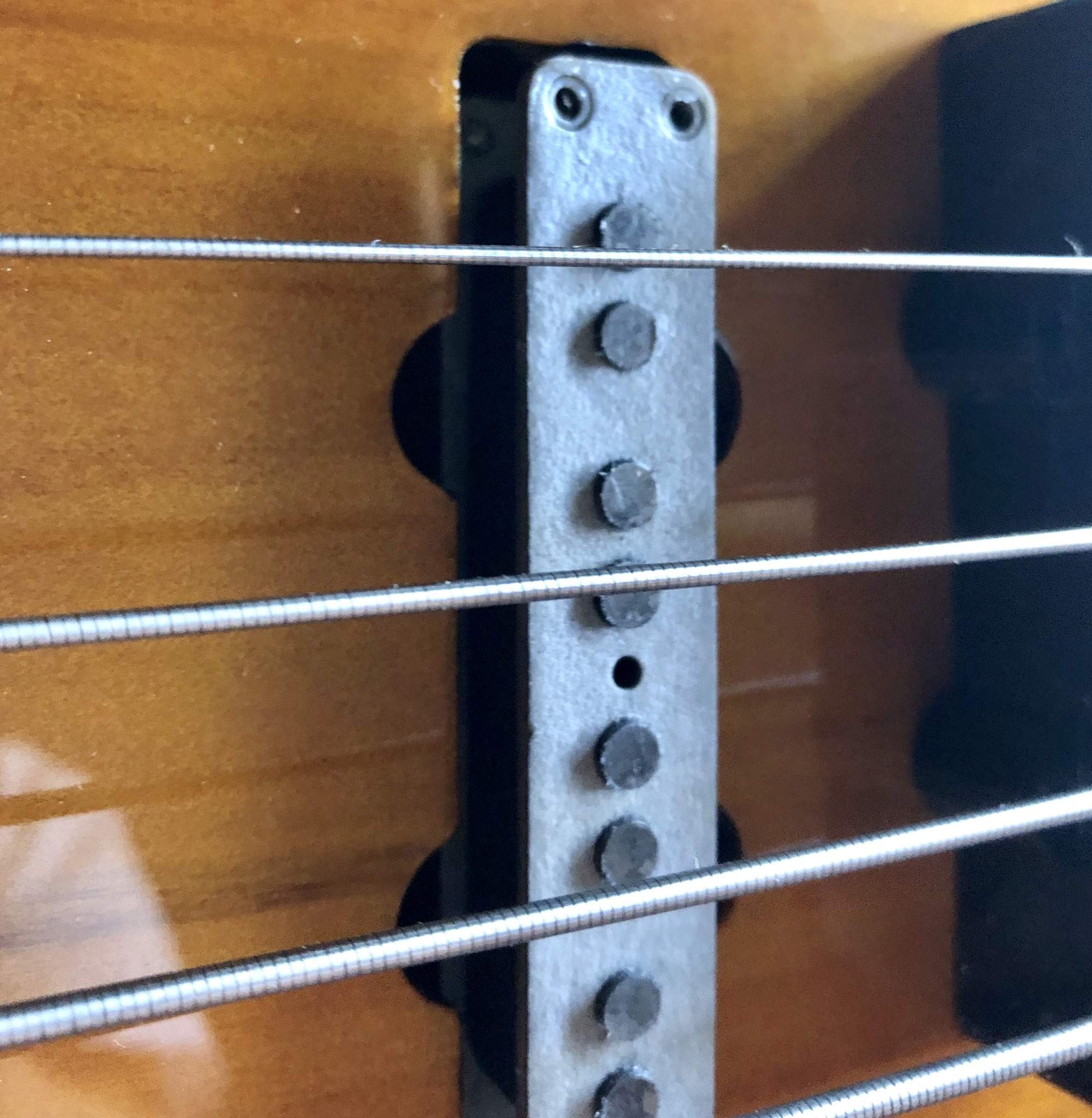
Picked up this fretless VM Squier Jazz, the pickups and controls look like they’ve been swapped out, though I’m not even sure about that. Can anyone help identify them? I can post more photos if it would be helpful.


Enjoy the benefits of a premium membership!
Upgrade Account
-
TalkBass has been independent since 1998. Add your voice.
Create a free account to reply to discussions, view embedded media, and browse with fewer display ads.
Join free Log in
Want zero display ads or expanded classifieds tools? Compare plans.
You are using an out of date browser. It may not display this or other websites correctly.
You should upgrade or use an alternative browser.
You should upgrade or use an alternative browser.
Anyone able to ID these pickups and controls?
- Thread starter Lujon
- Start date
More options
Who Replied?

The pickups look very much like the ones I just took out of my Fender MIM 75th Jazz. The grey cardboard, the writing on them, the wire..all the same. The only difference is the coil wrapping tape which mine does not have. Fender does not say what they are, they only say 'a recreation of 60's Jazz pickups' so I take that to mean 'cheap generic pickups'.
I replaced them with Duncan Quarter Pounders but to be honest I can't give a good comparison yet because I had other things going on with getting my bass setup right and the Duncans didn't sound much different at first. But I've got everything dialed in and now they sound phenomenal so eventually I'm going to put the stock pickups back in just to see what they actually sound like.
And judging by the soldering job and the orange cap, I would say your controls are definitely not stock.
I replaced them with Duncan Quarter Pounders but to be honest I can't give a good comparison yet because I had other things going on with getting my bass setup right and the Duncans didn't sound much different at first. But I've got everything dialed in and now they sound phenomenal so eventually I'm going to put the stock pickups back in just to see what they actually sound like.
And judging by the soldering job and the orange cap, I would say your controls are definitely not stock.
I take that to mean 'cheap generic pickups'.
I think it's important to keep mind that real original vintage Fender pickups are essentially "cheap generic pickups'" in the sense that they're utterly simple and were designed for ease of cheap manufacturing.
I think we've all been trained to assume that real Fender pickups or name-brand aftermarket pickups are automatically better than anything else, but ultimately, there are often no meaningful differences between cheap generic pickups and the real thing.
I guess what I'm trying to say is that "those are just simple cheap generic pickups" shouldn't automatically be taken to mean that they won't sound good.

I think it's important to keep mind that real original vintage Fender pickups are essentially "cheap generic pickups'" in the sense that they're utterly simple and were designed for ease of cheap manufacturing.
I think we've all been trained to assume that real Fender pickups or name-brand aftermarket pickups are automatically better than anything else, but ultimately, there are often no meaningful differences between cheap generic pickups and the real thing.
I guess what I'm trying to say is that "those are just simple cheap generic pickups" shouldn't automatically be taken to mean that they won't sound good.
Yeah that's why I'm going to put them back in so I can give them a fair shot. They might be the best pickups ever made, who knows! I just feel that due to their lack of description on Fender's website that they are not great, and and by them avoiding saying that they are a specific model or giving any actual specs that they are kinda free to put in whatever pickups they can buy at that time, as 'inspired by classic Fender pickups' can cover a lot of ground
From Fender's point of view, it's in their best interest if everyone assumes the stock pickups in their cheaper models are less good. Then they can sell you an upgrade! Personally, I've found that some of their recent cheap model pickups have been incredibly good. To the extent that even though I make my own pickups, and I tend to immediately put them in any instrument in the house, I haven't bothered to replace the stockers in my son's Squier CV Jazz or my own Player strat.
Fender's early pickups were certainly excellent pickups that sound great. But they were designed to be cheap and easy to make. Look at a Jazz pickup compared to the pickups that were being put in other brands in the 50's and 60's. To make a Jazz pickup, you pop some rods into flatwork, wind the coil, solder on the leads, and you're done. Minimal parts count using cheap materials and essentially three assembly steps. Most every other quality brand (ie Gibson) had many more parts, often from more expensive materials, and twice the number of steps. Leo really paved the way for cheap knockoffs and put his own company in a position where they have to lean heavily on cultural and nostalgic marketing in order to sell anything (at least in terms of pickups).
But we are way off on a tangent now. I have no idea what the pickups in the OP are. There are lots of pickups out there with gray flatwork (thanks to Fender using it for a while back in the day and everyone wanting to copy that), but the tape wrapped on the coil is unusual.
Fender's early pickups were certainly excellent pickups that sound great. But they were designed to be cheap and easy to make. Look at a Jazz pickup compared to the pickups that were being put in other brands in the 50's and 60's. To make a Jazz pickup, you pop some rods into flatwork, wind the coil, solder on the leads, and you're done. Minimal parts count using cheap materials and essentially three assembly steps. Most every other quality brand (ie Gibson) had many more parts, often from more expensive materials, and twice the number of steps. Leo really paved the way for cheap knockoffs and put his own company in a position where they have to lean heavily on cultural and nostalgic marketing in order to sell anything (at least in terms of pickups).
But we are way off on a tangent now. I have no idea what the pickups in the OP are. There are lots of pickups out there with gray flatwork (thanks to Fender using it for a while back in the day and everyone wanting to copy that), but the tape wrapped on the coil is unusual.
The pickups look very much like the ones I just took out of my Fender MIM 75th Jazz. The grey cardboard, the writing on them, the wire..all the same. The only difference is the coil wrapping tape which mine does not have. Fender does not say what they are, they only say 'a recreation of 60's Jazz pickups' so I take that to mean 'cheap generic pickups'.
I replaced them with Duncan Quarter Pounders but to be honest I can't give a good comparison yet because I had other things going on with getting my bass setup right and the Duncans didn't sound much different at first. But I've got everything dialed in and now they sound phenomenal so eventually I'm going to put the stock pickups back in just to see what they actually sound like.
And judging by the soldering job and the orange cap, I would say your controls are definitely not stock.
Interesting, so are your 75th anniversary pickups individually numbered as well? I pulled the bridge pickup and it has “904” written on it. I think the cloth tape could have just been added by the previous owner.
No idea about the pickups, but the controls were obviously changed from the stock volume, volume, tone to blend, master volume, tone setup. No doubt a DIY job based on the generous amounts of solder and heatshrink, and oversized orange drop tone capacitor.
Interesting, so are your 75th anniversary pickups individually numbered as well? I pulled the bridge pickup and it has “904” written on it. I think the cloth tape could have just been added by the previous owner.
They are individually numbered. I'll get pictures of them later sinceI have them out.

- Jul 7, 2010
- 3,383
- 2,311
- Disclosures
- Endorsing Artist for: Duncan Pickups; Line6, Hipshot, GHS Strings, Somnium Guitars
Interesting that they put 500K pots in.
Personally I prefer 250K...BUT that is my taste (and a .047 orange cap)
The main question I would ask is how good does the bass sound? If you like then let is go for now...or just replace the pots and cap and see how it will effect your sound.
On the pickups not sure...sorry.
Personally I prefer 250K...BUT that is my taste (and a .047 orange cap)
The main question I would ask is how good does the bass sound? If you like then let is go for now...or just replace the pots and cap and see how it will effect your sound.
On the pickups not sure...sorry.
Interesting that they put 500K pots in.
Personally I prefer 250K...BUT that is my taste (and a .047 orange cap)
The main question I would ask is how good does the bass sound? If you like then let is go for now...or just replace the pots and cap and see how it will effect your sound.
On the pickups not sure...sorry.
It’s a bit hard to see but they are 250k. As far as how it sounds, the bass is new to me so I’m still getting to know it. I got it for 200$ to have an inexpensive bass to keep at work and so far I think it’s perfectly fine for what it is.
Perfect match, minus the tape. Thanks so much for helping me out!
- Jul 7, 2010
- 3,383
- 2,311
- Disclosures
- Endorsing Artist for: Duncan Pickups; Line6, Hipshot, GHS Strings, Somnium Guitars
Oops seen that now on PC zoomed in...sorry.It’s a bit hard to see but they are 250k. As far as how it sounds, the bass is new to me so I’m still getting to know it. I got it for 200$ to have an inexpensive bass to keep at work and so far I think it’s perfectly fine for what it is.
That is a good price. Have fun modifying it.
rebranded Geddy Lee pickups for Rush Muzak

Can you look at the top of the top flatwork, and see if it has the counterbore cut around the empty eyelet holes, as in the OP photo?
And judging by the soldering job and the orange cap, I would say your controls are definitely not stock.
I mean it probably works well but that is some smurgy soldering. Heat shrink- nice. Actual solder- smurgy.
(just made that word up- smurgy- I think you know what it means from the picture and the sound of the word).
It is not stock, I have a VM Jazz. I think Crater got it right. And I do like that setup on a jazz- master volume, blend and tone. The Wilde pickups/Bill/Becky Lawrence crew had that as a recommendation and it works really well with their pickups (noiseless).
I can't ID those jazz pickups, they look like pretty generic 2 wire single coil jazz bass pickups with no cover. So the blend may make it noisy in certain cases- watch shield and ground if it is noisy.
Can you look at the top of the top flatwork, and see if it has the counterbore cut around the empty eyelet holes, as in the OP photo?
You can kinda see that in my picture on the pickup that is laying sideways, looks like it does not have the counterbore. However looking closer at the pickups in the OP's picture, it looks like the top flatwork also has metal eyelets for the wires as well. Unused, of course.
You can kinda see that in my picture on the pickup that is laying sideways, looks like it does not have the counterbore. However looking closer at the pickups in the OP's picture, it looks like the top flatwork also has metal eyelets for the wires as well. Unused, of course.
View attachment 4407829
What looks like a counterbore in the first post is actually the metal eyelet, just looks like the same material as the grey surrounding it. Hard to tell, do your pickups have metal eyelets as well or are they just holes?
What looks like a counterbore in the first post is actually the metal eyelet, just looks like the same material as the grey surrounding it. Hard to tell, do your pickups have metal eyelets as well or are they just holes?
Mine are just holes.


