Thats getting into the realms of a heavy bass.Yeah, and the Ultra already weighs 4.54kg (10 ounces). That’s heavy enough in my opinion

Enjoy the benefits of a premium membership!
Upgrade Account
-
TalkBass has been independent since 1998. Add your voice.
Create a free account to reply to discussions, view embedded media, and browse with fewer display ads.
Join free Log in
Want zero display ads or expanded classifieds tools? Compare plans.
You are using an out of date browser. It may not display this or other websites correctly.
You should upgrade or use an alternative browser.
You should upgrade or use an alternative browser.
Are high mass bridges actually... Bad ?
- Thread starter Romain909
- Start date
More options
Who Replied?
To me, a high mass bridge is a no go if:
1. The total weight of the bass is unacceptable (for me that's going too much over 9 lbs)
2. The action cannot go low enough for my liking (which is around 1.50-1.75 mm at the 12th fret for me)
Otherwise, they're fine, but they must match the aesthetics of the bass for me.
On a Fender, I like the classic vintage style bridge (either 60s or 70s).
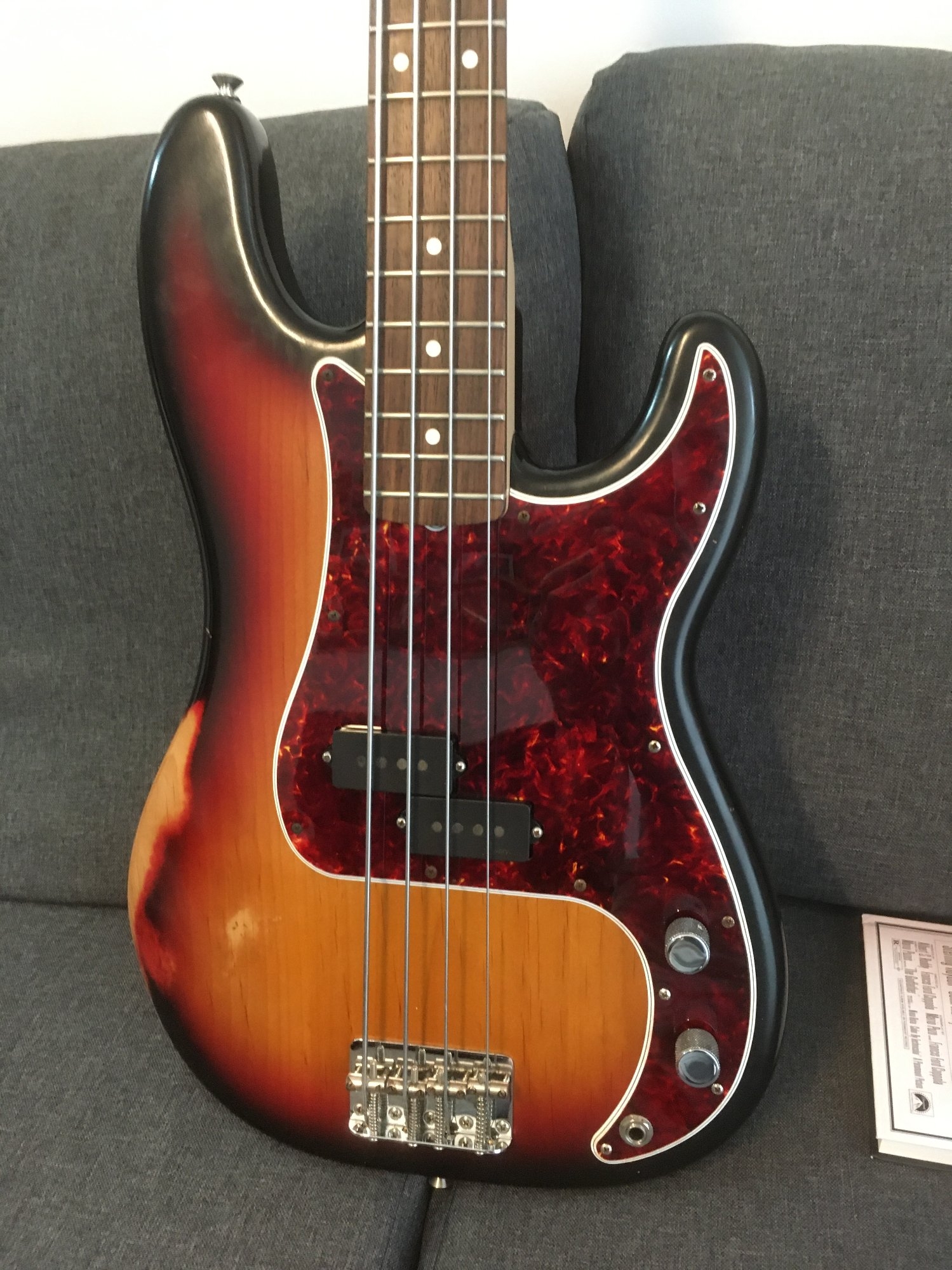
Here's my Spitfire wearing (good taste OP!) P bass with the 70s style Fender bridge:
1. The total weight of the bass is unacceptable (for me that's going too much over 9 lbs)
2. The action cannot go low enough for my liking (which is around 1.50-1.75 mm at the 12th fret for me)
Otherwise, they're fine, but they must match the aesthetics of the bass for me.
On a Fender, I like the classic vintage style bridge (either 60s or 70s).
Here's my Spitfire wearing (good taste OP!) P bass with the 70s style Fender bridge:
Last edited:


A heavier bridge rarely provides any benefit. Ideally, you want a bridge with quick Removal slots for string changes, possibly adjustable string, spacing, and truly as light as possible. I find the hip shot a style in aluminum fits the bill. Also, regarding the shim. Installing a shim is standard practice. I’m sure you can find a thickness that will create the ideal tilt for proper set up.

I have an Ultra Jazz, 4 string. I love this bass, it's an excellent instrument. Mine is a bit heavy, and I like low action, so I swapped out for an aluminum hipshot bridge, B-style I think. Now the bass is half a pound lighter, I can quick load the strings, and it still sounds and looks great. I think the high mass bridges are fine, but I'm glad I made the change. I think you would like it.


On one hand, the high mass Fender bridge is not well suited to this bass bc it doesn’t allow proper setup. That’s objectively true. As a matter of opinion, however, I just prefer vintage bridges regardless. I personally don’t like the high mass look at all, the extra weight, or what they do to the sound, and I would swap it for a vintage style.

Imo you just cannot beat the genuine vintage Fender tin bridge. Use them on all my basses. Simple, elegant, light, with bags of sustain.
You might be able to file or grind down the offending saddles. First choice would be on their underside if possible to avoid messing up the string witness point on top (you can introduce sitar buzzes if you file the witness point even slightly imperfectly). I have done this with a dremel tool before on a bass bridge to get the G and D saddles lower. That was a more conventional bridge with barrel saddles, though.

w
1000 grams = 1 kg (kilogram) = 1 l (litre) = 1000cc - 1000ml.
So it’s all based on the weight, volume and dimensions of a gram of water. Not based on the size of some dead kings foot. The chicken and egg question remains though: which came first the cm3 or the gram?
Back on topic. HM bridges do make a difference. It’s subjective whether it’s a good or bad difference. There’s no point in saying HM bridges are better, or they suck, the same with vintage bridges. It’s all up to YOU the owner. Do what you want.
Makes no sense? Let see. One gram of water = 1 ml (millilitre) = 1 cc (cubic centimeter).Ah sorry, I meant 10 POUNDS.
Sorry, the units you guys use just make no sense to me ahah
1000 grams = 1 kg (kilogram) = 1 l (litre) = 1000cc - 1000ml.
So it’s all based on the weight, volume and dimensions of a gram of water. Not based on the size of some dead kings foot.
The chicken and egg question remains though: which came first the cm3 or the gram? Back on topic. HM bridges do make a difference. It’s subjective whether it’s a good or bad difference. There’s no point in saying HM bridges are better, or they suck, the same with vintage bridges. It’s all up to YOU the owner. Do what you want.
Last edited:

They certainly matter and have an impact on sound. I put one on my P bass and immediately went back to the old bent metal stock one. The high mass one took the air out of the sound. It took away the bark and the hair around the notes. It gave the bass a weird EQ and felt mainly subtractive in its effect. If you think about it for even a few seconds it makes no sense that a thick block of metal could add anything to the sound. It's going to take away. How could it not?

They are the Hummer of bridges, everything in excess for no good reason.


Yeah I know, I am French, we use the metric system over here and invented it in the 18th century.w
Makes no sense? Let see. One gram of water = 1 ml (millilitre) = 1 cc (cubic centimeter).
1000 grams = 1 kg (kilogram) = 1 l (litre) = 1000cc - 1000ml.
So it’s all based on the weight, volume and dimensions of a gram of water. Not based on the size of some dead kings foot.
Back on topic. HM bridges do make a difference. It’s subjective whether it’s a good or bad difference. There’s no point in saying HM bridges are better, or they suck, the same with vintage bridges. It’s all up to YOU the owner. Do what you want.
I meant that imperial units make no sense to me as I said ounce instead of pound ahah

You might be able to file or grind down the offending saddles. First choice would be on their underside if possible to avoid messing up the string witness point on top (you can introduce sitar buzzes if you file the witness point even slightly imperfectly). I have done this with a dremel tool before on a bass bridge to get the G and D saddles lower. That was a more conventional bridge with barrel saddles, though.
When I had this issue with the G string on a G&L JB-5, I considered grinding down the saddle and I think it's an elegant solution. And you're right not to mess with the witness point, because problems there can cause strings to break. I experienced this on a Peavey Patriot, which had a very slight burr on the A string saddle. After breaking a few A strings I had it fixed by an excellent tech. (This experience made me compulsive about having backups for gigs.)
I've had good experiences with high-mass bridges, especially G&L (R.I.P.) saddle-lock bridges. They aren't perfect, but they seem to contribute to sustain and they are very comfortable for palm muting with a pick.
Also, when I replaced the OEM bridge on an MIM Fender with a higher mass Gotoh, I thought the bass gained some sustain and focus to the tone. I was surprised it made such a difference.

Going to a Fender High-Mass bridge on my Squier Sonic P-bass made a noticeable improvement (to me, at least) tone. And, subjectively, to the look.
I remember seeing where someone had disassembled their T40 and the bridge weighed close to a pound itself!Heavy is great - I love my T40 and my ATK.
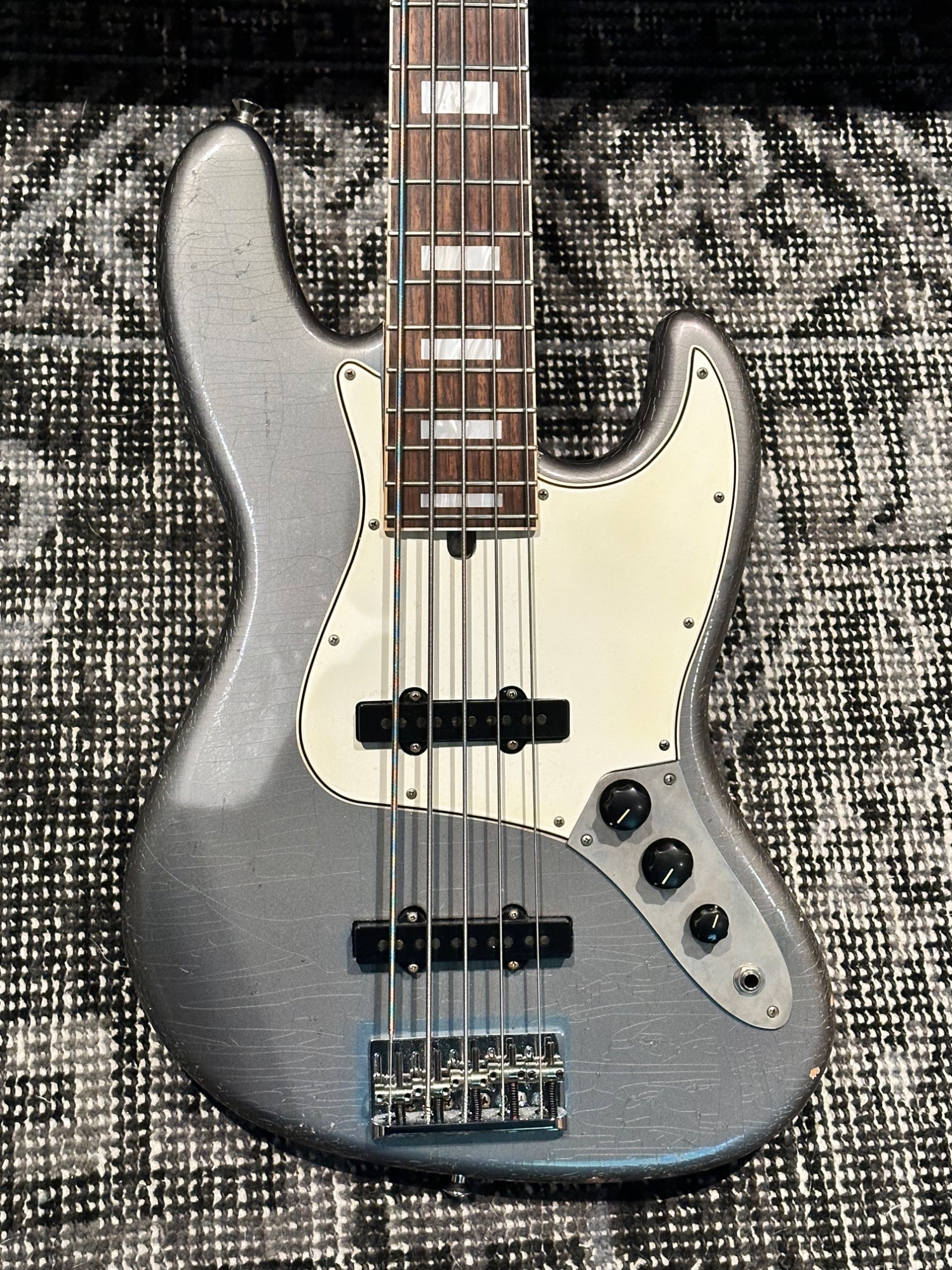
In my experience it's hard to predict how well a bridge will work on a given instrument until it's installed. I went through a few on my Bluesman Vintage V (Jazz Bass clone) until I found one that worked best, which is a Fender American Standard bridge from the 2010's. Weight-wise it's inbetween a high mass and lightweight bridge and it's very solid and easy to intonate. I'm sure you can find the 4-string version out there somewhere. It doesn't inhibit resonance like the high mass bridges I tried, and it doesn't emphasize dead spots or cause a lack of sustain in certain regions like the lightweight bridge that I put on. Caveat: that's what happened with this bass, the result might be totally different on another one.
Note: the bluish area around the bridge is the original un-faded paint color. The exposed areas of the finished have faded over the 4 years or so since the bass was built to a shade that's closer to the classic Inca Silver Fender color.

Note: the bluish area around the bridge is the original un-faded paint color. The exposed areas of the finished have faded over the 4 years or so since the bass was built to a shade that's closer to the classic Inca Silver Fender color.
Last edited:

I believe he's talking about shimming just that one saddle so the screws aren't bottomed out. I think it's worth it as a test. Easily reversed.Yes, that’s my guess as well, I would need to take it off to check it out.
Yes, the screws are touching the base, I mentioned it in my first post.
Regarding the break angle, there is one but def not enough.
Hell no, I am not shimming. I tried once and the bass lost its ability to vibrate, as if the vibration of the neck was slightly out of phase with the vibration of the body, mostly cancelling each other and killing all sustain. The bass instantly felt dull. Indeed, a full shim might lead to better results, but I obviously have multiple issues with this bridge, so let’s work on the bridge instead.
I’m not a fan of Fender’s high mass bridges use on Ultras, especially their 5 strings bridges. If you look at your E string, at the saddle, the groove in the saddle is too close to the upright metal that goes between the strings. It may be rubbing on it.Hello guys.
I own this amazing Fender Ultra Jazz bass (with an OUTSTANDING vintage correct Avant Guard pickguard).
But I have 2 issues with my bridge.
1st : the E strings saddle rattles. If I push the saddle against the base of the bridge, behind the string, the rattle stops.
Sometimes, when I push the saddle backwards against the spring, the rattle can stop. But it is not an exact science, sometimes it is just there.
Before you mention it : the strings are changed every 3 - 6 months (DR), the string is not swirled or twisted but perfectly straight, and the adjustment screws are perfectly leveled on the bridge. Also, it is not amazingly noticeable in my amp, but it 100% sucks the vibration of the string and dampers the sustain. I can feel it more than I can hear it.
2nd issue : The E and G saddles are almost maxed out, and yet the bass still has a 2.4mm / 2.5mm action on the E string at the 17th fret (with a perfect 0.3mm relief at the 7th fret). So, with this bridge, I would need to shim the neck to lower the action further. So this bridge, by design, does not allow to go too low - which is unfortunate given how often JB necks go forward..
Question :
Would you guys swap the bridge ?
I like vintage bridges. Would you go for it ? I am super tempted to try one on the Ultra.
I would say that I prefer modern standard bridges (like those on the American pro II but they use 3 screws, not 5).
View attachment 7349747
View attachment 7349746
On the 5 string version, it’s worse on the B string because of the retaining hole in the tail piece is significantly off center of the plane of the saddle to the nut. Looking at your picture you can see your E string as a slight bend in the string between the tail piece and the saddle. I’m not saying this is your problem, but what I found was that this caused a muffled tone as opposed to the A-D-G strings, almost like it was a different instrument.

The bridge you choose affects the ADRS characteristics of the bass. (attack, decay, release and sustain)
Hi mass bridge and the traditional bend metal plate actually sound a bit different. The high mass bridge will compress the initial transient of the attack and have a longer decay time. Its even sounding with great sustain. The old style bent metal design Leo used has a sharp attack (large transient peak) and quicker decay (than a high mass). It is more aggressive sounding. You can see this on the wave form when you record the instrument. Although you don't get as much sustain with the bent metal design, there is plenty enough for any genre that I play.
Starting in the 70's, I put BadAss bridges on my Fender basses. I recently restored the stock bridge and I was shocked to hear the difference.
Which is better? My vote; I believe the old style bridge sounds punchier with better note definition. Is that better, is that your experience? You decide.
Hi mass bridge and the traditional bend metal plate actually sound a bit different. The high mass bridge will compress the initial transient of the attack and have a longer decay time. Its even sounding with great sustain. The old style bent metal design Leo used has a sharp attack (large transient peak) and quicker decay (than a high mass). It is more aggressive sounding. You can see this on the wave form when you record the instrument. Although you don't get as much sustain with the bent metal design, there is plenty enough for any genre that I play.
Starting in the 70's, I put BadAss bridges on my Fender basses. I recently restored the stock bridge and I was shocked to hear the difference.
Which is better? My vote; I believe the old style bridge sounds punchier with better note definition. Is that better, is that your experience? You decide.

Are high mass bridges actually... Bad ?
No they are not.
You might have a problem with your bridge but that does not make the rest "bad". You can prefer the sound of either style, again, doesn't make the other "bad".
What is bad is not having a choice. Fortunately, these days, we have a dozen ways of getting the sound we want out of a bass.


