• TalkBass has been independent since 1998. Add your voice.
    Create a free account to reply to discussions, view embedded media, and browse with fewer display ads.
    Join freeLog in
    Want zero display ads or expanded classifieds tools? Compare plans.

Are high mass bridges actually... Bad ?

Hello guys.
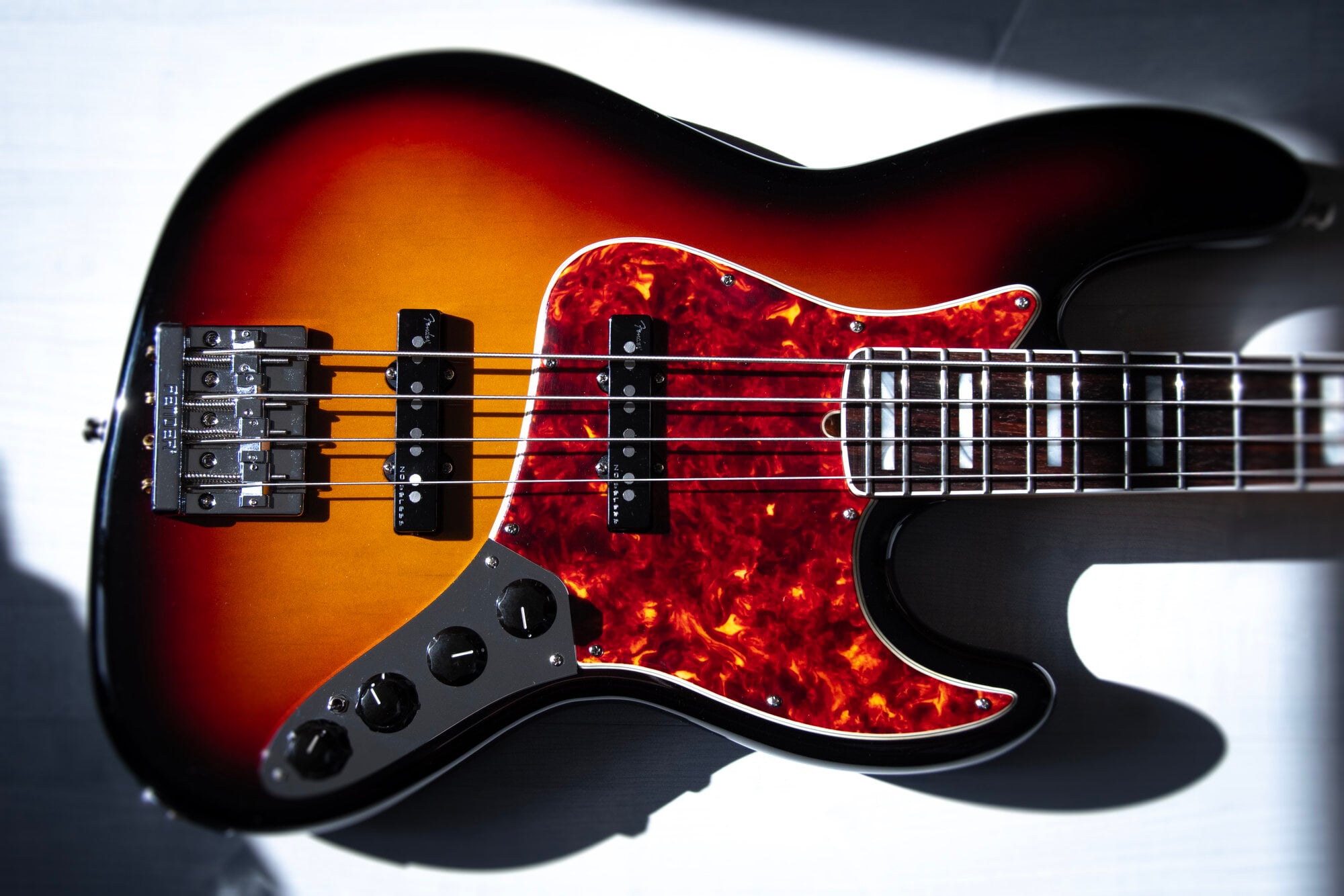
I own this amazing Fender Ultra Jazz bass (with an OUTSTANDING vintage correct Avant Guard pickguard).

But I have 2 issues with my bridge.

1st : the E strings saddle rattles. If I push the saddle against the base of the bridge, behind the string, the rattle stops.
Sometimes, when I push the saddle backwards against the spring, the rattle can stop. But it is not an exact science, sometimes it is just there.

Before you mention it : the strings are changed every 3 - 6 months (DR), the string is not swirled or twisted but perfectly straight, and the adjustment screws are perfectly leveled on the bridge. Also, it is not amazingly noticeable in my amp, but it 100% sucks the vibration of the string and dampers the sustain. I can feel it more than I can hear it.

2nd issue : The E and G saddles are almost maxed out, and yet the bass still has a 2.4mm / 2.5mm action on the E string at the 17th fret (with a perfect 0.3mm relief at the 7th fret). So, with this bridge, I would need to shim the neck to lower the action further. So this bridge, by design, does not allow to go too low - which is unfortunate given how often JB necks go forward..


Question :
Would you guys swap the bridge ?
I like vintage bridges. Would you go for it ? I am super tempted to try one on the Ultra.
I would say that I prefer modern standard bridges (like those on the American pro II but they use 3 screws, not 5).
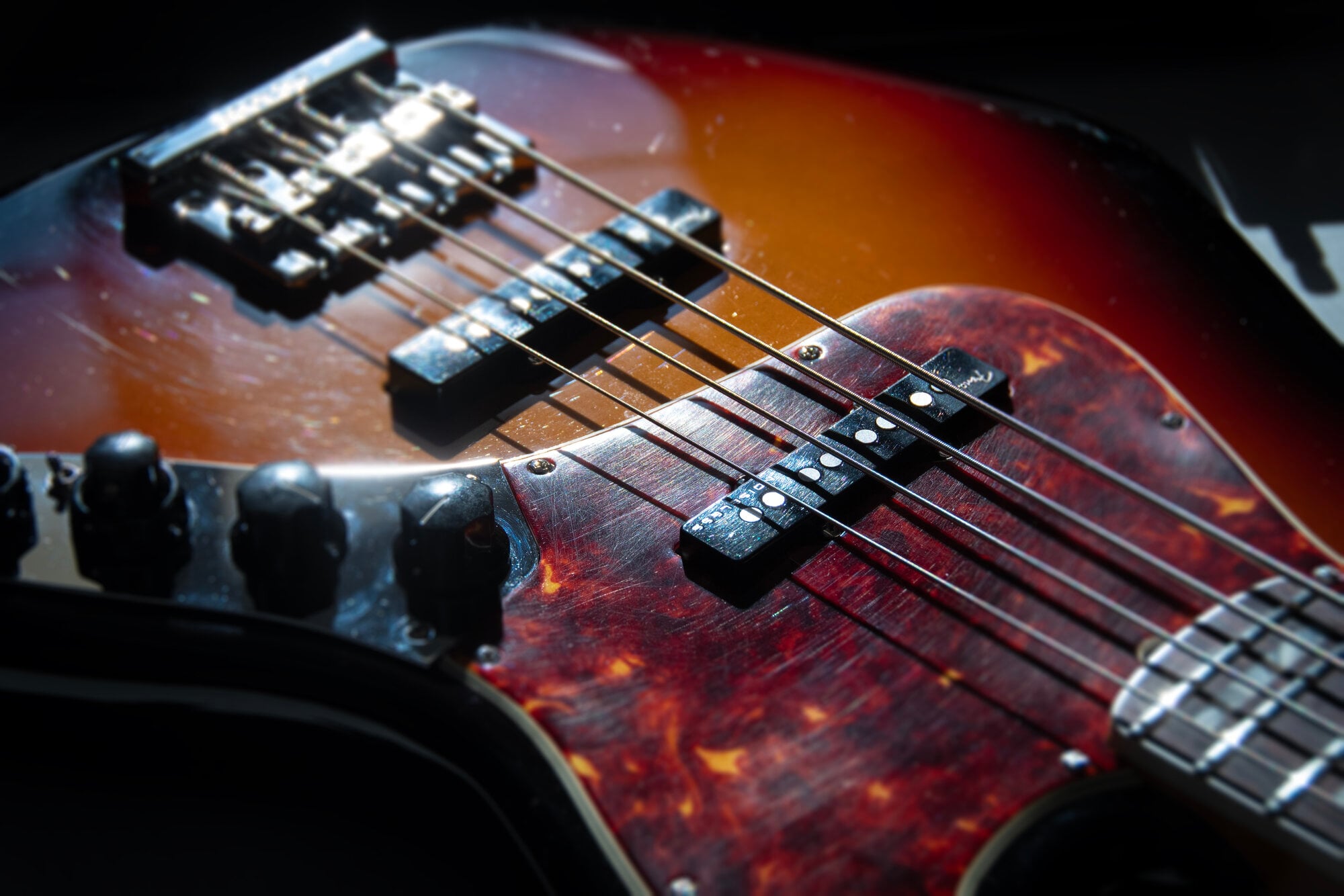
1761079155827.jpeg

1761079139353.jpeg
 
I'd bet the old style "L" bridge has a smaller footprint than the hi-mass bridge. If you take that one off I'd bet it has left an impression on the body that you'll see with the "L" bridge installed.
Yes, that’s my guess as well, I would need to take it off to check it out.


"E" string rattles? And you're sure its not the spring itself? Are the saddle screws touching the base? You say E and G are bottomed out. Is there any break angle over the saddles? Can you take some SIDE SHOTs of it? I think I'd put an shim in there which actually makes you raise the saddles.
Yes, the screws are touching the base, I mentioned it in my first post.
Regarding the break angle, there is one but def not enough.

Hell no, I am not shimming. I tried once and the bass lost its ability to vibrate, as if the vibration of the neck was slightly out of phase with the vibration of the body, mostly cancelling each other and killing all sustain. The bass instantly felt dull. Indeed, a full shim might lead to better results, but I obviously have multiple issues with this bridge, so let’s work on the bridge instead.
 
Nothing wrong in trying another bridge. It's easy swap, not expensive, and it's reversible. If you don't like new bridge, install old one and just post here, you'll get help getting the setup right.
BTW shim done right will never change the sound or sustain in any way, guaranteed. And that rattle is probably easy fix, I guess just stretching that spring will make it go away.
 
Bummer..... I haven't had that same negative experience with shims that you have. I think 2 of mine have them now. Just keep in mind, its easy to try, takes 10 min. and if it doesn't work, its easy to reverse. I have an Ultra as well and it's saddles are insanely low. My G is bottomed but my E has just a sliver (around 0.010) of a gap under it.
 
Hello guys.
I own this amazing Fender Ultra Jazz bass (with an OUTSTANDING vintage correct Avant Guard pickguard).

But I have 2 issues with my bridge.

1st : the E strings saddle rattles. If I push the saddle against the base of the bridge, behind the string, the rattle stops.
Sometimes, when I push the saddle backwards against the spring, the rattle can stop. But it is not an exact science, sometimes it is just there.

Before you mention it : the strings are changed every 3 - 6 months (DR), the string is not swirled or twisted but perfectly straight, and the adjustment screws are perfectly leveled on the bridge. Also, it is not amazingly noticeable in my amp, but it 100% sucks the vibration of the string and dampers the sustain. I can feel it more than I can hear it.

2nd issue : The E and G saddles are almost maxed out, and yet the bass still has a 2.4mm / 2.5mm action on the E string at the 17th fret (with a perfect 0.3mm relief at the 7th fret). So, with this bridge, I would need to shim the neck to lower the action further. So this bridge, by design, does not allow to go too low - which is unfortunate given how often JB necks go forward..


Question :
Would you guys swap the bridge ?
I like vintage bridges. Would you go for it ? I am super tempted to try one on the Ultra.
I would say that I prefer modern standard bridges (like those on the American pro II but they use 3 screws, not 5).

View attachment 7349747
View attachment 7349746

Having owned jazzes with each kind, I’m not really sure what we win with a high mass. I leave ‘em as is nowadays.
 
  • Like
Reactions: BeyondFiredUp
Bridges are about function, not weight. IMO, a bridge has to solve a problem, like string spacing, ease of string replacement, adjustability, or intonation. As long as it stays in place and provides the necessary clearances, any bridge is mostly acceptable. Bridges that require too much tightening, loosening, and lining up are the bane of my existence.

After once being a fan of high-mass bridges, I now look at them through a prism. If all they add is weight, how does that help anything at all?

That’s all I got.