iron woodWhat's the best wood for metal?

Enjoy the benefits of a premium membership!
Upgrade Account
-
TalkBass has been independent since 1998. Add your voice.
Create a free account to reply to discussions, view embedded media, and browse with fewer display ads.
Join free Log in
Want zero display ads or expanded classifieds tools? Compare plans.
You are using an out of date browser. It may not display this or other websites correctly.
You should upgrade or use an alternative browser.
You should upgrade or use an alternative browser.
Are Lightweight Plastic Cabinets Coming Soon ??
- Thread starter 57pbass
- Start date
-
- Tags
- cabinets lightweight plastic
More options
Who Replied?

The answer was clear..... 
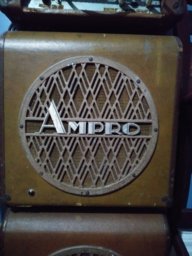
I think we all know what kind of bass has to be played with that cab.

Please clarify your response. I'm not seeing through the com-plexi-ty.
I could see the walls made from a foamed plastic. Structural can be improved using a plastic filler like talc.
I vaguely remember speaker cones made from foamed polystyrene
Cost is a huge factor, wood is cheap, because of its porosity, it is relatively light. Working techniques well known. It costs money to develop technology.
I vaguely remember speaker cones made from foamed polystyrene
Cost is a huge factor, wood is cheap, because of its porosity, it is relatively light. Working techniques well known. It costs money to develop technology.

So maybe you add an adjustable damper on a composite cab like a snare drum has? If you pick up a rattle just adjust it out?The biggest hurdle I see with it is overcoming the ratio of hardness to brittle. Wood is rigid and hard, but synthetics with the same hardness and rigidity tend to be brittle; even more so at low temperatures. There is a specification for these materials called cold-crack, and one called flex maxim or similar. In order to overcome physical shock they need to flex, making a sweet spot very difficult to nail down. If it is too flexible it is susceptible to vibration. If it is too rigid it can crack or shatter. They tighten up or even shrink a bit at or below temperatures that lots of gear sees, and this makes them open to fatigue and stress fracture. Like posted above, so far the mass produced products aren't necessarily offering weight savings over wood. The day will come, but for the next decade or longer I don't see anything de-throning wood as king of cab material.
Graphene is stronger than steel.
Once sheets were made cost effectively one could spray a clam shell injection mold with a releasing agent. Apply a sheet top and bottom clam shell. thin (height wise) vertical strips horizontally, attach at both ends.Multiple injector tubes run to far end .Inject nano tube infused plastic while drawing out the nozzle at same time inject inert gas into the plastic that rapidly expands.The gas would be injected near the tip of the injector.That would create microscopic bubbles to increase strength and reduce weight.All while under an electrical charge to orientate the nano tubes to the graphene fabric.Should work .
Once sheets were made cost effectively one could spray a clam shell injection mold with a releasing agent. Apply a sheet top and bottom clam shell. thin (height wise) vertical strips horizontally, attach at both ends.Multiple injector tubes run to far end .Inject nano tube infused plastic while drawing out the nozzle at same time inject inert gas into the plastic that rapidly expands.The gas would be injected near the tip of the injector.That would create microscopic bubbles to increase strength and reduce weight.All while under an electrical charge to orientate the nano tubes to the graphene fabric.Should work .
Why not cabinets made from corn stalks. Use sheet building techniques similar to fabricating engineered beams. Thin sheets made like plywood. Probably not cost effective.
Could make it out of crush and compressed hemp,but then the drummer would try to smoke your cabs...

Arguably, they’re already here. Darryl Jones has been using QSC K.12 powered monitors to augment his SVT rig with The Rolling Stones and has used a pair onstage as a stand-alone rig in small venues for years. They have a full EQ and volume control set in the back.
I’ve seen Jones in the big places and the small places. You can’t evaluate a bass rig from the audience in a stadium, but the QSC gear by itself in Darryl’s hands in small rooms with little PA help sounds as good or better than anything else out there.
Among other uses, the K.12 speakers are offered as a bass guitar amplification solution, and at least one bass specialty shop is selling them for that purpose. I don’t see an industry wide change in construction of bass amps anytime soon, but the ABS plastic enclosure material seems to work just fine.
I’ve seen Jones in the big places and the small places. You can’t evaluate a bass rig from the audience in a stadium, but the QSC gear by itself in Darryl’s hands in small rooms with little PA help sounds as good or better than anything else out there.
Among other uses, the K.12 speakers are offered as a bass guitar amplification solution, and at least one bass specialty shop is selling them for that purpose. I don’t see an industry wide change in construction of bass amps anytime soon, but the ABS plastic enclosure material seems to work just fine.

I got it! Shredded carrots, glued, pressed and formed like particle board. The color would rival Orange amps. Very organic sound.It was either that or the other classic "Fire the drummer"

Passinwind
I know nothing.
- Dec 3, 2003
- 23,045
- 45,909
- Disclosures
- Designer/Toaster Tech @ Passinwind Electronics
Sonusphere (made my Moses Graphite). Surprisingly big and clear sound, relatively lightweight!
I had a nice visit with those guys last weekend in their NAMM booth. Only heard the cabs with an upright, but that sounded good.
My Eden Nemesis cabs are light even though they use regular magnet speakers. The cabs are some, uh, composition of something. I don’t remember now. I will say those cabs have a unique tone to them. Not sure if its the cab tuning, material, or speakers themselves.

Molded cabs are great for big production runs. They can be well designed. Even QSC uses ply for their subs. It's easy to build with ply these days.
With all the CNC and other automation it just may be that speakers built to order by local builders will keep plywood and other composites popular for a long time.
Ship and store locally flat sheets of ply. Build locally on demand. The builder may not be a speaker cabinet specialist. Good designs and plans will be required. Good machined parts with tabs that fit together.
It is happening in other areas, might as well be MI cabinets too.
The mid/high horns will still be molded or they could be printed. The flair is much more important in the mids and highs.
Raw drivers aren't as bulky to ship as completed cabinets.
If you move keep your drivers, and recycle the cabinet.
With all the CNC and other automation it just may be that speakers built to order by local builders will keep plywood and other composites popular for a long time.
Ship and store locally flat sheets of ply. Build locally on demand. The builder may not be a speaker cabinet specialist. Good designs and plans will be required. Good machined parts with tabs that fit together.
It is happening in other areas, might as well be MI cabinets too.
The mid/high horns will still be molded or they could be printed. The flair is much more important in the mids and highs.
Raw drivers aren't as bulky to ship as completed cabinets.
If you move keep your drivers, and recycle the cabinet.

K12s are hardly "light". Although they could certainly make a convenient small venue rig with the preamp pedal of your choice. But I can't really imagine getting a great live bass tone out of one, and they're definitely not cheap either. Would probably work well with a high end active bass like a Ken Smith, but then you're kind of cheating the bass, aren't you? For 1/5 the price of a pair of K12s, and about the same weight, but surely more sensitivity and usable output, I'll keep my Goliath IV instead. That leaves about 1k or more left over for an actual head that's more than just a gain stage and a few basic EQ switches. If I had a Golight, forget it, those things are like balloons and don't cost much more than the Goliaths.
Anyway, it seems silly to want to jump to plastic cabs when the industry isn't coming close to maximizing what could be done with wooden cabs. Go to 1/2 plywood with lots of bracing. Turn the extra $100 worth of labor/build cost into a $200 price increase for a 20 pound weight savings or whatever. If somebody made a slammin 50 pound 800w 4x10 that sounded killer at a reasonable price (say, at or close to $1k), people would buy it. Plus you should save a bit of money just not buying as much VOLUME of wood, AND it's better for the environment (less trees).
Anyway, it seems silly to want to jump to plastic cabs when the industry isn't coming close to maximizing what could be done with wooden cabs. Go to 1/2 plywood with lots of bracing. Turn the extra $100 worth of labor/build cost into a $200 price increase for a 20 pound weight savings or whatever. If somebody made a slammin 50 pound 800w 4x10 that sounded killer at a reasonable price (say, at or close to $1k), people would buy it. Plus you should save a bit of money just not buying as much VOLUME of wood, AND it's better for the environment (less trees).
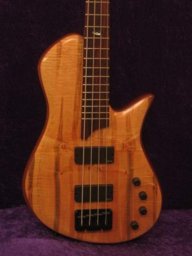
What's the best wood for metal?
iron wood
Morning wood. Or maybe that's just for '80s hair metal.
I had a nice visit with those guys last weekend in their NAMM booth. Only heard the cabs with an upright, but that sounded good.
Cool, glad you chatted with them! [Didn't they have an electric there??]

Can you imagine trying to keep that clean? Or damage free? It is really cool looking however.

An acrylic SWR Henry 8x8 (but with neo drivers) would be awesome (and still heavy).
No one has suggested bamboo for a cab material yet??


