to gain a more thorough understanding of the rhythm section.
that and slap bass is really cool.
Hit the nail on the head right there.

TalkBass has been independent since 1998. Add your voice.
Create a free account to reply to discussions, view embedded media, and browse with fewer display ads.
Join free Log in
Want zero display ads or expanded classifieds tools? Compare plans.
to gain a more thorough understanding of the rhythm section.
that and slap bass is really cool.
we do listen... just not all the time... especially not when the guy with the really big guitar is talking
i read one of these types of threads a while ago, and inspired me to learn basic drum beats, so that maybe i could get more insight as to why my drummer consistently under performs.
after a weeks... i have found my rthym to have improved, timing as well.
alas with no understanding as to why he still sucks.

That is exactly the point that I was making, most drummer do listen ...to themselves and not to the "guy with the big guitar" (bassist I assume) who sadly is the one guy that they should.
I'm also a drummer. Played drums professionally for the 1st 20 years of my musical career before moving to bass and keyboards. As a drummer I aproached music in almost a mathamatical way rather then a melodic way. (I was big into odd time signatures and poly-rhythms ... Think Bill Bruford) Many of the BEST bass players started out as drummers. (For example Mark King started out as a drummer) When a bass player has drums in their background it's easier to understand where the drummer you work with is coming from and it's easier to find the pocket they like to play in. Some drummers like to play in front of the beat, some right on and some behind ... it really helps to be able to hear and understand their aproach so you can lock in with them. I think you can tell a bass player who started as a drummer because their aproach is more rhythmic. They can lay into a simple pattern and make it swing and move rather then just play the notes. I'd suggest ALL bass players study drums or at least really listen to them, understand the way your favorite drummers think, understand the way the drummer you gig with thinks. Definitely a marrage! A good drummer and bass player combo will make any band cook even if the other musicians are lack luster.
Why are there so few good extreme metal drummers?
I actually know why. I'm just venting cause its such a pain in the ass to find a good metal drummer.
I'm also a drummer. Played drums professionally for the 1st 20 years of my musical career before moving to bass and keyboards. As a drummer I aproached music in almost a mathamatical way rather then a melodic way. (I was big into odd time signatures and poly-rhythms ... Think Bill Bruford) Many of the BEST bass players started out as drummers. (For example Mark King started out as a drummer) When a bass player has drums in their background it's easier to understand where the drummer you work with is coming from and it's easier to find the pocket they like to play in. Some drummers like to play in front of the beat, some right on and some behind ... it really helps to be able to hear and understand their aproach so you can lock in with them. I think you can tell a bass player who started as a drummer because their aproach is more rhythmic. They can lay into a simple pattern and make it swing and move rather then just play the notes. I'd suggest ALL bass players study drums or at least really listen to them, understand the way your favorite drummers think, understand the way the drummer you gig with thinks. Definitely a marrage! A good drummer and bass player combo will make any band cook even if the other musicians are lack luster.

IIRC-
Oteil Burbridge also played cans pre-bass.
I do recall 'jamming' with my 'hours-old' white Yamaha 5-string with him on drums...this was '85? Damn, time is flying by.
There are other great bassists that started on drums...one cool thing I ike about Latin music/musicians: Everyone's mentality is that of being a percussionist-first.
...and every bassist/bass player/bass owner out there should know how to play at least a couple of drum grooves.
My question deals with polyrhythms-
Say 'part of the kit' is in an Odd time while the 'other part of the kit' is in 4/4...what timeline are you referencing to keep everything "together"?
What is the deal with drummers and stupid hats??
What is the deal with drummers and stupid hats??
Doesn't the stereotypical bassist also sport unfashionable head covers?
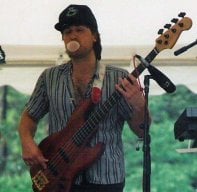
 I was thinking more like a bowler or a feddora.

