
Enjoy the benefits of a premium membership!
Upgrade Account
-
TalkBass has been independent since 1998. Add your voice.
Create a free account to reply to discussions, view embedded media, and browse with fewer display ads.
Join free Log in
Want zero display ads or expanded classifieds tools? Compare plans.
You are using an out of date browser. It may not display this or other websites correctly.
You should upgrade or use an alternative browser.
You should upgrade or use an alternative browser.
Assembling your own basses vs buying production basses vs modding
- Thread starter SactoBass
- Start date
More options
Who Replied?


The important part is the neck, find something with a good, stiff neck & you're golden.
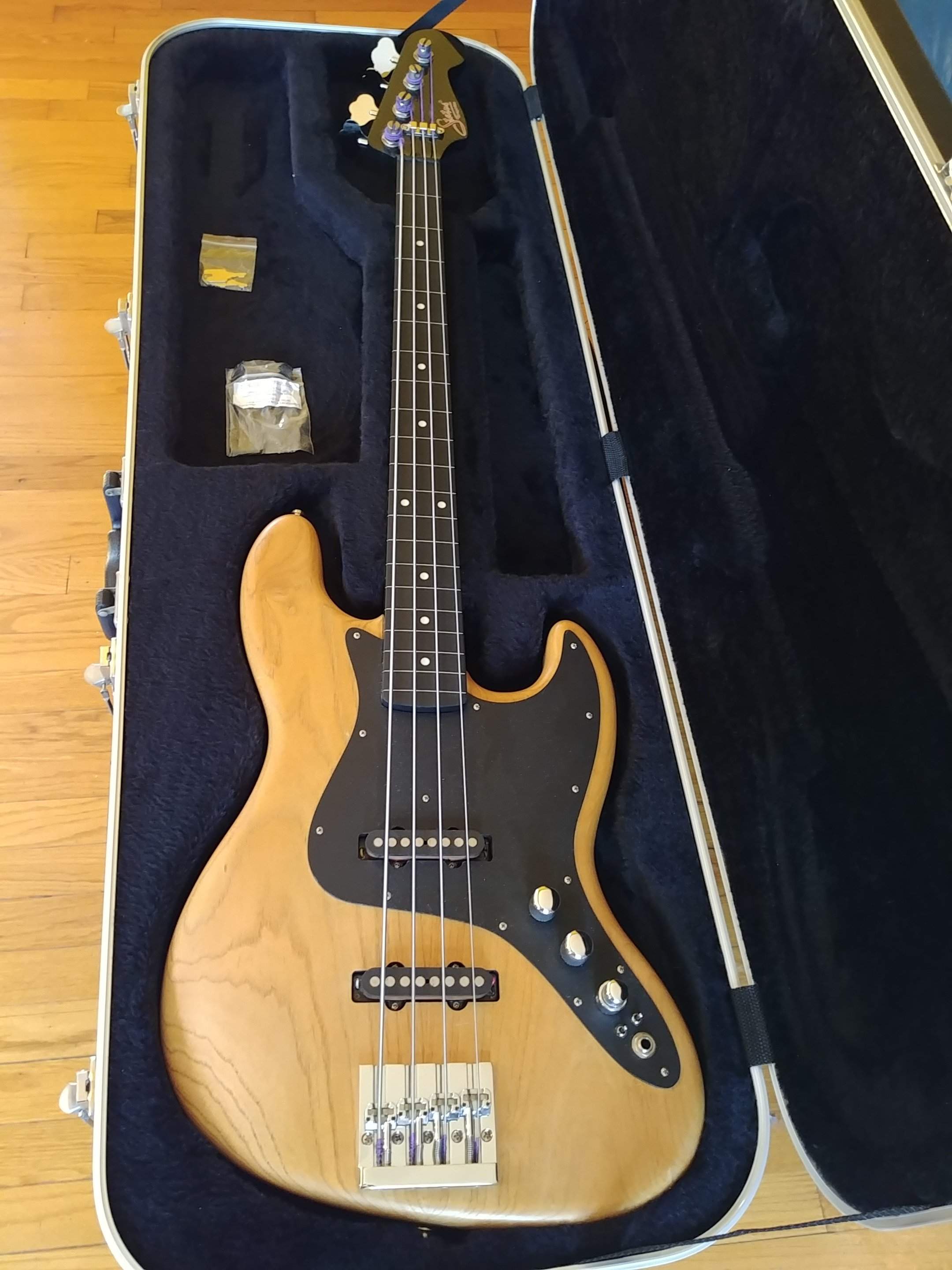
This USA Schecter California Custom Shop/Status Graphite one is a lil stiffer, not too expensive, but NOT $5K!
Having worked in Austin for Mark Erlewine and a few years at Warmoth, I can tell ya that if you purchase QUALITY parts, EXCEPTIONAL electronics and the fit is good and assembled in a PROFESSIONAL manner you can have a better Bass for less investment!
If you are an "investor", then buy guns & Gold and don't get caught up in the "flipper" mania that is all too prevalent in G.A.S.!
This USA Schecter California Custom Shop/Status Graphite one is a lil stiffer, not too expensive, but NOT $5K!
Having worked in Austin for Mark Erlewine and a few years at Warmoth, I can tell ya that if you purchase QUALITY parts, EXCEPTIONAL electronics and the fit is good and assembled in a PROFESSIONAL manner you can have a better Bass for less investment!
If you are an "investor", then buy guns & Gold and don't get caught up in the "flipper" mania that is all too prevalent in G.A.S.!
Last edited:

Here is a MIM Jazz Bass, body and neck and parts sourced separately. The neck pocket was routed incorrectly and was a reject or something. I think I shimmed it with some hog. The ne k had frets popping out, so I refretted it (2nd attempt), and I also inlayed abalone top and side dots, inked the headstock and inlayed an abalone logo I hand cut (first attempt at inlay). 60s CS PUs, a nice bridge (black satin Hipshot), HB7s, a satin black (sanded to 2000) pick guard, and a high quality wiring replacement and knobs finished it off. Inlay was fun. It played and sounded great.
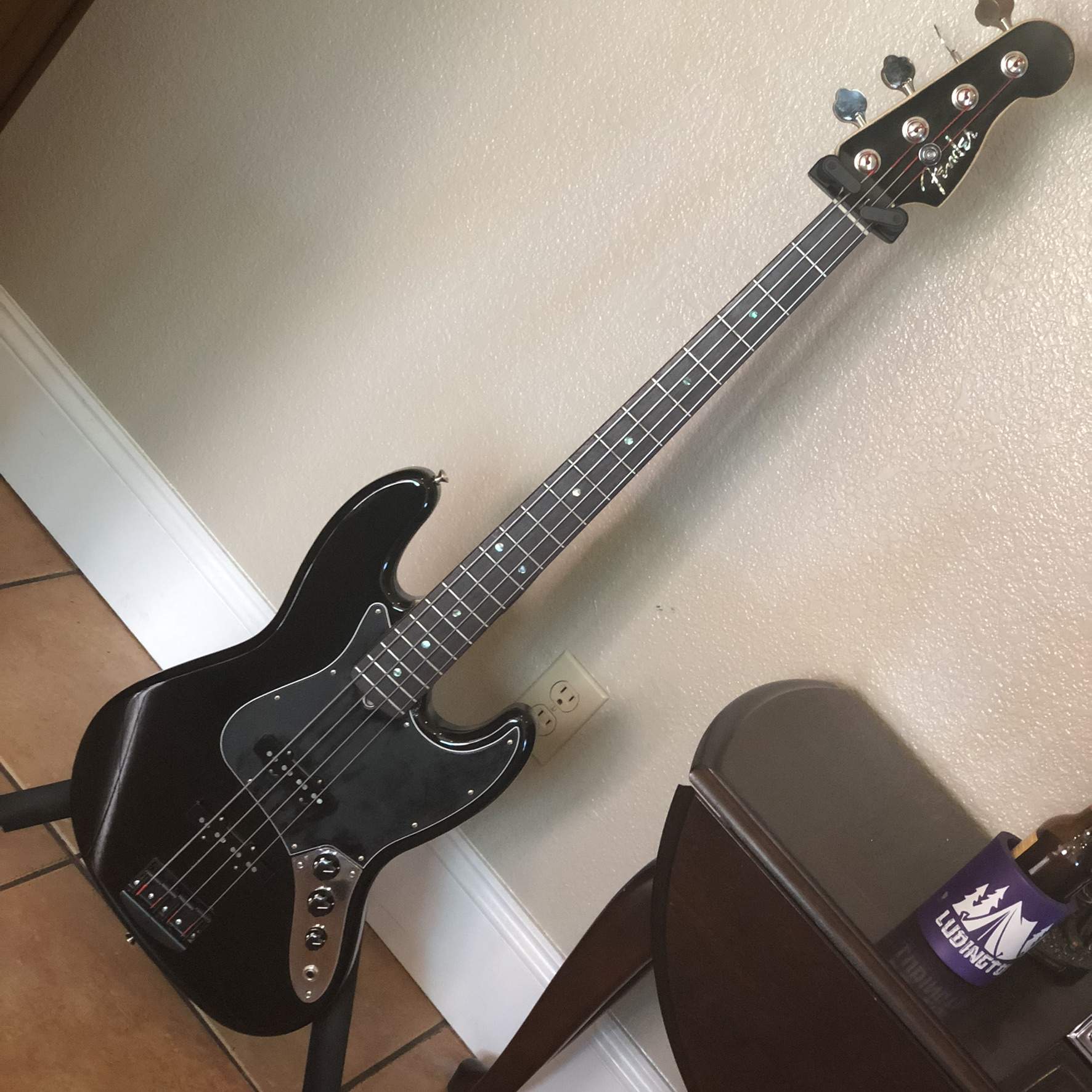
Here is a MIM Jazz Bass, body and neck and parts sourced separately. The neck pocket was routed incorrectly and was a reject or something. I think I shimmed it with some hog. The ne k had frets popping out, so I refretted it (2nd attempt), and I also inlayed abalone top and side dots, inked the headstock and inlayed an abalone logo I hand cut (first attempt at inlay). 60s CS PUs, a nice bridge (black satin Hipshot), HB7s, a satin black (sanded to 2000) pick guard, and a high quality wiring replacement and knobs finished it off. Inlay was fun.
View attachment 3652207
How is the intonation as I can see there are string alignment issues on the E/A string spacing?
It looks clean and a nice job on that Abalone cut/inlay, too.
An area that most don't consider in parts selection is how the wood is treated before being milled, neck construction and the fret & finish quality. This area WARMOTH has down to a science and supplies many OEM operations with parts and things like Flame Maple tops to Gibson. A guitar factory.
A Yugo filled with GAS doubles it's value, but a BMW runs better, feels better and has a solid stable resale market!
How is the intonation as I can see there are string alignment issues
Intonation was fine.

When is the last time you saw a PJ with stack knobs powering a set of Curtis Novak pickups?

I have a parts bass with a P body and a J neck which I could never find from Fender. I did consider a Lakland Skyline Duck Dunn [not sure what they call it now] but this was much cheaper/
I have a 69 Precision bass with a Jazz profile neck with dot inlays and the heel is dated 69 and stamped with Herb G's name and it is almost identical to my 63 Jazz's neck in feel. it is slimmer than an early 70s 'A' profile Precision neck.
It has a few other marks on the neck suggesting that it may have been special order, so it looks as though Fender would listen if you wanted a slim neck.....it has always been this way judging by the original heavily patina on the neck.
Needless to say, it is THE best P bass!!

I can see there are string alignment issues on the E/A string spacing
That string misalignment (shown on @Sands bass) is actually a super-easy fix. You'll notice that all four strings are shifted slightly to the G side of the neck (looking at the higher registers near where the neck joins the body). To fix that, *slightly* loosen the screws that are holding the neck to the body, and then, while holding the body firmly, push the headstock end of the neck in the direction that you want the strings to shift (in this case, push the G side of the headstock toward the E side). Once the E and G strings in the higher registers have equal distance from the fretboard edges (in other words, when the strings are centered over the neck), retighten the neck/body screws. That's all there is to it!
That alignment is always part of the normal assembly process when I am putting basses together.
Beautiful bass!
If you build your own you can get exactly what you want.
True dat! That's why I created this thread!

That string misalignment (shown on @Sands bass) is actually a super-easy fix. You'll notice that all four strings are shifted slightly to the G side of the neck (looking at the higher registers near where the neck joins the body). To fix that, *slightly* loosen the screws that are holding the neck to the body, and then, while holding the body firmly, push the headstock end of the neck in the direction that you want the strings to shift (in this case, push the G side of the headstock toward the E side). Once the E and G strings in the higher registers have equal distance from the fretboard edges (in other words, when the strings are centered over the neck), retighten the neck/body screws. That's all there is to it!
That alignment is always part of the normal assembly process when I am putting basses together.
Actually, that may shift the fretboard a bit, maybe, but nut slots, pickup position and bridge alignment play into centering strings between pole pieces, having even string spacing and potentially no intonation issues.
A Chiropractic move on the neck should not be needed if all other cuts are in square to begin with. On this project the builder mentioned a hinky neck pocket to begin with and some sort of wedge job to correct it.
Actually, that may shift the fretboard a bit, maybe, but nut slots, pickup position and bridge alignment play into centering strings between pole pieces, having even string spacing and potentially no intonation issues.
A Chiropractic move on the neck should not be needed if all other cuts are in square to begin with. On this project the builder mentioned a hinky neck pocket to begin with and some sort of wedge job to correct it.
+1
The procedure I discussed in my post #330 is assuming a normal neck/body interface.
@Sands: it's your call, but you still might wanna give it a try if ya want.
Actually, that may shift the fretboard a bit, maybe, but nut slots, pickup position and bridge alignment play into centering strings between pole pieces, having even string spacing and potentially no intonation issues.
A Chiropractic move on the neck should not be needed if all other cuts are in square to begin with. On this project the builder mentioned a hinky neck pocket to begin with and some sort of wedge job to correct it.
the neck pocket was a PITA. Almost tossed the body. The bridge was a quick load hipahot so NO Adjustment there. I think the neck could have been tilted. I never noticed. Pickups were well balanced. Intonation seemed good to me. Good eye people. I don’t have it anymore. I mainly took the project on to try inlay and fretwork. It was not too difficult (not impossible) but very time consuming. I think the bass sounded freaking great and was a joy to play.
Or you can only have 5 bass lol
LOL!
 HA! Hmmmm yeah......maybe that was a sneaky way for her to limit my arsenal to five!
Specs for reference:I neglected to post a picture of my Warmoth build earlier in the thread. Here it is.
View attachment 3651759
Body (Warmoth):
- Standard Z Bass
- Flame Maple front laminate
- Mahogany body
- Pickup Rout: (P Bass (Standard Split Set), J Bass (Bridge, 3 3/4")) - 70s Bridge Pickup Reposition
- Bridge route: Bad Ass III - String-Thru Body
- Jack Rout: 1/2" (12.70mm) Side Jack Hole
- Tummy Cut, Forearm Contour, Contoured Heel
- Top Finish: Blue dye; Back Finish:Transparent Blue - gloss
- Super Bass Construction
- Scale: 34"
- Neck Wood: Quartersawn Maple
- Fingerboard Wood: Wenge
- Nut Width: 1-1/2" (38mm)
- Back Shape: Slim Taper
- Stiffening Rods: Graphite Rods
- Fret Size: 6230
- Tuner Ream: GB7 (14mm)
- Radius: Straight 10"
- Fret #: 20
- Inlays: No Inlay
- Side Dots: White Side Dots
- String Nut: GraphTech Black TUSQ XL
- Finish: Clear Satin Nitro
- P pickup: NP4A
- J Pickup: NJ4SE Hum-Cancelling
- Leo Quan BadAss III bridge
- Hipshot HB6 Ultralite Bass Tuner - Y Key (x3)
- HE6 Ultralite Bass Xtender - Y Key
Depends on the bass and what you want. Fenders, Gibsons and budget models are great for modding, but I wouldn't do anything to something like a Lakland, Warwick or Roscoe, etc. that wasn't easily reverseable.
A diy or custom option is probably the best option if you want something different. Better to get it the way you want before its finished. I'm considering a Gecko 5 and doing the pickups and locations myself atm. Also thinking about modifying a GWB, not sure which way to go.
A diy or custom option is probably the best option if you want something different. Better to get it the way you want before its finished. I'm considering a Gecko 5 and doing the pickups and locations myself atm. Also thinking about modifying a GWB, not sure which way to go.

I'd hesitate to describe anything happening in a passive electric guitar as electronics. It's all very basic simple stuff unless you want to wind your own pickups.I would love to be able to build one but don’t reckon that I have the skills. What skills do you need....obviously soldering and electronic stuff. I have (successfully) built an acoustic mandolin and (mostly successfully) an acoustic guitar in the past ..under instruction
The genius of Leo Fender was to design something that really requires minimum skills to assemble compared to acoustic instruments. Brutally, apart from finishes, where I freely admit skills way beyond my compass are on display, the assembly of a partscaster from well manufactured components should be within the reach of anyone who can work with their hands.

I like to buy production basses and then, if necessary (or if I want to), mod them. I currently have 2 stock (Stingrays) and 2 modded (Fender Ps) basses. I like to find well built mid priced Fenders (used) with good feeling necks, and then put the pickups, bridge, tuners and pickguards to my liking. If pickguard swap is a mod (IMO it's not, it's an aesthetic change), then only 1 of my basses is truly stock.
I'd hesitate to describe anything happening in a passive electric guitar as electronics. It's all very basic simple stuff unless you want to wind your own pickups.
The genius of Leo Fender was to design something that really requires minimum skills to assemble compared to acoustic instruments. Brutally, apart from finishes, where I freely admit skills way beyond my compass are on display, the assembly of a partscaster from well manufactured components should be within the reach of anyone who can work with their hands.
I agree. I'm not a handy man by any stretch of the imagination. I can dodgy things up to work but fine woodworking or even basic carpentry, painting, etc and I'll get a pro to do it so it doesn't come ot as complete crap.
In much the same way I'll pull necks off basses, change pickups, pots, machine heads and bridges, do shielding and basic set-ups. That's all easy stuff.... however I won't do fretwork, nut filing or fingerboard leveling though as i know the limit of my skills.


