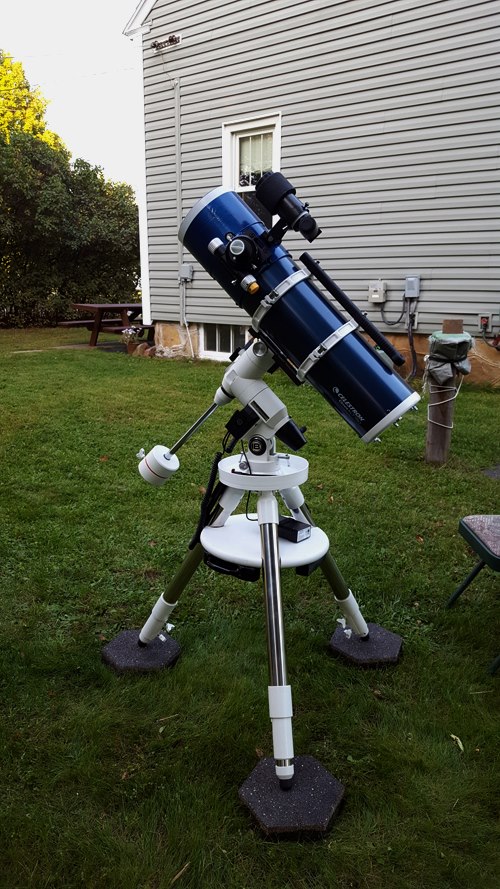
Back when all cameras used film, I was into astrophotography for awhile before it got too expensive and I lost interest.
But now things are different. I have two smaller telescopes that are portable and easy to use, and digital cameras that are dedicated to astrophotography have become cheap and plentiful.
Moreover, there is some amazing software available now that is almost miraculous in its ability to overcome most of the atmospheric distortions and other limitations of small, ground based telescopes, allowing casual, backyard astronomers the ability to achieve some stunningly beautiful images that rival the best pictures taken with the largest observatories from past decades.
To get started, I just borrowed an entry level (ie. cheap) digital astro camera from my brother and I intend to start practicing with it this summer.
It's a Svbony SV105 camera that cost $45. As expected from it's low price, it has its limitations, mostly that it's only useful for the brightest objects, like the moon and planets, plus a handful of the brightest star clusters. It's virtually useless for deep sky objects like nebulae or galaxies.
My two scopes are a Celestron C5 (5" Catadioptric) and an Orion Starblast 4.5 (4½" tabletop Dobsonian), both on alt-az mounts.
Either of these scopes should be within the budget of nearly every casual hobbyist. I have less than $600 into the C5, including high quality eyepieces and some useful accessories, and the Orion scope costs significantly less than that.
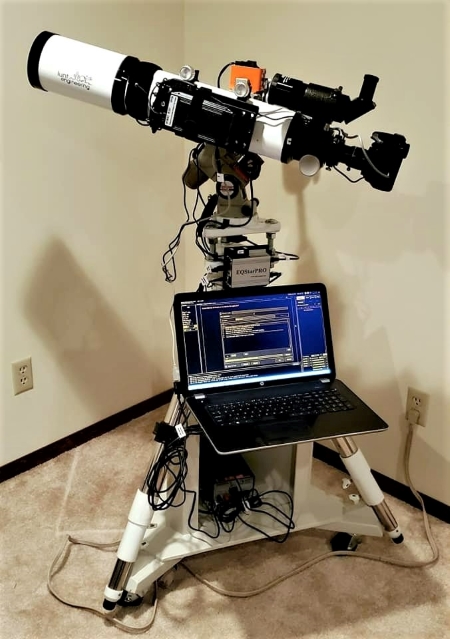
I have a Linux Mint laptop to use for taking images with the SV105 camera, using Astro DMX capture.
The software I'll be using to stack images is Autostakkert 4. It's free, open source, and is widely used with a large support community. I'll be using GIMP (Linux) for image processing.
I haven't started yet, but I expect to start trying to take some basic images in the next few weeks, while Mars, Jupiter and Saturn are still visible in the early evening and Venus is still in its crescent phase.
Until then, I hope that there will be other TB members who are into astrophotography and would be generous enough to share their experiences and results with us.
But now things are different. I have two smaller telescopes that are portable and easy to use, and digital cameras that are dedicated to astrophotography have become cheap and plentiful.
Moreover, there is some amazing software available now that is almost miraculous in its ability to overcome most of the atmospheric distortions and other limitations of small, ground based telescopes, allowing casual, backyard astronomers the ability to achieve some stunningly beautiful images that rival the best pictures taken with the largest observatories from past decades.
To get started, I just borrowed an entry level (ie. cheap) digital astro camera from my brother and I intend to start practicing with it this summer.
It's a Svbony SV105 camera that cost $45. As expected from it's low price, it has its limitations, mostly that it's only useful for the brightest objects, like the moon and planets, plus a handful of the brightest star clusters. It's virtually useless for deep sky objects like nebulae or galaxies.
My two scopes are a Celestron C5 (5" Catadioptric) and an Orion Starblast 4.5 (4½" tabletop Dobsonian), both on alt-az mounts.
Either of these scopes should be within the budget of nearly every casual hobbyist. I have less than $600 into the C5, including high quality eyepieces and some useful accessories, and the Orion scope costs significantly less than that.
I have a Linux Mint laptop to use for taking images with the SV105 camera, using Astro DMX capture.
The software I'll be using to stack images is Autostakkert 4. It's free, open source, and is widely used with a large support community. I'll be using GIMP (Linux) for image processing.
I haven't started yet, but I expect to start trying to take some basic images in the next few weeks, while Mars, Jupiter and Saturn are still visible in the early evening and Venus is still in its crescent phase.
Until then, I hope that there will be other TB members who are into astrophotography and would be generous enough to share their experiences and results with us.
Last edited: