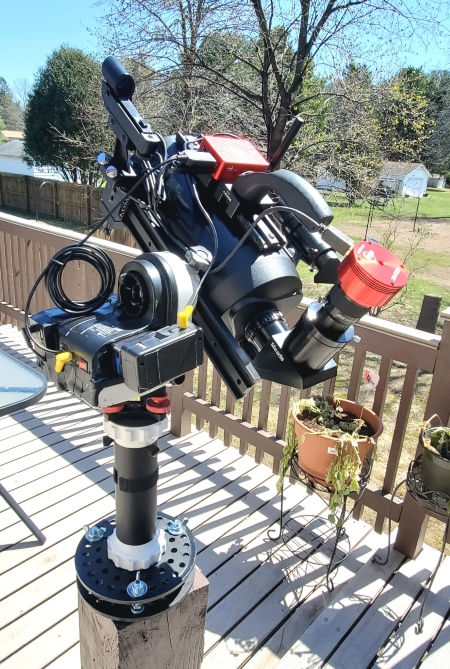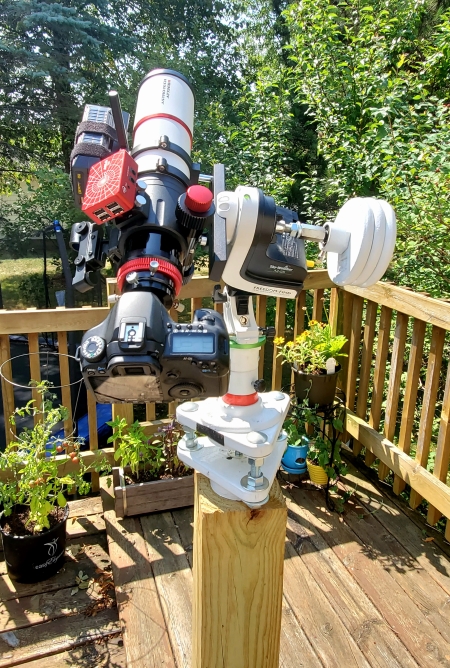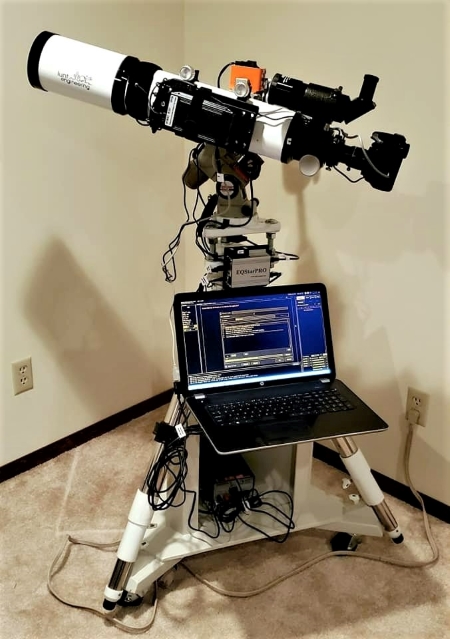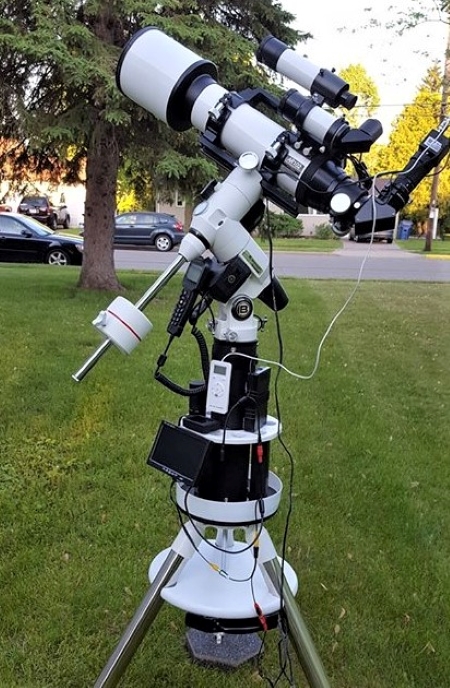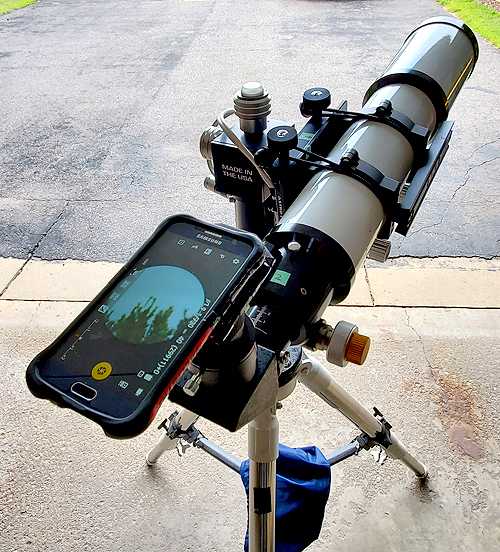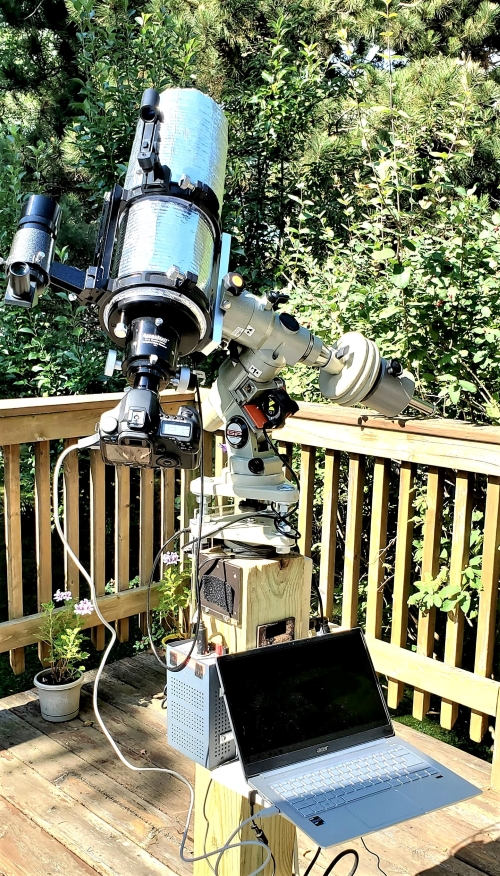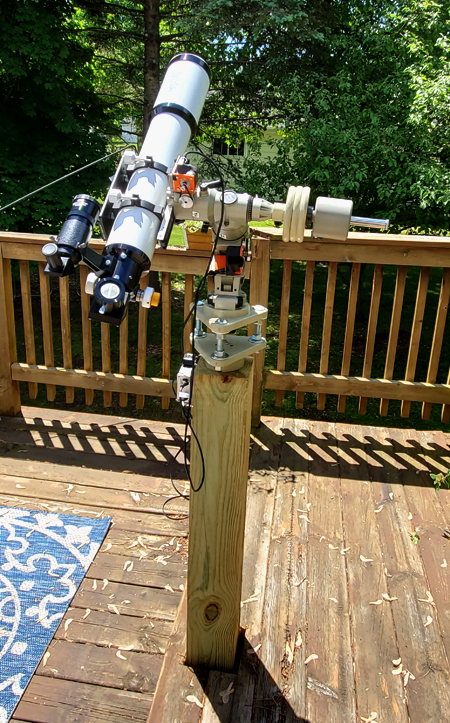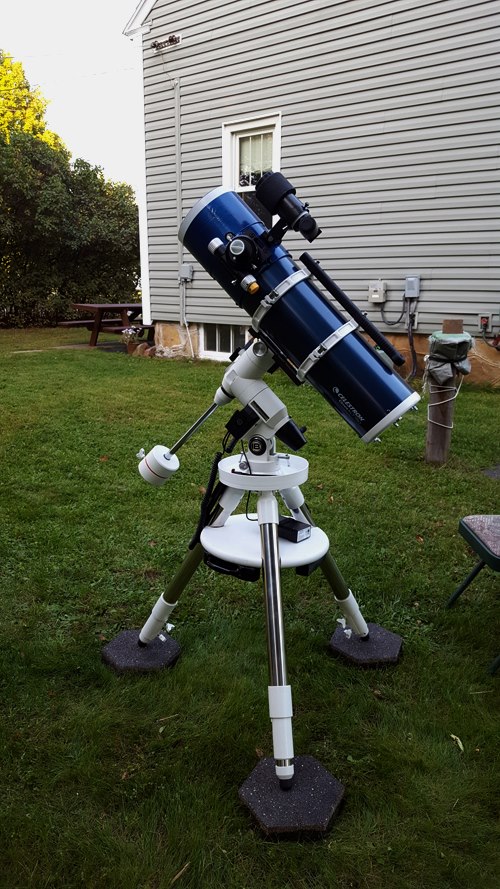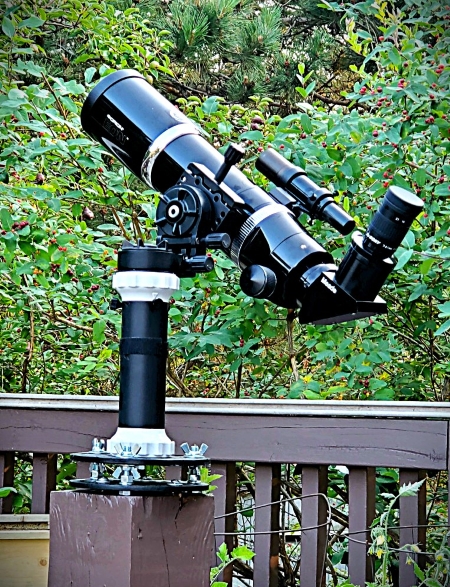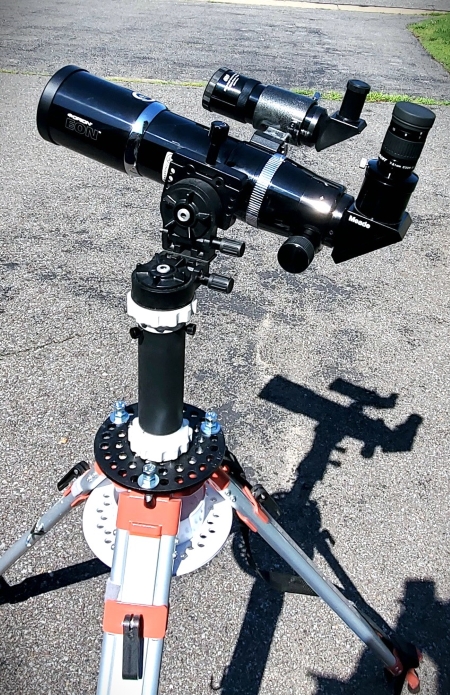
The faster the scope, the less exposure time is required, thus the mount doesn't need to be as accurate in tracking. EAA is more forgiving than AP in that way. The slower a scope is (higher F number) the more accurate the mount needs to be because exposures need to be much longer.Something I've learned along the way is that the total focal length (tfl) of the scope makes a difference in what it's good for viewing or imaging.
Warning: some techno jargon ahead.
Suppose you have two different scopes. One is a 10" Newtonian at f/5 (1250 mm tfl) and the other is an 11" SCT at f/10 (2800 mm tfl)
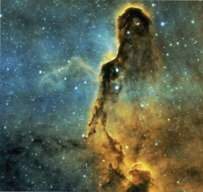
The shorter 1250 mm scope will be much better suited to wide field objects like nebulae, galaxies, and open star clusters, while the 2800 mm scope will be better suited to compact objects like the planets, double stars, and globular clusters.
For direct viewing, the choice of eyepiece can offset the differences. A longer focal length eyepiece provides a wider field of view, while a shorter focal length provides a narrower field of view.
When doing astrophotography, the eyepiece is typically bypassed, with the digital camera taking its place. However, you can alter the effective focal length (efl) of the scope by using a "barlow" lens, which either reduces or extends the scope's baseline focal length. They're rated in multiples (2x, 2½x, 3x, -2x, -2½x, -3x, etc..)
f10 is better for lunar and planetary, while f5 is great for wide field photos of DSO's.

 ) Oh yeah, also invite me over for a viewing party and crank it up on 40 acres jam
  Sounds like a dream property…