I'd consider the term "proper engineering" a somewhat 'loaded' term. And strictly speaking, they're all "knockoffs" considering the underlying design theory.
Although the design theory for bass systems has become fairly sophisticated since the work of A. N. Thiele and N. Small, there are many compromises that can be made in choosing how you design a system based on what you want from it - efficiency, bandwidth, transient response. Just recall that the only acoustic reason you have a box is to enhance the low-frequency output of a loudspeaker (driver). Of course, the box also helps give a mounting method for drivers of a full-range cabinet. The driver can also be made to specific parameters that a company may want in terms of the quality of the sound of the driver, cone composition and other aspects of the cone/voice coil design/manufacture and how the magnetic circuit design affects the sound. These choices are indicative of the company's design philosophy and dictate the resultant sound of the final system and so the ensuing debate over sound takes off.
Most home-brew constructionists (which includes me) have to find an existing driver that has that sound that they want. Obviously, that can be a long, trial and error period to do that. Of course, in recent years, Internet sites and forums have developed to help folks learn about the acoustics/physics involved and to construct their own cabs/systems.
My point is that there's so much to consider and so much you can do to design a good sounding system. I think Avatar has done a great job in the design of their cabs, especially the newer neo-driver cabs. I had tried some of their ceramic magnet driver loaded cabs over the last few years that friends have owned, which is why I finally bought a B212 Neo cab about two years ago. Since I've built my own cabs, and some for others, over the last thirty-six years, I don't buy many name brand cabs (audition, yes), but I do currently own Avatar and Euphonic Audio. And I haven't even addressed the commercial and marketing aspects of competing in the marketplace. That's an entirely different aspect based on opinion of each of the producing companies involved.
Lloyd Howard









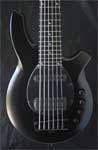

 The low end out of my Avatar is very tight.The Accugroove I had before wasn't near as tight. The Bergantino was close.It sounded great,but the weight was killing me. My standard gigging rig is a MM Sterling,Thunderfunk head,and the Avatar 4x10.Been using that combination for a few years now,and never even considered another combination.