I'm also not a huge fan of buying things made in China if possible.
Do you have a music related issue about that, or is your concern unrelated to the tone and build quality of an instrument?

TalkBass has been independent since 1998. Add your voice.
Create a free account to reply to discussions, view embedded media, and browse with fewer display ads.
Join free Log in
Want zero display ads or expanded classifieds tools? Compare plans.
I'm also not a huge fan of buying things made in China if possible.


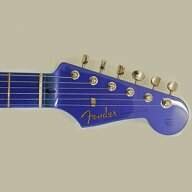
No I cant, I should have realised this was him from that description and not pressed play. That guitar was too pretty though.If you can get past the slightly creepy Bob Ross vibe this guy has going

I stand partially corrected regarding the above: whilst these 50s to 70s instruments came tuned E2e, there were some that had a shorter scale than 30". @Steven Ayres's Wurlitzer 7771 (mentioned above and shown/described here: 1, 2, 3, 4, 5), had 27". The Kay K5962 Value Leader 6-string bass was around 25", but, again, came with bass strings and tuned an octave lower than standard Spanish guitar tuning.between 1956 (when the Danelectro UB-2 was introduced) and 1980 (when Joe Veillette introduced what he claims was the first dedicated baritone, according to this article) only vintage-style 6-string basses were around, and everything from Patsy Cline stuff to "Wichita Lineman" to Morricone was recorded with 30"-scale Danelectros, Fenders VIs and the like, either as-is or (as the '70s progressed) re-up-tuned A-to-a or B-to-b.

The OLP sounded fine when I had one, so no PU changes should be needed and it's quite decent. That said, I have SRC6s which are much nicer and made in Indo. Long story how I ended up with a pair but one is E-E and the other A-A.I have played an Ernie Ball Silhouette Bass, which is sort of their version of Fender's Bass VI. I think there is an OLP version, too, which might be ok with a pickup change.
Set it up right with larger strings than they all come with (which I'm yet to do) but then it's just a SS bass with 2 extra strings. Do SS players have a bad tone? Because I have them, my E tuned one is getting an active EMG DC&CS set.How good of a 'traditional bass tone' does one get with a baritone guitar? Assuming using a pitch shift pedal to drop it on down to the E to E range, and fingers on the strings? Through a regular bass amp.
Too personal a question to answer.If I played it that way most of the gig, would I get sick of it? Miss the traditional bass tone too much?
That isn't a baritone guitar. It's a 6-string bass guitar. A baritone will have a scale length around 27-28 inches.
Set it up right with larger strings than they all come with (which I'm yet to do) but then it's just a SS bass with 2 extra strings. Do SS players have a bad tone? Because I have them, my E tuned one is getting an active EMG DC&CS set.
I use mine through bass amps. No idea of stage tone as I've DI'd for donkey's years.
Too personal a question to answer.
Sure. There's a healthy very SS group here too who can offer suggestions. Many are around the 25.5" IIRC.I have an older guitar preamp with pitch shifting. I'm gonna use that and try it out with a MIM Strat tuned down.

View attachment 3770955 I have this one - an Eastwood Sidejack Baritone. I'm sure there are "better" ones, but this one plays and feels fine, and stays in tune. Sounds good, too - I use the 13-72 EB Slinky baritone strings on it. Currently, a right handed DLX model (with a tremelo) will set you back $600 (case is extra). And, by the way - new Danelectros are made in Korea, now. And have been for a while...

I also conceptualize baritones and bass vi as very similar beasts, with a lot of overlap. The Gretsch and Danelectro baritones come in at just a hair under 30" and were originally designed and marketed as basses, and are sold as baritones now just because that is a bit more popular. I also recall a model of Jaguar bass vi recently that was sporting a 28.5" scale - so, yes, the difference between some of these instruments comes down entirely to what strings you choose to put on it.Not entirely true, baritone guitars will have a scale length between 27" and 30", though it is correct that most baritone guitars will have a scale length of either 27" or 28".
But as an example the Warmoth baritone conversion necks are 28 5/8", the Danelectro baritone guitars and the Gretsch Jet Baritone are very close to a 30" scale length, and Fender have had a couple of baritone guitars on the market as well with a 30" scale length.
As such if you tune a Fender Bass VI instrument to baritone tuning and string it accordingly it will function fully as a baritone guitar, regardless of what it was marketed as.
And the other way around, string and tune a baritone guitar like a Fender Bass VI and you got a Fender Bass VI type instrument.
Also I'll dare claim that the Fender Bass VI and similar instruments is kind of a crossover between a bass and guitar, as it while it has a scale length of a short scale bass, it has shorter guitar like string spacing, and typically will be tuned exactly like a guitar,just an octave lower, unlike a regular 6 string bass guitar, and this is not just a matter of superficial numbers and measurements, it does effect functionality too, which is why I think this is a totally valid argument to make.
I guess though that weather you want to classify Fender Bass VI instruments as a bass/guitar crossover instrument type in it's own regard and category, or weather you want to classify it as a full fledged bass guitar is freely up for debate, but baritone guitars indeed can have a 30" scale length for sure, even if 27" or 28" scale baritone guitars are more common.
Yes.If I take my current baritone tuned B-B and want to go to a bass tuning if I lower it to E won't the strings be too floppy and slack?

Just wondering why - I have been considering these two versions (semi and solid) and am leaning toward the solid because it has humbuckers and the semi doesn't. If it were not so hard to find both to play in a store I would go in person so any advice or insight would be welcome.I had a PRS 277 semi-hollow that was definitely the nicest six string I ever had. If I got another one, I would probably go for the solid body version of the same model.
I also think the humbuckers would be better than the soapbars. This was my first hollowbody guitar, and I didn't feel like the hollow design added any resonance, acoustic volume, or tone difference. Again, really nice guitar, I just dont think I personally got a lot out of the hollow body.Just wondering why - I have been considering these two versions (semi and solid) and am leaning toward the solid because it has humbuckers and the semi doesn't. If it were not so hard to find both to play in a store I would go in person so any advice or insight would be welcome.