
Enjoy the benefits of a premium membership!
Upgrade Account
-
TalkBass has been independent since 1998. Add your voice.
Create a free account to reply to discussions, view embedded media, and browse with fewer display ads.
Join free Log in
Want zero display ads or expanded classifieds tools? Compare plans.
You are using an out of date browser. It may not display this or other websites correctly.
You should upgrade or use an alternative browser.
You should upgrade or use an alternative browser.
Best bass for finger style?
- Thread starter Green Knight
- Start date
More options
Who Replied?


I saw this guy playing a Warwick Steamer fingerstyle a couple of weeks ago and for the 1st time in my life I really wanted a Warwick.

It's not like there is only one kind of fingerstyle
I'd love to see more pics of that bass. Gives me ideas.I'm not sure there's a BEST bass for fingerstyle - comfort of an instrument depends on the ergonomic preferences and physical attributes of the player.
IMO, however, there are basses that are easier to play with a pick than fingerstyle (the Rickenbacker 4001/4003 come to mind) and some that just don't have ideal places to anchor your thumb (Schecter basses with "bare bobbin" pickups).
However, I just sold a fretless that was as comfortable to play fingerstyle as any bass I've ever held:
I installed DiMarzio "Relentless" pickups with curved tops and comfortable edges, then added a ramp between the pickups that mirrored the fretboard radius and string angle.
That bass had tons of comfortable places to anchor your thumb AND the ramp let your fingers just glide over the tops of the strings.
If my intonation didn't need so much work, I would have gladly kept it...
I will just say the 3 easiest basses for me to play comfortably are;
1st - MTD Bass KZ4 SA Kingston Z bass
2nd - Ernie Ball Music Man Sterling 4
3rd - Fender Limited Edition American Professional Jazz Bass
1st - MTD Bass KZ4 SA Kingston Z bass
2nd - Ernie Ball Music Man Sterling 4
3rd - Fender Limited Edition American Professional Jazz Bass

All the pics are in the ad:I'd love to see more pics of that bass. Gives me ideas.

For sale Yamaha BB350F fretless with upgrades
Great fretless!
- groovaholic (+117 /0 /-0)
- Updated
- Views: 732
- Reaction score: 1
- Comments: 6
- Category: For Sale: Bass Guitars
$450.00
$425.00
6 watching
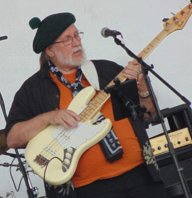
Started playing bass in 1965 and played with my thumb. In 1966 I purchased a 1965 Fender Jazz Bass and hooked my fingertips of my right hand on the tug bar below the G-string and still played with my thumb. Shortly thereafter I switched to a pick. I played with a pick until 1968 when our band's new drummer begged me to try finger style. I've been doing finger style ever since although I will pull out a pick if the song needs it for the better attack on the note. I'll also pretend I'm playing slap sometimes, but very rarely because I've never devoted time to that so I suck at it.After thirty years and loads of progress on left-hand technique, my right hand is stuck in two-finger plucking mode, each attempt to pick up a pick or mobilize a thumb giving way to the familiarity of the good old two-finger salute. Do you suppose there is a best bass for finger style, the same way many peeps do posit a best bass for slapping, or picking, etc?
Finger-style is my jam and since 1966 I've been playing a Fender Jazz Bass. Played my '65 Jazz through high-school, couple of years of college, and then toured with it for 3-years. After I came off the road, I played weekend gigs until 1976 when all my touring gear was stolen during a house burglary. I was without a bass while raising a family, until 1985 when I bought my 1982 Jazz with all-maple neck and 70's era pickup spacing (4" center to center instead of standard 3.6" spacing). Didn't have an amp yet but at least I could play my bass again. I bought that bass specifically because the neck profile, shape, and radius was the same as that on my '65 Jazz. In 1997, my son gave me his old Yamaha 115 combo and at least I could gig again!
I love the Jazz bass for a few reasons. One reason is the neck on both my Jazz Basses used the 60's Slim C-shape neck with a 7.25" radius. It's by far the easiest, fastest neck to move around on. Even the thicker 70's and later Jazz necks are easier to move around on than the Precision Bass, which with few exceptions has a very thick neck. Exception was my Grandsons Squier Affinity Precision-bass with P/J pickups. It's the wider width of the P-bass but much slimmer and I found I could move around on it pretty comfortably.
The next and extremely important feature is its sound. It is capable of a very wide range of sounds with its two pickups. The neck pickup produces a warmer and darker sound and the bridge pickup produces a much brighter and more percussive sound. Each pickup has its own volume control and you can use those to adjust the blend of sounds that you like. There is also a Tone control that controls how dark or bright the sound is.
One thing to understand on these controls is that they are what is known as the old "grease-pot" controls. Unlike Active controls the only thing your controls can do is cut sounds. There is no boosting. As you cut sounds, you lose some signal strength. So I run mine with all three controls dimed (turned up to 10), so I can get the most signal out of my pickups with my passive Jazz Bass. Then I adjust the EQ on my amps for the sound I want. I use DNA and Eden amps, all of which were designed by David Nordschow (aka David Eden). He founded Eden and after he left in 2009 he founded DNA. Those amps produce an extremely clean and clear signal.
The Eden amps have semi-parametric controls that pick out a frequency center and then cut or boost it by 15db. I run my Eden amps with the Bass and Treble EQ flat (at 12 o'clock) set one of the semi-parametric controls at 250Hz (low-mids range) and boost it to just 1:30. Everything else I run flat with no enhance (shape control) added and the auto compressor by-passed. I boost the low mids slightly because that is where there is sonic space in the mix for the bass. The kick drum owns the lows, and the guitars and keys own the high mids and highs. With just a little boost in the low-mids it gives me great presence and definition in the mix without having to drown everyone out to be heard. ***Warning*** if you cut the low-mids (scoop them) you will dial yourself right out of the mix. A little boost anywhere between about 250Hz and 500Hz will do the trick. If you boost it too much, your sound will honk at you. If that happens, just slowly turn those low-mids down until the "honk" goes away.
On my DNA amp, David just used a simplified 4-band EQ. the Bass is a shelving control at 35Hz; the low-mid is centered at 500Hz, the High-mid is centered at 2KHz, and the Treble is a shelving control for everything above that. Since his Eden amps have the bass EQ shelving at 30Hz and the DNA has it set at 35Hz, I find that I need to boost the Bass EQ slightly to 1 o'clock to get the same sound out of it that I do with my Eden gear. Even though the low-mids is higher than I use in my Eden amps, 500hz still works just great. In fact, I found out at a 3-hr. recording session that setting my low-mids at 500Hz recorded better than the 250Hz I usually use live with my Eden gear.
OK, so the whole point here is to get a really clean, clear, articulate sound with a tight and focused bottom end. Now let's look at some ways that with the Jazz set up and EQ'd the way I do it, you can change the sound of your bass without even touching another dial. This is where "The sound is in your fingers" comes into play.This works well on all basses that have two pickups but it works particularly well on a Jazz bass, especially if you one with the 70's pickup spacing that puts the bridge pickup almost 1/2" closer to the bridge itself.
If you need a darker, smoother sound than you are getting with your plucking hand in your default position, move your plucking hand up closer to or over the butt of the neck. A change in your plucking position of 1" will give you a noticeable difference in your sound. If you want a brighter and more percussive sound, move you plucking position back incrementally towards the bridge pickup until you get the brightness you desire. My '85 Jazz with the 70's pickup spacing is noticeably brighter sounding than my '65 Jazz was. This method of changing the location of your plucking hand will give you and immediate change in your sound without having to touch any dials on your bass or amp.
Another way you can affect the sound of your bass is how you choose to fret your notes. Most bass teachers will have you put your thumb in the middle of the back of your neck and play with the tips of your fingers. However, that is very limiting to the sound you reproduce and it literally eliminates many of your options in shaping the sound and dynamics of your music..
I use two different approaches and at this point just switch back and forth automatically:
• For notes that I want to ring out, I will fret the note with the pad of my finger and my thumb along or over the top of my neck. My fingers approach the frets at an angle from above and my hand is very relaxed. This is very easy on your hands as long as you keep your wrist straight. You are literally cradling the neck in the palm of your hand this allows you to play fuller and smoother bass lines. When I was touring back in the early 70's, we played 4-hours per night, 5-nights a week, 50-weeks a year. That worked out to about 750 performances over that 3-year period., which is a grueling schedule and this technique saved my hand and wrist from constant tension that you get with the thumb on the middle of the back of the neck.
• When I need to play a fast series of notes I absolutely will move my thumb to the back of the neck and fret the notes with my fingertips. This results in a more percussive but short sound (staccato). There is also much more tension in you hand and wrist when playing this style and if I don't need the speed or the staccato sound, I will default to the pad of the finger as I mentioned above.
So, if you want the notes to ring out, use the pads of your fingers and if you want a more staccato sound use your finger tips. Switching between them will give you very clean and sharply separated notes or smoother and fuller-sounding notes as needed.
You will eventually be able to switch back and forth as needed without even thinking about it The best example I've seen of this is on the video below of Scott Devine (Scott's Bass Lessons) quizzing Bobby Vega about his unusual technique, which just happens to be exactly what I'm trying to describe for you. I have the video below cued up to that part. You can hear him describe it and play it while you watch him switch back and forth between techniques.
If you want to find out how Bobby Vega gets his famous funky picking sound, you will want to go back afterwards to see the video from the beginning.
Hope this helps!
Last edited:

something where your thumb rests on the pickup. the Sterling Stingrays have a nice thumbrest built in
Why did you sell that? That was a really nice fretless.All the pics are in the ad:
For sale Yamaha BB350F fretless with upgrades
Great fretless!
- groovaholic (+117 /0 /-0)
- Updated
- Views: 732
- Reaction score: 1
- Comments: 6
- Category: For Sale: Bass Guitars
$450.00$425.006 watching

songwriter21
I have an obsession for wood. The musical kind.

Started playing bass in 1965 and played with my thumb. In 1966 I purchased a 1965 Fender Jazz Bass and hooked my fingertips of my right hand on the tug bar below the G-string and still played with my thumb. Shortly thereafter I switched to a pick. I played with a pick until 1968 when our band's new drummer begged me to try finger style. I've been doing finger style ever since although I will pull out a pick if the song needs it for the better attack on the note. I'll also pretend I'm playing slap sometimes, but very rarely because I've never devoted time to that so I suck at it.
Finger-style is my jam and since 1966 I've been playing a Fender Jazz Bass. Played my '65 Jazz through high-school, couple of years of college, and then toured with it for 3-years. After I came off the road, I played weekend gigs until 1976 when all my touring gear was stolen during a house burglary. I was without a bass while raising a family, until 1985 when I bought my 1982 Jazz with all-maple neck and 70's era pickup spacing (4" center to center instead of standard 3.6" spacing). Didn't have an amp yet but at least I could play my bass again. I bought that bass specifically because the neck profile, shape, and radius was the same as that on my '65 Jazz. In 1997, my son gave me his old Yamaha 115 combo and at least I could gig again!
I love the Jazz bass for a few reasons. One reason is the neck on both my Jazz Basses used the 60's Slim C-shape neck with a 7.25" radius. It's by far the easiest, fastest neck to move around on. Even the thicker 70's and later Jazz necks are easier to move around on than the Precision Bass, which with few exceptions has a very thick neck. Exception was my Grandsons Squier Affinity Precision-bass with P/J pickups. It's the wider width of the P-bass but much slimmer and I found I could move around on it pretty comfortably.
The next and extremely important feature is its sound. It is capable of a very wide range of sounds with its two pickups. The neck pickup produces a warmer and darker sound and the bridge pickup produces a much brighter and more percussive sound. Each pickup has its own volume control and you can use those to adjust the blend of sounds that you like. There is also a Tone control that controls how dark or bright the sound is.
One thing to understand on these controls is that they are what is known as the old "grease-pot" controls. Unlike Active controls the only thing your controls can do is cut sounds. There is no boosting. As you cut sounds, you lose some signal strength. So I run mine with all three controls dimed (turned up to 10), so I can get the most signal out of my pickups with my passive Jazz Bass. Then I adjust the EQ on my amps for the sound I want. I use DNA and Eden amps, all of which were designed by David Nordschow (aka David Eden). He founded Eden and after he left in 2009 he founded DNA. Those amps produce an extremely clean and clear signal.
The Eden amps have semi-parametric controls that pick out a frequency center and then cut or boost it by 15db. I run my Eden amps with the Bass and Treble EQ flat (at 12 o'clock) set one of the semi-parametric controls at 250Hz (low-mids range) and boost it to just 1:30. Everything else I run flat with no enhance (shape control) added and the auto compressor by-passed. I boost the low mids slightly because that is where there is sonic space in the mix for the bass. The kick drum owns the lows, and the guitars and keys own the high mids and highs. With just a little boost in the low-mids it gives me great presence and definition in the mix without having to drown everyone out to be heard. ***Warning*** if you cut the low-mids (scoop them) you will dial yourself right out of the mix. A little boost anywhere between about 250Hz and 500Hz will do the trick. If you boost it too much, your sound will honk at you. If that happens, just slowly turn those low-mids down until the "honk" goes away.
On my DNA amp, David just used a simplified 4-band EQ. the Bass is a shelving control at 35Hz; the low-mid is centered at 500Hz, the High-mid is centered at 2KHz, and the Treble is a shelving control for everything above that. Since his Eden amps have the bass EQ shelving at 30Hz and the DNA has it set at 35Hz, I find that I need to boost the Bass EQ slightly to 1 o'clock to get the same sound out of it that I do with my Eden gear. Even though the low-mids is higher than I use in my Eden amps, 500hz still works just great. In fact, I found out at a 3-hr. recording session that setting my low-mids at 500Hz recorded better than the 250Hz I usually use live with my Eden gear.
OK, so the whole point here is to get a really clean, clear, articulate sound with a tight and focused bottom end. Now let's look at some ways that with the Jazz set up and EQ'd the way I do it, you can change the sound of your bass without even touching another dial. This is where "The sound is in your fingers" comes into play.This works well on all basses that have two pickups but it works particularly well on a Jazz bass, especially if you one with the 70's pickup spacing that puts the bridge pickup almost 1/2" closer to the bridge itself.
If you need a darker, smoother sound than you are getting with your plucking hand in your default position, move your plucking hand up closer to or over the butt of the neck. A change in your plucking position of 1" will give you a noticeable difference in your sound. If you want a brighter and more percussive sound, move you plucking position back incrementally towards the bridge pickup until you get the brightness you desire. My '85 Jazz with the 70's pickup spacing is noticeably brighter sounding than my '65 Jazz was. This method of changing the location of your plucking hand will give you and immediate change in your sound without having to touch any dials on your bass or amp.
Another way you can affect the sound of your bass is how you choose to fret your notes. Most bass teachers will have you put your thumb in the middle of the back of your neck and play with the tips of your fingers. However, that is very limiting to the sound you reproduce and it literally eliminates many of your options in shaping the sound and dynamics of your music..
I use two different approaches and at this point just switch back and forth automatically:
• For notes that I want to ring out, I will fret the note with the pad of my finger and my thumb along or over the top of my neck. My fingers approach the frets at an angle from above and my hand is very relaxed. This is very easy on your hands as long as you keep your wrist straight. You are literally cradling the neck in the palm of your hand this allows you to play fuller and smoother bass lines. When I was touring back in the early 70's, we played 4-hours per night, 5-nights a week, 50-weeks a year. That worked out to about 750 performances over that 3-year period., which is a grueling schedule and this technique saved my hand and wrist from constant tension that you get with the thumb on the middle of the back of the neck.
• When I need to play a fast series of notes I absolutely will move my thumb to the back of the neck and fret the notes with my fingertips. This results in a more percussive but short sound (staccato). There is also much more tension in you hand and wrist when playing this style and if I don't need the speed or the staccato sound, I will default to the pad of the finger as I mentioned above.
So, if you want the notes to ring out, use the pads of your fingers and if you want a more staccato sound use your finger tips. Switching between them will give you very clean and sharply separated notes or smoother and fuller-sounding notes as needed.
You will eventually be able to switch back and forth as needed without even thinking about it The best example I've seen of this is on the video below of Scott Devine (Scotts Bass Lessons) quizzing Bobby Vega about his unusual technique, which just happens to be exactly what I'm trying to describe for you. I have the video below cued up to that part. You can hear him describe it and play it while you watch him switch back and forth between techniques.
If you want to find out how Bobby Vega gets his famous funky picking sound will want to go back afterwards to see the video from the beginning.
Hope this helps!
With exception of the thumb, this is pretty much the way I play, but I never thought about it before. Thank you for the detailed explanation, and the video. Recently started playing fretless and it's made me much more aware of my technique, and the sounds the variations produce. One change I made a couple months ago, at suggestion from another of our members (JazzNFunk), was to take the thumb totally off the back of the neck occasionally just to make sure you aren't using too much pressure from the hand muscles, instead use the muscles in upper arm and shoulder to pull the hand back into the fingerboard. That has helped me quite a bit to loosen up my touch.

Why did you sell that? That was a really nice fretless.
I agree 100% - but none of the bands I work with would really suit a fretless…especially with how much I’d need to work on my intonation.If my intonation didn't need so much work, I would have gladly kept it...
My main basses have been Dingwalls (fan fret) since 2003. So that’s how my muscle-memory is programmed.
I have several “normal” basses too, it fretting on a fretted bass doesn’t have to be as precise as on a fretless.
But yes - great fretless and amazingly comfortable bass to play.

To add to the previous post about curved pickups and ramps - Scott Devine of SBL recently had a video where he showed of a Lull jazz bass with curved pickups as allowing him to fingerpick better or faster or something....


It's about ergonomics.
That depends on your height, arm length, circumference, shoulder angle and other things that are more or less unique to each human.
With smaller hands you might prefer a narrower string spacing, both at nut and bridge, and with larger hands, the opposite may be true.
I have a bass that hugs my figure perfectly, like it was made for me. The strings are exactly where they are supposed to be. Of all the basses I owned and played, this one simply plays better. More speed, more precision, less fatigue. Will it be the same for you? Of course it will. As long as you are as tall as me, have the same arm length, belly curve, finger size and so on. If you're not looking exactly like my lost twin, it's only a guess.
Your best bet is to go to a place that has a bazillion basses on display and play all of them. There will be a few that stick out.
That depends on your height, arm length, circumference, shoulder angle and other things that are more or less unique to each human.
With smaller hands you might prefer a narrower string spacing, both at nut and bridge, and with larger hands, the opposite may be true.
I have a bass that hugs my figure perfectly, like it was made for me. The strings are exactly where they are supposed to be. Of all the basses I owned and played, this one simply plays better. More speed, more precision, less fatigue. Will it be the same for you? Of course it will. As long as you are as tall as me, have the same arm length, belly curve, finger size and so on. If you're not looking exactly like my lost twin, it's only a guess.
Your best bet is to go to a place that has a bazillion basses on display and play all of them. There will be a few that stick out.

It's about ergonomics.
That depends on your height, arm length, circumference, shoulder angle and other things that are more or less unique to each human.
With smaller hands you might prefer a narrower string spacing, both at nut and bridge, and with larger hands, the opposite may be true.
I have a bass that hugs my figure perfectly, like it was made for me. The strings are exactly where they are supposed to be. Of all the basses I owned and played, this one simply plays better. More speed, more precision, less fatigue. Will it be the same for you? Of course it will. As long as you are as tall as me, have the same arm length, belly curve, finger size and so on. If you're not looking exactly like my lost twin, it's only a guess.
Your best bet is to go to a place that has a bazillion basses on display and play all of them. There will be a few that stick out.
This. The question is not as random as some of the posters have made it sound. The balance, the neck and the cutaways contribute immensely to the fingerstyle experience. That's why people pay extra money to boutique builders like Elrick. So that playing becomes so easy that it's almost wrong.


