And yet we're still going 40 posts later/THREAD

Everybody who's gigged has learned life hacks for making the bookend work easier. I probably didn't even touch on half the little tricks this forum has on tap.

TalkBass has been independent since 1998. Add your voice.
Create a free account to reply to discussions, view embedded media, and browse with fewer display ads.
Join free Log in
Want zero display ads or expanded classifieds tools? Compare plans.
And yet we're still going 40 posts later/THREAD

My band and I are a bunch of older guys and We are mostly new to gigging. We successfully completed our first 4 hour gig and the venue owner has invited us back for 2 more dates. I myself would like to improve our gear unload and load up since we obviously are doing it ourselves. I’m the youngest in the group at 53 but I would still like some advice to set up quicker for outdoor events with no sound guy and avoid some common mistakes as well as help out the older guys who are a little slower at setting up. My current rig is a fender rumble 4x10 cab and I will be adding a 1x15 soon. I also will be bring 2 basses, a boss multi effects processor, mic stand and I also take care of the PA setup.
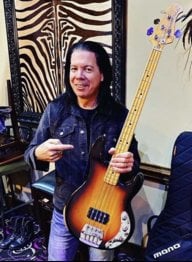
At 75, I sold all my cabs and heavy amps that I had and got just one Mesa 115 and a 7 lb class D amp head. I can manage it myself, but I can always throw down the age card if need be and the band will help be with my gear. Nothing like getting a little respect in your senior years. Also, I don't do stomp boxes, that means bending over to plug things in and make adjustments. Not gonna happen.
My wife helps me at times carrying bags but in her absence, this is my 2nd wife.
View attachment 4319809

—I can’t even begin to express what an excellent post this is. Do exactly what it says to cut your setup time in half.
- Find a sound guy. Even if you have to pay him a slice of the take, it's worth it to have a good soundman. He's an extra pair of hands and legs to move and set up the gear, he's an extra pair of ears out in FOH listening to the mix, and he can have his hands on the board when you can't because you're too busy playing. When you're running your own sound, have someone dedicated to running it. Our band is lucky; the lead singer and the drummer's son are an item, so he tags along to all the gigs anyway. Instant roadie. Not only do we put his volunteer-fireman ass to work in the load-in/load-out, we're teaching him the rudiments of running the board, so when it's our board he can bump faders out in FOH.
- Look for gigs with professional "house" sound. In terms of your load-in/load-out responsibilities, house sound is a boon, as is a house sound guy that knows the system to run it. It won't always be available, especially for the kinds of gigs new bands often land. However, venue owners and event coordinators have their own reputation to uphold as a place bands want to come and play, and a place people want to come to hear the bands. As such, at least halfway decent house systems for live music are becoming a staple of venues that host live music, and annual events seeking to attract talent will invest in a third-party media crew. Either way, you should be able to know in advance what your load-in is going to be, and if you're hauling your own PA to and from BFE for the gig, you can negotiate that into the price.
- Scale the PA, not your stage rigs. Sounds counterintuitive, but when you think about it it really isn't. You need the PA anyway, at least a couple tops and monitors for vocals. If your rehearsal rig won't carry the house, neither will the drums, and if you're miking the kit you'll need a PA beefy enough that you might as well mic up everything. It's tempting to make sure that you yourself have enough rig for the gig no matter what the PA situation is (and there are definitely advantages to that approach), but this is how volume wars start between band members, and nobody wins a volume war, least of all your audience. You'd be surprised how far a decent pair of 1000w 2x12" or 2x15" mains and one or two subs underneath will take you, even outdoors. Considering you need the tops anyway, that's less load-in than an extra cab for your bass amp and each guitar amp. There are some gigs where you have to look like a stereotypical rock band, complete with backline, but they're rarer than you think especially in the bar/festival circuit; most venues in fact encourage the opposite, because they don't have the space for it all and because they need to minimize turnaround between each act. Sometimes it won't even be your rig you plug into; the venue will insist on their backline (or DIs), making your load-in your axe and maybe a pedalboard.
- Furniture dollies/hand carts. It's so obvious, yet so rare. Don't haul the gear when you can roll it around. This is an investment that pays dividends in spades, and it doesn't even have to be that expensive (for the price of a single Shure SM58, you can have Invalid Link Removed). Obviously not as useful for the roof patio gig up three flights of stairs, but you'd be surprised how many people make a dozen trips to and from the truck carrying cabs and amp racks by hand when a simple hand cart cuts the trips in half at least and the effort by more than that.
- Have a plan to divide and conquer. Nobody should be standing around watching someone else hauling gear and doing hookups. By the same token, you don't need all five people clustered around the stage box trying to plug things in. You're a band; your entire gig is fundamentally dependent on your ability to work together. That should extend from the time you pull up to the venue to the time you head out home. The exact plan depends on the band, the gear and even the specific venue, but the goal should be that everyone is tasked with things they have the knowledge and strength/dexterity to handle, that keeps them out of everyone else's way. You might assign a band member to their "home section" of the stage, as in the lead singer is also responsible for the monitor wedges along the frontline, the bass player and lead guitarist handle the mains on their side of the stage, and the rhythm guitarist handles the connections at the stage box. Whatever. Just make sure everybody knows what needs to be done, the approximate order of operations, and what of that they are expected to do.
- Help the freakin' drummer already. If you're like most bands, and you've followed my advice so far, you'll have already cut your load-in significantly. Your drummer, however, has been back of the eight-ball from the moment he discovered that hitting things with sticks is fun. The drummer typically has the worst loading and setup/teardown requirements of the whole band, even if he doesn't touch the main PA components. You want to streamline the prep and teardown, you help the drummer with theirs. Obviously you should ask him if he wants help - people can be picky about who handles their stuff - and you need to know what you're doing, but it won't be long before you'll have seen that kit get set up and torn down enough times that you could probably do the whole thing yourself, maybe minus the fine-tuning. It ain't rocket surgery; it's an instrument designed for a guy who thinks hitting it with sticks is fun after all.
- Mise en place. That's Frenchy talk for "a place for everything, and everything in its place". For bands and audio gear, that boils down to, have an intuitive and organized way to store and transport all your stuff. That means cases. They don't have to be designed specifically for music; before getting scammed on light cases at Guitar Center or Sam Ash, take a look at what Home Depot or Lowe's has in their tool storage section. You can get a durable, lightweight, accessible rolling tool caddy for a lot less than a purpose-built flight case. Make sure to economize on number and size of cases, you don't want a bunch of small bags or boxes getting lost in the shuffle any more than you want a big half-empty monstrosity to find a place for backstage. The cases don't have to be ATA rated, at least not until you're on a 50-city tour of the US, but not only will these cases give your valuable gear some protection, they give your gear a place it should be when not in use, where it can be easily gotten to. Given such a place, put the gear where it goes when you're done.
- COIL AND WRAP YOUR CABLES. An important corollary of the previous point. After you've closed the bar down on a 4-hour gig playing every song you know and a few you don't, it's very tempting to just rip everything out of the jacks, ball it up and throw it in the duffel bag. Don't be tempted; you're just going to deal with an even bigger mess in that bag at your next gig or rehearsal. Take the time to coil each cable, and have a Velcro wrap-tie on each one. Still too much bother? Pro tip; head to Home Depot and pick up an Invalid Link Removed. Hook your first 20' XLR into the clip on the reel and start reeling it in. When you get to the end, hook the next 20-footer to it and repeat until they're all on the reel. A reel like the one I linked to will easily hold 10 cables, tangle-free, knot-free. Then at the next gig, just set the reel down on stage and start pulling of cable as needed. If you have different lengths (10, 20 and 50 are common on-stage), have multiple reels. They aren't expensive.

My band and I are a bunch of older guys and We are mostly new to gigging. We successfully completed our first 4 hour gig and the venue owner has invited us back for 2 more dates. I myself would like to improve our gear unload and load up since we obviously are doing it ourselves. I’m the youngest in the group at 53 but I would still like some advice to set up quicker for outdoor events with no sound guy and avoid some common mistakes as well as help out the older guys who are a little slower at setting up. My current rig is a fender rumble 4x10 cab and I will be adding a 1x15 soon. I also will be bring 2 basses, a boss multi effects processor, mic stand and I also take care of the PA setup.


My band and I are a bunch of older guys and We are mostly new to gigging. We successfully completed our first 4 hour gig and the venue owner has invited us back for 2 more dates. I myself would like to improve our gear unload and load up since we obviously are doing it ourselves. I’m the youngest in the group at 53 but I would still like some advice to set up quicker for outdoor events with no sound guy and avoid some common mistakes as well as help out the older guys who are a little slower at setting up. My current rig is a fender rumble 4x10 cab and I will be adding a 1x15 soon. I also will be bring 2 basses, a boss multi effects processor, mic stand and I also take care of the PA setup.

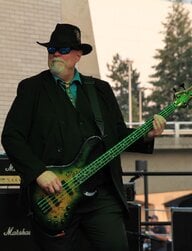
My current rig is a fender rumble 4x10 cab and I will be adding a 1x15 soon.
At 75, I sold all my cabs and heavy amps that I had and got just one Mesa 115 and a 7 lb class D amp head.
Small is the new big in bass amplification. The best, most capable, best sounding, smallest, and lightest bass gear in history is being made right now.I'm already at the point where if I have to bring an amp to a gig I bring a small class D head and 1x12 cabinet.


There should be a member of the band assigned to collect your money at the end of the gig. ...





