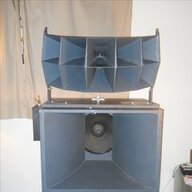
If I were looking for a cab, I would take a serious look at Audio Kinesis cabs. Duke is one of the kindest guys I know. I haven’t heard his bass cabs yet, but I’ve heard a lot of his high end stereo speakers over the years which are some of the best out there. His bass cabs offer the ability to change box tuning which is important as a box tuned for a 4 string may sound thin on a 5 string, or a room resonance over boosts the bass and box tuning can be changed to suit the room better.

Enjoy the benefits of a premium membership!
Upgrade Account
-
TalkBass has been independent since 1998. Add your voice.
Create a free account to reply to discussions, view embedded media, and browse with fewer display ads.
Join free Log in
Want zero display ads or expanded classifieds tools? Compare plans.
You are using an out of date browser. It may not display this or other websites correctly.
You should upgrade or use an alternative browser.
You should upgrade or use an alternative browser.
Best small bass cab?
- Thread starter LVannerson
- Start date
-
- Tags
- bass cab
More options
Who Replied?
...
His bass cabs offer the ability to change box tuning which is important as a box tuned for a 4 string may sound thin on a 5 string, or a room resonance over boosts the bass and box tuning can be changed to suit the room better.
Interesting. My understanding, at least as far as ported cabs go, is that the box/port is tuned to the driver parameters, and that this is as much for the mechanical protection of the driver as any sonic considerations.

Is someone comparing twelve or sixteen 5” speakers against one 10”?Phil Jones is a genius. Imagine 12 or 16 Mike Tyson fists hitting you or one slow 10” fist and you’ll get an accurate idea of the difference.
In any case, PJs are more like a few welter weight kids hitting you against one Mike Tyson blast from the conventional cab.
And if these things are so “genius”, why doesn't every other major company make such things? Are their engineers stupid?
Yeah, PJs make sound, and with some confirmation bias one can hear what one wants to hear, but in my opinion, they're a gimmick.
Go to your club thread and see all the PJs being combined with conventional cab so they can actually produce for stage use.
This is my opinion; peace out.


Every time I deploy this little workhorse, I think maybe I know what I want for my first tattoo.
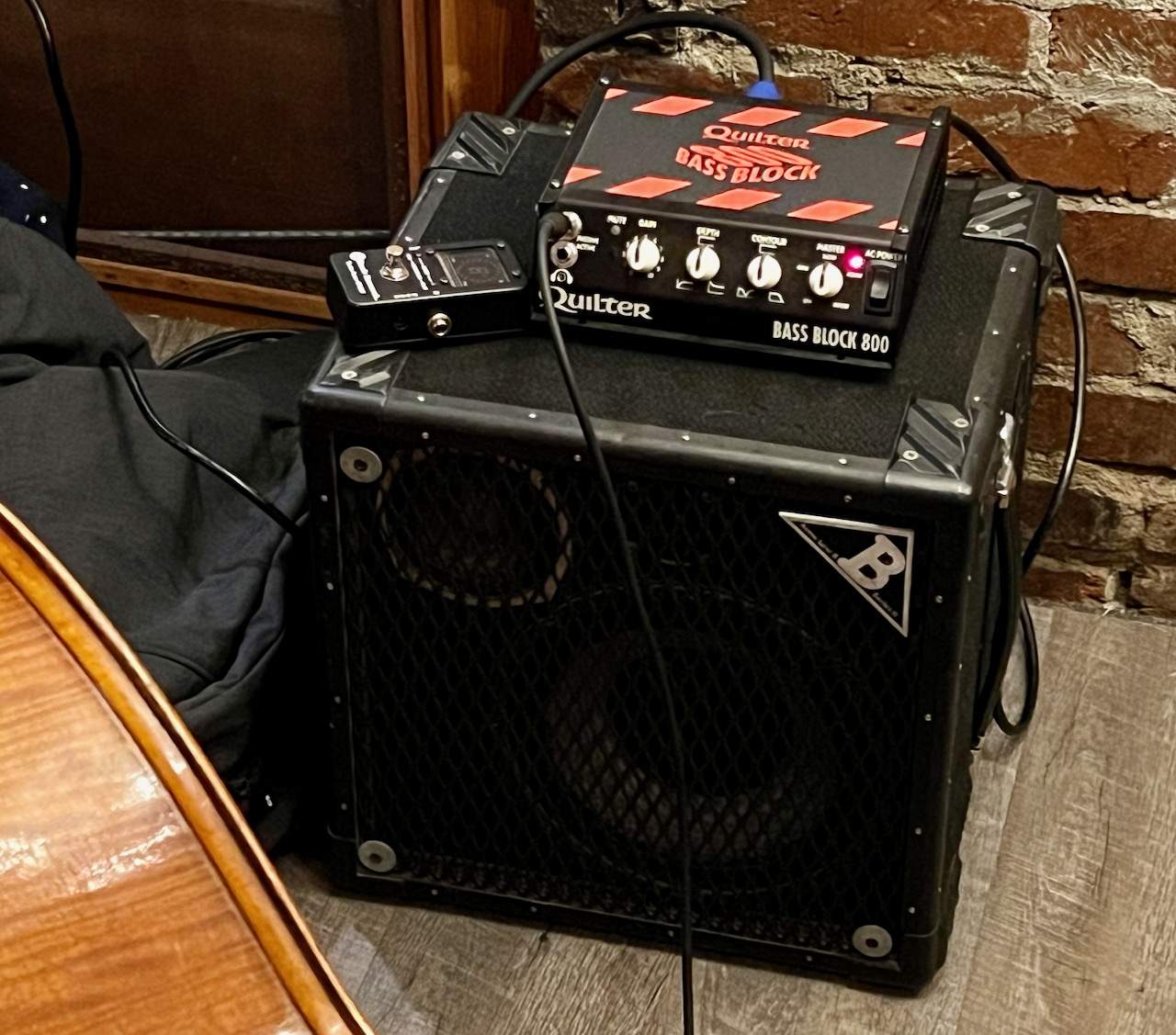
The Acme Low-B1 is dense & packed with super rugged components. It is not very sensitive/efficient - but that's not really a problem with most class D heads nowadays. Feed it enough watts and you will believe.
You might fry the woofer if you go in on the hype and try to make it do the work of a much larger cabinet. Think of it & use it as the beefiest, deepest sounding 1x10 money can buy and all will be better than good.
The Acme Low-B1 is dense & packed with super rugged components. It is not very sensitive/efficient - but that's not really a problem with most class D heads nowadays. Feed it enough watts and you will believe.
You might fry the woofer if you go in on the hype and try to make it do the work of a much larger cabinet. Think of it & use it as the beefiest, deepest sounding 1x10 money can buy and all will be better than good.

I find this post confusing. It's power hungry but at the same time you risk frying the driver? Where's the sweet spot in that equation? My OCD would be off the wall worrying about starving it or killing it...Every time I deploy this little workhorse, I think maybe I know what I want for my first tattoo.
View attachment 5076496
The Acme Low-B1 is dense & packed with super rugged components. It is not very sensitive/efficient - but that's not really a problem with most class D heads nowadays. Feed it enough watts and you will believe.
You might fry the woofer if you go in on the hype and try to make it do the work of a much larger cabinet. Think of it & use it as the beefiest, deepest sounding 1x10 money can buy and all will be better than good.

Anyone like the Trace Elliot ELF 1x10? I need a small cab for a similar reason and this one fits my budget.
If 4-string is your thing, then yes. The Elf 1X10 can't really keep up with a 5-string, though.
It can handle 5 string basses fine. Nice lightweight 10” cab for the money.

Try one of these LDS 1-10 + 6.5" midrange driver cabinets.Looking for the very best (in your opinions) 1X10 or 1X12 cab. No budget issues. Thanks for weighing in.
Lance
Pretty light weight (37 lb.), seamless transition between the 10" and mid driver. Sounds great, IMO+E.

I don't know if it is the best, but I got an EDEN EX112 and it sounds pretty cool. It can handle the 5th string pretty well.
Small is a matter of definition isn't it?
I've been playing Genzler BA cabs since they were first released. At that time I considered a Hathor, Greenboy, Barefaced, or Genzler and went with Genzler in large degree because of my history with using Genz Benz. I had been playing an Acme B2. I've been very happy with my choice and have found a single BA12-3 adequate for 90% of my uses. They have excellent dispersion. I love the smooth highs the array provides. Relatively light weight and reasonable footprint. I would say you need to get them off the floor and closer to your ear. Maybe that is advice for any small cab.
When I wanted a small cab (my definition) I picked up a Genzler BA10-2. For outdoor gigs, I use both. For indoor I usually use just the 12 although I recently began playing with a Motown band with horn section and feel as if I need something more... maybe another BA12.
So... I would recommend whichever Genzler fits your definition of small and gives you enough.
I did see/hear the featherweight GR cabs at NAMM this year and was impressed. They sounded great and were so incredibly lightweight. They felt to me as if they had forgotten the drivers... until you started playing. These give me serious GAS
I've been playing Genzler BA cabs since they were first released. At that time I considered a Hathor, Greenboy, Barefaced, or Genzler and went with Genzler in large degree because of my history with using Genz Benz. I had been playing an Acme B2. I've been very happy with my choice and have found a single BA12-3 adequate for 90% of my uses. They have excellent dispersion. I love the smooth highs the array provides. Relatively light weight and reasonable footprint. I would say you need to get them off the floor and closer to your ear. Maybe that is advice for any small cab.
When I wanted a small cab (my definition) I picked up a Genzler BA10-2. For outdoor gigs, I use both. For indoor I usually use just the 12 although I recently began playing with a Motown band with horn section and feel as if I need something more... maybe another BA12.
So... I would recommend whichever Genzler fits your definition of small and gives you enough.
I did see/hear the featherweight GR cabs at NAMM this year and was impressed. They sounded great and were so incredibly lightweight. They felt to me as if they had forgotten the drivers... until you started playing. These give me serious GAS

It's not really that much different from any small cab in that respect, just perhaps with a slightly different range. You're always straddling the gap between "not enough power to be heard effectively" and "more power than the cab can readily handle," and you don't have as big a safe range for power utilization with small cabs in general as you would with bigger cabs that can handle much more amplifier output. (Yes, there are exceptions and overlaps, but in general this is the case.) The "useful power floor" is perhaps somewhat higher with Acme and similarly inefficient cabs, but the principle is the same.I find this post confusing. It's power hungry but at the same time you risk frying the driver? Where's the sweet spot in that equation? My OCD would be off the wall worrying about starving it or killing it...

I had a really nice chat with Duke at AudioKinesis yesterday, and I put a deposit down on a ThunderChild 112UFT. What a genuinely nice guy he is.
He told me the story of how he got into making bass cabs: A dip in the economy caused him to look for other markets than making high-end hi-fi speakers (people weren't spending money on luxury items any more), and he had a inspirational moment at a live music event. Watching the bass player's fingers, it was evident that he was playing some interesting stuff, but all he could hear was "whump". He saw a market to give bass players other options than whump so he made the ThunderChild.
(I kinda wonder if whump may have been what the bassist was actually going for, but whatever).
I explained that I'm looking for the most uncoloured PA-like sound that I can get, and he confirmed that the TC would be much better for that than the Hathor (as Hathor is intentionally coloured).
His whump story really made me feel comfortable about my choice. It was further confirmed when he later mentioned that he sells maybe 10x as many Hathors as he does TCs (as I'm so naturally drawn to the less well-trod path that if someone ever tells me I made a "conventional" choice, my brain hears "wrong").
Duke said it would be a few months yet before I get it, but I can't wait to hear my new Demeter Minnie tube pre and (class D) power amp through it.
I suspect once it arrives I'll quickly discover that I have a much better rig than the quality of my playing can justify.
He told me the story of how he got into making bass cabs: A dip in the economy caused him to look for other markets than making high-end hi-fi speakers (people weren't spending money on luxury items any more), and he had a inspirational moment at a live music event. Watching the bass player's fingers, it was evident that he was playing some interesting stuff, but all he could hear was "whump". He saw a market to give bass players other options than whump so he made the ThunderChild.
(I kinda wonder if whump may have been what the bassist was actually going for, but whatever).
I explained that I'm looking for the most uncoloured PA-like sound that I can get, and he confirmed that the TC would be much better for that than the Hathor (as Hathor is intentionally coloured).
His whump story really made me feel comfortable about my choice. It was further confirmed when he later mentioned that he sells maybe 10x as many Hathors as he does TCs (as I'm so naturally drawn to the less well-trod path that if someone ever tells me I made a "conventional" choice, my brain hears "wrong").
Duke said it would be a few months yet before I get it, but I can't wait to hear my new Demeter Minnie tube pre and (class D) power amp through it.
I suspect once it arrives I'll quickly discover that I have a much better rig than the quality of my playing can justify.
Last edited:
Is there any truth to the idea that generally speaking, a 12" does lower better than a 10", and a 15" does lower better than a 12"? If I'm looking to get that subsonic rumble that you feel more than hear, should I be looking at a 15 or even 18 rather than a 12? Wha about multiples over single? Does 2x10 do subsonic better than 1x15?
Last edited:

No such general rule. It depends.Is there any truth to the idea that generally speaking, a 12" does lower better than a 10", and a 15" does lower better than a 12"? If I'm looking to get that subsonic rumble that you feel more than hear, should I be looking at a 15 or even 18 rather than a 12? Wha about multiples over single? Does 2x10 do subsonic better than 1x15?

No such general rule. It depends.
Agreed. From make to make and driver's driver, there's quite a range shape size and tone.
But if you're comparing similar drivers - say from the same manufacturer and the same product line - I found this to be true * in general for bass cabinets:
The 10-in driver needs more interior volume inside the cabinet to produce low frequencies than a 12-in driver. 10-in cabinet that produces low frequencies is basically the same size as a 12-in cabinet that does the same thing. I usually choose the 12 because it offers more efficient low frequencies, and greater volume potential in the same shape and size package. When people choose the 10-in speaker over the 12, it's usually because they hear something they like better in tone quality.
And in general, smaller speakers offer more detail, while the larger speakers offer more efficiency in LF production. The difference in detail between 10 and 12 is audible, but not very substantial, but the difference in LF response is substantial, IMO.
When you compare a 4-in driver to a 10-in driver it's more remarkable. The Phil Jones cabinets have been mentioned here. Their 4 inch drivers offer greater detail, but it takes several of them to do what 10 inch speaker can do in terms of volume.
The more common Phil Jones speaker is 5", and if you Pi-R-square them, the surface area of four of them roughly equals the surface area of one 10" speaker. So it's not unreasonable to expect more of them to do the job of one 10" speaker.When you compare a 4-in driver to a 10-in driver it's more remarkable. The Phil Jones cabinets have been mentioned here. Their 4 inch drivers offer greater detail, but it takes several of them to do what 10 inch speaker can do in terms of volume.
(I say "roughly" because of different specs for different speakers, not because I'm unsure of the math.)
4x5 = 20...The more common Phil Jones speaker is 5", and if you Pi-R-square them, the surface area of four of them roughly equals the surface area of one 10" speaker. So it's not unreasonable to expect more of them to do the job of one 10" speaker.
(I say "roughly" because of different specs for different speakers, not because I'm unsure of the math.)
I've never pi r squared any speaker cone combination and on Talkbass it's been stated for decades that an8x10 moves 80 inches of air.
Did I miss something along the lines, or is this entire website wrong?
Grabbing my popcorn...


