

Enjoy the benefits of a premium membership!
Upgrade Account
-
TalkBass has been independent since 1998. Add your voice.
Create a free account to reply to discussions, view embedded media, and browse with fewer display ads.
Join free Log in
Want zero display ads or expanded classifieds tools? Compare plans.
You are using an out of date browser. It may not display this or other websites correctly.
You should upgrade or use an alternative browser.
You should upgrade or use an alternative browser.
Bob Glaub 5 is real!
- Thread starter pickles
- Start date
More options
Who Replied?
If your J pickup is single coil, you'll get SC noise all the time.
If it's humbucking, you got a wiring problem which should be an easy fix...
Thanks. Guess ill need to look for a new bridge pup now.
Ive just changed the pups aroeund so the BEA are on the same part. To be honest i cant tell if it has made a difference but it looks better. I noticed the pole pices for the D string are sunk in just below the cover, i guess that wont make much difference.

Yes, the pickguard is "a little off" compared to Fender, Sadowsky, Lull P-basses. This is because the BG5 has 22 frets, with good access to all of them. That's not possible on a "vintage correct" P-bass body because the lower cutaway isn't deep enough - for example, the 21st fret on my Sadowsky P5 basses is not easy to reach. For 22nd-fret access on the BG5, the bridge is placed toward the middle of the body, essentially shifting the neck out by an inch or so. The pickup is also shifted, to maintain vintage tone. The pickguard winds up being a compromise, because it can't be "vintage correct" due to the aforementioned reasons.
In summary, the BG5 is modernized with two extra frets, and good access to both. I think it's nicely done. Sure, P-bass lovers like me will notice that it's "off" a little, but even so, the vintage P-bass vibe is still captured nicely. Kudos to Lakland for offering a 5-string P-bass!
In summary, the BG5 is modernized with two extra frets, and good access to both. I think it's nicely done. Sure, P-bass lovers like me will notice that it's "off" a little, but even so, the vintage P-bass vibe is still captured nicely. Kudos to Lakland for offering a 5-string P-bass!

Yes, the pickguard is "a little off" compared to Fender, Sadowsky, Lull P-basses...
In summary, the BG5 is modernized with two extra frets, and good access to both. I think it's nicely done. Sure, P-bass lovers like me will notice that it's "off" a little, but even so, the vintage P-bass vibe is still captured nicely. Kudos to Lakland for offering a 5-string P-bass!
Good explanation!

I would rather have just had the lower bout cut a little deeper and left everything else "normal". That one small change would have made for a less..."strange" looking P bass than all the changes you mentioned to achieve the same access.Yes, the pickguard is "a little off" compared to Fender, Sadowsky, Lull P-basses. This is because the BG5 has 22 frets, with good access to all of them. That's not possible on a "vintage correct" P-bass body because the lower cutaway isn't deep enough - for example, the 21st fret on my Sadowsky P5 basses is not easy to reach. For 22nd-fret access on the BG5, the bridge is placed toward the middle of the body, essentially shifting the neck out by an inch or so. The pickup is also shifted, to maintain vintage tone. The pickguard winds up being a compromise, because it can't be "vintage correct" due to the aforementioned reasons.
In summary, the BG5 is modernized with two extra frets, and good access to both. I think it's nicely done. Sure, P-bass lovers like me will notice that it's "off" a little, but even so, the vintage P-bass vibe is still captured nicely. Kudos to Lakland for offering a 5-string P-bass!

Now if they'd just add a J pickup, it might be halfways decent.
But if it had 2 J pickups it would 1.5 times better than a Jazz bass...

I would rather have just had the lower bout cut a little deeper and left everything else "normal". That one small change would have made for a less..."strange" looking P bass than all the changes you mentioned to achieve the same access.
Fender did that with their Deluxe. It's a different kind of strange.
That is a good example of Fender's short sightedness with the early P5 design. Not only is the A string on the wrong (vintage incorrect) bobbin, but because they used a normal size bobbin and cut for the B & E string only, you can't even correct it without routing and a new pickguard.Fender did that with their Deluxe. It's a different kind of strange.


Not nuts about the bridge humbucker on a P either, but I thing the overall body shape is fine.

A "vintage correct" 5 string? Hmm. Let's not forget that when Leo came out with the first extended bass range instrument it had Strat type p/ups on it. I think if it sounds OK, then it is OK. The unbalanced look of the Deluxe P p/up always bothers me though (takes gun and shoots self in foot).
It's not about being "vintage correct" as a 5 string. It's a P5 string.A "vintage correct" 5 string? Hmm. Let's not forget that when Leo came out with the first extended bass range instrument it had Strat type p/ups on it.
You're missing the point. It's about keeping the basic 4 strings (E, A, D, G) on the correct bobbins like a normal P and just adding the B to the equation (i.e. the E & A string bobbin).
If this P5 were tuned E-A-D-G-C I would leave the bobbins as they are because it would then be "vintage correct" (on the Deluxe). Or if we were to build a P6, to be "vintage correct" the B, E & A would be on the bass side bobbin and the D, G & C would be on the treble side bobbin.
Once again, not "vintage". "Vintage correct".And exactly how "vintage" is a 5 string P anyway

It's not about being "vintage correct" as a 5 string. It's a P5 string.
You're missing the point. It's about keeping the basic 4 strings (E, A, D, G) on the correct bobbins like a normal P and just adding the B to the equation (i.e. the E & A string bobbin).
If this P5 were tuned E-A-D-G-C I would leave the bobbins as they are because it would then be "vintage correct" (on the Deluxe). Or if we were to build a P6, to be "vintage correct" the B, E & A would be on the bass side bobbin and the D, G & C would be on the treble side bobbin.
I understand where you're coming from, but isn't the real point of a P p/up the ability to eliminate hum and to mimic the shape of the fretboard radius (up to a point) and be able to compensate better for individual string output. Which section covers the A string won't really amount to a hill of beans tonally, especially live. Again the 5 string is a modern instrument (damn the Fender bass is only 58 years old) so shouldn't be constrained by vintage values, anything goes really.
Well that's that thread suitabley derailed from its Lakland roots, oops my bad

But if it's going to be a P style 5, it should mimic the classically accepted design of a P bass, simply just adding the B to the equation. Not changing (unneccessarilly) the other factors (especially the most definative one) of what already makes the 4 string P, a P.I understand where you're coming from, but isn't the real point of a P p/up the ability to eliminate hum and to mimic the shape of the fretboard radius (up to a point) and be able to compensate better for individual string output. Which section covers the A string won't really amount to a hill of beans tonally, especially live. Again the 5 string is a modern instrument (damn the Fender bass is only 58 years old) so shouldn't be constrained by vintage values, anything goes really.
Well that's that thread suitabley derailed from its Lakland roots, oops my bad
The sound will be noticably out of balance on the A to anyone who regularly plays a regular (4 string) P. It is very noticable as that's why I, and so many others, prefer the reversed P pup configuration.
"Vintage Correct" is a term that I think was coined by another TB'er in another thread on this subject. "Traditionally Correct" or "Design Correct" (when refering to the P pup) is probably a more apropriate term here.
It's not wrong. Just not "Traditionally Correct".
And Lakland got it right concerning the P5 pup positioning (not so sure about the actual placement).
(See?! Right back on track.
)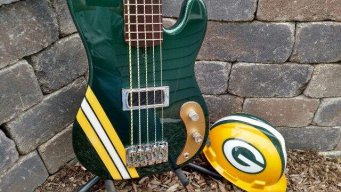
Now if they'd just add a J pickup, it might be halfways decent.
you mean like this?
and PB - my A string sounds FINE.....no issues...
you mean like this?
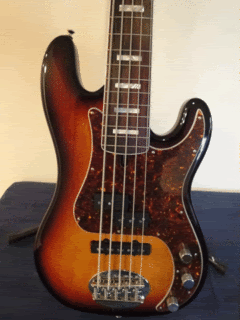
Look like we almost got twins!
Except I don't have the blocks and binding and of course my A pole is in the historically correct position.
I even have a Nordy custom P on the way...
Nobody said it would sound bad. Just not correct.PB - my A string sounds FINE.....no issues...
Here's the deal:
If we took the B string out of that equation, would you ever want just your E, A, D, & G string pole peices set up like that on a traditional 4 string P bass?
I'm not saying this is a huge issue. I just don't understand not doing it correctly when it is so easy to do so.

"Historically Correct! That works....historically correct...


