
Enjoy the benefits of a premium membership!
Upgrade Account
-
TalkBass has been independent since 1998. Add your voice.
Create a free account to reply to discussions, view embedded media, and browse with fewer display ads.
Join free Log in
Want zero display ads or expanded classifieds tools? Compare plans.
You are using an out of date browser. It may not display this or other websites correctly.
You should upgrade or use an alternative browser.
You should upgrade or use an alternative browser.
More options
Who Replied?

Hi all,
I've bought a '89 Long Horn Jazz Bass in that greeny metallic dark grey colour. Sorry, no pics because I don't have full Internet connection right now.
The bass is in pristine condition, NOS except for a little scratch. Sounds and feels really nice to me. Even the truss rod has never been adjusted. The problem is that relief is a bit high (loose) and action cannot be downed more, but her old owner does not have the truss rod tool and I don't know the nut size.
Anyone could tell me which hex nut size should I need?!? None of my metric nuts have worked so far (of course, it's USA made!!)
Thanks!!
I've bought a '89 Long Horn Jazz Bass in that greeny metallic dark grey colour. Sorry, no pics because I don't have full Internet connection right now.
The bass is in pristine condition, NOS except for a little scratch. Sounds and feels really nice to me. Even the truss rod has never been adjusted. The problem is that relief is a bit high (loose) and action cannot be downed more, but her old owner does not have the truss rod tool and I don't know the nut size.
Anyone could tell me which hex nut size should I need?!? None of my metric nuts have worked so far (of course, it's USA made!!)
Thanks!!

- Jun 30, 2010
- 49,636
- 222,262
- Disclosures
- musician/artist/owner - Gildaxe
Hi all,
I've bought a '89 Long Horn Jazz Bass in that greeny metallic dark grey colour. Sorry, no pics because I don't have full Internet connection right now.
The bass is in pristine condition, NOS except for a little scratch. Sounds and feels really nice to me. Even the truss rod has never been adjusted. The problem is that relief is a bit high (loose) and action cannot be downed more, but her old owner does not have the truss rod tool and I don't know the nut size.
Anyone could tell me which hex nut size should I need?!? None of my metric nuts have worked so far (of course, it's USA made!!)
Thanks!!
Good question. I use a 5mm (metric) on my '92 American Standard (boner) J. It's entirely possible that even the US made Fender will have a metric tr nut. Otherwise, the closest 'standard' wrench size equivalents are 3/16ths (smaller) and 7/32nds (larger). I don't have either so I can't say if either will suffice.
Once you determine a wrench size that will fit,
Loosen the strings, adjust > right (clockwise)=tight=less arch / left (counter-clockwise)=loose=more arch. Turn wrench both directions to assure it's not thread-locked and if there is major resistance, loosen it completely, remove the nut and lubricate the threads w/grease. Reinstall, bring it to snug and turn 1/2 turn tighter. See if this helped (tune strings to pitch and play) If it needs more, go no more than another 1/2 turn tighter. Tune to pitch and play it over the neck few days. Wood is organic and may take a while to readjust to it's new arch. You may have got it perfect first go and in a few days it's off again. If so, add another 1/2 turn (or less) and let that adjust over a few days more. Eventually it will settle into its new (correct) arch. Overall, don't over-tighten as you can strip the tr nut. If it continues to be over-arched, you may need to either use a clamping system to flatten th neck and then bring the tr up to that, or have a qualified luthier check it out. Good luck.

Not sure if it's one of you guys, but someone is parting out a Boner P bass on eBay.
http://www.ebay.ca/sch/peratron/m.h...h=item3a8935fe24&rt=nc&_trksid=p2047675.l2562
Since they're pretty rare and don't come up often, I thought I would share. Cheers.
http://www.ebay.ca/sch/peratron/m.h...h=item3a8935fe24&rt=nc&_trksid=p2047675.l2562
Since they're pretty rare and don't come up often, I thought I would share. Cheers.
- Jun 30, 2010
- 49,636
- 222,262
- Disclosures
- musician/artist/owner - Gildaxe
Not sure if it's one of you guys, but someone is parting out a Boner P bass on eBay.
http://www.ebay.ca/sch/peratron/m.h...h=item3a8935fe24&rt=nc&_trksid=p2047675.l2562
Since they're pretty rare and don't come up often, I thought I would share. Cheers.
Saw it - a project for sure. The neck skunk-stripe has separated/cracked open (???) <dropped or who knows, the tuners are "aged" Schallers (not original), the TBX pot is missing, the white pg is painted red (and scratched through to plastic), and the body has some sort of flat scratched-up finish (again,???) and the frets look "aged"...
- Jun 30, 2010
- 49,636
- 222,262
- Disclosures
- musician/artist/owner - Gildaxe
I am installing new NJ4 pu's in my A/S "boner" so I shielded the cavities w/a combination of copper tape and shielding paint.
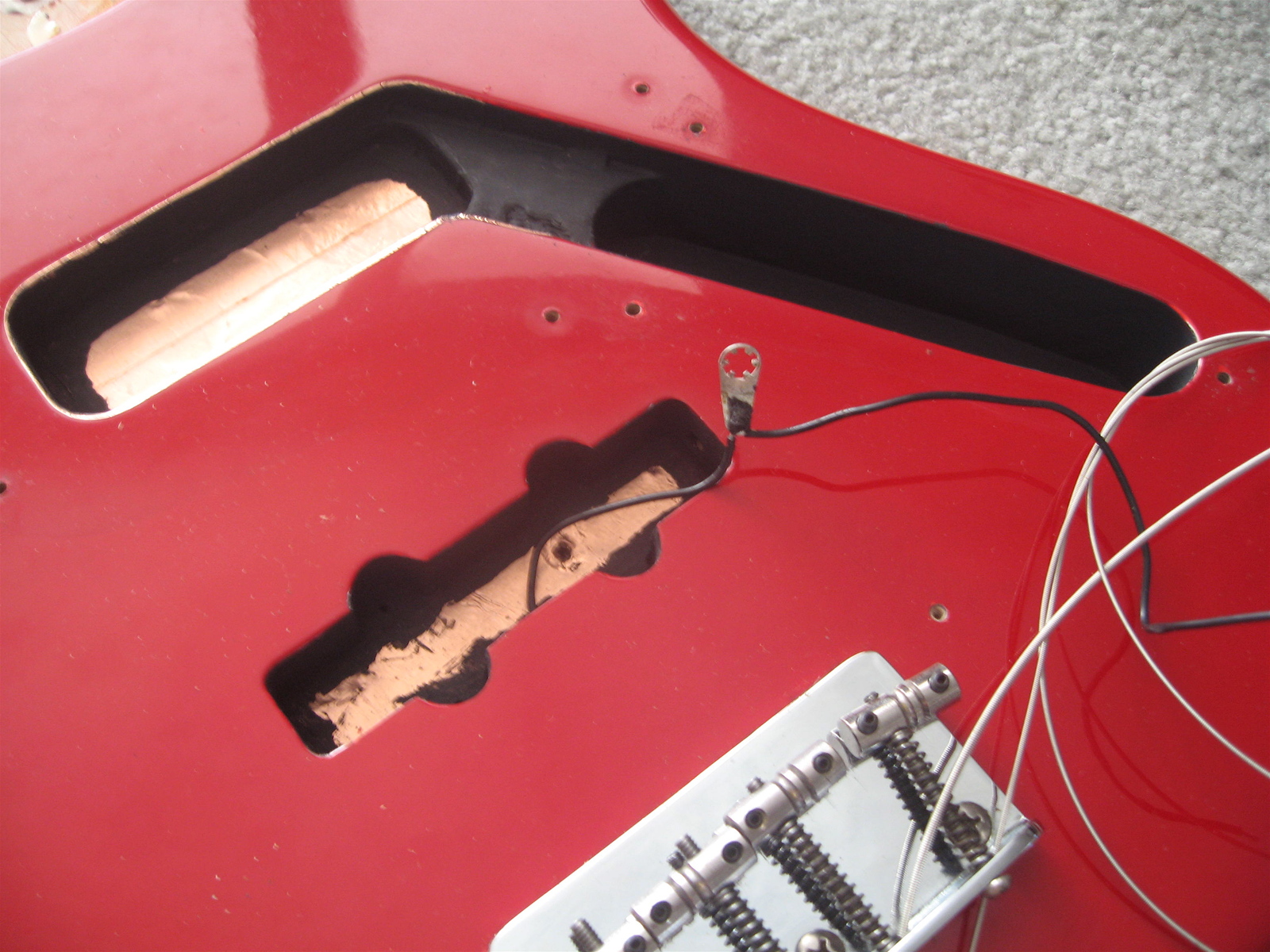
While I was at it I removed the neck (probably the 1st time since it left the factory 21 years ago) <- which lead to finding out that it was not a '92 as I thought, but a '93. The headstock serial number starts N2... so I assumed that meant Ninety 2.
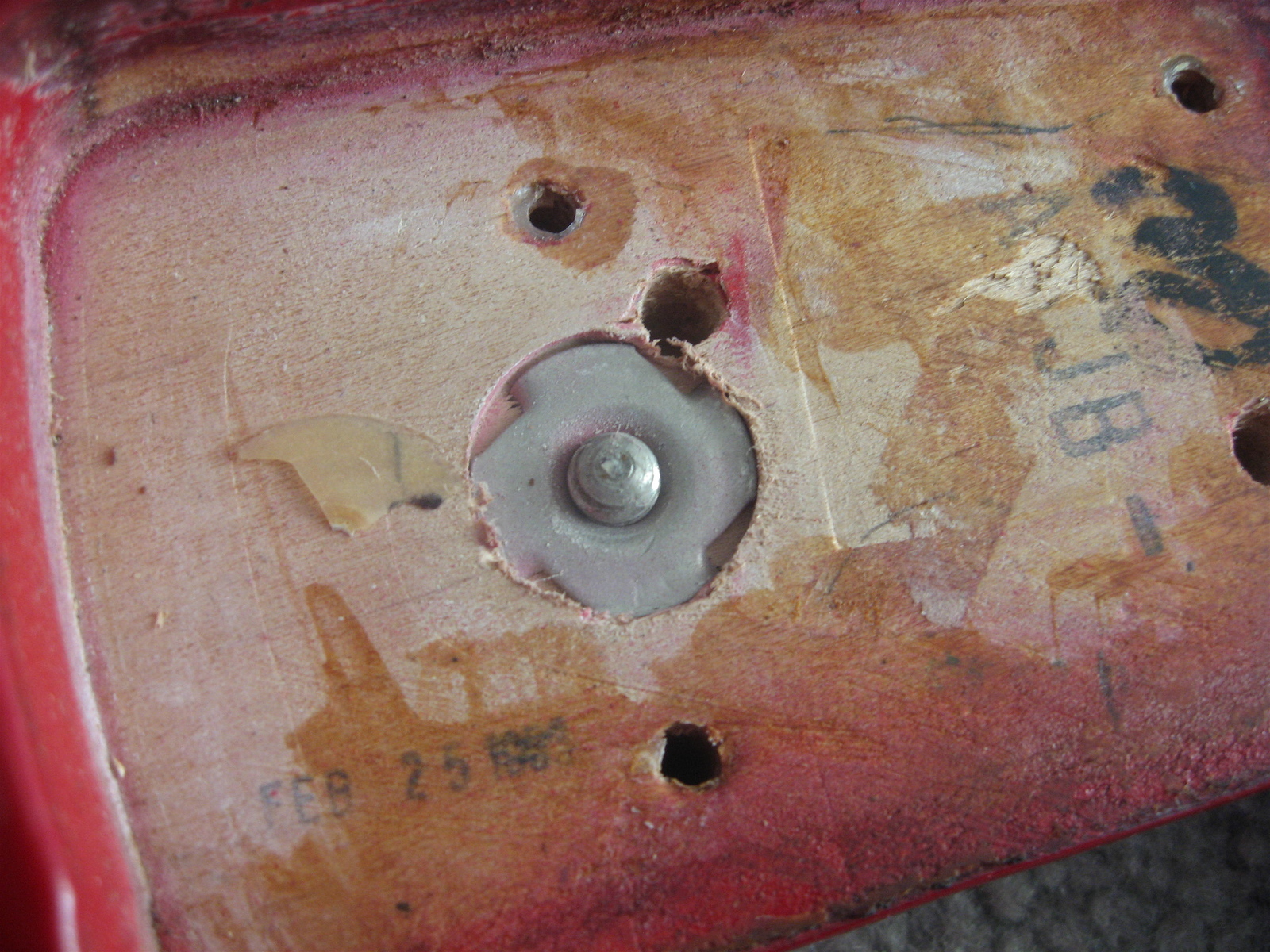
The body is stamped (in very small print in the lower pocket corner) Feb 25 1993
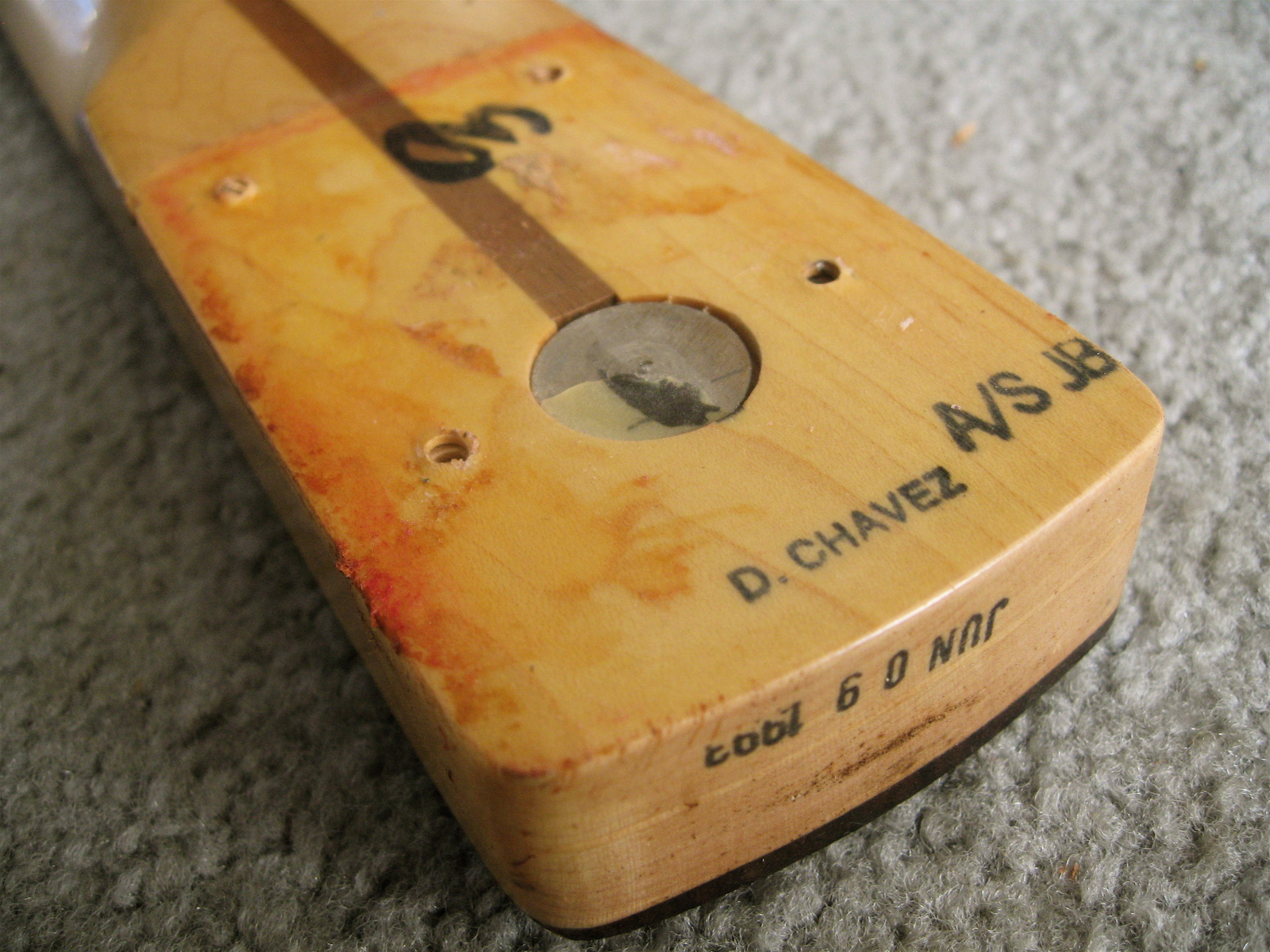
and the neck is dated June 09 1993, inspected by D.Chavez
You can see the small pieces of clear-coat that came off of the tilt-plate in the pics - I carefully super-glued them back into place, not wanting to disrupt the original ingredients.
The Nordstrands are on their way, and I'm looking forward to hearing the bass renewed.
While I was at it I removed the neck (probably the 1st time since it left the factory 21 years ago) <- which lead to finding out that it was not a '92 as I thought, but a '93. The headstock serial number starts N2... so I assumed that meant Ninety 2.
The body is stamped (in very small print in the lower pocket corner) Feb 25 1993
and the neck is dated June 09 1993, inspected by D.Chavez
You can see the small pieces of clear-coat that came off of the tilt-plate in the pics - I carefully super-glued them back into place, not wanting to disrupt the original ingredients.
The Nordstrands are on their way, and I'm looking forward to hearing the bass renewed.

- Jun 30, 2010
- 49,636
- 222,262
- Disclosures
- musician/artist/owner - Gildaxe
- Jun 30, 2010
- 49,636
- 222,262
- Disclosures
- musician/artist/owner - Gildaxe
Diggin' the tone of these pu's - now to address the bridge. I ordered a Schaller HM adjustable-saddle bridge. I use both standard bent-plate and HM bridges on my basses and really don't have a preference per say, but this is a well designed bridge (Deeter engineering) w/saddle roller wheels which allow for exact spacing and this is what I'm up against on this bass - correct string to string alignment. Never used this bridge before, but I think it will good. I'll post again once I install it.
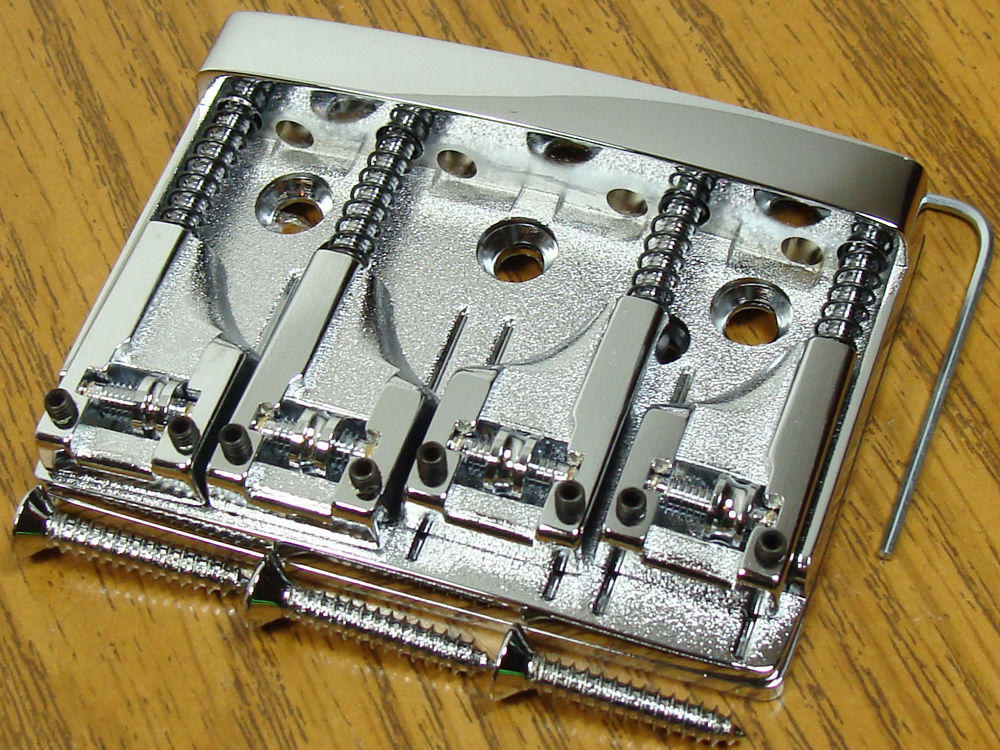
The overly wide stock bridge (why?) is playable but as it is different string spacing than my other J's, it becomes more of an adjusting issue in playing one to the other. So once I started upgrading, it seemed like a good thing to do. While I wait for it to arrive, I decided to mod the bridge that will go. (I doubt it will ever be "a valuable collectors item") I had some standard saddles in my parts bin which are shorter side-to-side and bigger in diameter than the stock ones. I drilled 2 new holes next to the E & G adjustment screw holes. (same as a standard spacing) I then used a small file to notch the side of the string hole so that the wire above the ball-end slipped into the notch. Finally I screwed in a tiny bolt/washer/nut to fill the hole so that the string stays in the notch. More of a make-do and not for quick string changing, but it won't be on for much longer. The combination of these mods put the E & G at the correct spacing from each other, and the strings on the fretboard where they should be. (not on the edge) The A & D holes are not correct (slight tow-in), but not worth "screwing" with. The other make-do is the inset saddle adjusters height (too high). This is because the barrels are bigger in diameter, so lower at the base. If I wasn't replacing it, they could be shortened from the bottom so they didn't stick up over the barrels. I'll just have to watch out with getting scratched by them at rehearsal today.
It looks ugly but intones and plays well. Good enough for the time being.
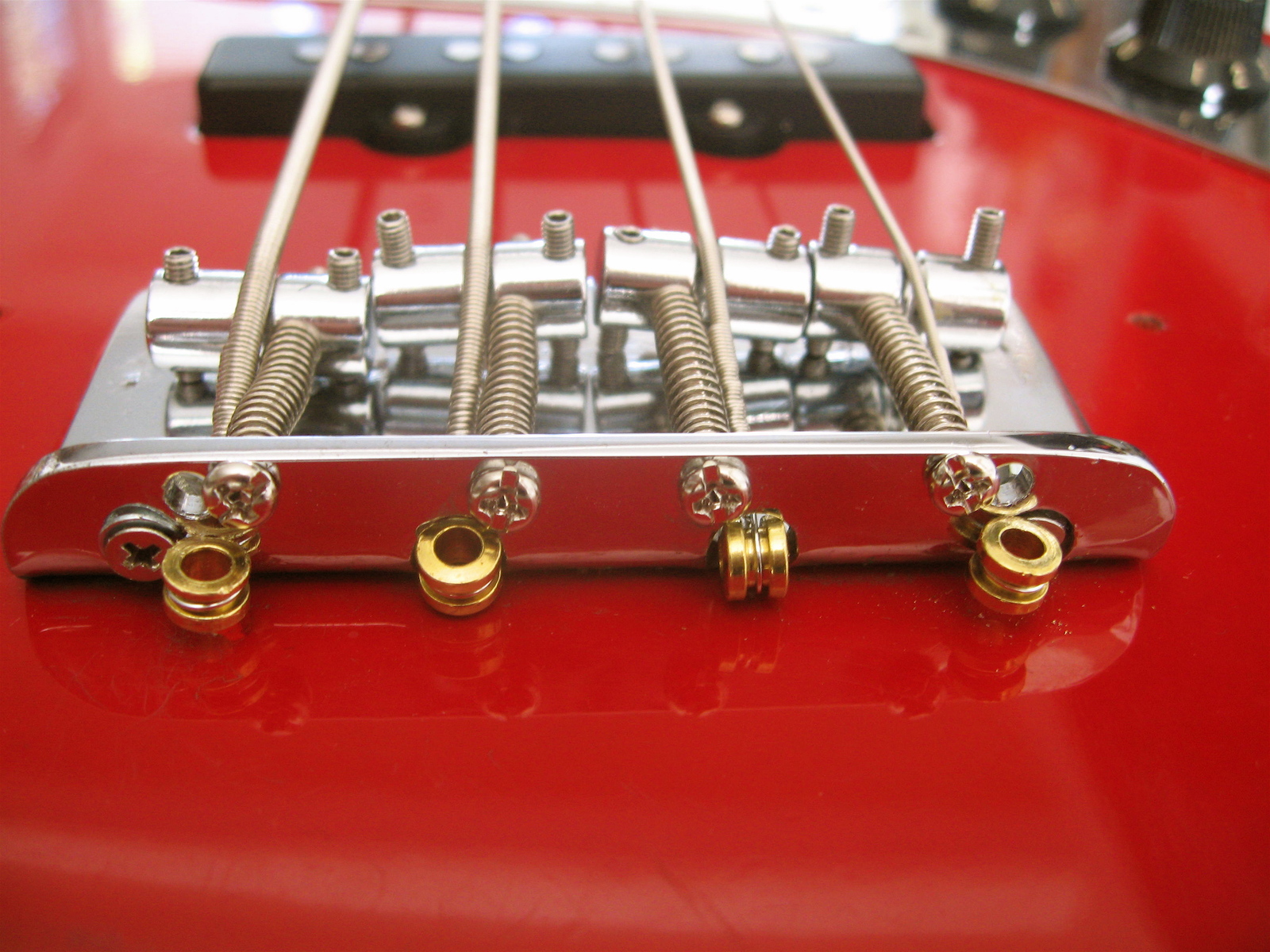
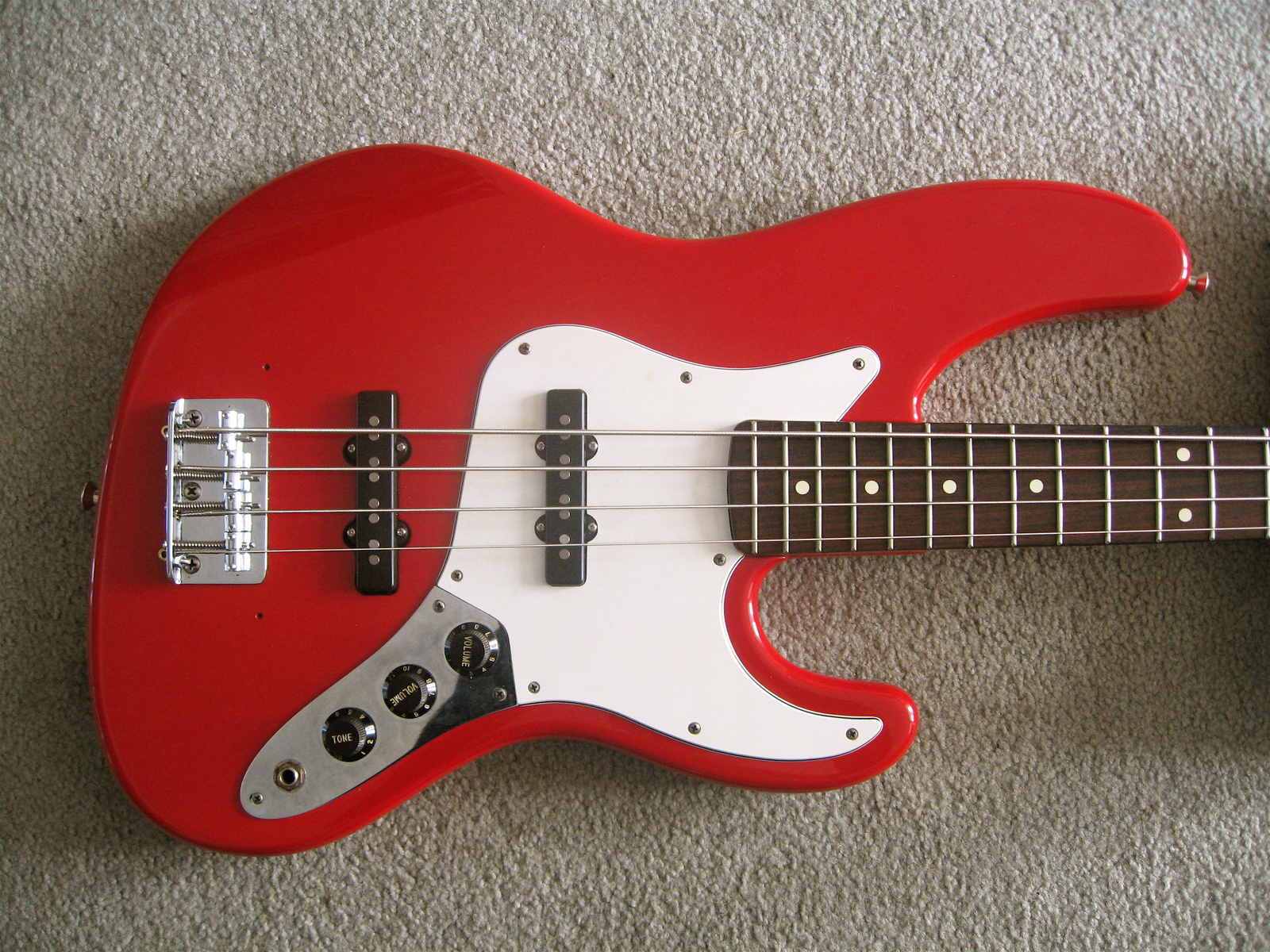
The overly wide stock bridge (why?) is playable but as it is different string spacing than my other J's, it becomes more of an adjusting issue in playing one to the other. So once I started upgrading, it seemed like a good thing to do. While I wait for it to arrive, I decided to mod the bridge that will go. (I doubt it will ever be "a valuable collectors item") I had some standard saddles in my parts bin which are shorter side-to-side and bigger in diameter than the stock ones. I drilled 2 new holes next to the E & G adjustment screw holes. (same as a standard spacing) I then used a small file to notch the side of the string hole so that the wire above the ball-end slipped into the notch. Finally I screwed in a tiny bolt/washer/nut to fill the hole so that the string stays in the notch. More of a make-do and not for quick string changing, but it won't be on for much longer. The combination of these mods put the E & G at the correct spacing from each other, and the strings on the fretboard where they should be. (not on the edge) The A & D holes are not correct (slight tow-in), but not worth "screwing" with. The other make-do is the inset saddle adjusters height (too high). This is because the barrels are bigger in diameter, so lower at the base. If I wasn't replacing it, they could be shortened from the bottom so they didn't stick up over the barrels. I'll just have to watch out with getting scratched by them at rehearsal today.
It looks ugly but intones and plays well. Good enough for the time being.
- Jun 30, 2010
- 49,636
- 222,262
- Disclosures
- musician/artist/owner - Gildaxe
Sunburst Boner on ebay - (if you are interested) w/upgraded Bassline pu's and HM bridge (correct spacing)
--- I spaced and didn't copy the link - it's somewhere in the 4000+ J's on ebay! ---
otherwise ... a black-burst/pewter/smoke 5's body - I'm not sure it's a boner although the pic looks like one. I think it's a Plus Deluxe series which had active electronics.
http://www.ebay.com/itm/151150109616?ssPageName=STRK:MEWAX:IT&_trksid=p3984.m1438.l2649
I have no ties to either, just saw them and thought if anyone is interested this is the thread to give a heads-up.
--- I spaced and didn't copy the link - it's somewhere in the 4000+ J's on ebay! ---
otherwise ... a black-burst/pewter/smoke 5's body - I'm not sure it's a boner although the pic looks like one. I think it's a Plus Deluxe series which had active electronics.
http://www.ebay.com/itm/151150109616?ssPageName=STRK:MEWAX:IT&_trksid=p3984.m1438.l2649
I have no ties to either, just saw them and thought if anyone is interested this is the thread to give a heads-up.
As an eBay Associate, TalkBass may earn a commission from qualifying purchases.
- Jun 30, 2010
- 49,636
- 222,262
- Disclosures
- musician/artist/owner - Gildaxe
Got and installed the Schaller bridge. Must say it is a very nice bridge in every way. I have Hipshot A bridges on my string-thru basses, and standard bent-plate bridges on a couple of others. Although they all work - as far a well designed top-load bridge goes I like the Schaller best. It has staggered holes for 5 screws (three included) but since the boner only had 3 - I installed 3. (with the larger cast base, it isn't going anywhere - 5 screws would be overkill) Adjusting it is a dream because of the smooth spinning rollers. Easy to dial in the exact spacing you want, and the for/aft adjustment is smooth because the strings are spinning on the rollers. The individual string adjusters have their own tracks so there is no side to side movement. (no need for locking anything) The overall profile is low and the base plate is curved on the top to conform to the fingerboard radius.
So I was prepared to just be happy with the correct string spacing, and a bridge that looks great - but the bass sounds and plays better now! Not night and day different, but definitely improved. Cleaner, clearer - more defined, more even overall and solid. It just feels planted, solid and integrated. I hear the character of the bass now.
For anyone owning these basses who hasn't already 86'd the too wide stock one - I highly recommend this upgrade.
So I was prepared to just be happy with the correct string spacing, and a bridge that looks great - but the bass sounds and plays better now! Not night and day different, but definitely improved. Cleaner, clearer - more defined, more even overall and solid. It just feels planted, solid and integrated. I hear the character of the bass now.
For anyone owning these basses who hasn't already 86'd the too wide stock one - I highly recommend this upgrade.

Nice! I do the same with mine except mine is a bit of a strange one. The original owner tried to make the original neck into a fretless! Needless to say it was never completed. He put a power jazz neck on it and it actually fits perfectly. With that I still had the string spacing issue. I installed a GOTOH bridge and it has made all the difference! I recommend the bridge swap as well!
- Jun 30, 2010
- 49,636
- 222,262
- Disclosures
- musician/artist/owner - Gildaxe
Nice! I do the same with mine except mine is a bit of a strange one. The original owner tried to make the original neck into a fretless! Needless to say it was never completed. He put a power jazz neck on it and it actually fits perfectly. With that I still had the string spacing issue. I installed a GOTOH bridge and it has made all the difference! I recommend the bridge swap as well!
ah, the urge to pull frets.., I did it twice years ago and wouldn't attempt it again. (once professionally - pre knowledge of Jaco, and once myself later) They came out good and all, but why not just buy a fretless neck! Now I can say I did it I guess. Fender made fretless 22 fret necks later for their Deluxe Series that fit. Is yours one of the all black Power J necks? Pics? Anyway, yes - quality bridges do make a difference and in the case of these cool basses w/an Achilles heal (a too wide spacing bridge) it's a must. I wanted to try a Gotoh but the string spacing was 2 1/4" (E-G) I have the Schaller dialed at the standard 2 5/8" down from 2 3/4", a full 1/8" difference. As far as I know, this was the only bass that this bridge was used on - what were they thinking? 

- Jun 30, 2010
- 49,636
- 222,262
- Disclosures
- musician/artist/owner - Gildaxe
Ok stupid question but does any bass with a horn that goes up to or past the eleventh fret qualify as a boner bass or is it specificly fenders with those specs
Anything can be given a nick-name if it has something about it that alludes to such, but in this case this particular Fender bass series has adopted that nick-name in many posts about it over the years. It's because a Fender bass is such a standardized icon in it's shape/design, one that attempted to riff off of it, er.., sticks out. Many people still think the original VW Beetle is the only real VW Bug, but many people have since accepted the contemporary version of it.
This is an Ibanez RKB. Looking at it it could be called a "boner" bass. But Ibanez has had many body designs over the years so it's just looked at as yet another style they offered.
- Jun 30, 2010
- 49,636
- 222,262
- Disclosures
- musician/artist/owner - Gildaxe
I found some historical insight into the 86-94 American Standard line which the "boner" bass is part of to share
from Electric Guitars - The Illustrated Encyclopedia - Tony Bacon 2000 - this describes the guitars but provides an overview of the line in general. My input in slanted type.
"The (86) American Standard was an efficacious piece of re-interpretation. It drew from the best of the original Stratocaster but was updated with a flatter-camber 22 fret neck and a revised vibrato unit based on twin stud pivot points. Once the Corina plant's production lines reached full speed, (production at the Corina plant started in late 85 in a limited scale- prior to that most Fenders were made in Japan since 82) the American Standard proved extremely successful for the revitalized Fender operation. (post CBS sale in 85) By the early 1990's, the instrument was a best seller, and was notching up some 25,000 sales annually. In many markets today,(2000) including the US, the American Standard Stratocasters and Telecasters remain the best-selling US-made Fender models."
Now the boner basses drifted a bit from drawing from the best of the original P & J basses, but it did offer a 22 fret flatter neck. (a first for Fender basses) In some ways, these basses were caught in the crossfire between Fenders tug-of-war between creating a forward, modern bass and the beginning surge of retro-rehash that continues to this day. The mutant child of this one night stand ended up with the nick-name "boner". One could say it came from good stock, but was a non-conformist.
from Electric Guitars - The Illustrated Encyclopedia - Tony Bacon 2000 - this describes the guitars but provides an overview of the line in general. My input in slanted type.
"The (86) American Standard was an efficacious piece of re-interpretation. It drew from the best of the original Stratocaster but was updated with a flatter-camber 22 fret neck and a revised vibrato unit based on twin stud pivot points. Once the Corina plant's production lines reached full speed, (production at the Corina plant started in late 85 in a limited scale- prior to that most Fenders were made in Japan since 82) the American Standard proved extremely successful for the revitalized Fender operation. (post CBS sale in 85) By the early 1990's, the instrument was a best seller, and was notching up some 25,000 sales annually. In many markets today,(2000) including the US, the American Standard Stratocasters and Telecasters remain the best-selling US-made Fender models."
Now the boner basses drifted a bit from drawing from the best of the original P & J basses, but it did offer a 22 fret flatter neck. (a first for Fender basses) In some ways, these basses were caught in the crossfire between Fenders tug-of-war between creating a forward, modern bass and the beginning surge of retro-rehash that continues to this day. The mutant child of this one night stand ended up with the nick-name "boner". One could say it came from good stock, but was a non-conformist.
Finally I can post the pics of my "recently" adquired Jazz Bass. As you can see it's in pristine condition except for a scratch behind the bridge (top rear side, behind the E string, but almost unnoticiable).
So far the only thing I've changed is the original bridge for a Fender Vintage (http://www.themusiczoo.com/PDGImages/Fender_Vintage_Bass_Bridge_Chrome_990804100_576.jpg) , as I could not get used to the big string spacing (not shown in pics). Pickups sound nice to me even though I've been said that they have somewhat different sound compared to other classic/vintage am.std. Jazz basses. Anyway I love it.
[Invalid or Expired Link Removed]
[Invalid or Expired Link Removed]
[Invalid or Expired Link Removed]
[Invalid or Expired Link Removed]
[Invalid or Expired Link Removed]
[Invalid or Expired Link Removed]
So far the only thing I've changed is the original bridge for a Fender Vintage (http://www.themusiczoo.com/PDGImages/Fender_Vintage_Bass_Bridge_Chrome_990804100_576.jpg) , as I could not get used to the big string spacing (not shown in pics). Pickups sound nice to me even though I've been said that they have somewhat different sound compared to other classic/vintage am.std. Jazz basses. Anyway I love it.
[Invalid or Expired Link Removed]
[Invalid or Expired Link Removed]
[Invalid or Expired Link Removed]
[Invalid or Expired Link Removed]
[Invalid or Expired Link Removed]
[Invalid or Expired Link Removed]
Sweet bass! I'll post pics of mine ASAP. I have found that the original owner also repainted the body with a different white and different texture paint. I've had it for a year now an where my buckle rash would be the paint is coming off, revealing the original oly white! Wow! I'd like to take the paint off and have it back to original colour. Any suggestions on how to do this without ruining the original paint?


