

Enjoy the benefits of a premium membership!
Upgrade Account
-
TalkBass has been independent since 1998. Add your voice.
Create a free account to reply to discussions, view embedded media, and browse with fewer display ads.
Join free Log in
Want zero display ads or expanded classifieds tools? Compare plans.
You are using an out of date browser. It may not display this or other websites correctly.
You should upgrade or use an alternative browser.
You should upgrade or use an alternative browser.
Boss Katana Bass ...
- Thread starter Phlipper
- Start date
More options
Who Replied?


I stopped by the local GC today to check one of the 110 versions out. First person to plug into it as it had been on the floor since this morning. set all knobs to noon. It farted hard on the B string. The rumble 100 did much better.

I stopped by the local GC today to check one of the 110 versions out. First person to plug into it as it had been on the floor since this morning. set all knobs to noon. It farted hard on the B string. The rumble 100 did much better.
Does that include gain and volume? If so, the gain structure could he completely different on different brands amps. Even if you set the EQ "flat" the gain and volume should be adjusted.
I had the gain low and turned it up. neither the gain or master made it above 9 o'clockDoes that include gain and volume? If so, the gain structure could he completely different on different brands amps. Even if you set the EQ "flat" the gain and volume should be adjusted.
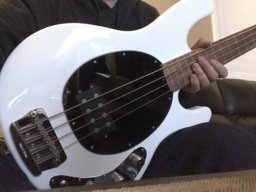
I haven’t played a 5 string through mine yet but I did play my NG3 4 string which is tuned CGCF. It handled the C string very well. I’ll have to try my Stingray 5 through it while it’s still in the return period. One thing to check for with these amps is if they’re set to panel or one of the presets. I’ve had much better results using the panel controls. A lot of the presets seem to distort. I haven’t had the time yet to set up my own presets.I stopped by the local GC today to check one of the 110 versions out. First person to plug into it as it had been on the floor since this morning. set all knobs to noon. It farted hard on the B string. The rumble 100 did much better.
Last edited:
I tune to D standard so: ADGCF. I'm also using flatwounds with a double buck music man style pickup.I haven’t played a 5 string through mine yet but I did play my NG3 4 string which is tuned CGCF. It handled the C string very well. I’ll have to try my Stingray 5 through it while it’s still in the return period. One thing to check for with these amps is if they’re set to panel or one of the presets. I’ve had much better results using the panel controls. A lot of the presets seem to distort. I haven’t had the time yet to set up my own presets.
Not sure it would handle something that low. It works for what I need. It’s essentially just a living room practice amp. The one time I did take it to the studio I set up inside the control room and turned the speaker off.I tune to D standard so: ADGCF. I'm also using flatwounds with a double buck music man style pickup.
If anyone was wondering how the 60W Katana 110 stacks up against the 40W Rumble Studio, I can offer my take. I bought the Rumble Studio from Sweetwater about 2 weeks ago before I found out about the Katana. Since they were the same price I went ahead and bought the Katana with the intent that I would return one of them.
Well, the Rumble is going back and it's not even close. I don't know if it's the class A/B vs class D thing or not, but the Rumble sounds weak and anemic compared to the Katana. Katana has far more balls, if you will. The Katana sounds like a real amp and the Rumble sounds like listening to a good recording of someone playing bass through good hi-fi speakers. It really does fill the room with sound in a way the Rumble can't match. You can just physically feel the Katana speaker pushing more air. With that in mind, I borrowed my brother's decibel meter and did a quick experiment and discovered something interesting. Maybe someone who is more of a sound engineer than I am can explain it, but this is what I found.
First, I set the volume on both of them where it was reading 95 decibels at a distance of 2 feet with a similar tone. I checked the volume on each at a distance of 10 feet, 20 feet and 30 feet then I checked it from 12 feet away from the side. At each distance the volume dropped off much quicker from the Rumble than the Katana. At 30 feet, the Rumble read almost 8 db less than the Katana. That's probably why it filled the room so much better.
Obviously, tweaking the Rumble and adding effects involves a lot of menu diving. On the Katana you simply turn knobs. Most of the effects on the Rumble seem to be the exact same as the ones on the Mustang GTX, it even includes the acoustic simulator which is clearly intended to be used with an acoustic guitar but there it is anyway. The compressors are good on both amps. The drives are much better on the Katana. Chorus is much more rich-sounding on the Katana. I do give the Rumble props on the ability to tweak everything from the panel with a few buttons and one knob. You have to use the Tone Studio to do a lot of deep editing on the Katana.
That's about all I have to say about it. I don't really do reviews, but if anyone is considering the two of these, I hope this helps.
Well, the Rumble is going back and it's not even close. I don't know if it's the class A/B vs class D thing or not, but the Rumble sounds weak and anemic compared to the Katana. Katana has far more balls, if you will. The Katana sounds like a real amp and the Rumble sounds like listening to a good recording of someone playing bass through good hi-fi speakers. It really does fill the room with sound in a way the Rumble can't match. You can just physically feel the Katana speaker pushing more air. With that in mind, I borrowed my brother's decibel meter and did a quick experiment and discovered something interesting. Maybe someone who is more of a sound engineer than I am can explain it, but this is what I found.
First, I set the volume on both of them where it was reading 95 decibels at a distance of 2 feet with a similar tone. I checked the volume on each at a distance of 10 feet, 20 feet and 30 feet then I checked it from 12 feet away from the side. At each distance the volume dropped off much quicker from the Rumble than the Katana. At 30 feet, the Rumble read almost 8 db less than the Katana. That's probably why it filled the room so much better.
Obviously, tweaking the Rumble and adding effects involves a lot of menu diving. On the Katana you simply turn knobs. Most of the effects on the Rumble seem to be the exact same as the ones on the Mustang GTX, it even includes the acoustic simulator which is clearly intended to be used with an acoustic guitar but there it is anyway. The compressors are good on both amps. The drives are much better on the Katana. Chorus is much more rich-sounding on the Katana. I do give the Rumble props on the ability to tweak everything from the panel with a few buttons and one knob. You have to use the Tone Studio to do a lot of deep editing on the Katana.
That's about all I have to say about it. I don't really do reviews, but if anyone is considering the two of these, I hope this helps.
Last edited:

Well the Katanas are using a completely different speaker. They seem to move more than the Rumble speakers do, and the Katana has a lot of DSP under the hood that plays around with the amount of bass, sustain, and peak vs average over time stuff... It's not simple compression, but there's some multi-band stuff going on. Definitely a more complex system under the hood compared to the Rumble.
I had pretty much the same experience comparing the two. The Rumble 40 Studio was shipped back this morning.If anyone was wondering how the 60W Katana 110 stacks up against the 40W Rumble Studio, I can offer my take. I bought the Rumble Studio from Sweetwater about 2 weeks ago before I found out about the Katana. Since they were the same price I went ahead and bought the Katana with the intent that I would return one of them.
Well, the Rumble is going back and it's not even close. I don't know if it's the class A/B vs class D thing or not, but the Rumble sounds weak and anemic compared to the Katana. Katana has far more balls, if you will. The Katana sounds like a real amp and the Rumble sounds like listening to a good recording of someone playing bass through good hi-fi speakers. It really does fill the room with sound in a way the Rumble can't match. You can just physically feel the Katana speaker pushing more air. With that in mind, I borrowed my brother's decibel meter and did a quick experiment and discovered something interesting. Maybe someone who is more of a sound engineer than I am can explain it, but this is what I found.
First, I set the volume on both of them where it was reading 95 decibels at a distance of 2 feet with a similar tone. I checked the volume on each at a distance of 10 feet, 20 feet and 30 feet then I checked it from 12 feet away from the side. At each distance the volume dropped off much quicker from the Rumble than the Katana. At 30 feet, the Rumble read almost 8 db less than the Katana. That's probably why it filled the room so much better.
Obviously, tweaking the Rumble and adding effects involves a lot of menu diving. On the Katana you simply turn knobs. Most of the effects on the Rumble seem to be the exact same as the ones on the Mustang GTX, it even includes the acoustic simulator which is clearly intended to be used with an acoustic guitar but there it is anyway. The compressors are good on both amps. The drives are much better on the Katana. Chorus is much more rich-sounding on the Katana. I do give the Rumble props on the ability to tweak everything from the panel with a few buttons and one knob. You have to use the Tone Studio to do a lot of deep editing on the Katana.
That's about all I have to say about it. I don't really do reviews, but if anyone is considering the two of these, I hope this helps.

I only try the 60 watts Katana which look shine from media report.
Spend around half hous....here is my humble opinion.....
On tone side, RB112 again ; on weight, still Rb112 ;on similar price tag, i more prefer Ampeg Rb112 ; on panel lay out and control..... i am still prefer simple and clean panel on Rb112.
I have no change put both combo side by side, but from just judge on the look from both combo, the RB112 look like expensive thing, and the Katana 60 just look like Ibanez IBZ10BV2!
Spend around half hous....here is my humble opinion.....
On tone side, RB112 again ; on weight, still Rb112 ;on similar price tag, i more prefer Ampeg Rb112 ; on panel lay out and control..... i am still prefer simple and clean panel on Rb112.
I have no change put both combo side by side, but from just judge on the look from both combo, the RB112 look like expensive thing, and the Katana 60 just look like Ibanez IBZ10BV2!

^ Not a particularly helpful review but it’s great you like the RB112. More interested in reviews by people who LIKE one of the combos, but can point out its weaknesses, if any.
I’ve never seen one of the Rocket Bass combos for comparison, but I feel like the build quality of the Katana 110 is very good. It just looks and feels like a solid piece of gear. IMO the build quality is a notch above the Rumble series. I’ll have to stop by GC to check out the Ampeg RB series. I’m sure they sound great. I just wanted a little more variety for living room practice/writing.I only try the 60 watts Katana which look shine from media report.
Spend around half hous....here is my humble opinion.....
On tone side, RB112 again ; on weight, still Rb112 ;on similar price tag, i more prefer Ampeg Rb112 ; on panel lay out and control..... i am still prefer simple and clean panel on Rb112.
I have no change put both combo side by side, but from just judge on the look from both combo, the RB112 look like expensive thing, and the Katana 60 just look like Ibanez IBZ10BV2!
^ Not a particularly helpful review but it’s great you like the RB112. More interested in reviews by people who LIKE one of the combos, but can point out its weaknesses, if any.
It's a tough question to answer. They are not high-power combos. They are programmed such that the harder you push them, the less "bass" they have. At very high volumes they become quite midrangey to get that extra volume by tapering off the power-robbing deep bass. It's really not that bad. I would not recommend running them flat, though. Really play with the EQ controls - you may find that a pretty obscene EQ setting sounds really good on it - and you'll have lots of clarity as long as you're not trying to rattle the dishes.
I think they sound great. It did struggle with my upright bass because the attack has such a heavy low-frequency component. The sound was pretty squishy - but I could definitely be heard!
The Rocketbass faired much worse with my upright bass. The Rocketbass combos also don't have most of the signal-processing the Kanatas have. So if you like more features in one box, the Kanata is probably going to be more satisfying.

Why would Boss have a speaker output but cut the internal speakers off when plugged in?

My usumption is marketing and cost savings. It looks good on paper saying the amp has a external speaker out but they didn't want to add the extra weight and cost of an additional power amp channel. This is all speculation on my part tho. Boss could have completely different reasons but they are unkown and wouldn't be obvious to me on the surface at this point.Why would Boss have a speaker output but cut the internal speakers off when plugged in?
Why would Boss have a speaker output but cut the internal speakers off when plugged in?
I can't say for sure, but it's possible they're re-using speaker tech they developed from the D-Bass line. Those speakers had some additional instrumentation on them to provide a signal back to the amplifier outside of the audio signal path so the DSP knew what the speaker cone was doing. In the D-Bass line it used an IR LED and a light sensing device to "see" the speaker cone moving in real time.
So when you plug in an external speaker, it removes a known range of values from the DSP.
On the modern Bass Cube amps, the speaker output was actually in series.
IMHO the internal 10s in the Katana 210 are most likely a 4 ohm load and the amp puts out a 160 watts into 4 ohms.The owners manual states that when plugging an external speaker the load must be 4 ohms or higher.Adding a 8 ohm load would take it down to 3.2 ohms and a 4 ohm load down to 2 ohms.Why would Boss have a speaker output but cut the internal speakers off when plugged in?
When the the Katana 110 was being compared to the Fender Rumble 100 on the Andertons video it sure didnt sound like the Ibanez IBZ10BV2.I only try the 60 watts Katana which look shine from media report.
Spend around half hous....here is my humble opinion.....
On tone side, RB112 again ; on weight, still Rb112 ;on similar price tag, i more prefer Ampeg Rb112 ; on panel lay out and control..... i am still prefer simple and clean panel on Rb112.
I have no change put both combo side by side, but from just judge on the look from both combo, the RB112 look like expensive thing, and the Katana 60 just look like Ibanez IBZ10BV2!


