A simple test - measure the distance from the nut at the top of the fretboard, to the 12 the fret. Then measure from the 12 the fret to approximately the center of the bridge intonation travel. They should be equal.

Enjoy the benefits of a premium membership!
Upgrade Account
-
TalkBass has been independent since 1998. Add your voice.
Create a free account to reply to discussions, view embedded media, and browse with fewer display ads.
Join free Log in
Want zero display ads or expanded classifieds tools? Compare plans.
You are using an out of date browser. It may not display this or other websites correctly.
You should upgrade or use an alternative browser.
You should upgrade or use an alternative browser.
Bridge won't compensate enough; 12th fret about 10% sharp.
- Thread starter bbbeavis
- Start date
More options
Who Replied?
On a bass I had trouble with, for a while I intonated to the 5th or 7th fret instead of the 12th. It was a lot easier and I didn't usually use the B string up that high. This lasted until I did a more permenant fix.
And start with something simple: clip the spring in half so you get a tad more rearwards travel (this is assuming you have a plate bridge and not a tune-o-matic style bridge, like on an Epiphone or Warwick). I've had to do that on almost every bass I've ever owned in the 38+ years I've played bass.
Really???
What make of basses?
I currently have 10+ makes/models and have never run out of intonation range.
Some makes are prone to it tho, I guess...


There are two common reasons that intonation is a problem. They are, in order of occurrence, lack of witness points and improperly filed nut.
1. Push down on the string hard in front (neck end) of the saddle at the bridge.
2. Push down on the string hard in front (body end) of the nut.
Witness points set.
If the slope of the bottom of the groove in the nut is not correct, the string will not speak from the fingerboard end of the nut. Rather, it will speak from somewhere in the middle or the other end of the nut. This effectively changes the scale length. To test for this condition, rub a graphite pencil in the bottom of the slot. Tune and detune the string several times. Loosen the string and look at the bottom of the slot. If the wear is even to the fingerboard end of the nut, all is well. If there are marks showing the string is stopped in the nut elsewhere, the bottom of the nut slot must be filed to eliminate either the hump or the negative slope.
1. Push down on the string hard in front (neck end) of the saddle at the bridge.
2. Push down on the string hard in front (body end) of the nut.
Witness points set.
If the slope of the bottom of the groove in the nut is not correct, the string will not speak from the fingerboard end of the nut. Rather, it will speak from somewhere in the middle or the other end of the nut. This effectively changes the scale length. To test for this condition, rub a graphite pencil in the bottom of the slot. Tune and detune the string several times. Loosen the string and look at the bottom of the slot. If the wear is even to the fingerboard end of the nut, all is well. If there are marks showing the string is stopped in the nut elsewhere, the bottom of the nut slot must be filed to eliminate either the hump or the negative slope.


Every Fender I've ever set up in the thirty-eight plus years I've played bass, both for myself and my friends; and concededly, many off-brand basses that the bridge was not set properly to begin with. Recently, both the Ibby SRA305's I played (I recently sold one) needed the B string adjustment screw and the spring both shortened to get the saddle back far enough. And that was after trying a dozen different B strings.Really???
What make of basses?
I currently have 10+ makes/models and have never run out of intonation range.
Some makes are prone to it tho, I guess...

Beavis is very quite on this... My guess is that he has a less-than-top notch bass that might have a silly neck.
A lot of bass players don't have 'top notch' basses, for whatever reasons. The rest are just more fortunate, for now.
No reason, tho, that something with the bassic essentials shouldn't be able to be adjusted to be playable.
Some really cut-all-the-corners basses with a 'name' have to be hacked and upgraded to be decent players.
No reason to try to 'dis' anyone for what they've got (mat'l-wise)-
some got chops and understanding that the rest just wish they had...
No reason, tho, that something with the bassic essentials shouldn't be able to be adjusted to be playable.
Some really cut-all-the-corners basses with a 'name' have to be hacked and upgraded to be decent players.
No reason to try to 'dis' anyone for what they've got (mat'l-wise)-
some got chops and understanding that the rest just wish they had...
No reason, tho, that something with the bassic essentials shouldn't be able to be adjusted to be playable.
The vast majority of intonation issues I've encountered can be traced to string installation which has gone terribly awry (operator error, critical steps ignored or overlooked). I've asked a fairly relevant question in #18; other valid questions and suggestions have also been posted. I'd like to see a response from the OP.
Riis

I have the same issue with my basses. Not enough adjustment on the bridge screw.
Not a big issue as I rarely play the B string on the 12th fret.
I did get improvement with a tapered B string .
Not a big issue as I rarely play the B string on the 12th fret.
I did get improvement with a tapered B string .

Truly, how often does one play at the 12th fret or higher on the B string? I check intonation at the 5th, 7th, 10th and 12th frets, and come up with the closest solution where most of my playing actually takes place.On a bass I had trouble with, for a while I intonated to the 5th or 7th fret instead of the 12th. It was a lot easier and I didn't usually use the B string up that high. This lasted until I did a more permenant fix.

During my 25 yrs of playing I bought two string sets with a bad string that could not intonate properly. I would start by trying a different string.

can you cut the spring, shorten it?? otherwise if its not set in just move the bridge back 1/4" or so. piano wound string might intonaate better.
i have had to remove the spring completely to get enough adjustment, then use a drop of silicone to keep it from vibraating loose.
i have had to remove the spring completely to get enough adjustment, then use a drop of silicone to keep it from vibraating loose.
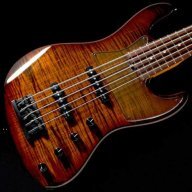
Facing the issue with one of my basses. The B string does not intonate properly at the 12 fret. My other basses intonate just fine.


