

Enjoy the benefits of a premium membership!
Upgrade Account
-
TalkBass has been independent since 1998. Add your voice.
Create a free account to reply to discussions, view embedded media, and browse with fewer display ads.
Join free Log in
Want zero display ads or expanded classifieds tools? Compare plans.
You are using an out of date browser. It may not display this or other websites correctly.
You should upgrade or use an alternative browser.
You should upgrade or use an alternative browser.
Bright sound that cuts through?
- Thread starter shoulderpet
- Start date
More options
Who Replied?
There’s another thread going on this subject with some good suggestions. It’s long and not all the suggestions are good. So anyway, getting the cab pointed at your ears instead of flapping your trouser cuffs and trying a high pass filter is a good start. It was years before I heeded the long standing wisdom of good EQ is often achieved by cutting frequencies as opposed to boosting. Not always the case, but it’s a great place to start. The frequencies that cut through are often already there, you just need to find the frequency that is covering / masking / dominating the ones you want to hear and cut it back. It will be like taking a blanket off your rig once you find what to roll off. Sometimes a simple mid boost works, but that requires an active mid EQ which isn’t always available depending on your amp and if you bass is active or not.

Presence and sizzle and live in upper mids and treble around 1.5kHz-4.5kHz and 5kHz-7.5kHz respectively. Whereas 'cutting through lives in the 800Hz-1kHz region. The eq on your amp is a little limited in dial in some of these areas, but not impossible.
I would start with the 4 band eq set neutral, ensure VLE and VPF are both off (fully anticlockwise).
Start increasing VPF until you get more presence - this boosts treble and bass whilst cutting around 380Hz, which should clean up the muddy area that masks brightness.
Turn the bass knob down to compensate for the increased bass from the VPF filter. It should sound bright and airy
Adjust the high mids, which is centred at 800 Hz, if you need to cut through more.
FWIW, the older manuals had more detail in them, including specific eq details and graphs that I found quite useful when I had a lIttle mark 2 head.
I would start with the 4 band eq set neutral, ensure VLE and VPF are both off (fully anticlockwise).
Start increasing VPF until you get more presence - this boosts treble and bass whilst cutting around 380Hz, which should clean up the muddy area that masks brightness.
Turn the bass knob down to compensate for the increased bass from the VPF filter. It should sound bright and airy
Adjust the high mids, which is centred at 800 Hz, if you need to cut through more.
FWIW, the older manuals had more detail in them, including specific eq details and graphs that I found quite useful when I had a lIttle mark 2 head.

I'd reiterate a couple points stated by others already, namely look for mids more than treble, and a short scale bass is always gonna sound a little duller than normal. I would also suggest a little distortion. A lot of bassists use distortion, but not in a way that works well in a mix. I am not suggesting using Lemmy's max gain, mids only tone. Someone else mentioned a tech 21 (sansamp pedal), although unless you're looking for that exact specific sound, you could get any more affordable drive pedal with some kind of wet/dry blend functionality. An eq pedal can also help, especially when paired with the drive. For example, if you boost the mids on the pedal before the drive, and then cut mids on the amp after, you get a more distorted, aggressive midrange character, while retaining a scooped tone. I'd also say experiment with using different pickup configurations while adjusting eq. Yes, your bridge pickup will typically give more treble and high mid, but if you boost treble and high mid on the neck pickup or both pickups you can get a similar eq curve with different tonal characteristics. You're using single coils unless you replaced the pickups anyway, so you should have enough treble through those.
With all that said, I will say this again: You won't get a bass tone like a long-scale (34", basically the industry standard but it's usually called long scale anyway for some reason) on a short scale. Also, nickel strings not only aren't quite as bright as steels, but seem to die quicker too, so if you want to retain that top end, either replace them frequently or find a set of stainless steels for short scale bass. I can't make many recommendations because I don't play a short scale, but there should be some decent ones out there. If all else fails, consider a 34" bass. I've seen people with quite small hands manage it, so with any luck you'll be fine.
With all that said, I will say this again: You won't get a bass tone like a long-scale (34", basically the industry standard but it's usually called long scale anyway for some reason) on a short scale. Also, nickel strings not only aren't quite as bright as steels, but seem to die quicker too, so if you want to retain that top end, either replace them frequently or find a set of stainless steels for short scale bass. I can't make many recommendations because I don't play a short scale, but there should be some decent ones out there. If all else fails, consider a 34" bass. I've seen people with quite small hands manage it, so with any luck you'll be fine.
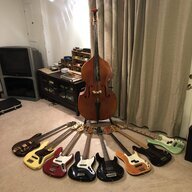
Whether the single pickup version or the dual pickup version, this bass is not a particularly hi-fi instrument endowed with a lot of definition or clarity. And the speaker is a 15 inch? The Markbass site says otherwise.Hi all
Am after some tips on getting a bright sound that cuts through, is such a thing possible?
I like to use a lot of treble in my tone, how do you get that nice trebly tone and get it to cut through?
My combo is a Markbass 121H with a 15" and a high frequency horn, and using a Gretsch junior jet with fresh nickel roundwounds (ss is nice but choice is limited with a short scale bass)
Thanks
My gut and strongest intuition is that bass is simply not going to give that sound that cuts through in the way you want... by itself. I'm presuming PA support, and if so, there's much your solution right there. If you are happy with the sound at the amp, then leave your bass and amp alone and talk to your soundperson. If you don't even like the sound at your amp... Also if there's no sound support, getting this combo to cut in certain situations and rooms is a challenging deficit of clean headroom and perhaps even venue acoustics.
From most of but certainly not ALL the Markbass amps I've played, and Fender Jazz Bass dialed in sounds KILLER through Markbass Combos, and that instrument and combo would surely cut as much as you'd want... particularly the active versions with the ultra-flexible EQ and extended frequency range. I think if you tried one of these, you'd find what you're currently missing.

eliminate competing high frequency sources like guitars and cymbals and vocals 
Truth is in most typical situations, any high frequency information in a bass signal
will be buried by other stuff, both by nature, design, and preference of engineers /band leaders / producers.
If you want a high frequency sheen(an) you'll have to fight for it.
Truth is in most typical situations, any high frequency information in a bass signal
will be buried by other stuff, both by nature, design, and preference of engineers /band leaders / producers.
If you want a high frequency sheen(an) you'll have to fight for it.
Last edited:

The "easiest" way is to get a bass that is naturally bright. If you have a bass that is naturally dark or neutral, which is common among short scales (although I am not saying it is always the case), it will be an uphill battle. You could also try adding an EQ pedal with options to most mid or treble frequency ranges other than those covered by your amp. Some other pedals can also add more high end content if you want to go more extreme, such as a bit of subtle chorus or pitchshifting from a pedal that has a higher octave voice, although I don't think most people would want to use that in typical bass playing scenarios (I use it more for playing bass arpeggio or solo parts mostly in the higher register to help them "pop").

Lot of good advice and a simple (even always on) High Pass Filter may help you get more volume leeway from your fellow band members. I'd start with all the mids/cab pointing advice and add on the HPF for good measure. May be overkill, but a pedal like the Empress ParaEQ (bass or non-bass), which has an integrated HPF, could be very handy. It's my most important pedal by a mile.
Edit: Went to the classified just after this and sure enough, a ParaEQ. I emailed with Mike Empress about the bass vs non and for many applications the non-bass will work just as well. I just got the bass one and candidly I sort of miss the non-bass version, though I expect that's just because I was more familiar with it. The bass version has some other unique features which are worth the splurge if you'd use them, but if you're only needing the EQ the non-bass version is equally good. Bassists have raved about it for years. You could also get super surgical with your mids and find just there right bands - both narrow or broad - to get you shining through a bit more. Empress ParaEq MKII Deluxe
Edit: Went to the classified just after this and sure enough, a ParaEQ. I emailed with Mike Empress about the bass vs non and for many applications the non-bass will work just as well. I just got the bass one and candidly I sort of miss the non-bass version, though I expect that's just because I was more familiar with it. The bass version has some other unique features which are worth the splurge if you'd use them, but if you're only needing the EQ the non-bass version is equally good. Bassists have raved about it for years. You could also get super surgical with your mids and find just there right bands - both narrow or broad - to get you shining through a bit more. Empress ParaEq MKII Deluxe
Last edited:

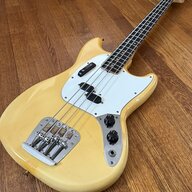
Your bass has metal covers over the pickups. Those damp the upper mid peak that helps make a bass guitar sound "bright" and cut through. You're going to need to compensate for that. The first place to look for that is technique - playing with a pick, or bouncing the strings off the frets to get some "zing" going. If you do that, you have a good sound going up your cable - the rest of your signal chain is then focused on making sure you don't remove that with eq. You can also lose a lot at FOH - your sound person may want to roll off the brightness you worked so hard to get. A nice, calm chat about your desires for what ends up in the mix (don't go in with "demands") is helpful to getting your sound across to the audience.

Elevate your cab and tilt it back to aim at your ears. The dispersion varies by frequency. For the most part, lows are omni-directional, but as the frequency rises the cab will be come more directional. If the cab is flat on the floor, you won't hear the upper mids and highs coming directly from the cab, unless you are a significant distance out in front of it.Hi all
Am after some tips on getting a bright sound that cuts through, is such a thing possible?
I like to use a lot of treble in my tone, how do you get that nice trebly tone and get it to cut through?
My combo is a Markbass 121H with a 15" and a high frequency horn, and using a Gretsch junior jet with fresh nickel roundwounds (ss is nice but choice is limited with a short scale bass)
Thanks
I generally dial in a sound that I think is somewhat lean, but otherwise balanced when I am playing by myself. In almost all occasions, once others start playing I find it necessary to bump the highs and cut the lows further. The worse the room acoustics, the more this is true.
In truly awful acoustic environments, it's a totally lost cause. You can be a few feet from a cab elevated to ear level and the sound will still be boomy and diffuse, lacking clarity and focus.
I big part of the problem is something we call masking. Basically if two sound sources produce the same frequency, you hear the sound source that is louder at your ears. Masking can result from other instruments that produce energy in a frequency range you need to hear. The low mids tends to be a critical frequency range for bass guitar. Unfortunately many other sound sources create energy in the same range, for example guitar, keyboard, drums, vocals.
Masking can also result from your own sound. Basically you need to hear more of your direct sound in relation to the part of your sound that has bounced around the room before making it's way back to your ears. Keep in mind every source produces both direct sound and indirect sound and IMHO the indirect sound tends to be the biggest part of the problem. Sometimes it can be helpful to use EQ to reduce how much energy is injected in the acoustic environment.
Using an ampless system with IEMs can help considerably. Getting rid of stage amps and foldback monitors considerably reduces how much energy is put into the acoustic environment. Since there is less indirect sound bouncing around, the PA can deliver a higher ratio of direct sound to the audience. Also wearing sealed IEMs pretty much isolates your ears from the acoustic environment. What you hear in the IEM mix is still degraded because all of the open mics will sample sound energy that is bouncing around the room.

It isn’t the scale of the bass they are fighting it’s the type of pickups. Possibly pot values too, most likely the Jet is rocking 250k pots. Other thing is it’s a 2 pickup passive bass running both pups in parallel which is going to mid scoop.You’re pushing a rock uphill trying to get that tone with a short scale bass.
My Warmoth J bass 32 cuts through the mix no problem. Even my modded Bronco bass with some nice rounds and a bit of EQ can still cut through the mix.
Strings, pickups and electronics are where most of the sound comes from on an electric bass, scale has much less influence.

drumvsbass
Commercial User
- Aug 20, 2011
- 1,985
- 4,324
- Disclosures
- I work for Long and McQuade Musical Instruments Canada in Sales.


Op is looking for a bright trebly tone which is what I was referring to. A 30 inch short scale makes that much more difficult to achieve. That’s a fact. Nothing is impossible but that is not what 30 inch basses are designed to achieve.It isn’t the scale of the bass they are fighting it’s the type of pickups. Possibly pot values too, most likely the Jet is rocking 250k pots. Other thing is it’s a 2 pickup passive bass running both pups in parallel which is going to mid scoop.
My Warmoth J bass 32 cuts through the mix no problem. Even my modded Bronco bass with some nice rounds and a bit of EQ can still cut through the mix.
Strings, pickups and electronics are where most of the sound comes from on an electric bass, scale has much less influence.
Cutting through a mix is extremely subjective and based on the mix in question. And I don’t have much of an opinion on that
Like I said it’s the make and not the scale in this scenario.Op is looking for a bright trebly tone which is what I was referring to. A 30 inch short scale makes that much more difficult to achieve. That’s a fact. Nothing is impossible but that is not what 30 inch basses are designed to achieve.
Cutting through a mix is extremely subjective and based on the mix in question. And I don’t have much of an opinion on that
Does this short scale not have enough treble?
There are lots of short scale basses out today with lots of different pickup and electronic options.
The opinion that all short scales are just tubby sounding basses is an out dated one based on the limited choices of short scales “back in the day”.
Like I said it’s the make and not the scale in this scenario.
Does this short scale not have enough treble?
There are lots of short scale basses out today with lots of different pickup and electronic options.
The opinion that all short scales are just tubby sounding basses is an out dated one based on the limited choices of short scales “back in the day”.
Haven’t watched the video but I didn’t say it was impossible. I said it’s much more difficult given what the OP is looking for and what he has on hand to achieve it. Thanks for all the input on my opinion though!

Yes I agree a bass with dark pickups is going to sound dark no matter its scale. Thanks for you input too.Haven’t watched the video but I didn’t say it was impossible. I said it’s much more difficult given what the OP is looking for and what he has on hand to achieve it. Thanks for all the input on my opinion though!
Also, make sure that the VPF control on the amp is turned ALL THE WAY OFF - that is fully counter-clockwise. The VPF is a mid-scoop filter. If you have it set an 12 o’clock you’re dialling a lot of the punch and cut frequencies out of your sound.My combo is a Markbass 121H
Treble can get eaten up really easily by guitars and cymbals. Shoot for upper mids, 2500-3500 hz. You don't want to remove your treble (5-7K), but it's those upper mids that "cut through".
Similarly keep the VLE filter turned off or set low unless you want to roll off the high end from your sound.
FWIW I got my best sound combining the Markbass (15") with a solid-state guitar combo (12").
I figure the guitar combo (which claims to be 80w) is carrying most of the character, with the MB providing heft underneath.
Drummer proclaimed the result as having plenty of "bark"
I figure the guitar combo (which claims to be 80w) is carrying most of the character, with the MB providing heft underneath.
Drummer proclaimed the result as having plenty of "bark"
Latest posts
-

-
 The Bartolini BH2: Why Does It Sound So Dark? My EHB1265MS Experiments
- Latest: Riff Ranger
-

-

