Some people can’t deal with repetition. I am quite happy to just motor along on a simple line as long as necessary if that works for the song. It turns into a Zen thing.

TalkBass has been independent since 1998. Add your voice.
Create a free account to reply to discussions, view embedded media, and browse with fewer display ads.
Join free Log in
Want zero display ads or expanded classifieds tools? Compare plans.
My daughter plays bass in a university orchestra and she has told me the same - it’s not unusual to find pieces where the composer hasn’t really thought out the bass part, so the bass section will modify it.How spare or how busy, and all points in between, should be determined by the music you're playing and how the other musicians are playing it. If you're playing in a duo or trio, "busy" is often useful. If you're with other "busy" players, dial it back. There is a big difference, however, between "tastefully busy" and "wankage."
As an aspiring orchestral bassist, I've discovered that even orchestral composers often write too many notes (IMO) for the bass, or give the basses what they've already written for the cellos. I tend to fix it by analyzing the music, determining what the important notes are, and "pruning" notes which don't contribute.
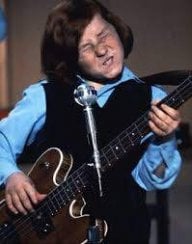
I play bass primarily. However, I also play guitar and drums.
My experience playing bass basically went like this:
I had played trombone in middle school and high school band. I started bass at 15 and had no guitar experience. I took six months of lessons and started playing in a band. I'm 44 now. I am just a hobbyist who loves playing music.
I tried to get better and better, but I did not appreciate simplicity in bass playing. I never wanted to play the same note twice, I wanted to walk around and show my chops constantly.
After years of doing this, I felt I was hitting a plateau. I finally learned to appreciate simplicity, and it opened up the instrument so much to me.
I think if I started on guitar, I may have appreciated this sooner, but I wanted to be a dedicated bass player. My biggest regret in my playing is not learning the value of simple playing sooner. A friend came over to jam and was playing bass so busy that it reminded me. It crowds everyone out. When I am playing guitar, and the bass is busy, I feel relegated to pretty simple rhythm playing. Which is fine. BUT, it is best to serve the song, get playful when it is appropriate. Holding down the groove is the most important lane. Give the song room to breathe. Let the other players play too and only get busy when it best serves the song. Simplicity is a bass player's best friend.
JMHO


Whenever I play on a song where I think a busy complicated bass part is appropriate, I almost always juxtapose it to something very simple in another part of the song.
It usually makes the busy part sound so much cooler. - and gives your fingers a moment to prepare.

How spare or how busy, and all points in between, should be determined by the music you're playing and how the other musicians are playing it. If you're playing in a duo or trio, "busy" is often useful. If you're with other "busy" players, dial it back. There is a big difference, however, between "tastefully busy" and "wankage."
Some people can’t deal with repetition. I am quite happy to just motor along on a simple line as long as necessary if that works for the song. It turns into a Zen thing.

That pruning bit is a useful technique. I play primarily in a worship context now, and when we are playing older hymns or Christmas music which tends to be more classically influenced, I do exactly what you said. Listen and find the key notes. I did not appreciate this a 20 year old when I got going.How spare or how busy, and all points in between, should be determined by the music you're playing and how the other musicians are playing it. If you're playing in a duo or trio, "busy" is often useful. If you're with other "busy" players, dial it back. There is a big difference, however, between "tastefully busy" and "wankage."
As an aspiring orchestral bassist, I've discovered that even orchestral composers often write too many notes (IMO) for the bass, or give the basses what they've already written for the cellos. I tend to fix it by analyzing the music, determining what the important notes are, and "pruning" notes which don't contribute.
^this! I play in a jazz/jam trio, where at times I play many notes. But I enjoy sub gigs in other genres where the bass role is different. It kind of resets my brain to thinking about supporting the groove.^^^^^
Truth. End thread.
But, my measly little $0.02 - I used to overplay at times because I was coming from duos and trios where tactfully filling space was a good thing in some situations. But in a full band I had a tendency to crowd everyone out and occasionally throw off the groove. Then, when I was ar around 24, I started playing DB in a 6 piece bluegrass group and was scolded right from the jump about stepping on toes during the songs. So I had to dial it back and just play bass...which was amazing! I could just hold down the low end and let them fill in all the sonic spaces. That was a valuable experience that definitely improved my playing in all genres because I learned to let the song and even the bassline breathe by not playing every note on the fretboard.

Your comment reminds me of when Keyboards came out with useable Horn sounds, like Sax, let's say...you'd listen to it and start losing your breath...because the keyboardist would put really long phrases, without ever pausing for a Breath, like a Sax player would have to do! Lol!Playing instrument is like holding a speech. There are places where one puts pause in order to emphasize what was said, or prepare listeners for next thought. Good musicians know this and have good feel for this leaving space.
So in the end, it is not about how many words (notes) you use, it's how you place them.
You could be playing a little and still be borring, or playing a lot and be interesting.

Them studio cats' timing can be impeccable.Easy and simple are not synonymous.

 - The Bar Band Bassman


I’m not a big fan of Jaco’s solo albums, but on Bright Size Life, and what I’ve heard him playing with Weather Report and Joni Mitchell he does so much more than just support the band or the song. Sometimes he is the song, the whole kit and caboodle, melodic and rhythmically fascinating. Nothing against Bill Wyman though.Being Jaco is nice. Being Bill Wyman supports the band.