Nothing wrong with a "fill" if your drummer or a guitar player negates to take the opportunity. My current music really has no real solo's but, I ve played in a band or two where they are prevalent. Either way, I'm good!

TalkBass has been independent since 1998. Add your voice.
Create a free account to reply to discussions, view embedded media, and browse with fewer display ads.
Join free Log in
Want zero display ads or expanded classifieds tools? Compare plans.



Like to play busy bass lines?
Play Fusion,Prog Metal and/or Djent.



I play bass primarily. However, I also play guitar and drums.
My experience playing bass basically went like this:
I had played trombone in middle school and high school band. I started bass at 15 and had no guitar experience. I took six months of lessons and started playing in a band. I'm 44 now. I am just a hobbyist who loves playing music.
I tried to get better and better, but I did not appreciate simplicity in bass playing. I never wanted to play the same note twice, I wanted to walk around and show my chops constantly.
After years of doing this, I felt I was hitting a plateau. I finally learned to appreciate simplicity, and it opened up the instrument so much to me.
I think if I started on guitar, I may have appreciated this sooner, but I wanted to be a dedicated bass player. My biggest regret in my playing is not learning the value of simple playing sooner. A friend came over to jam and was playing bass so busy that it reminded me. It crowds everyone out. When I am playing guitar, and the bass is busy, I feel relegated to pretty simple rhythm playing. Which is fine. BUT, it is best to serve the song, get playful when it is appropriate. Holding down the groove is the most important lane. Give the song room to breathe. Let the other players play too and only get busy when it best serves the song. Simplicity is a bass player's best friend.
JMHO



Great article. "Busy" implies playing gratuitous, unnecessary stuff. Rocco was not doing that on those famous TOP tracks. He played what the music called for.
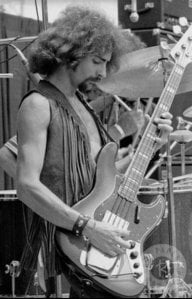
Usually takes a bassist a few years to learn HOW to play bass, a few more years to learn WHEN to play what you learned, and a few more years to learn WHAT & WHEN not to play.I play bass primarily. However, I also play guitar and drums.
My experience playing bass basically went like this:
I had played trombone in middle school and high school band. I started bass at 15 and had no guitar experience. I took six months of lessons and started playing in a band. I'm 44 now. I am just a hobbyist who loves playing music.
I tried to get better and better, but I did not appreciate simplicity in bass playing. I never wanted to play the same note twice, I wanted to walk around and show my chops constantly.
After years of doing this, I felt I was hitting a plateau. I finally learned to appreciate simplicity, and it opened up the instrument so much to me.
I think if I started on guitar, I may have appreciated this sooner, but I wanted to be a dedicated bass player. My biggest regret in my playing is not learning the value of simple playing sooner. A friend came over to jam and was playing bass so busy that it reminded me. It crowds everyone out. When I am playing guitar, and the bass is busy, I feel relegated to pretty simple rhythm playing. Which is fine. BUT, it is best to serve the song, get playful when it is appropriate. Holding down the groove is the most important lane. Give the song room to breathe. Let the other players play too and only get busy when it best serves the song. Simplicity is a bass player's best friend.
JMHO

Especially if you want to work!.....It's a natural progression to get that out of your system when you are young, and gradually learn that less is more, simple is hard, and leaving space for others is the essence of BASS playing.

It seems to me that I have often heard veteran bass players say that when they were younger they strived to play as many notes as possible, but as they got older and more experienced they came to appreciate how much less is better than more. I can't remember a single example in which a veteran bass player said the opposite.