- Mar 1, 2002
- 4,237
- 52
- 75
- Disclosures
- Owner: Ken Smith Basses, Ltd.
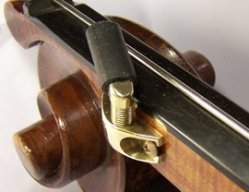
Yeah, I'm dealing with the same thing. I had a KC strings extension installed a couple of years ago pretty soon after purchasing my current bass, and while I really appreciate the low cost (I had a friend do the install for only like $100 on top of it), I've had no end of problems with the thing that I've had to constantly adjust and re-adjust. The flipper on the Eb gate kept bumping into the E gate if both were open and causing some train wrecks, all the leather pads have come off and I've had to either glue them back on repeatedly or replace them entirely. I ended up removing the C gate and having it replaced by a nut, so as to raise the height of the open C enough to make it speak at higher volumes.
Also, does anyone else have a fingered extension installed on a bass with ebony or rosewood tuners? I'm wondering how common this is, because I feel like extension passages that I think are difficult are only difficult because I have to play around projecting tuning knobs.
Two of the Basses in the Philly Orchestra (Hal Robinson/Gargoyle head Italian and Duane Rosengard/G.Ceruti) have wooden tuners on them and they don't seem to have a problem. These I think are both Robertson's chromatic Extensions. These are about the same as the ones that Arnold Schnitzer makes as well.
I have also played both of these Basses briefly and see no problems at all.
I am doing a Pops concert this week with another Orchestra as a Sub and I'm using one of my Basses with the Schnitzer Extension. It works like a charm either fingered or latched. I have the Krutz tuners on that Bass in reverse other like a French Bass and the E/C on the upper most Tuner.
On the Hatpeg wood tuners, I have bumped my own head with them on occasion so it's something you may just have to work around. Also, I don't find the Hatpegs easy to fine tune or tune at all some times so if it's a high end Bass, I would replace them for something better with about a 40:1 ratio or so.
[Invalid or Expired Link Removed]Invalid Link RemovedInvalid Link Removed
This Bass had Hatpegs when I bought it. Don't you think it's better now than beforeTuner-wise?
Invalid Link RemovedInvalid Link RemovedInvalid Link Removed