
Enjoy the benefits of a premium membership!
Upgrade Account
-
TalkBass has been independent since 1998. Add your voice.
Create a free account to reply to discussions, view embedded media, and browse with fewer display ads.
Join free Log in
Want zero display ads or expanded classifieds tools? Compare plans.
You are using an out of date browser. It may not display this or other websites correctly.
You should upgrade or use an alternative browser.
You should upgrade or use an alternative browser.
Cab Speakers?
- Thread starter Cruzer23
- Start date
More options
Who Replied?

- Feb 12, 2006
- 60,978
- 5
- 220,736
- Disclosures
- Development Engineer-Mesa Boogie, Development Engineer-Genzler (pedals), Product Support-Genz Benz
First, the wiring was modified because the black-white pair should have been twisted together but while the white wire shows the original twisting, the black wire does not.
The very first thing to do is verify that the cabinet is correctly wired. (Most of the cabinets were 8 ohms, using a series-parallel combination of 8 ohm drivers)
Is there a nominal impedance stated on the driver?
Are they all the same driver... for the 8 ohm cabinet, they SHOULD all be 8 ohms but the one with the missing dustcap may be 4 ohms which may (depending on how wired) have received more power and because those drivers were not designed around extended bass, damaged the dust cap.
Those look like an early driver we used, possibly earliest of what became the Eminence Legend series. Does it have a #761058 stamped on the back of the magnet? I kind of doubt it because the surround doesn't match my data.
I would say no more than 150 watts each as a generality for driver of that era.
The very first thing to do is verify that the cabinet is correctly wired. (Most of the cabinets were 8 ohms, using a series-parallel combination of 8 ohm drivers)
Is there a nominal impedance stated on the driver?
Are they all the same driver... for the 8 ohm cabinet, they SHOULD all be 8 ohms but the one with the missing dustcap may be 4 ohms which may (depending on how wired) have received more power and because those drivers were not designed around extended bass, damaged the dust cap.
Those look like an early driver we used, possibly earliest of what became the Eminence Legend series. Does it have a #761058 stamped on the back of the magnet? I kind of doubt it because the surround doesn't match my data.
I would say no more than 150 watts each as a generality for driver of that era.

First, the wiring was modified because the black-white pair should have been twisted together but while the white wire shows the original twisting, the black wire does not.
The very first thing to do is verify that the cabinet is correctly wired. (Most of the cabinets were 8 ohms, using a series-parallel combination of 8 ohm drivers)
Is there a nominal impedance stated on the driver?
Are they all the same driver... for the 8 ohm cabinet, they SHOULD all be 8 ohms but the one with the missing dustcap may be 4 ohms which may (depending on how wired) have received more power and because those drivers were not designed around extended bass, damaged the dust cap.
Those look like an early driver we used, possibly earliest of what became the Eminence Legend series. Does it have a #761058 stamped on the back of the magnet? I kind of doubt it because the surround doesn't match my data.
I would say no more than 150 watts each as a generality for driver of that era.
Attachments

First, the wiring was modified because the black-white pair should have been twisted together but while the white wire shows the original twisting, the black wire does not.
The very first thing to do is verify that the cabinet is correctly wired. (Most of the cabinets were 8 ohms, using a series-parallel combination of 8 ohm drivers)
Is there a nominal impedance stated on the driver?
Are they all the same driver... for the 8 ohm cabinet, they SHOULD all be 8 ohms but the one with the missing dustcap may be 4 ohms which may (depending on how wired) have received more power and because those drivers were not designed around extended bass, damaged the dust cap.
Those look like an early driver we used, possibly earliest of what became the Eminence Legend series. Does it have a #761058 stamped on the back of the magnet? I kind of doubt it because the surround doesn't match my data.
I would say no more than 150 watts each as a generality for driver of that era.
Has a P.Audio tweeter
First, the wiring was modified because the black-white pair should have been twisted together but while the white wire shows the original twisting, the black wire does not.
The very first thing to do is verify that the cabinet is correctly wired. (Most of the cabinets were 8 ohms, using a series-parallel combination of 8 ohm drivers)
Is there a nominal impedance stated on the driver?
Are they all the same driver... for the 8 ohm cabinet, they SHOULD all be 8 ohms but the one with the missing dustcap may be 4 ohms which may (depending on how wired) have received more power and because those drivers were not designed around extended bass, damaged the dust cap.
Those look like an early driver we used, possibly earliest of what became the Eminence Legend series. Does it have a #761058 stamped on the back of the magnet? I kind of doubt it because the surround doesn't match my data.
I would say no more than 150 watts each as a generality for driver of that era.
Nothing on the speakers other than Made in USA. Was thinking the speaker have been swapped out at some point?
- Feb 12, 2006
- 60,978
- 5
- 220,736
- Disclosures
- Development Engineer-Mesa Boogie, Development Engineer-Genzler (pedals), Product Support-Genz Benz
I can't read the numbers on the tag, that looks like a version of an early Eminence cast frame driver that ultimately became the Legend series metalwork. The numbers on the tag may include 761___ the first 2 digits should be 76. The cone numbers don't mean anything (for this purpose anyway).
That's an unvented motor used with a comp. paper dust cap. If they were driven beyond their mechanical rating, the dust cap could break the bond to the cone. This changed in later drivers.
I don't recall using a P-Audio HF driver, but it's quite possible that it was changed out at some time, or maybe it was a very early build prior to our later HF drivers.
That's an unvented motor used with a comp. paper dust cap. If they were driven beyond their mechanical rating, the dust cap could break the bond to the cone. This changed in later drivers.
I don't recall using a P-Audio HF driver, but it's quite possible that it was changed out at some time, or maybe it was a very early build prior to our later HF drivers.
I can't read the numbers on the tag, that looks like a version of an early Eminence cast frame driver that ultimately became the Legend series metalwork. The numbers on the tag may include 761___ the first 2 digits should be 76. The cone numbers don't mean anything (for this purpose anyway).
That's an unvented motor used with a comp. paper dust cap. If they were driven beyond their mechanical rating, the dust cap could break the bond to the cone. This changed in later drivers.
I don't recall using a P-Audio HF driver, but it's quite possible that it was changed out at some time, or maybe it was a very early build prior to our later HF drivers.
Speaker label, can't see anything else anywhere
- Feb 12, 2006
- 60,978
- 5
- 220,736
- Disclosures
- Development Engineer-Mesa Boogie, Development Engineer-Genzler (pedals), Product Support-Genz Benz
Looking at that again, I think those may have been a PAS driver that we used until PAS exited the MI business. It looks really familiar, but none of us can remember for sure. it's been at least 20 years. PAS used unvented motors and paper dust caps too, SWR used them and maybe Eden too, they had a really nice midrange character for bass guitar but were not very robust and started failing as amp power increased over the years.
"Parallel" is misspelled? Interesting...View attachment 7481402
Nothing on the speakers other than Made in USA. Was thinking the speaker have been swapped out at some point?
BBB


 I was given this cab last year from a friend who stated that the 10” driver is blown; which I confirmed. Upon removing the speaker it appears that this may not be the correct driver for this cab. Am I right?
- 59jazz
- ea speaker
- Replies: 2
- Forum: Amps and Cabs [BG]
Saw this thread from 2019. Same speakers?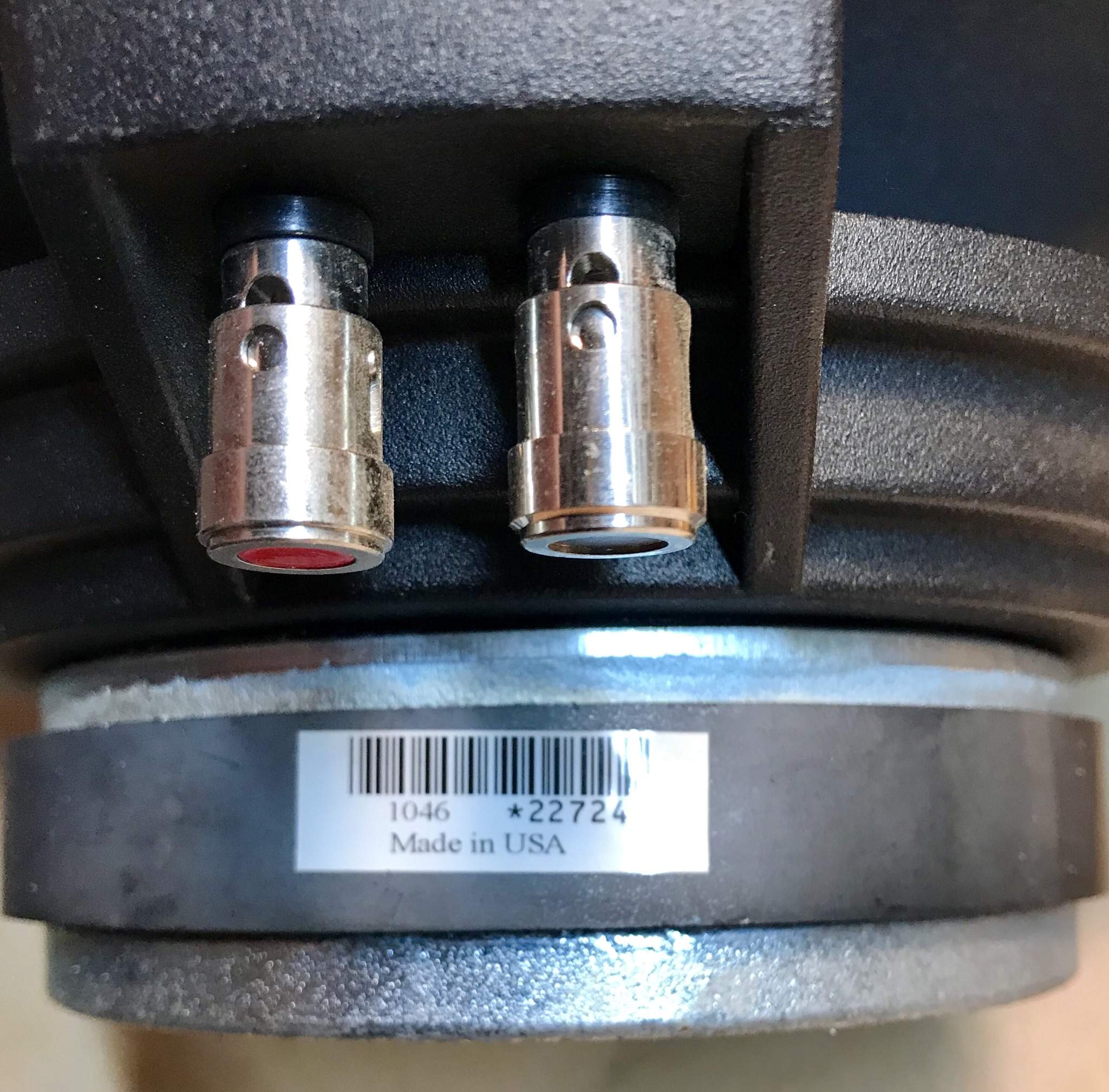
- 59jazz
- ea speaker
- Replies: 2
- Forum: Amps and Cabs [BG]
- Feb 12, 2006
- 60,978
- 5
- 220,736
- Disclosures
- Development Engineer-Mesa Boogie, Development Engineer-Genzler (pedals), Product Support-Genz Benz
Possibly, hard to be sure though because there may have been additional customization of the soft parts.
"Parallel" is misspelled? Interesting...
BBB
Seems consistent with other amps for sale. Although some say Paralleled also! Strange
Not implying it's not genuine, just noticed it's a word I don't recognize, probably because it'd not a word...View attachment 7481488
Seems consistent with other amps for sale. Although some say Paralleled also! Strange
BBB
Possibly, hard to be sure though because there may have been additional customization of the soft parts.
This one from 2019 does have a sramp starting 761...
- Feb 12, 2006
- 60,978
- 5
- 220,736
- Disclosures
- Development Engineer-Mesa Boogie, Development Engineer-Genzler (pedals), Product Support-Genz Benz
That’s our part number, back then things weren’t always consistent, not just with us, but with many of the industry’s vendors too.View attachment 7481505
This one from 2019 does have a sramp starting 761...
When you've wired up speakers, you've either serialed them or paralleled them. QEDView attachment 7481488
Seems consistent with other amps for sale. Although some say Paralleled also! Strange

- Feb 12, 2006
- 60,978
- 5
- 220,736
- Disclosures
- Development Engineer-Mesa Boogie, Development Engineer-Genzler (pedals), Product Support-Genz Benz
Paralleled came from the guitar side anyway (just like "omage"When you've wired up speakers, you've either serialed them or paralleled them. QED


